St Laurence’s well Clonmult, Co. Cork

A few days ago  while driving  to Cork, I took a small detour to the village of Clonmult. Clonmult, Co. Cork  is best know as the site of  an IRA ambush which took place on  the 20 February 1920 during the war of Independence.  On the outskirts of the village  is a lovely holy well dedicated to St Laurence.

St Laurence’s well is located in the townland of Garrylaurence/Garraí Labhráis meaning Field/Garden of Laurence.  It is located in a small enclosure  beside a narrow road that runs through the  townland.

St Laurence's well situated beside road

St Laurence’s well situated beside road

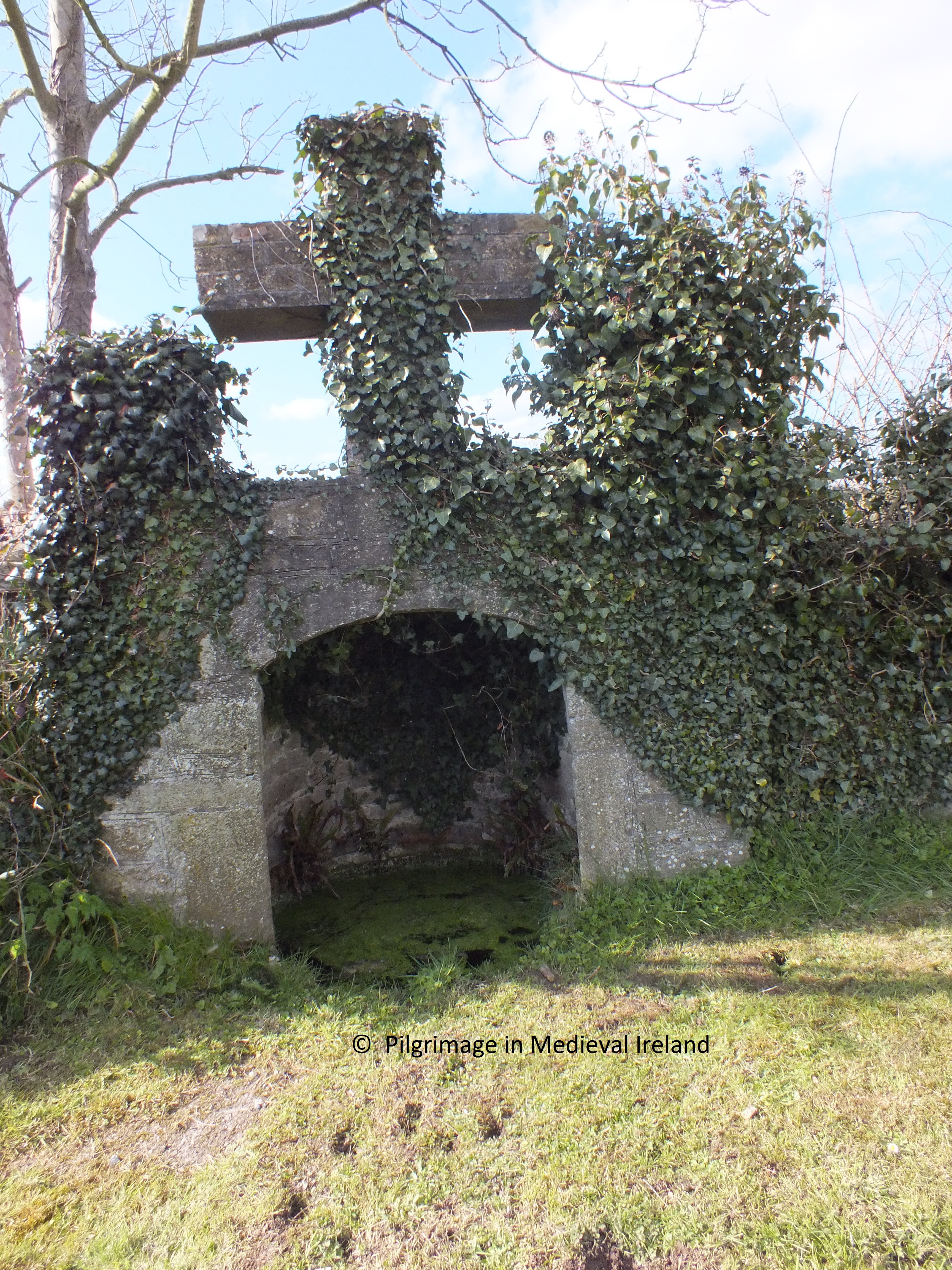
The well consists of a  natural spring  with a circular well house, with a corbelled roof  covered in concrete. The well house looks like it was built in the 19th century.  A plaque over the doorway states ‘St Laurence’s  Holy Well Renovated by Clonmult Muintir na Tíre 10. August 1969‘.

St Laurence's well

St Laurence’s well

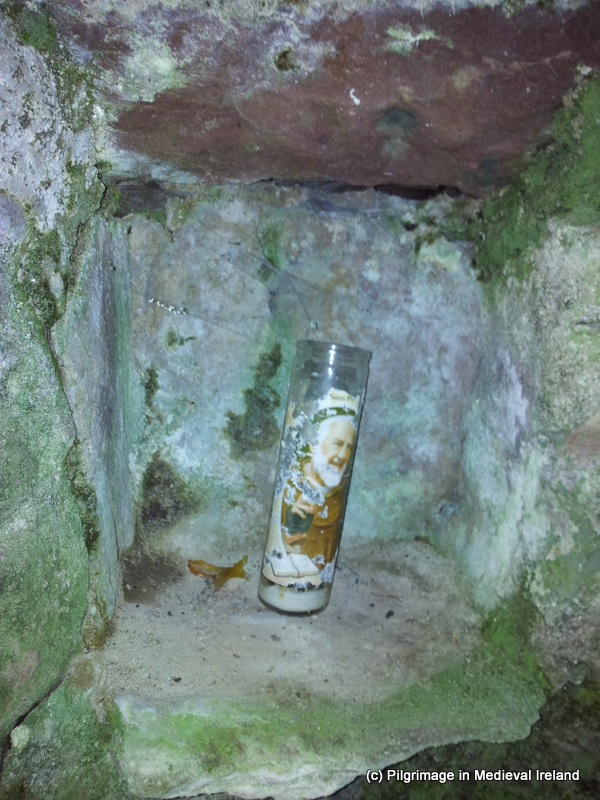
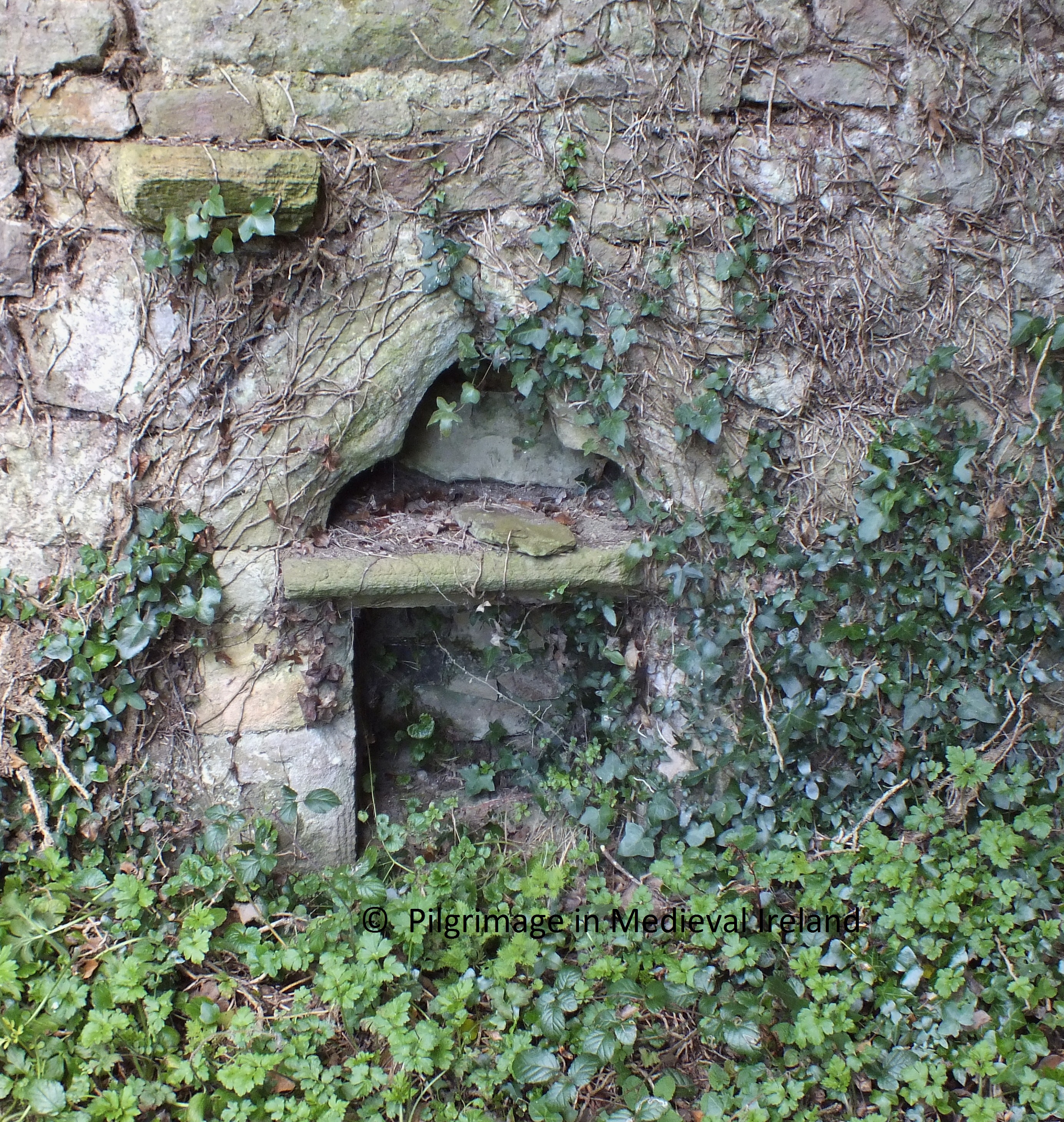
The well is accessed through a narrow doorway . There is  a step  down into the water and inside the door on the left  is a small recess.  Power writing in 1917  mentions the recess kept an iron drinking-ladle attached to a chain.  On my visit there was a  small candle with Padre Pio  in the recess.

44-751

Recess inside the well house at St Laurence’s Well

A large statue of St Laurence and a small stone cross bearing the inscription INRI Saint Laurence  and  the date 1824, sit on top of the roof.

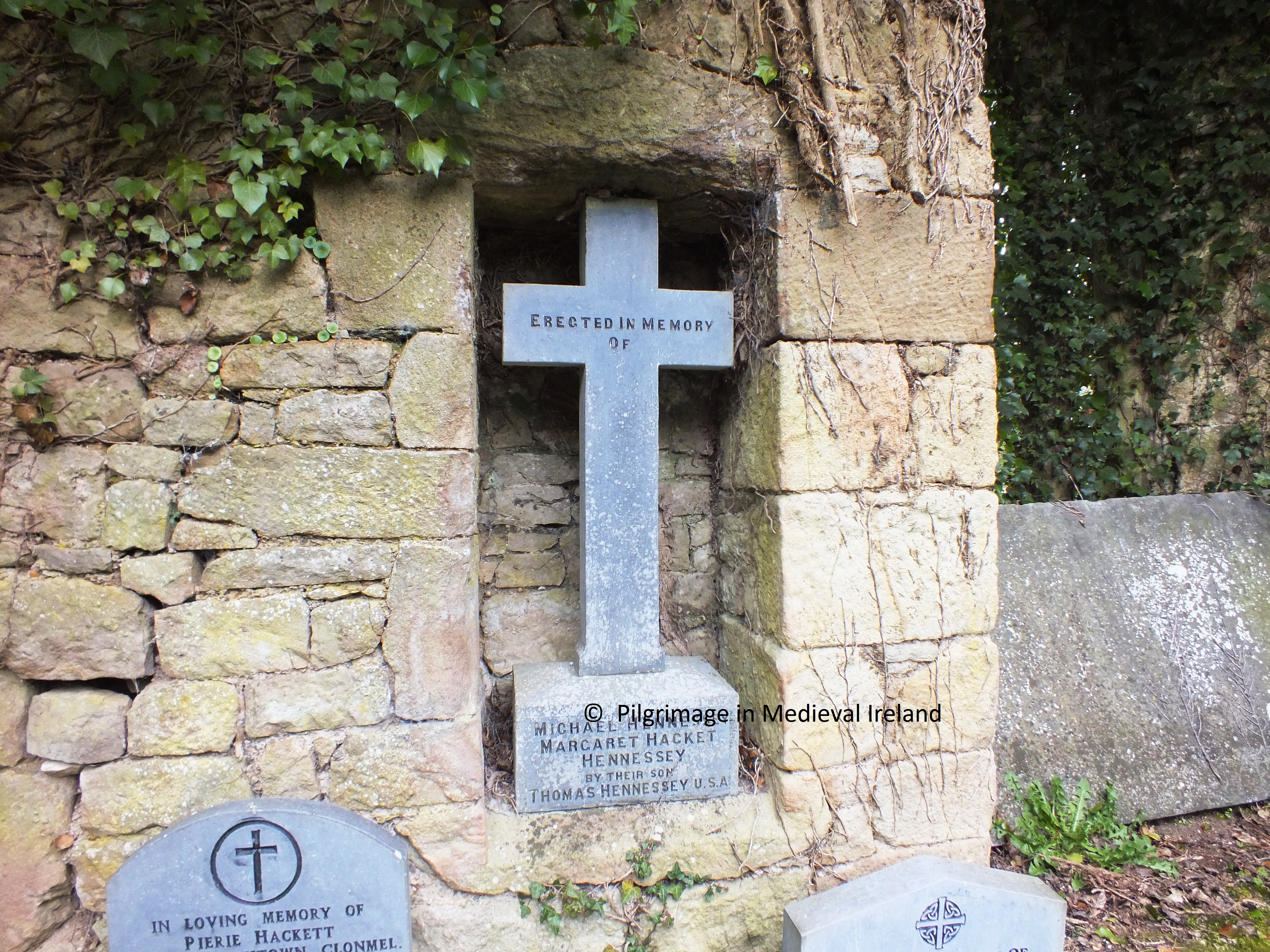
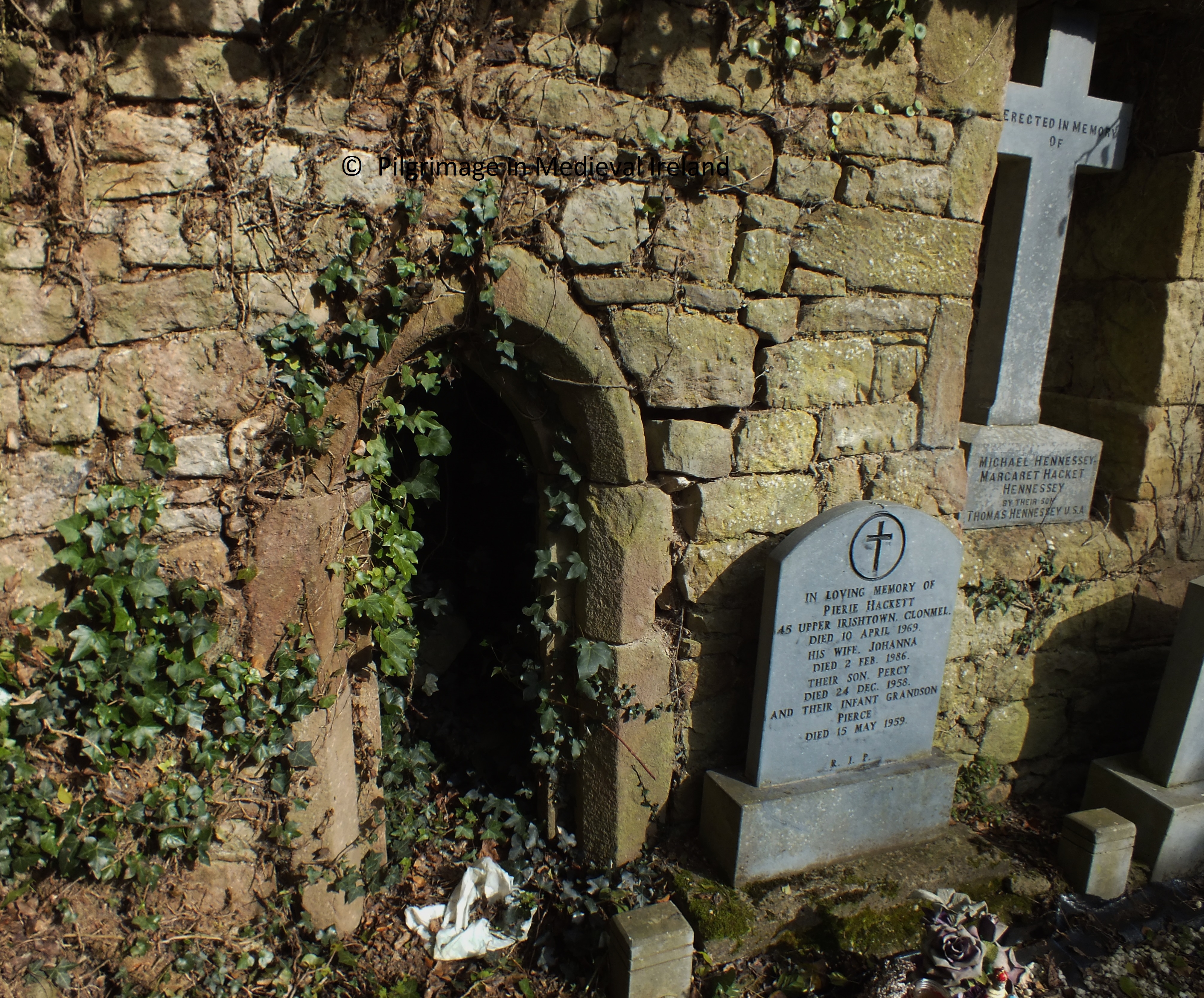
The  holy well looks  well maintained and appears to be still in use.  Beside the well is a small monument with an iron cross.

21-DSCF5498

Monument beside the holy well

Past Pilgrimages

St Laurence is Laurence O’ Toole a 12th century Irish saint who was abbot of Glendalough and later Bishop of Dublin. He died in the monastery at Eu, in Normandy and  his tomb in Eu  became a place of pilgrimage and many miracles were attributed to his intercession. He was canonized in 1225 by Pope Honorius and his remains were translated to a tomb in front of the High Altar on the 10th of May.The nearby church  church at Clonmult is also dedicated to the saint.

The saints feast day is the 14th of November , but  the 9th of August  was the main day for pilgrimage at Garrylaurence.

The Ordnance Survey Namebooks written in 1841 state

A holy well called ‘St Laurence Well’ where paterns were annually held some years since on the 9th of August…

In 1917 Power records that rounds were made here chiefly on August the 9th and  votive offering of ‘usual character ‘ on the tree branches ‘which are immediately over the scared fountain’.

References
Ordnance Survey Name books of Cork (http://www.logainm.ie/Place.aspx?PlaceID=12246)
Power, P. 1917. ‘Place-names and Antiquities of S.E.  Cork II’, PRIAI,  184- 230.

St Mary’s Priory Cahir

The town of Cahir one of the stops on the  The Butler Trail,  a new historical trail that links three of Tipperary’s medieval towns Clonmel, Cahir and Carrick-on-Suir  and a series of historic sites associated with the Anglo-Norman Butler family.

The town of Cahir is probably best know for its magnificent castle which attracts thousand of tourist each year. The castle has also been used in the filming of movies and TV series such as the Tudors.

The town also has some beautiful medieval churches which are often overlooked. This post will focus on the impressive  remains of St Mary’s Priory, known locally as Cahir Abbey.

100-DSCF4709

St Mary’s Priory Cahir

The priory is located a  short distance from the castle past the Supervalu and Aldi supermarkets,  on the Limerick road out-of-town. The Augustinian Priory of  St Mary’s  is situated on the banks of the river Suir opposite Cahir Saw mills and can be approached  from the main road by a small lane.

The priory  was  founded c.1220 by a Norman knight named Geoffrey de Camvill and given to the order the of the Augustinian Canons Regular (Gwynn & Hadcock, 1970, 162).  In 1540 the prior Edmund Lonergan surrendered the monastery to Henry VIII (ibid). It appears that at the time  the main monastic church   was being used as a parish church so it was not taken by the crown  but the surrounding  monastic buildings  were granted to Sir Thomas Butler the Baron of Cahir ( Hodkinson 1995, 148; Farrelly 2011).

If you want to find out more about the priory’s history  see Hodkinson’s article  The medieval priory of St Mary’s, Cahir  in the journal of the Tipperary Historical Society (reference below).

043-DSCF4652

Cloister and  domestic buildings on the south side of the Church

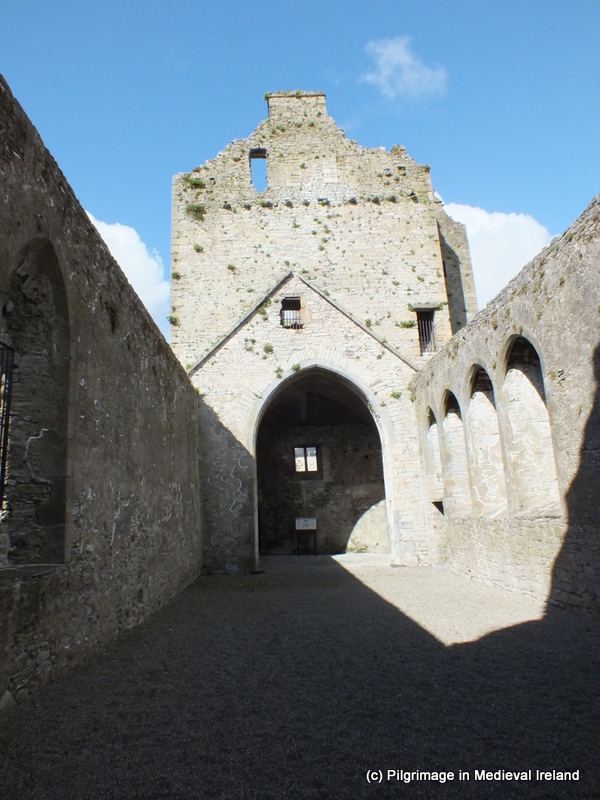
Today the remains of the  priory consist of a church with a large tower , a cloister  and  domestic buildings on the south side of the church. Like many  medieval buildings  St Mary’s priory is a multi phased, with evidence of the original 13th century buildings  and further alterations and additions  in the 15th and 16th/17th centuries.

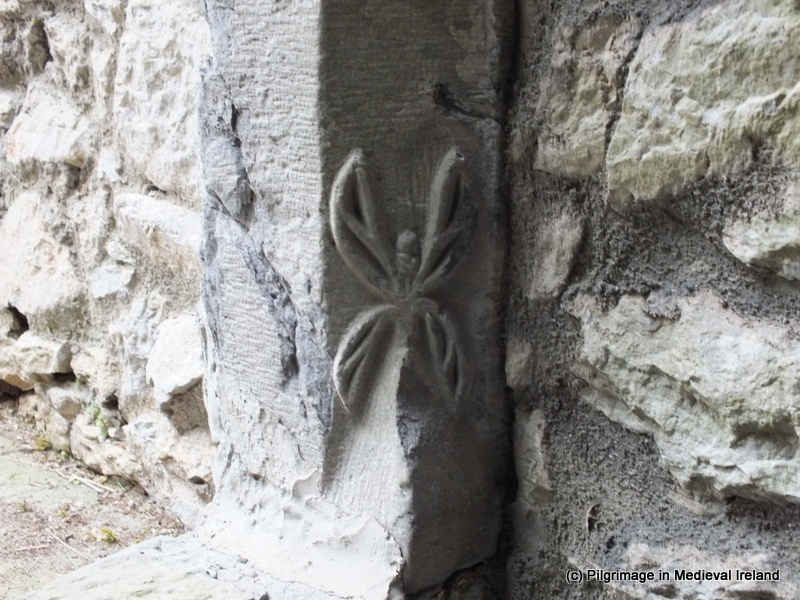
Today  priory church is entered through two doors in the north wall. The western most door is a simple pointed limestone door. On either side of the interior of the door are  two elaborate masons marks. Masons mark are marks made by  medieval stonemasons who cut the blocks, built walls, carved windows in medieval building. Each mason had his own distinctive mark and some like those at Cahir priory were very elaborate .

105-DSCF4714

Western most masons mark inside the door in the north wall

There are a number of masons marks scattered throughout the building so keep your eyes peeled. Today the church consist of a large chancel and a  5 story tower, which appear to have been remodeled in the 15th -16th century. The tower is  built over the crossing where the nave and chancel would have joined. The nave  is no longer extant  and Farrelly (2011) suggests the nave may have been  destroyed when the tower was remodeled.

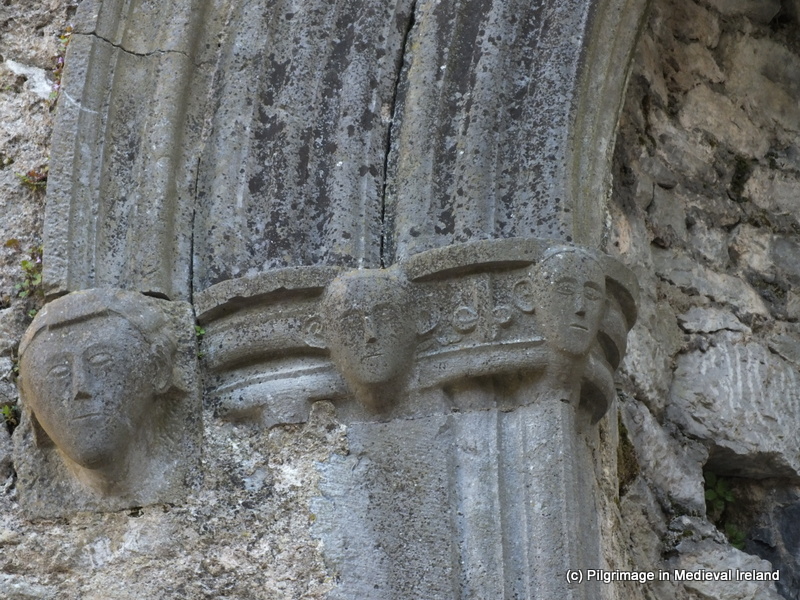
The windows are a mix of carved limestone and  sandstone. There are two very elaborate 15th century windows, one in the east gable of the church and the other in the north-east end of the north wall. The  windows are carved of limestone and decorated with  hooded molding  and the carved heads of clerics.

182-DSCF4792

The exterior of the east window in the east gable

The east window is  very ornate and the exterior has hooded molding with three carved heads and a  large  masons mark of a Celtic knot .

014-DSCF4623

Detail of the carved heads in the interior of the north-east window of the church.

The church tower  is  very well-built and is  accessible to the public.

008-DSCF4617

Facing west view of crossing tower from within the church

The tower  is entered through a  carved limestone pointed doorway.029-DSCF4638To get to the upper stories of the  tower you climb a finely carved  spiral staircase. The steps are a late addition and  are surprisingly wide and easy to climb compared to  narrow steps of earlier stairs at other monastic sites and castles.

038-DSCF4647

At the top of the stairs  is a rounded  ceiling.   There is evidence of  the wicker work frame used to support the ceiling as it was being constructed in the plaster.

039-DSCF4648

Ceiling at top of stairs

The upper floors are accessed through a pointed doorway at the top of the stairs.

152-DSCF4761

Doorway leading into the upper floors of the  tower

As you enter this floor look down at the base of the door and there you will see  a fine example of  a masons mark.

Masons mark in door jamb

Masons mark in door jamb

The upper floors of the building were likely used for domestic purposes and two fine examples of fire places are seen in the  east wall.

048-DSCF4657

East wall of the upper stories of the tower showing two  finely carved fire places

The windows of the tower offer fantastic views  of the church and the other monastic buildings. The  monks would have  had access to the cloister and its surrounding buildings through a doorway, now blocked up, in the  south wall of the chancel.  At present the buildings  surrounding the cloister are not accessible to the public.

The following photos were taken a  few years ago .  Along the east side of the cloister area are a series of vaulted rooms and south of these buildings is  another  a barrel-vaulted room which may have functioned as the chapter room (Farrelly 2011).

OLYMPUS DIGITAL CAMERA

Vaulted room on the east side of the cloister

At the south-east corner of the cloister  is a tall narrow 4 story high tower which was used as a domestic building .

OLYMPUS DIGITAL CAMERA

East wall of narrow tower showing elaborate fire-place.

Another building possibly a refectory was built on to the west side of this tower . Part of the south wall remains. This wall has three sandstone windows.

OLYMPUS DIGITAL CAMERA

Tower and wall of refectory

Like the church the domestic building were also altered in the 15th century.

The priory is surrounded  by a 19th century graveyard on the north and east side and it was here that I found a bullaun stone. The stone originally  had three hollows, one intact and two damaged.  As I have mentioned in previous posts,   bullaun stones are believed to be early medieval in date and may in some case have been associated with pilgrims.

176-DSCF4785There is also a holy well know as Lady’s well a short distance away but time did not allow for a visit and I plan to return soon   to find the well and will post more information then. This post has only really just touched on the story of the priory, its history and its complex architectural remains but I hope it has given you a taste  of what  a wonderful place it is and you might be encouraged to visit and read more.

References

Hodkinson, B. J. 1995. The medieval priory of St. Mary’s Cahir Tipperary Historical Journal, 148-50.

Farrelly, J. 2011. ‘TS075-048002- Cahir Priory’  http://webgis.archaeology.ie/NationalMonuments/FlexViewer/ accessed 25th April 2013.

Gwynn, A. & Hadcock, R. N. 1970. Medieval Religious Houses in Ireland. Dublin:   Irish Academic Press.

Salter, M. 2009. Abbeys and Friaries of Ireland. Worcester: Folly Publications.

http://www.discoverireland.ie/thebutlertrail

Exciting new research on Modern Pilgrimage in Ireland

There is some really exciting  pilgrimage research  taking place here in Ireland.  This blog post hopes to promote the work of one such researcher  Richard Scriven  who is currently researching for PhD in Modern Pilgrimage with the  Geography department  at University College Cork. Richard is also looking for volunteer to help him with his research by  sharing their experiences of pilgrimage  at  Irish holy wells  and other pilgrim sites. The rest of this post has been written by   Richard  and he explains in his own word about his research and  hopefully by the end of the post  some of you  will be inspired to help out  contact him at the address below .

Pilgrimage traditions in Ireland are a unique cultural trait. A vast range of devotional activities are performed on mountain tops, on islands, on beaches and at wells, trees and rocks. These practices, that blend folk customs and Christian beliefs, are the modern manifestation of traditions that date back centuries, if not millennia. Even in the context of a general decline in religious observance and increasing secularisation, annually in Ireland, hundreds of thousands of people go on some form of pilgrimage. As well as being deeply spiritual and personal activities, they are also expressions of cultural identity that create rich lived landscapes.

Photo 1

Pilgrims climbing Croagh Patrick on Reek Sunday 2012.

I am interested in studying this fascinating aspect of Irish social and cultural life. My research looks at pilgrimage in contemporary Ireland by considering how and why it is performed, what it means to the people involved and the ways in which rich spiritual landscapes are forged. As a cultural geographer, I examine the complex relationships that exist between people and place. Geography focuses on how people, through their actions and ideas, shape the world around them and how environments influence and define people. I am interested in the ways in which people and places interact through the performance of pilgrimage. In the performing of devotional practices, it can be seen that people are ‘making’ holy places and that the locations are, also, defining people as pilgrims.

My research involves two main activities: studying the performances of pilgrimages and talking with people. I visit different pilgrimage sites, especially on the main feast days, and observe and record what is going on. In this way, I can capture a sense of the pilgrimages as they are occurring. Equally important are my conversations with people. These usually take the form of short informal interviews in which we discuss pilgrimages, the practices involved and motivations and experiences. By gaining insight these elements I can present a fuller more human understanding of pilgrimage in contemporary Ireland.

The study is focused on Croagh Patrick, Lough Derg and several holy wells in the South West. Croagh Patrick, or ‘the Reek’ as it is known, is one of Ireland’s foremost holy mountains that attracts tens of thousands of pilgrims annually. The island retreat of Lough Derg has been a spiritual space for centuries and is valued by a great many people who make their yearly pilgrimage there. Ireland has over 3,000 holy wells; while some have fallen into neglect or been lost, many still serve as sites of local devotion and pilgrimage. These places are usually associated with a saint and they are visited on the Pattern Day. I am particularly interested in looking at St Gobnait’s Ballyvourney, St Fanahan’s Well Mitchelstown, ‘The City’ Rathmore, St Brigid’s Well, Liscannor and Our Lady’s Well, Timoleague.

Pilgrims praying at the statue of St Gobnait as part of the rounds on St Gobnait’s Day (11th Feb) 2013.

Pilgrims praying at the statue of St Gobnait as part of the rounds on St Gobnait’s Day (11th Feb) 2013.

My research is made possible by people volunteering a small amount of their time and sharing stories with me. I am interested in people’s own experiences and motivations, rather than collecting factual or historical information. If you have gone on pilgrimage to Croagh Patrick or Lough Derg, or do the ‘rounds’ at a local holy well, I would be delighted to hear from you.

Richard  can be contact at 102087081@umail.ucc.ie or at +353 (0) 21 490 2709 (during office hours) and you can find out more about his research at http://liminalentwinings.com/

Kilronan medieval church & holy well at Glebe, Co Waterford.

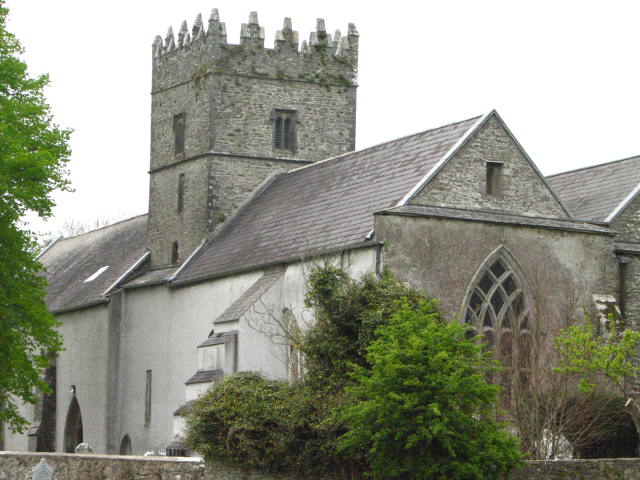
A few days ago, I visited one of County Waterford’s hidden treasures, the medieval  parish church of Kilronan.  I am in the process of doing some historical research into this site but  here are some of my initial  observations.

DSCF2555

Kilronan medieval parish church at Glebe, Co. Waterford.

Location

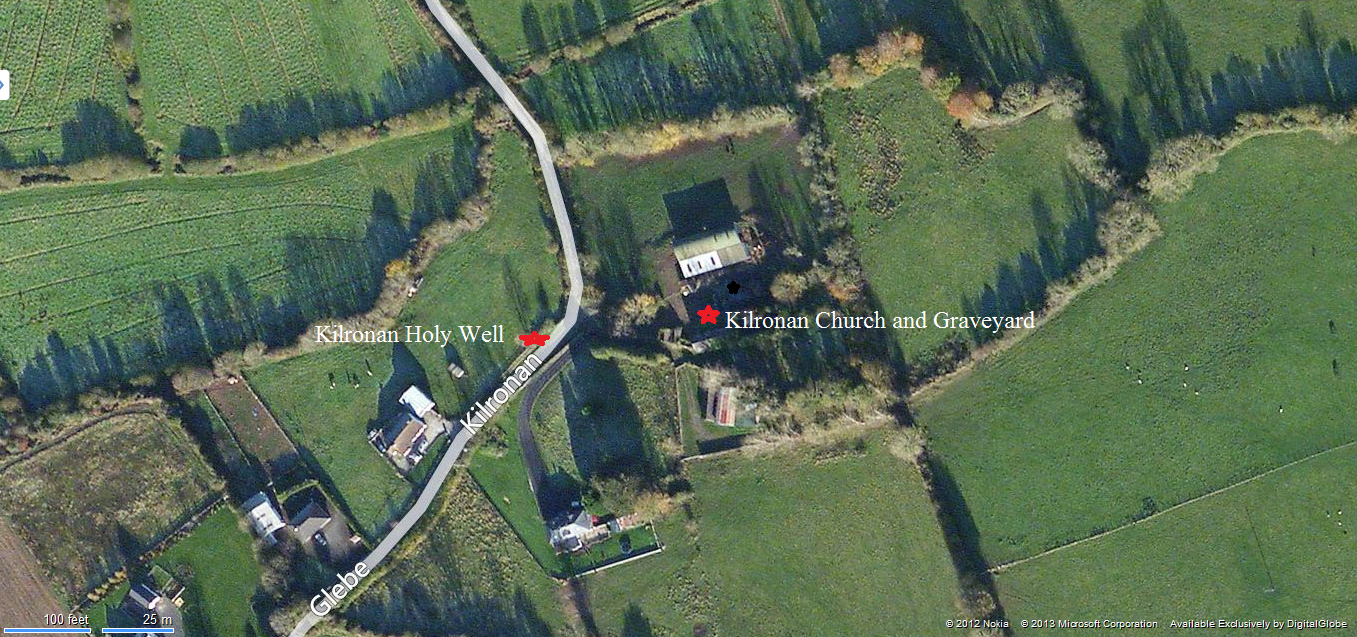
Kilronan church is located in the townland of Glebe,   in the barony of Glenihery, close to the Tipperary Waterford country boundary. It is a short drive from the town of Clonmel (c. 6km), just off the  Dungarvan-Clonmel near the crossroads at Kilmanahan.  This area is in the diocese of Waterford and Lismore, which came in to existence in the later medieval period following the amalgamation of  the dioceses of Waterford, Lismore and Ardmore .

kilronan

Map showing Kilronan church and holy well taken from Bing maps.

Placename

The name  Kilronan or Cill Rónáin means the Church of Ronan which suggests there was an early medieval church of some sort in the area.   There are several saints called Ronan listed in the early medieval calendars of  Irish saints, however there is no way of knowing which of them was connected to this area.   There is no trace of an early medieval church at the site or anywhere else in the parish. The diocesan system in Ireland came into being in the 12th century and the present  church was built after the 12th century,  it may be possible it was built on an earlier church. The townland name Glebe, refer’s to church land. Glebe  land  was used to support the parish priest.  According the  Ordnance Survey Letters of the 1840’s the church  was remodeled in the 15th century, when it and the parish were re-dedicated to St Laurence.

The Church

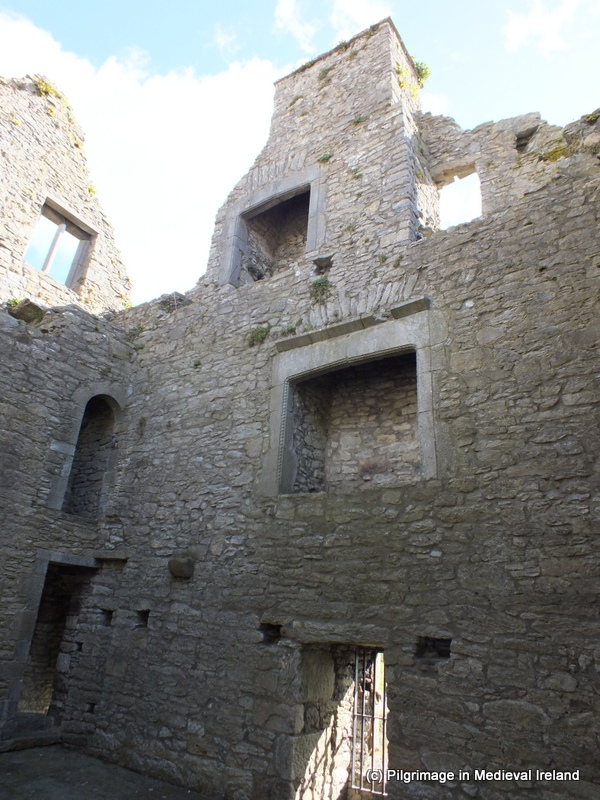
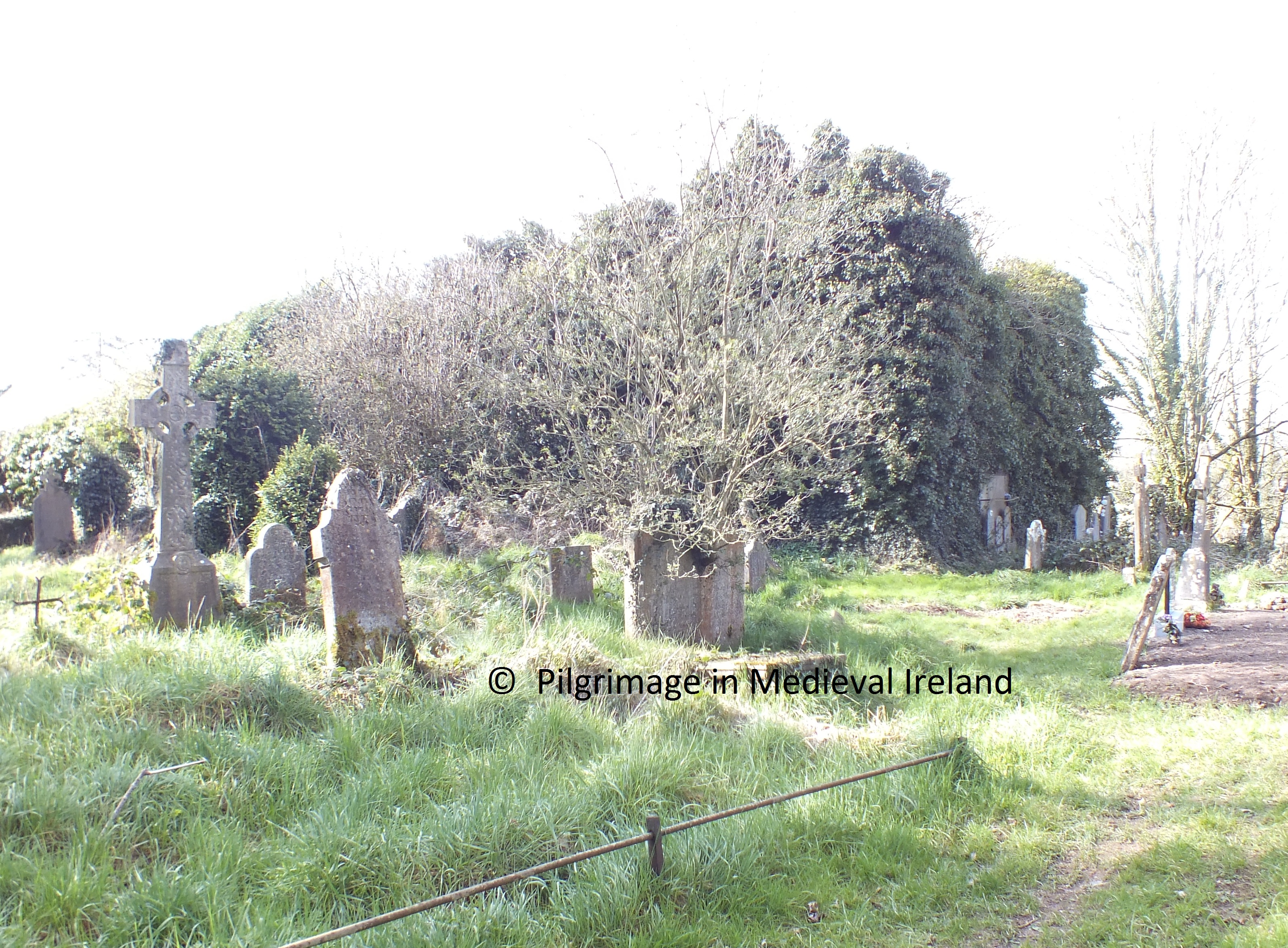
Kilronan church  sits  in a rectangular graveyard with  gravestones range from  late 1700’s to modern times.   19th century farm buildings are built  against the church on the north and west side. It is surprising that there has been little academic discussion of Kilronan as it has some very unusual  and interesting architectural features.

East gable and south wall of Kilronan church

East and south wall of Kilronan church

As you can see from the photo above a  layer of very thick  ivy  covers much of the  walls of the church.  It is difficult to accurately date the church as it is so over grown but it is mentioned in a document written by Pope Nicholas’s   in 1291, which suggests it was constructed prior to the late 13th century. The original building was altered   in the 15th century  and  a number of  new windows and a door  were added.

The church is built of sandstone and is entered through a door at the west end of the south wall.  The door way is a lovely 15th  century hooded  moulded doorway. If you look closely at the photo you can see the  door way was inserted into an earlier larger doorway.

Doorway in the south wall of the church

Doorway in the south wall of Kilronan church

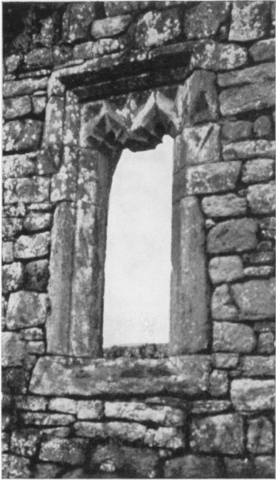
It is difficult to see all the windows with the ivy. Rev. P.  Power, the former head of Archaeology at UCC, writing in 1938 counted 6 windows and suggest there was at least one more.  I noticed  two window (one blocked) on the  west side of the doorway, and a twin-light, cusped ogee-headed window at the east end of the south wall. There is a blocked windows in the north wall. All the windows have very wide embrasures.

Kilronan windows

Photo of the ogee head window at the east end of the south wall in 1938 (Power 1938, 63)

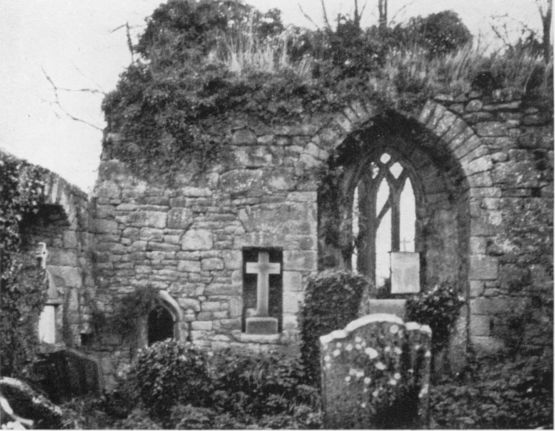
The largest  and most elaborate window  is found in east  wall of the church. It is a  three lights window with switch line tracery. Today it is  covered in ivy so  below is a photo of the east wall and window taken in 1938.

Image of east wall of church taken in 1938

Image of east wall of church taken in 1938 (Power 1938, 63).

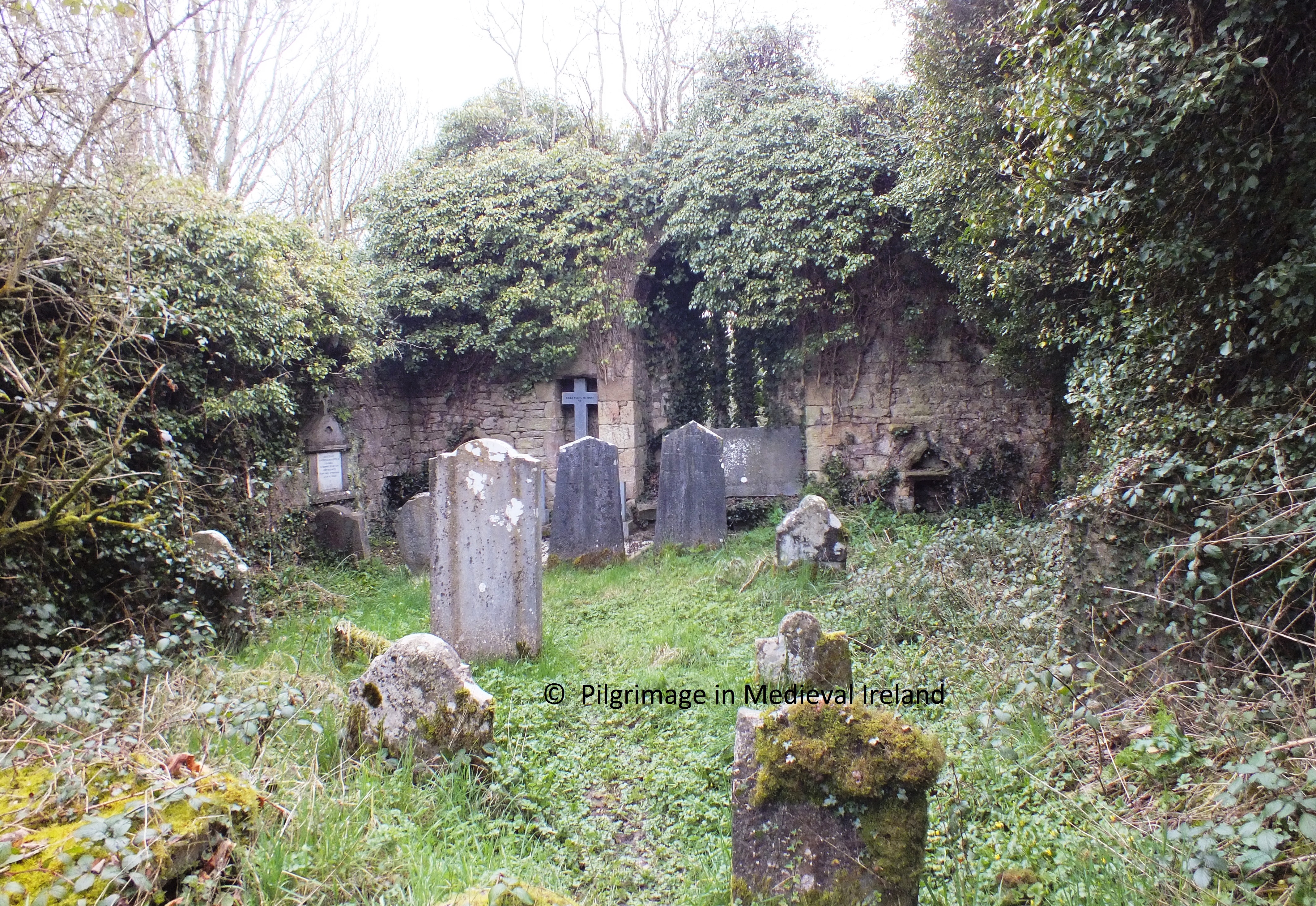
The church has a simple rectangular plan, the interior it is now filled  with 18th and 19th century burials and heavy vegetation growth. There is no evidence of any internal division between the chancel and nave.

View of east wall of church

View of east wall of church

The Archaeological Inventory of   Co. Waterford  noted there was  ‘ traces of rood-screen sockets towards the E end of the long walls’ .  In the south-east corner of the church,  the  ivy free sections of the wall shows the upper courses leaning inwards which may suggest evidence of  vaulting.

Power noted that notable individual details is the evidence of a former double roof; this is voussoirs of the inner vault plainly visible on the south side (interior) of the building. No doubt there was, as in Cormac’s Chapel, a chamber for lodging of the priest, above the barrel vault, and in this connection, note the putlog beside the entrance door, clearly the door way  was fastened from within, i.e., the ecclesiastic lived in the church.

If Power is correct then the priest live within the church  above a vaulted ceiling.  In medieval times the priest  often lived at or in the church,  in accommodation above the west and sometime the east end of the church,  in an upper story apartment  or in accommodation attached to one side of the gable end of the church, or in residential towers attached to the church (Birmingham 2006, 169).  Less commonly the priest could live in a free-standing house were also used (ibid.). The use of vaulting is not unheard of in creating an upper floor for the priest residence  and examples of vaulted medieval parish churches are found at Kilbride Co. Offaly,  Gallon and Raffony, Co Cavan & Leighmore Co Tipperary (ibid., 173-174).

DSCF2515

Piscina in the east wall of Kilronan church

The east wall of the church is the least affected by ivy which is fortuitous as some of the  churches most interesting features are located within this wall. At the south end is a piscina,  a recess with a shallow basin used to  wash the communion vessels. The upper section of the Kilronan piscina has an elaborate trefoil-head, a shelf  and the basin  has an   incised petal  design.

Modern memorial cross inserted into aumbry in east wall

Modern memorial cross inserted into aumbry in east wall

At the north side of the main east window  a modern memorial cross has been inserted into one of several   aumbry that are found within the church.  An aumbry is  a fancy word for a  cupboard. There is a small pointed finely cut sandstone door way which leads into a tiny room (dims. 2.03m x 0.85m) that is built into the east wall.

DSCF2525

The room is tiny, a stone seat is built against the north wall  and aumbry (cupboard) is found in the eastern corner of the south wall. The room is roofed with flat lintels and  small square window is found in the center of the east wall.  This is a very unusual feature which I have not found at any other church perhaps the  closest parallel  I can find is  Okyle church and anchorite cell.  I am very curious as to what the function of this room.  It is a tiny room  so would an anchorite be able to stay here ? Does it have a penitential purpose?  I plan to look into this further and I will keep you posted on my findings.

Holy Well

Close to the church c.  60-70 m away   is lovely looking holy well.  The well is  a  semi circular superstructure with a large brick cross on top.

Kilronan Holy Well

Kilronan Holy Well

The  Ordnance Survey Letters of 1840  do not record   any saint associated with the well  nor does Power writing in the early 20th century.  It is always simply referred to as the ‘Holy Well’. According to Power the holy well was venerated up to the 1930’s but he gives no further information. The stagnant water within the well suggests is no longer visited.

I would love to hear from anyone who  knows any history of the well or its traditions and I will come back to Kilronan again and share any new findings on its history and architecture.

© Louise Nugent 2013

References

Birmingham. H. 2006, ‘Priests’ residences in later medieval Ireland’, in Fitzpatrick, E. & Gillespie, R. (ed.) The Parish in Medieval and Early Modern Ireland.Dublin: Four Courts Press, 168-185.

O’ Flanagan, Rev. M. (Complier) 1929. Letters containing information relative to the   

  antiquities of the county of Waterford collected during the progress of the

  Ordnance Survey in 1841. Bray: Typescript.

Moore, M. 1999. Archaeological Inventory of County Waterford. Dublin: Stationery

Office.

Power, Rev. P. 1937. Waterford and Lismore; a compendious history of the united

  dioceses. Cork: Cork University Press.

Power, P. 1938. ‘Some Old Churches of Decies’, JRSAI, Vol. 8, 55-68.

The Easter Controversy in Early Medieval Ireland

Easter is the  most  important feast day  of the Christian church. It  is a moveable feast and the methods  of calculation used to determine the date are very complex.  Easter  must always occur on a Sunday, as Sunday was the day of Christ’s resurrection. The date is calculated taking into account lunar and solar calendars.  In the early church there were several methodologies used at different points in time  to determine the date.

By  the 5th and 6th centuries there was  divergence within the church as to how to calculate Easter. In Ireland, northern and western Britain (an area which  had strong links to the Irish church, as Irish missionaries had converted this area), the  church used an eighty-four-year Easter cycle and assigned Easter to the Sunday that fell between the fourteenth and twentieth days of the  lunar month. This system of calculation was at odds with the Continental church and the church in southern Britain (that had strong links with Rome). These churches used a system devised by Victorius of Aquitaine (457 AD) and from 630’s the Alexandrian system to calculate Easter.

With two systems  for calculation in play   divergent dates for Easter often occurred.  This meant Easter could be celebrated at different times of the year  in different geographical locations. In the mid 7th century  Rome  began moves to  bring uniformity to the  Christian church. This uniformity extended to a standard date for Easter across the Christian World.

In 630 Pope Honorius wrote to the Irish threatening  excommunication if they did not conform to the Roman way of calculating Easter. As a result of the this letter the southern church in Ireland held a synod in 632  at Magh Lene or as it is  known today  Old Leighlin in Co Carlow. The synod probably took place at the site of Old Leighlin Cathedral which is built upon the ruins of an early monastic site founded by St Gobban in the early seventh century. At the time of the synod St Laserian  who was the successor of Gobban was the leader of the religious community here.

The synod  decided to send a delegation  to Rome. Tradition holds that  St Laserian  was among the delegation. Upon their return the southern church decided to conform to the Roman Easter,  however the northern  church didn’t conform until it was accepted by the archbishop of Armagh in third quarter of the 7th century .

In Britain the famous synod of Whitby 664 settled the question in favor of  Roman system but some clergy unhappy with the outcome  came to Ireland.  For example St Colmán the bishop of Lindisfarne  along with a group of   monks from Lindisfarne  came to Ireland and set up a monastery on Inishbofin Co Galway and later at Mayo.  It was not until 716 that the  Columban federation of churches   finally accepted Roman Easter and there was uniformity  throughout the Christian world concerning Easter.

© Louise Nugent 2013

References

Grimmer, M. 2008. ‘Columban Christian influence in Northumbria, before and after Whitby’ Journal of the Australian early medieval association, vol. 4, 99-123. http://home.vicnet.net.au/~medieval/jaema4/grimmer.html.

Kenny, C. Molaise. Abbot of Leighlin and Hermit of Holy Island.  Killalla: Morrigan.

Schaff, P. History of the Christian Church, Volume IV: Mediaeval Christianity. A.D. 590-1073.

Ó Cróinín, D. 1997. Early Medieval Ireland 400-1200. London: Longman.

Stancliffe, C. E. 2005. Religion and society in Ireland. In The New Cambridge Medieval History, volume I c. 500 – c. 700. Fouracre, P. Cambridge: Cambridge University Press. 1: 397-425

Szarmach, P. 1996. Holy Men and Holy Women. Old English Prose Saints’ Lives and Their Contexts. Suny Press

http://www.askaboutireland.ie/reading-room/history-heritage/folklore-of-ireland/carlow-folklore/st-laserian/easter-controversy/

http://www.saintsandstones.net/saints-inishbofin-journey.htm

http://www.cristoraul.com/ENGLISH/History-of-the-Popes/Seventh-Century-Popes/6-HONORIUS_I.html

http://www.catholic.org/saints/saint.php?saint_id=4195


St Patrick’s day at St Patricks well in Glassely, Co Kildare

Last week I visited St Patrick’s well at Glassely/Glashealy in  Co. Kildare   to record the annual St Patrick’s day  pilgrimage. Sharon Greene a local archeologist and good friend of mine was at hand to  helped me to find the site which is difficult for a non local like myself to find, being located off the road in private land.

DSCF1052

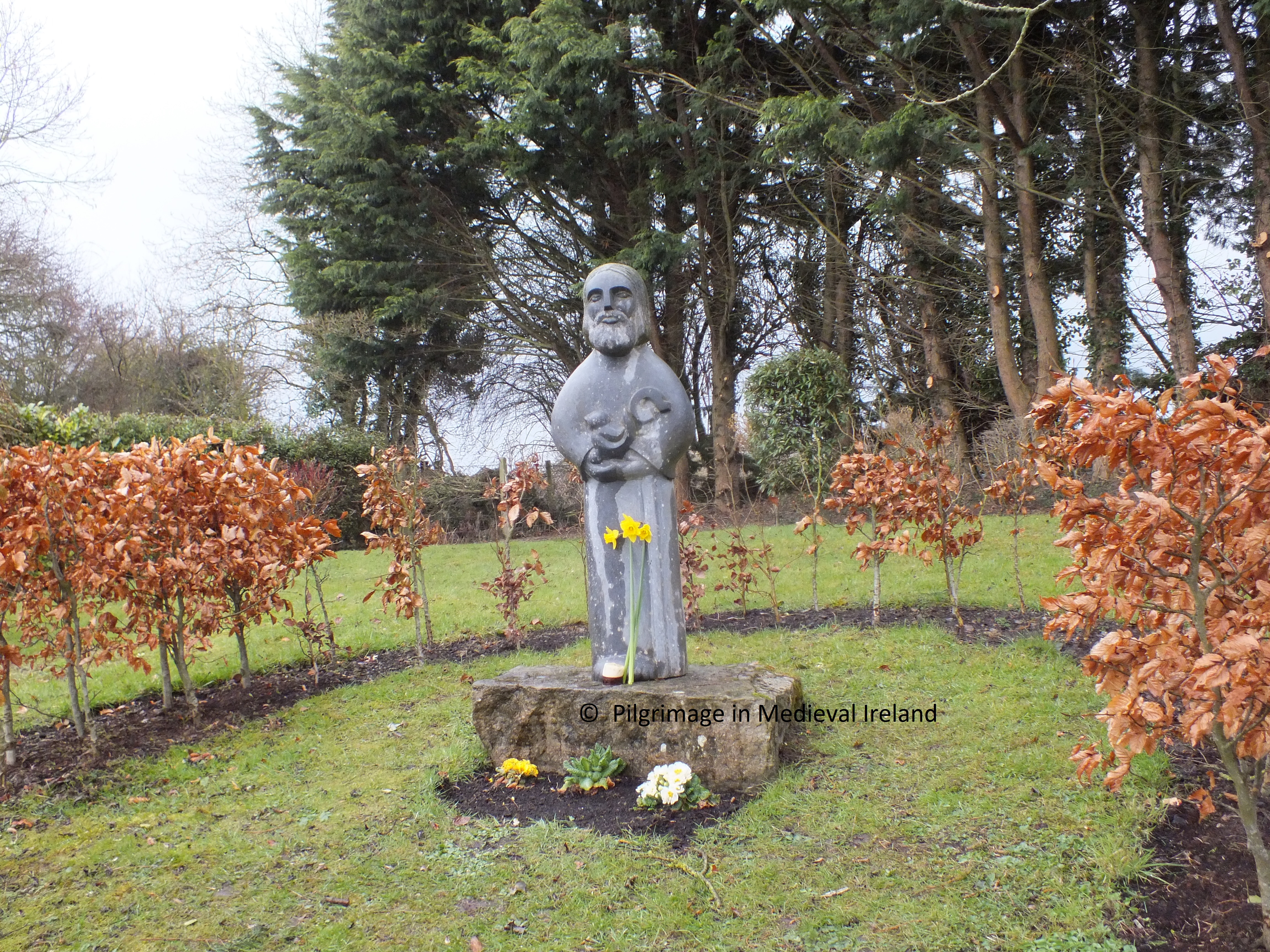
Statue of St Patrick at Glassely

Location

The townland of Glassealy about 5 miles from Athy.   St Patrick’s  well is located  in the corner of a field close to the site of an old  graveyard  also dedicated to St Patrick.  The graveyard is semi circular in shape and the outer wall seems to enclose a circular bank. The dedication to St Patrick and the shape of the enclosure may suggest and early medieval date. The church no longer survives,  there is an underground vault or crypt  slightly east of center of the enclosure  and  also present are fragments of a  seventeenth century  altar tomb of the Fitzgerald family. Other features of note are the two portions of the shaft of a memorial cross dated to 1615.

Map of the area  by FitzGerald  created in 1912.

Map of the area by Lord Walter FitzGerald created in 1912 (J.K.A.S, 82)

St Patrick’s graveyard is situated at the edge of the road.  An old pilgrim path runs along the  north side of the stream which runs past the graveyard. The path follows the stream until it reached the well. The path  was known as the glen. ‘Glen’ is a term  often used in Ireland to refer to a small stream.   Running parallel to the stream is an old millrace  now dry which in former times powered a corn mill located close to Glassely House . A large mill-pond was located above the well. The well sits  in the corner of the adjoining field and its waters flow into the stream. Today most pilgrim get to the well through the roadside gateway of the well field  and on the main pilgrim day the farmer opens the get so that people drive there cars into the field .

The Well

The earliest reference I found concerning the well is the OS name books of 1838 which state

a well called St Patrick’s Well about 300 yards S. E. of the grave yard.

The well  is a natural spring  that rising out of rock  and is now located in a very pretty landscaped garden close to the banks of the stream.  The site is extremely peaceful and the modern renovations are very tastefully done. The landscaping was done about 15-20 years ago. I especially  liked the statue of St Patrick  which sits above the well as it  depicts the saint  as  a friendly and approachable character.

DSCF1074

St Patrick’s well and garden

The well itself has not been changed although paving has been added around it to make access easier. Many coins have been left in the well and  the small tree over the well has some  ribbons and rosary beads tied to it, which show it is still visited  by pilgrims.

DSCF1050

St Patrick’s well

The well and surrounding  area looked  very different 50-60 years ago.  The image below shows the well in the early 1900’s when it was surrounded by bushes and  scrub.

Fitzgerald (1912-1913) writing in 1912 wrote

The well itself, near the smaller of the two mill-ponds: the water from it  flows into the stream…The numbers of rags, coloured glass beads, and religious medals fastened to the overhanging branches and briars, testify to the reputation the well has for cures.

Image of the well from 1912

Image of the well taken by Lord Walter FitzGerald in 1912 (J.K.A.S, 97)

An article written in 1899-1902 on folk traditions in County Kildare  notes a tradition the water from the well would  boil (Greene 1899-1902, 371).

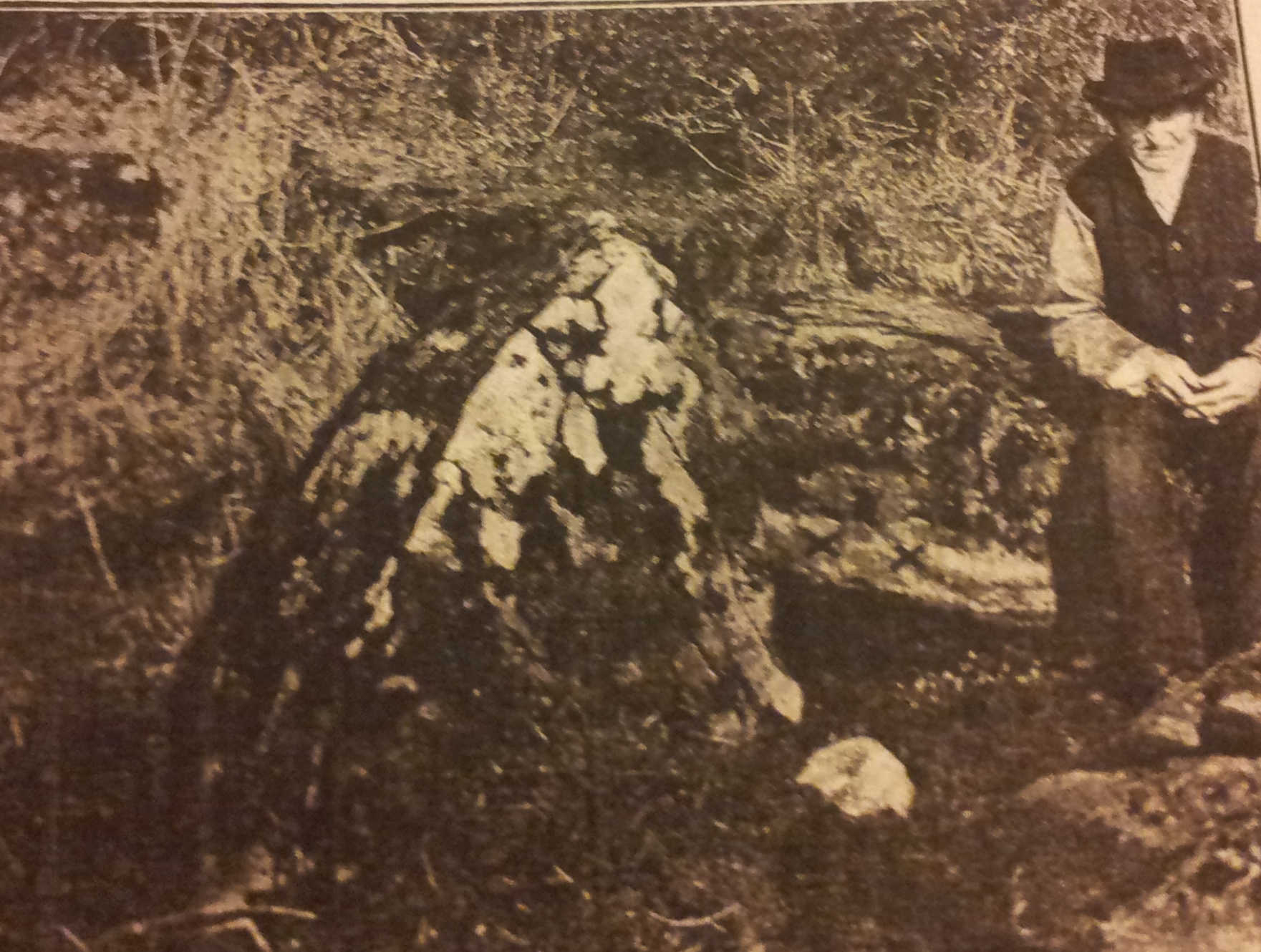
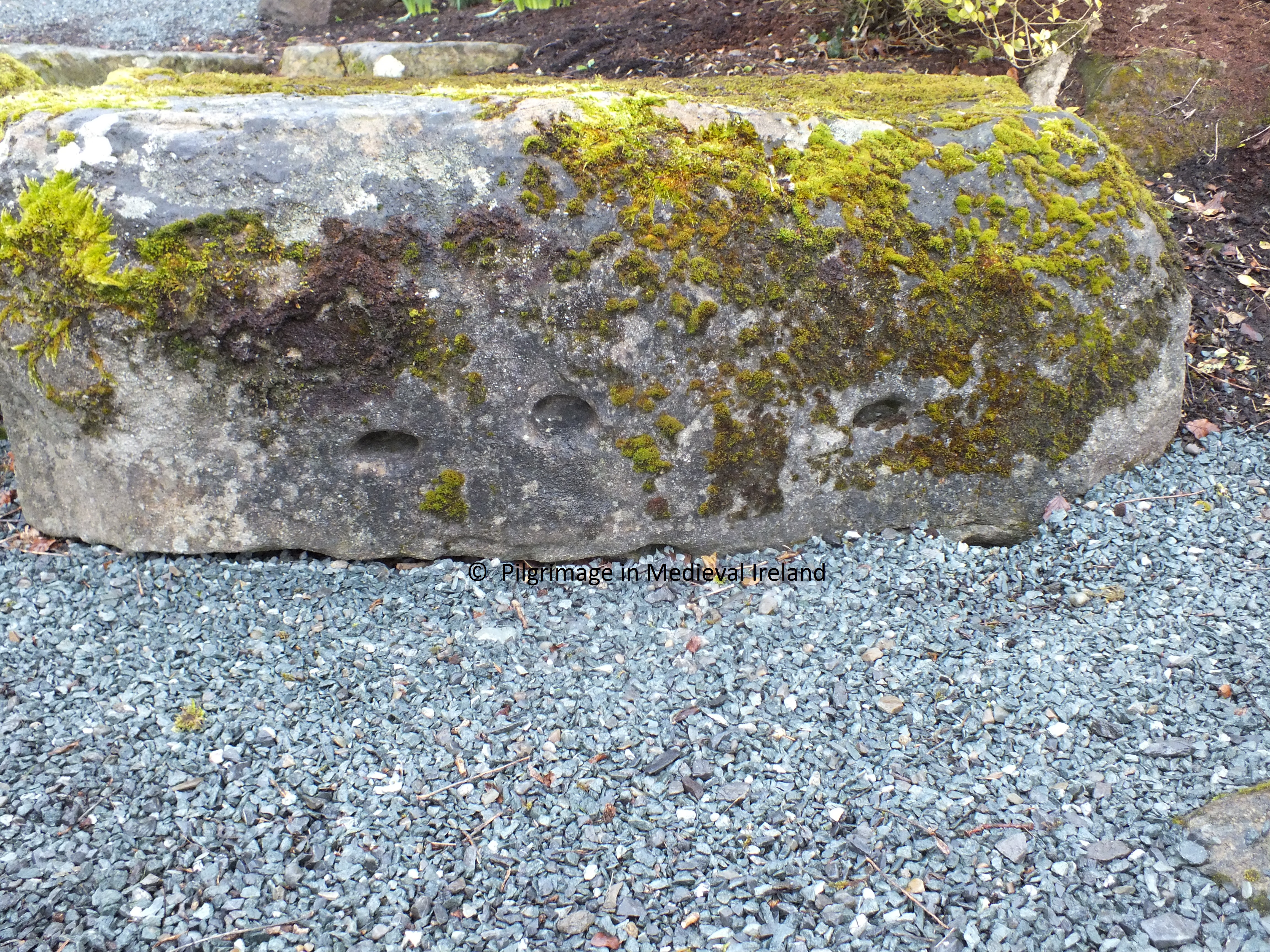
Tradition  states the well was  created by the saint. A large boulder  close to the well  has  three small holes/depressions in its side which tradition holds were created by St Patrick toes and are known as St Patrick’s footprints.  It is very interesting that FitzGearald in 1912  records the a stone known was St Patrick’s foot marks a short   distance  to the northwest in the field beside St Patrick’s graveyard (see map above).

 About a quarter of a mile up “the Glen,” through which the little stream flows, above the churchyard, and close to a sheep-dipping pool, there are some large boulders of a course brown kind of granite, in the side of  one which there are two indentations, which from time immemorial have been attributed to the Saint, and are called St Patrick’s Foot-marks’. Fitzgerald goes on to say local people said Patrick   “threw a lep” from the Blessed Well to this boulder. A few perches further up “the Glen”.

20130324_102940 - Copy

Image of St Patrick’s stone taken by Lord Walter FitzGerald. Note the X marks the spot of the foot prints. (J.K.A.S, 97).

Today a rock with St Patrick’s foot steps is located beside the well. During the landscaping this rock was exposed  as were several other similar boulders but there was no suggestion  that the boulder with the toe print’s  was moved to its present location. From talking to local people it was exposed but not moved. One of the boulders has a bowl-shaped depression, which looks like it was made by a chisel. It looks very similar to a bullaun stone but to me it looks quiet modern.   Some local people I spoke to  told a story  that St Patrick jumped from the rock and when he landed the holy well was created.

DSCF1001

Boulder at St Patrick’s well with depression known as St Patrick’s footprints

It is not unusual for there to be several version of the an origin tale for a holy well . I also came across another version in the article on Holy wells of County Kildare.  The author Patricia Jackson records a version by Mr John O’Brien in 1979

Tradition has it at on St Patrick’s way to Tara after landing in Co. Wicklow he camped at the foot of Mullaghmast. Some of the local chieftains were converted to Christianity and asked St. Patrick to bless the nearest well as was the custom – this  being Glashealy well.

St Patrick’s Day Pilgrimage

People visit St Patrick’s well throughout the year but the main  day of devotion for pilgrims is the feast of St Patrick.   The Patrick’s day pilgrimage attracts a large crowd. According to local man Tommy Hurley in the 1950’s on St Patrick’s day  a band made up of local people would gather at Grange crossroad and march in a procession  (followed by other  local people)  to the well . Then a football match used to be  played in the field beside the well but  over the years the tradition died  out.

DSCF1010

Pilgrims at St Patrick’s well

In recent years a man named Jack O’Connor who is since deceased would play some hymns on the  pipes before the annual service began.

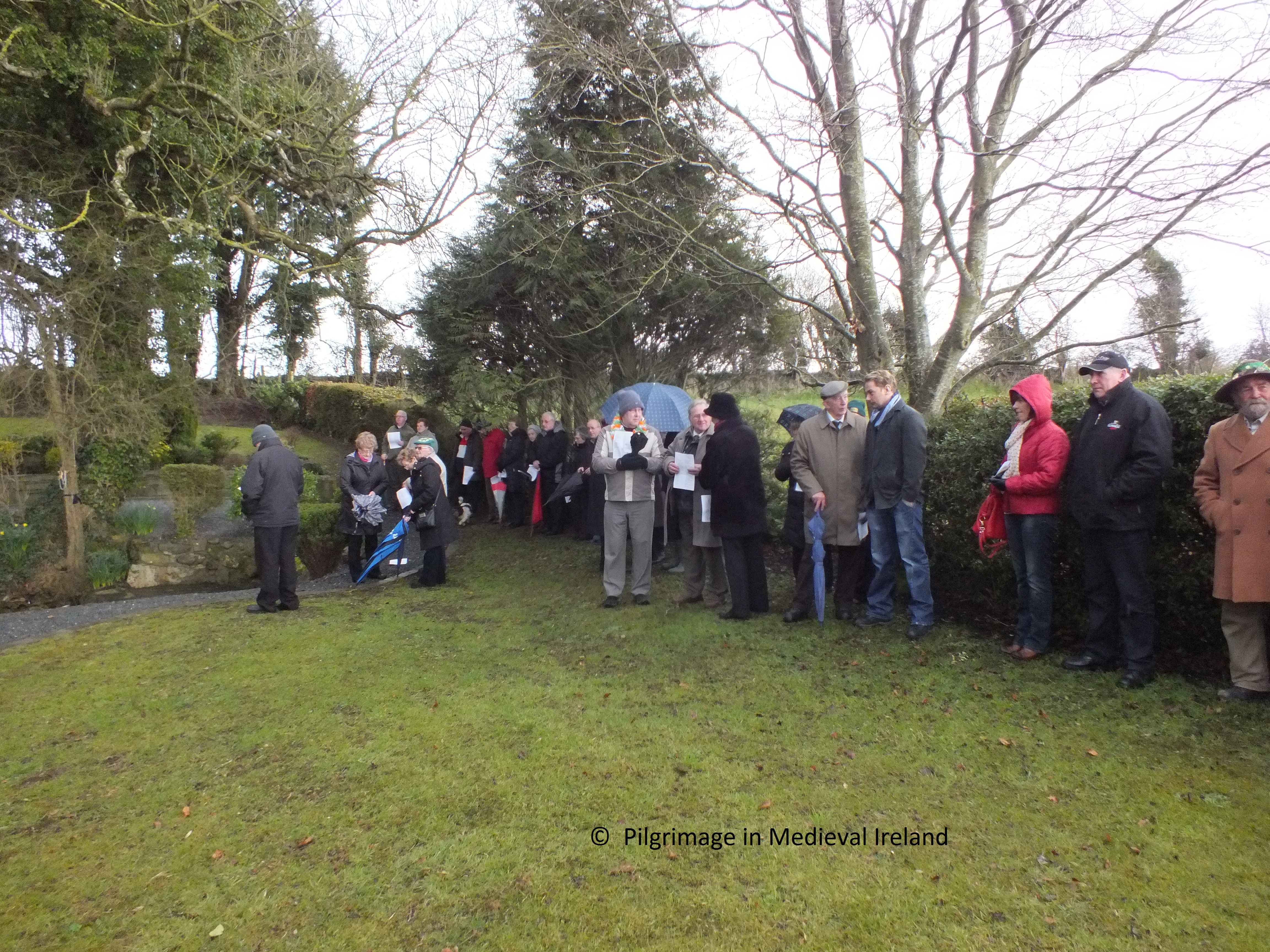
This years pilgrimage was on a very wet and cold day. Despite the weather  well over 60 people turned out to honor St Patrick. I was told that in fine weather crowds of over 100-200 people could be expected. Many of those who arrive were wearing the traditional shamrock.

DSCF1029

Pilgrim wearing the shamrock

Shamrock is worn on St Patrick’s day all over Ireland as  tradition holds that when converting the Irish to Christianity Patrick explained the mystery of the Holy Trinity to the people using the shamrock plant whose leaves are clustered in threes. So much as St Brigit’s cross is a symbol of Brigit , the shamrock represents St Patrick.

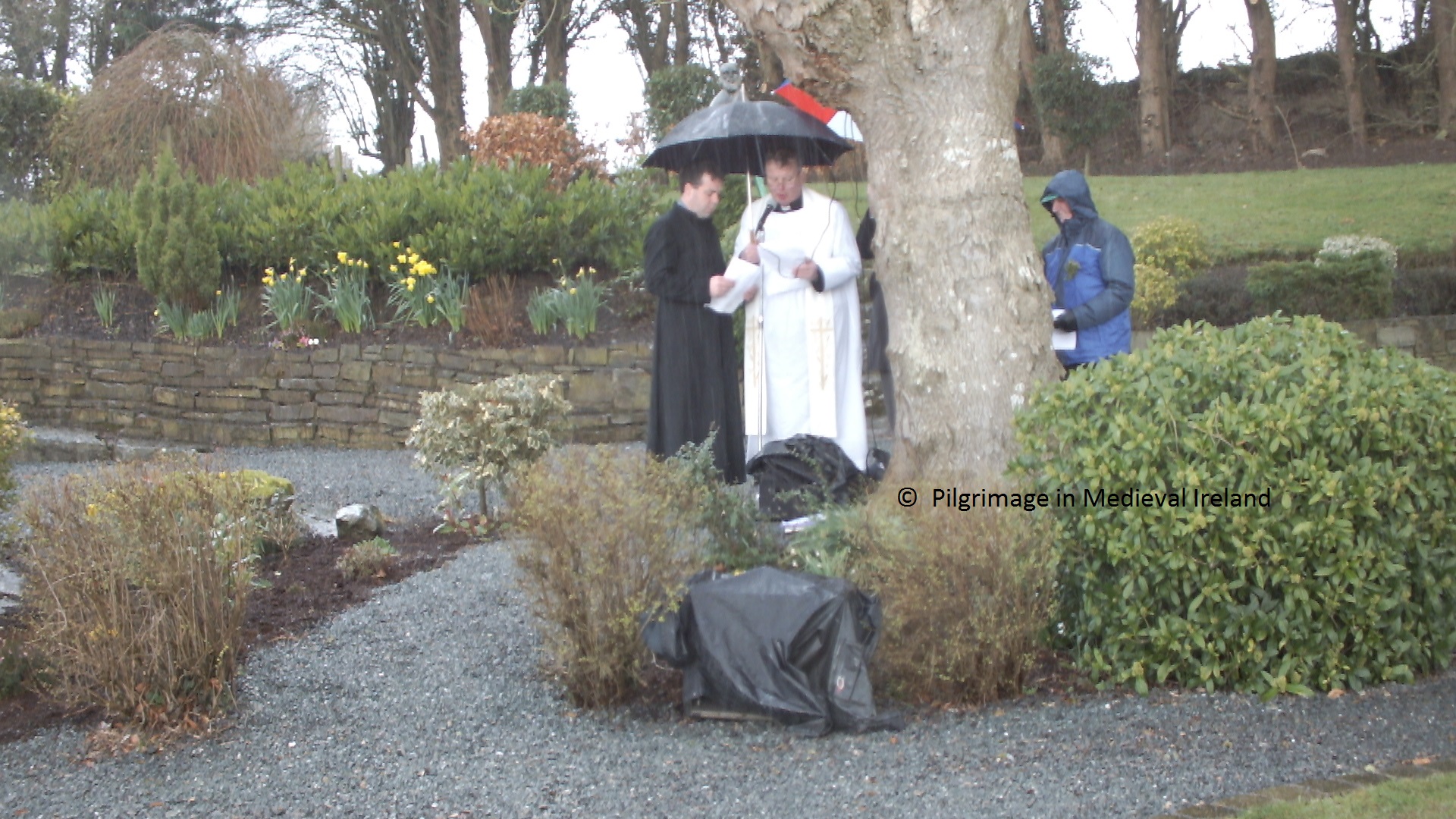
The people of the area celebrate St Patrick’s day with an  Ecumenical Service at the well and people from all denominations attend and pray together. The service  began at 3 o clock and was led by Rev Isaac Delamere and Fr Tim Hannan.

DSCF1019

Fr Tim and Rev Isaac shelter under an umbrella during the service

Despite the sporadic heavy showers and occasional hail stones everyone was in good spirits. Prayers and hymns were sung.  The prayer St Patrick’s Breast Plate  was recited in Irish by Tommy Hurley.  A poem was recited by  Louise Plewman the daughter of T.P. Plewman  the farmer who owns the land the well is on. This poem was written by her grand-uncle Tom Plewman.  It is a tradition that each year a member of the Plewman family recite this  poem each year.

Your St Patrick is a holy man

With Churches and Cathedrals,

Catholic and Protestant;

Your St Patrick is a learned man

With colleges and schools,

Green and red;

Your St Patrick is a healing man

With hospitals and homes

For sick and dying;

Your St Patrick is a pilgrim

Claiming his own Purgatory

May God and Mary and St Patrick be with you.

My St Patrick is a gentle man

Scarcely four foot tall,

Carved in stone, flat faced,

In simple Celtic style;

He stands alone.

His church is but a few square yards

Of grass rock and shrubs,

With healing water from his well

Offering peace to all without.

May God and Mary be with him.

There are no set rounds at the well. Before and after the service people went to the well and drank  its waters. Being a spring the water is crystal clear and is said to have curative powers.

DSCF1039

Pilgrims getting water from the well

Conclusion

Despite the harsh  weather this was one of the nicest and intimate pilgrimages I have attended. On this special day St Patrick brings all the local communities  together and there is a real sense of pride in the well and St Patrick’s connection with the area. The local area is steeped in history  and I hope people continue to use and take care of this very special well.

© Louise Nugent 2013

Acknowledgements

Many thanks to Tommy Hurley, John O’Donovan and T.P Plewman for  information on the well. Also Sharon Greene for all her help and for having the foresight to  bring a large umbrella.

References

Greene, Miss,  1899-1902. ‘County Kildare Folk-tales. Collected from the narration of Tom Daly.’ Journal of the County Kildare Archaeological Society, Vol. III, 368-71

FitzGerald, W. 1912-1914. ‘Glassealy and its tenants. With the career of Walter “Reagh” FitzGerald.” Journal of the County Kildare Archaeological Society, Vol. VII, 83-108.

Jackson, P.  1980. ‘ The Holy Wells of County Kildare’  ,Journal of the County Kildare Archaeological Society   Vol. XVI, 133-61.

St. Patrick: A Man on a Mission

So today is the feast day of St Patrick, Ireland’s national saint. It is incredible to think that celebrations in the saints name are taking place all over the world today.  This post was written by  Terry O’Hagan  blogger and archaeologist . Terry is near to completing a PhD thesis on St Patrick at the school of Archaeology at UCD and  is one of the country’s experts on the saint.  Many thanks to Terry for taking the time to write this post and share his knowledge of the saint with us.

St. Patrick: A Man on a Mission

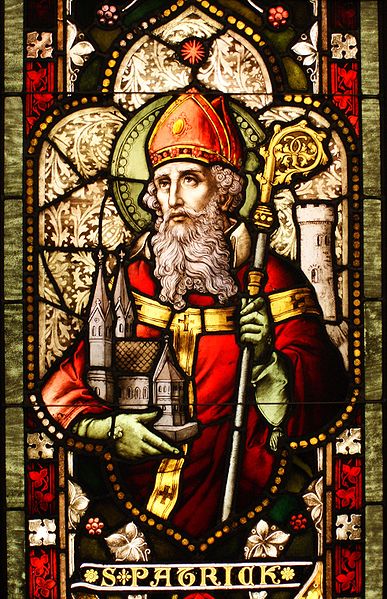
St. Patrick is a man of many faces: missionary, mascot, legend, figurehead, saint, sinner, superhero and saviour. Over the 1500 years or so since his death; successive generations have chosen to remake and remodel his life according to ever-changing concerns and  climates. Ongoing adaptation, along with the passing of the centuries, has resulted in a gradual obscuring of the historical man beneath the heavy presence of later legend. Such is the level of later additions, some modern audiences are even sometimes surprised to discover that he actually existed at all.

He most certainly did, though. We know this because he left behind two surviving documents (the Confessio; and the Letter to the Soldiers of Coroticus) which together form the basis for all subsequent understanding and appreciation of his life and work. Later medieval and early modern accounts of him are products of their own times; and as interesting as they are, they can tell us practically nothing about the man himself. The only certainties that we have for the historical Patrick are those which can be found within his writings; the earliest documents known to have been written in Ireland.

Patrick (or Patricius, as he called himself) was born into a middle-class family somewhere in western Roman-Britain at the end of the fourth century, or perhaps early fifth century. His says that his father was a deacon and a decurion; while his grandfather was a priest. They owned a villa/estate that was large enough to have slaves. In the earliest surviving copy of his Confessio (within the Book of Armagh) his home town is given as Bannavem Taburniae. Scholarly consensus is that this is a textual corruption; and the original name is more likely to have been rendered as something like Banna Venta Burniae. No solid identification has ever been made of such a location; but most scholars would tend to agree that it was somewhere near the western coast of Britain.

Patrick seems to have led a normal, carefree life (apparently without any firm Christian belief, despite his families occupations) until the age of 16, when he was captured by slavers, transported to Ireland and sold to a man who put him to work tending animals. Contrary to later legend; there is no hint within his writings that this was Slemish, Antrim, or anywhere else in north-eastern Ireland. In fact, it was almost certainly somewhere in Co Mayo. Patrick does not expressly say what kind of animals he worked with, but he does use a term that could equally apply to cattle, or sheep. Given that he says that he was out on mountainsides in all weathers; it is likely that he would have worked with several different animals, depending on the season.

From a Romano-British perspective, Ireland was viewed as lying at the edge of the known world; a wild and dangerous place beyond civilisation. The shock of kidnapping and enslavement seems to have had a profound effect on Patrick. Amidst the extreme hardship and lifestyle, he underwent an intense and personal religious experience which he credits as helping him to survive 6 years as a slave. Towards the end of this period; he tells us that he had several dreams concerning his escape and return to his homeland. Eventually running away from his captors; he says that he travelled across the entire width of Ireland, some 200 miles, in order to reach a port. There he found passage on a ship and following initial refusal, was eventually taken on board.

The next phase of his life is hard to assess; the relevant portions of his texts are obscure in their arrangement and subject matter. When Patrick was writing them, he was doing so with motivations other than simple linear narrative; seeking to frame his movements and events within ecclesiastical and biblical frameworks. What is suggested within though is a gap of a few years following his escape from Ireland, before his eventual return to his parents and home. He may have taken ecclesiastical orders during this time, or perhaps later; there is no definitive indication in his own words. After some years again, within Britain, he tells us of his famous dream; where he received a call from ‘The Voice of the Irish’. In his dream, he reads the start of a letter entitled the same, and hears the voices of people in Ireland who knew him as a slave in his youth. This is the only other occasion where he gives a placename in Ireland: that of Silva Vocluti, the Wood of Foclut (Near Killala, Co. Mayo). Modern scholarship tends to agree that his phrasing of details indicate that this was the location of his earlier captivity.

Despite being very personally affected by the dream; Patrick then alludes to even more years passing. He tells us that he was too afraid to put into action, what had apparently already started within his mind. During this time (at least several decades) he seems to have been ordained and sufficiently advanced to an age where it was possible for him to have been considered a bishop. Again, this period is very poorly rendered in his writings; but he alludes to several travels outside of Britain during this time and elsewhere speaks of peoples and ecclesiastical practices of Christians within Gaul (France). It seems likely that he may have spent a little time in a monastic environment there. Although he doesn’t expressly state it, he insinuates an admiration of monastic type lifestyles within his later Irish converts, something he may have experienced in Gaul.

At some stage in his middle years, he decided to come back to Ireland. His subsequent mission seems to have been viewed with some suspicion by fellow British Christians; and he spends a lot of his writings defending his actions. It must be remembered that at this stage of early Christianity; large-scale efforts to convert pagans was almost unheard of within Romanised provinces of Europe. The very idea of attempting to do so in Ireland, outside the frontiers and untouched by Roman administration, would have been considered highly dangerous and illogical to a fifth century Christian mindset. Many would have no doubt imagined that his efforts would have been short-lived and his life expectancy even shorter. Patrick’s survival and relative success seems to have surprised many; and his actions and methodology appears to have been questioned by some.

Patrick of course was a perfect candidate for attempting such a mission. His years in captivity left him more knowledgeable than most concerning insular Irish society. He spoke the language and had first-hand experience of the cultural habits and makeup; as well as an awareness of the workings of the hierarchical social structure of Ireland. Although he doesn’t give much details concerning his methods; he does hint at certain aspects; such as protection payments and hiring the sons of chieftains as royal bodyguards. He stresses the need to appear ‘above board’ when dealing with pagans at all times; for fear of retribution on his mission and converts.

The people he focused on were both high and low status. He mentions a daughter of a noble as well as female slave and children raised from an early age; implying that he worked at many different levels of society. Clerics ordained by him are referenced several times, illustrating the likelihood that his converts included men of similar varied classes. Taken altogether, it appears as if Patrick was focusing on establishing small communities of converts, along with a native clergy to tend them.

Patrick seems to have been active in extremely remote regions. He states that he had gone where nobody had ever brought the gospel to before.  Scholars have seen this as reflecting an awareness of other missionaries or Christian activity elsewhere in the Island; but he makes no further references to any such people. He was certainly in touch with a wider network of Christians both in Ireland and in Britain. The surviving documents testify to this; being open encyclical type letters intended for multiple recipients on each island.

Contrary to later legend, he makes no claim to have converted the entire country. Indeed, at the end of his documents, he appears to hold a rather pessimistic view on the future success of his converts. He considered their situation within Irish society as being precariously balanced to say the least; so much so that he was afraid to leave them for long periods. This fear was horribly realised when a group of recent converts were attacked by slavers. Many were killed and many more enslaved and sold on. Patrick’s second document, the Letter to Coroticus is a passionate plea to both free them and gain recognition from fellow British converts. We have no indication if it was ever successful. The last we hear of the historical Patrick (in his second document) is a man in his later years who expects to be killed at any moment; despairing for the safety and souls of his fledgling converts.

Within three-to-four generations of his death; Christianity had made serious inroads into Irish society. Latin literacy and the earliest strata of Irish monasteries were already established and in full flow. Within another generation after that, Irish Christianity was producing people of the calibre of Columbanus who went to Europe. Famously popular for his learning and piety in Merovingian Gaul; Columbanus was a man who would write to the Pope of the day (using floral Latin, with some choice Greek thrown in for good measure) in order to (politely) suggest that he was wrong on certain ecclesiastical matters!

I’d like to think that Patrick would have approved.

If you want to read more of Terry’s writings check out his blog http://voxhiberionacum.wordpress.com/

Further Reading:

De Paor, L (1993) (Ed. and trans.) Saint Patrick’s World. Blackrock and Dublin: Four Courts Press.

Patricks Confession (Trans: Padraig McCarthy); available at: http://www.confessio.ie/etexts/confessio_english

Patricks Letter to the soldiers of Coroticus (Trans: Padraig McCarthy); available at: http://www.confessio.ie/etexts/epistola_english#01


An unfortunate pilgrimage to Croagh Patrick on St Patrick’s day in 1113

Today is the eve of the feast of St Patrick. As the country gets ready to celebrate our national saint with street parades, parties,  turning buildings green and the odd pilgrimage, people are carrying on  a tradition of  venerating St Patrick that dates back to  the 6th-7th century, if not before.  Although many modern celebration of the saint are  secular in nature the  relics of medieval  devotion  to Patrick are to be found  across the Irish  countryside, where  rocks, stones, holy wells, mountains,  islands and roads are dedicated to the saint.  Many of these holy places  are still visited today on the saints feast day  and at other times during the year.

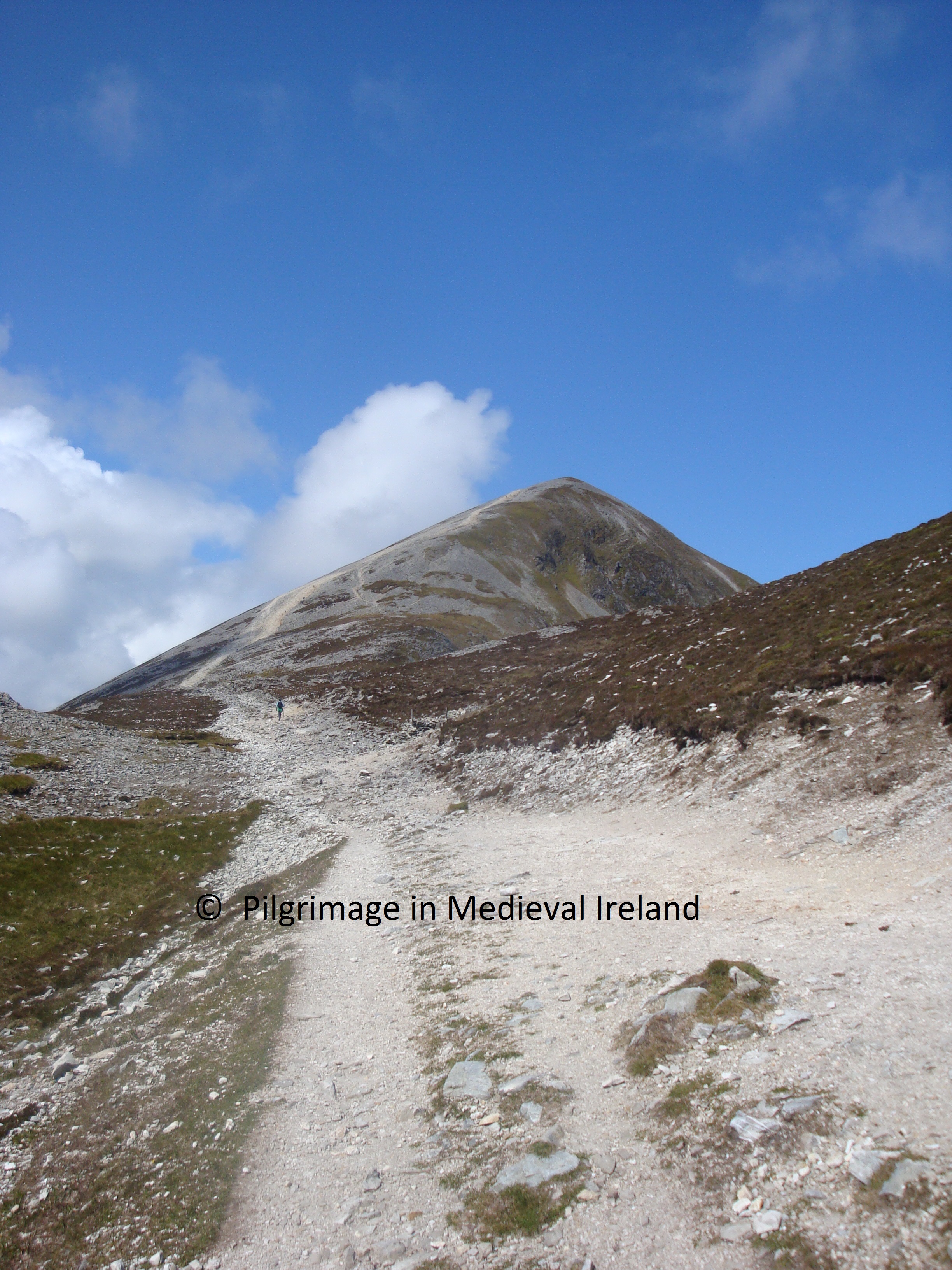
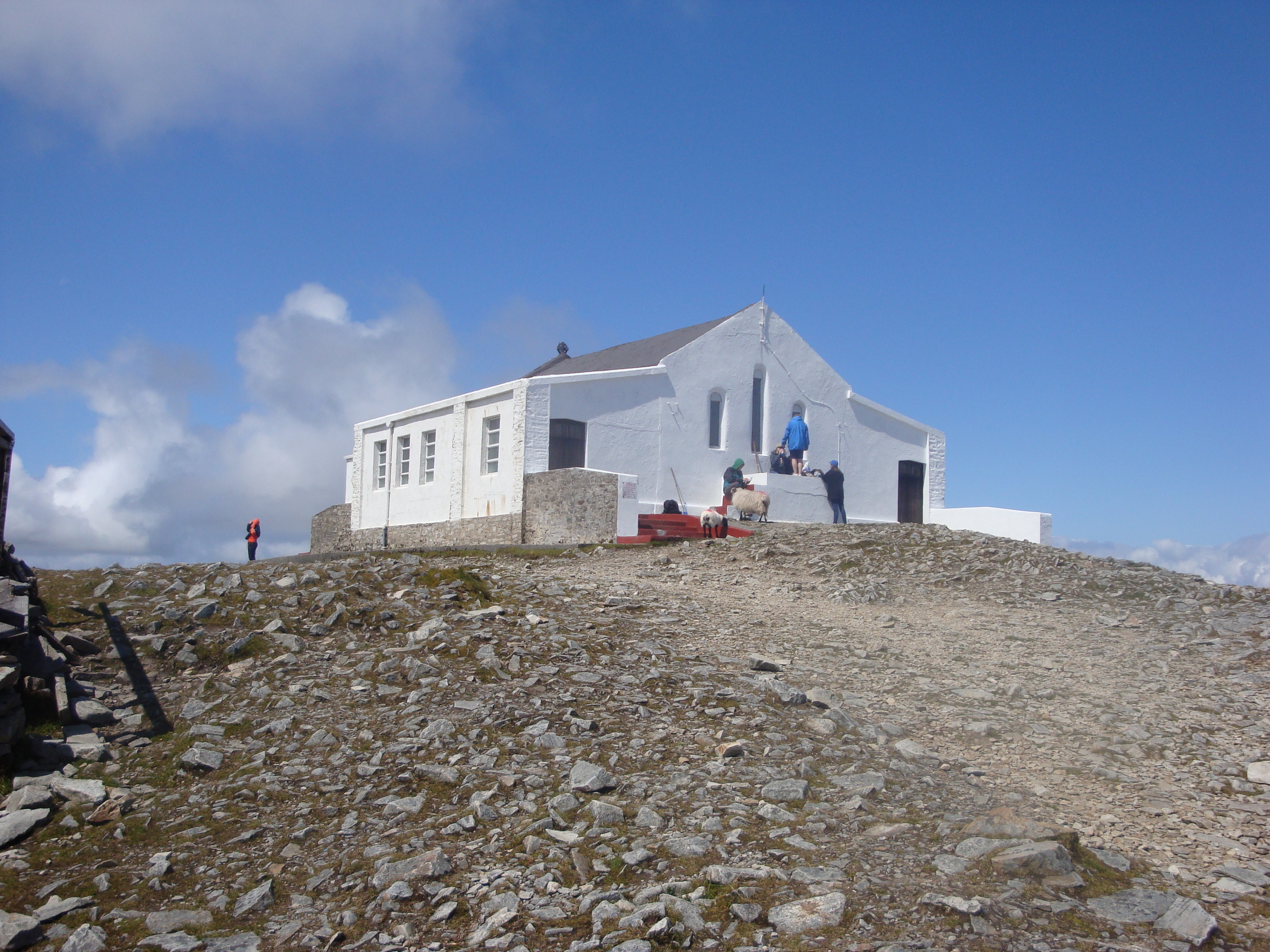
Pl. 9 The Casán Phádgaig as it approaches the summit of Croagh Patrick (13)

Cone of Croagh Patrick

One of the earliest medieval accounts of pilgrimage in honor of  St Patrick  concerns pilgrimage to the holy mountain of Croagh Patrick,  in Co Mayo. Legend had it the saint fasted here for 40 days and nights and  banished all the snakes and demons from Ireland.  We are told that in 1113  a  group of unfortunate  pilgrims  suffered a terrible misfortune, when they were struck by lightning while praying on the summit.

Pl.3 Modern church on summit of Croagh Patrick

Modern Church on Summit of Croagh Patrick Taken by Helen Duff

The  annals for the year AD 1113 (AU, AFM, ALC) recount

A ball of fire came on the night of the feast of Patrick 17 March on Cruchain Aighle (Croagh Patrick), and destroyed thirty of those fasting (AU). (see Pilgrims being stuck by lightning at Croagh Patrick by Sarah MacDowell)

Unfortunately we are told no more details and we can only imagine  how the events unfolded.  Croagh Patrick is a 764 meters (2,507 ft) above sea level and its very exposed spot.  It is a very dangerous place in  bad weather. Each year  people fall and injure themselves.  There are also recorded incidents of people getting hypothermia.

According to the annals the pilgrims were fasting and performing a night vigil on the summit of the mountain. Archaeological evidence suggest there was  a small church similar to Gallarus on the summit as early as the 8th century ( to small to hold a large number of people). Most of the pilgrims were probably outside praying when a lightning storm came upon them. Humans or animals struck by lighting may be killed or suffer sever injury due to electrical burns.We do not know how many people were present that night but  the weather conditions must have been extreme  to result in the death of 30 people (although it is possible these figures are exaggerated).   There may also have been many more injured. To get help  those who were not injured would have had to climb down the mountain a good 2 hours walk from the summit of the mountain to the base.

???????????????????????????????????????????????????????????????

Pilgrims climbing Croagh Patrick on a wet day in Summer

This tragic event did not deter further pilgrimage to Croagh Patrick  and  Jocelyn’s twelfth century Life of St Patrick which records ‘That many are accustomed to spend the night awake and fasting on the mount’.

In the centuries that follow there was a marked shift in recorded dates of  pilgrimages away from St Patrick’s day to the summer months when the weather was better. Today  very few people  climb the holy Mountain on St Patrick’s day  and modern pilgrimage to the Mountain focuses on the summer months, last Friday of July, last Sunday of July, the 15th of August when the weather conditions are more favorable.

© Louise Nugent 2013

Pilgrimage to St Gobnait at Ballyvourney, Co. Cork

Saint Gobnait: first impressions

I first came across St Gobnait when I wandered in to the Honan Chapel  around 14 years ago.  The Honan chapel is  very  beautiful  church located on the campus of University College Cork. It has many splendid stained glass windows by Harry Clarke, who in my opinion was Ireland’s finest stain glass artist.

As I wandered around the chapel I looked up at one of the many windows which depicted various Irish saints and there was Gobnait. Her window is one of the most beautiful depictions of a saint I had ever seen. The window shows  Gobnait of Baile Bhúirne/Ballyvourney adorned in blue robes and surrounded by bees, at her feet  are two men with   fearful expressions.  My curiosity immediately demanded that I find out who this saint was, where she came from and most importantly what was the connection with the bees?

http://www.flickr.com/photos/feargal/6388195535/

Stain glass image of St Gobnait in the  Honan Chapel . Taken by Fergal of Clabbagh (http://www.flickr.com/photos/feargal/6388195535/)

Who was Gobnait and where did she come from?

Much of what we know about Gobnait comes from folklore. Unlike many other Irish saints, Gobnait’s  life story was not written down during the medieval period. Tradition  and  links with  St Abban (also associated with Ballyvourney) suggests  she lived during the 6th century.  Today the main centres of devotion to Gobnait are  on  Inis Oírr/Inisheer ( one of  the Aran Islands), Dún Chaoin in West Kerry, Kilshanning, Co. Cork  and Baile Bhúirne/Ballyvourney near the Cork/Kerry border, where the local people venerate the saint on her feast day,  the 11th of February. Evidence of the saint’s cult  is also found in the dedications of churches and holy wells in the counties of Cork, Kerry, Limerick and Waterford.

There are two  folk versions of the  saints life. One  tells us that Gobnait was born in  Co Clare and due to a family feud fled of to the island of Inisheer where she founded a church. One day an angel appeared to her  and told her to head inland and  to find the  place of her resurrection. She was told she  would know this spot as it would be marked by  the presence of 9 white deer. She travel south in search of  this place and her  many stops  are marked by  churches and  holy wells dedicated to her, such as the medieval church at Kilgobnet,  Co Waterford.

At various stages of her journey Gobnait met  with white deer of varying numbers but it was only when she reached Ballyvourney that  she found the nine deer grazing  and it was here she  ended of her journey. In a Kerry version of her life, Gobnait  was said to be the daughter of a pirate who came ashore at Fionntraigh (Ventry, Co. Kerry).  Once ashore an angel appeared to her and  told her to go forth and search for the site  of her resurrection  and to travel on until she saw nine white deer grazing, which she did in Ballyvourney.

I will post more in the coming months about  Gobnait’s journey around Ireland and the other sites associated with her.  This post  will focus on the  evidence of  pilgrimage at Ballyvourney.

Metal working and bees

Gobnait was likely the patron saint of iron workers. The hypocoristic (pet name) form of her name Gobba come from Gabha which means smith.  Excavations  St Gobnait’s House/Kitchen at her shrine in Ballyvourney  in  the 1950’s,  prior to the erection of the modern statue of St Gobnait, revealed evidence  of iron working (smithing and smelting).

Gobnait was also the patron saint of bee keepers and kept her own bees.  There are a number of  legend  in which she unleashes her bees to attack enemies. In one  story soldiers came to Ballyvourney and stole livestock, as they left the village the saint  let loose her honey-bees upon them.  Another version of this tale has a band of robbers stealing her cattle and she sends her bees  after them and they promptly return the  cattle. It is this legend that inspired the Harry Clarke window. Many modern depictions of the saint  associate her with bees such as the  statue at her shrine in Ballyvourney by  Séamus Murphy.

20130211_152850

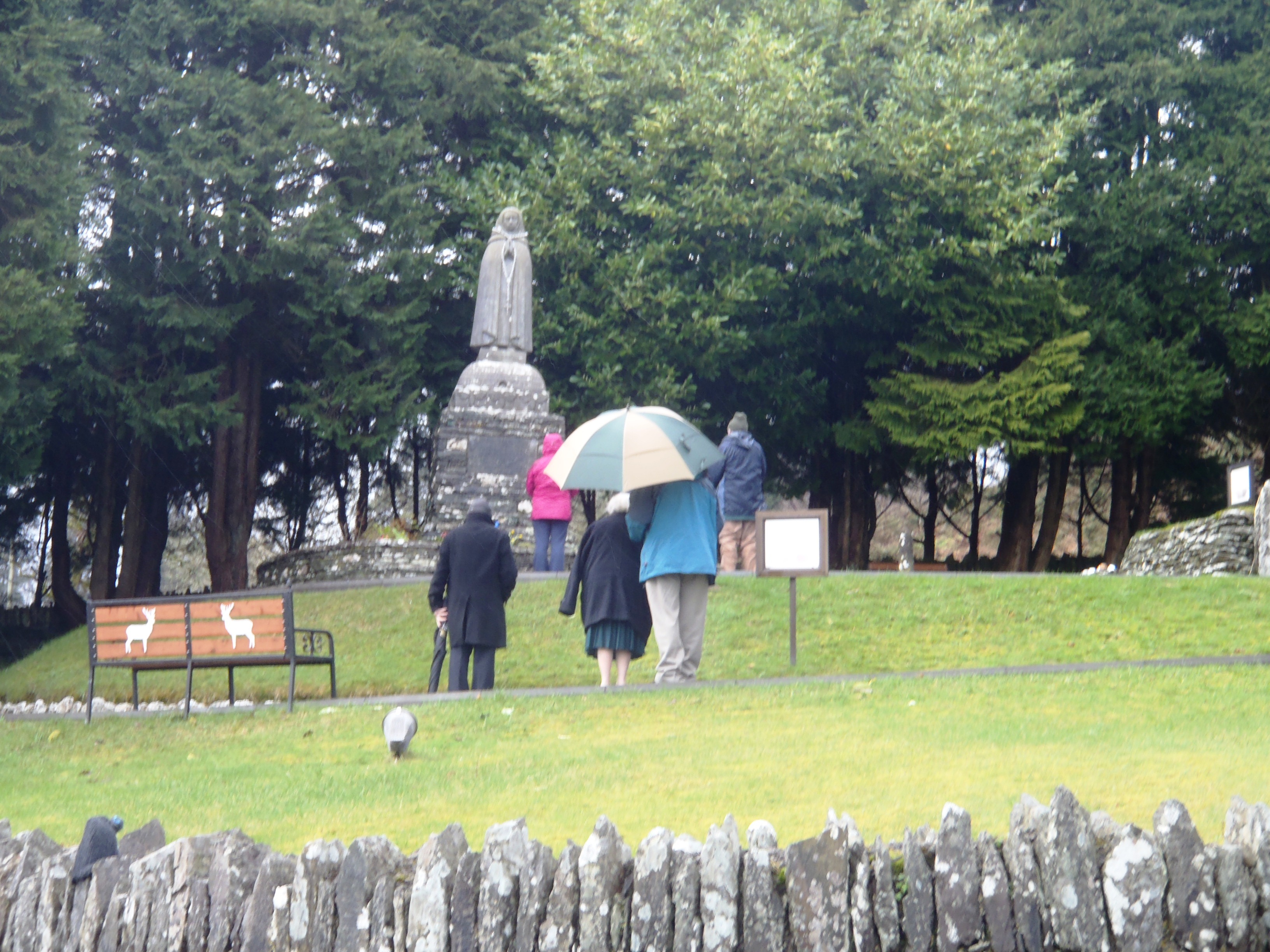
St Gobnait in the rain. Statue of St Gobnait created by Seamus Murphy in the 1950s.

Medieval Pilgrimage at Ballyvourney

Gobnait is not the only saint associated with Ballyvourney. St Abban had established a monastery here prior to her arrival. Abban gave her land and  helped she established a nunnery here. The traditional  site of Gobnait’s nunnery is the old graveyard and medieval parish church known as Teampall Ghobhatan ( the church of Gobnait).   I will come back to St Abban and his links to Ballyvourney in another post.

There is  little evidence  to suggest when pilgrims first began to come here. Unfortunately the archaeological and historical sources tell us nothing about pilgrimage prior to the 17th century.  Given the popularity of the saints cult  in the 17th century it is likely pilgrimage  likely  began many centuries prior to this date.

The silence of the historical and archaeological record concerning pilgrimage at Ballyvourney, should not be seen as  evidence that pilgrimage was not taking place in the early or later medieval period. Pilgrimage is seldom mentioned in the historical records and the act of pilgrimages  in most cases leaves little physical trace behind.

The earliest written reference to pilgrimage at Ballyvourney dates to the early 1600’s.   In 1601 Pope Clement VIII granted a special indulgence  of 10 years to those who, on Gobnait’s  feast day, visited the parish church, went to Confession and Communion and who prayed for peace among  ‘Christian princes’ , expulsion of heresy and the exaltation of the church’.  It is clear from this and other 17th century references,  such as the  poetry  of Dáibhidh Ó Bruidar, the writings of Don Philip Ó Súilleabháin and Seathrún Céitinn, that Gobnait’s  cult  was strong and popular during this period.

In 1603 Donal Cam Ó Súilleabháin during  his flight from Béara  stopped at Ballyvourney with his men to pray at Gobnait’s shrine, to offer gifts and to ask for her protection. The importance of Gobnait’s cult  is also attested by the  visited of  the Papal Nunico Rinuccini   in 1645 (Ó hÉaluighthe 1958, 47).

Devotion to Gobnait is again mentioned in the writings of Sir Richard Cox  in 1687,  who stated

Ballyvorney, a small village, considerable only for some holy relick (I think of Gobbonett) which does many cures and other miracles, and therefore there is great resort of pilgrims thither.

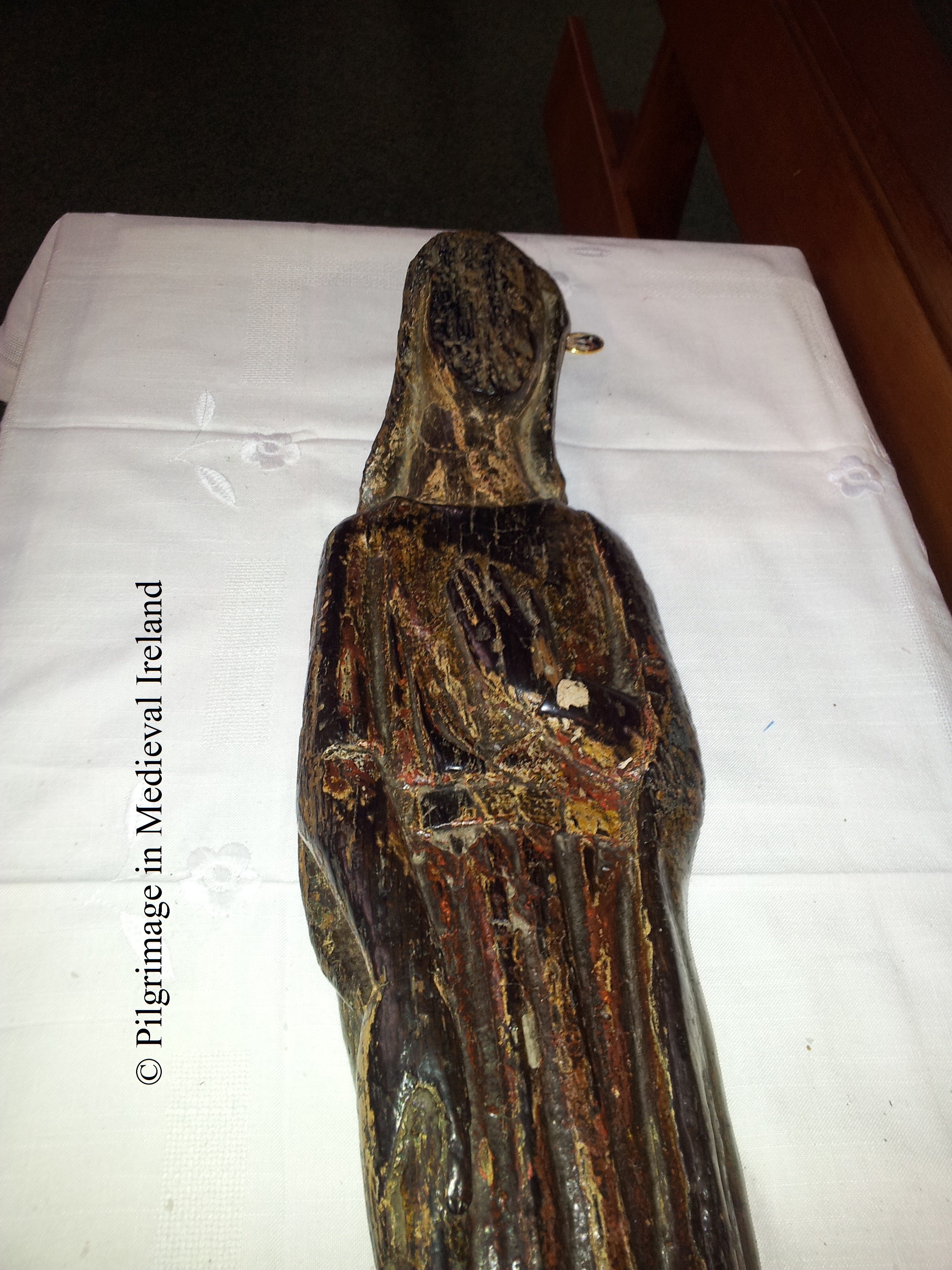
The relic  described by Cox is  a small  13th century medieval statue of St Gobnait, now in the care of the parish priest of Ballyvourney.

20130211_132934

Medieval statue of St Gobnait

Gobnait’s statue was again mentioned in 1731 when it is noted that

this Parish is remarkable for the superstition paid to Guibnet ‘s image  on Gubinet’s Day.

The literary sources suggest that  the hereditary keepers of the shrine and relics of Gobnait (the statue) were the  O’ Hierlihys family. Many of the relics of Irish saints  survived the reformation as they were kept  by individual families and passed down from generation to generation. These families were descendants of the family of stewards, or airchinnaigh, who controlled monastic lands and were often remunerated with a specific plot of land and fees when the relic was used. During the 18th & 19th century many of these families  fell on hard times and sold the relics some have been lost but thankfully many are now in the National Museum of Ireland. The statue of Gobnait continued to be cared for by the O’Herlihy family until 1843 when the statue was given into the care of the parish priest and it remains  in the care  to  church of Ballyvourney to this day.

John Richardson, a protestant gentleman with a low opinion of pilgrimage, gives an account of the 18th century pilgrimage at Ballyvourney in his book The Great Folly of Pilgrimage.  His account suggests that  devotion was focused on the aforementioned statue of St Gobnait  and makes no mention to any of the stations visited by modern pilgrims.

An Image of Wood, about two Foot high, carves and painted like a Women, is  kept in the Parish of Ballyvourney, in the Diocese of Cloyne, and the County of Cork; it is called Gubinet. The pilgrims resort to it twice a year, viz on Valintine’s Eve and on Whitsun Thursday…. it is set up for adoration on the old ruinous walls of the church. They go around the image trice on their knees saying a certain number of Paters, Aves and Credos. Then following prayer in Irish ‘A Gubinet, tabhair slan aon Mbliathan shin, agus sábháil shin o gach geine agus sórd Egruas, go speicialta on Bholgach’ and they conclude with kissing the idol and making an offer to it every one according to his ability, which generally amounts in the whole to 5 or 6 pounds.  The image is kept by one of the family of the O’ Herlihy’s and when anyone is sick of the small-pox, they send for it and scarifice a sheep to it, and wrap the skin about the sick person, and the family eat the sheep. But the Idol hath now much lost its Reputation, because two of the O Herlihys died lately of the Small pox. The Lord Bishop of Cloyne was pleased to favour me with the narrative of his rank idolatory, to suppress which he hath taken very proper and effectual methods (Richardson 1723, 70).

He goes on to say

Pilgrims kissed the statue, rubbed aching limbs to it, tied handkerchiefs about its neck, to be worn afterwards as a preventative against sickness (Richardson 1723, 71).

Richardson’s writings are very anti Catholic and written at a time when pilgrim was viewed as superstitious and backward by the established church, despite his negative tone his writing provides one of  the most detailed of the early accounts of pilgrimage at Ballyvourney.   During the  18th and 19th century pilgrimage was not just under pressure from the established church, many Irish pilgrimages were suppressed by the Catholic clergy  but thankfully the efforts of the then Bishop of Cloyne  to eradicate the pilgrimage at  Ballyvourney were in vain.

The modern pilgrimage at Ballyvourney on the saint’s feast day

I have been to Ballyvourney  on a number of occasions,  but this year was the first time I attended a pilgrimage. I arrived in the village around 10.30 am.   I was  told by some people i meet that was mass in honour of Gobnait, would be said at   11.30am  &  16.00pm  and that a rosary would be said at the shrine at 15.00 pm.  I was also informed  that people  visit the statue of Gobnait and  the shrine &  holy well to do their ’rounds’ (pilgrim prayer) throughout the day .

I headed first to the church to see the medieval statue of St Gobnait. The statue is a treasure possession of the parish of Ballyvourney and it is fascinating to think that it has survived here in this parish since the 13th or 14th century. Made of oak, it is approximately 27 inches/ 68 cm tall. The back is hollowed out from the shoulder to the feet. The face is now very worn and traces of  paint can be seen  on the front of the statue.  The folds of the saint’s dress and a belt are still visible. The feature of her face are now undiscernible but the details of her hands  (one hand is raised  to her chest and the other by her side) are clearly visible.

St Gobnait's Statue showing detail of hands

St Gobnait’s Statue, photo  showing detail of hands & robe

On the saint’s feast day the statue is displayed within the church. On the occasion of my visit it  was placed on a small table in the church in front of the altar.  A table with a large jar of colourful ribbons, key rings and booklets about Gobnait (all for sale) was located a few meters away  from the medieval statue in front  of a modern plaster statue of the saint.  People queued up and purchased fistful of ribbons and formed orderly lines to approach the medieval statue. The pilgrims armed with their ribbons (which they had brought with them or just  purchased) , were  no ready to  perform the ritual called St Gobnait’s measure. This is a practice  were pilgrims use the ribbons  to ‘measure’ the statue.

20130211_120807

Pilgrim’s taking ‘St Gobnait’s measure’ after mass in Ballyvourney church.

The ribbon(s) is held along the length of the statue and then wrapped around the neck, then the  waist and finally the feet of the statue. Some pilgrims make the sign of the cross when this is done, others pick up the statue and kiss it, while  others bless themselves with the statue.  The ribbon or in most cases ribbons are  then brought home and  used to ward off and to cure sickness.  Farmers often  placed  the ribbons in outhouses where there is livestock. As I sat in the church waiting for mass there was a constant line of people waiting to get to the statue. The scene reminded me of Richardson’s description  of pilgrims in 1723,  which tells of pilgrims tieing  handkerchief to the statue and then wearing them about the neck  as a preventative against illness.  It was fascinating to see that  modern pilgrims  are interact with  the statue in much the same manner as their ancestors almost 300 years before.  The church soon filled to capacity and a  mass was said in Irish.  There was a mix of people from within and outside the parish in attendance. Many  people had travelled some distance to get  here  and I heard one man say he came  that morning with his son from Killorglin in Co Kerry.

After  mass a new group of  people lined up  to visit the statue with their ribbons. I was told people would come throughout the day to visit the statue but the main burst of activity focused around mass times. When I passed by the church later at 16.15 the car park was again chock-a-block with cars.

Pilgrim stations at St Gobnait’s shrine.

A short distance from the village is St Gobnait’s shrine,  the other focus of devotion for pilgrims to Ballyvourney. As I mentioned above St Gobnait’s shrine is the traditionally held to be the site of St Gobnait’s nunnery and the burial-place of the saint. Throughout the year it  attracts pilgrims on a daily basis. The main peaks in pilgrimage are Whitsun, the feast of St Gobnait, on the 11th of February and an open air mass in July.

StGobnait'sair004

Aerial shot of St Gobnait’s shrine (taken from http://www.leevalleywalking.com/about.htm)

The landscape of the shrine is divided  in two  with  St Gobnait’s house, holy well and statue  separated from  the other stations by a  modern road.  During the course of my visit  I meet another  blogger  Richard Scriven  (Geography UCC)  who is currently doing PhD research  on the modern pilgrimage at Ballyvourney. For more details of Richard’s research check out his blog http://liminalentwinings.com/.

The day was  very cold with light to heavy showers but during the time I was here there was a constant  stream of pilgrims. Most  pilgrims  were  in  small groups of two or three and many were alone.  A small crowd gathered  at  15.00, for the rosary ,  in the area beside St Gobnait’s house.  Many of the people here who attended  the rosary  left afterwards perhaps to catch the 16.00 mass, while a small group remained to do the stations.

Pilgrim's at the Rosary  at Ballyvourney

Pilgrim’s  hiding from the rain during the recitation  of the rosary at Ballyvourney

Modern  information boards  are found  beside all the  pilgrim stations and detail the required prayers for each stations.
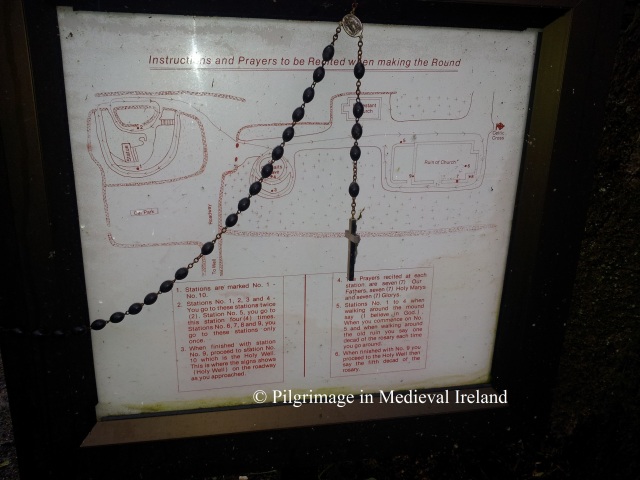
20130211_145224

One of the modern notice boards located at the shrine.

The  following details of the rounds is taken from the book  Saint Gobnait of Ballyvourney by  Bernie Donoghue Murphy written in c. 2007.

Pilgrimage begins in front of the  statue of Gobnait.  The  pilgrim recites  7 Our Fathers, 7 Hail Mary’s and 7 Gloria,  then walks clockwise ‘ ar deiseal’  around the outer path (around the periphery of the site) reciting the Apostles Creed. The practice of  pilgrims walking in a clockwise circuit can be traced back to early medieval times and  continued in post medieval and modern times.

???????????????????????????????

Pilgrims beginning their round  before the modern statue of St Gobnait.

At St Gobnait’s House (station 2)  the pilgrim recites 7 Our Fathers, 7 Hail Mary’s and 7 Gloria.  The pilgrim  walks clockwise around the  station reciting the apostles creed. I also saw people go inside the hut and walk clockwise around the interior and finish by marking a modern pillar with a cross.
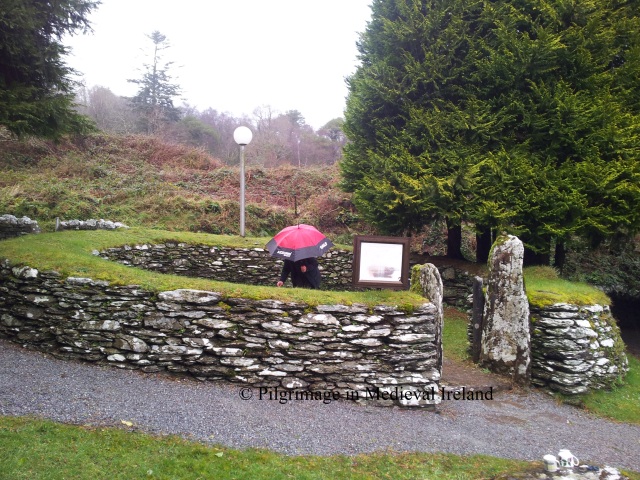
20130211_152925

Pilgrim within St Gobnait’s house marking the centre pillar with a cross.

This station  was in ruins  1950s. It was restored   following an  excavation of the site by M. J. O’Kelly  and rebuilt  to its current state. The results of this excavation suggests the structure was used for craft working in the early medieval period. Large amounts of slag (the waste product of  iron smelting),  a crucible  and other artifacts connected with iron working were recovered. Two  bullaun stones (stones with man-made depressions), artifacts which many scholars believe were used to grind metal ores are found close by at the site of Gobnait’s grave.

20130215_135753

Pilgrim praying at St Gobnait’s house (Ó hÉaluighthe 1958, Pl. 2)

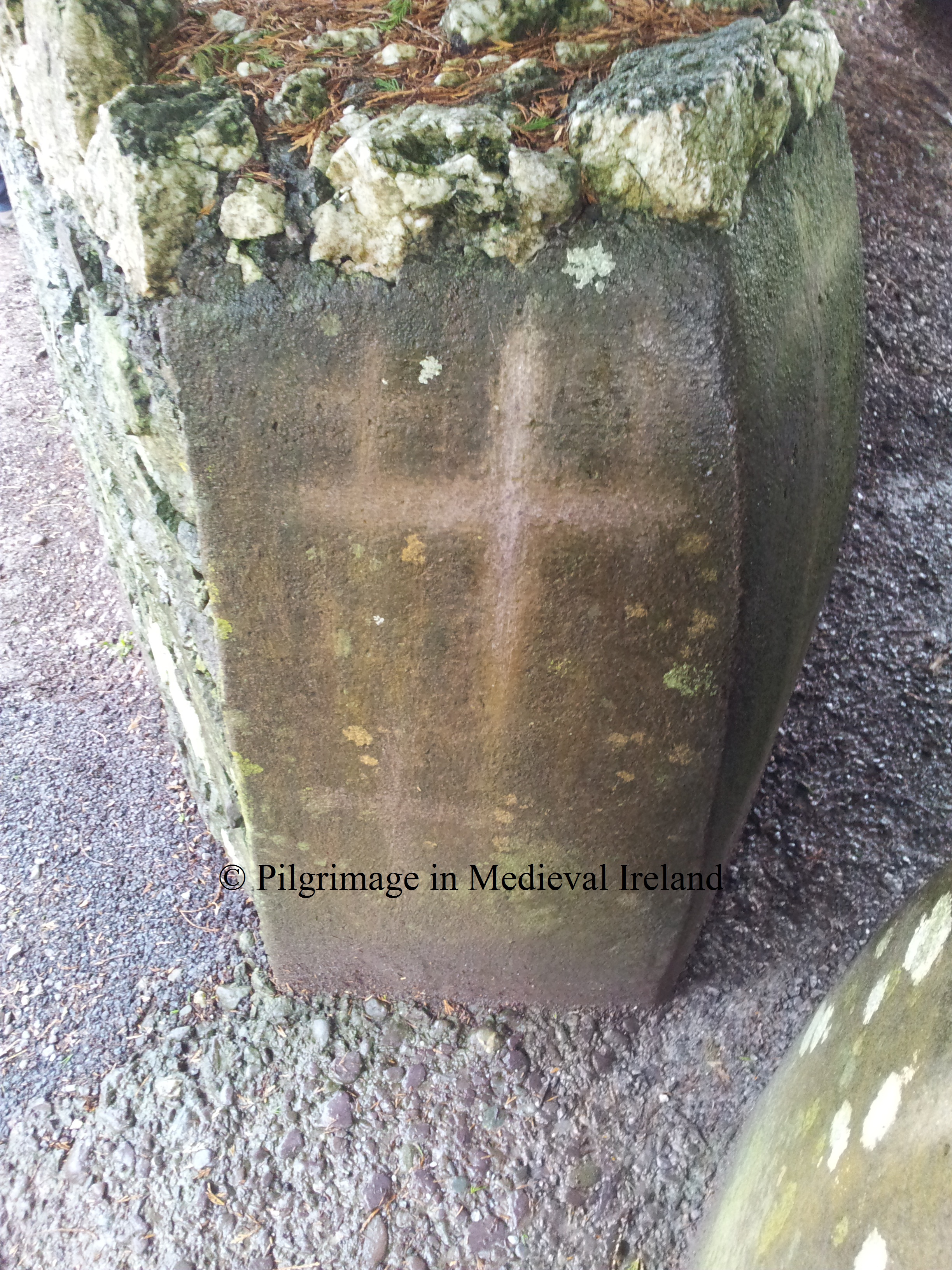
Modern pilgrims  have marked  stones around the  shrine  with crosses as part of their prayers.  The two entrance stones to St Gobnait’s house are marked by crosses,  as are the  modern  cylinder shaped pillars within the  hut and various stone in St Gobnaits church. This practice is seen at other pilgrim sites such as St Declan’s well at Ardmore. Such activity dates to  post medieval and modern times. Small pebbles are left on top of these stone for  pilgrims to  incise the sign of the cross.

20130211_153121

Crosses marked on the top of the modern pillar.

Having finished the prayers at station 2 ,  the pilgrim goes to the near by holy well , one of two wells associated with Gobnait at the shrine. The pilgrim then kneels down and  drinks some water from the holy well.

20130211_135140

Holy well beside St Gobnait’s house.

The remaining stations are  found  within the old graveyard. The pilgrim then crosses the road and enters the old graveyard.

20130211_153157

Crosses etched on the modern styles

Station 3 & 4 are located beside each other, close to the main entrance to the graveyard.  At station 3  the pilgrim  recites 7 Our Fathers, 7 Hail Mary’s and 7 Gloria. The pilgrim  walks  twice clockwise around the this station ( station 4 is at the centre of this path) reciting the apostles creed.

20130211_142618

Pilgrims praying at Station 3 & 4.

Station 4  is a sod-covered mound of loosely packed stones (4m N-S; 5.6m E-W; H 1.3m) known as  St Gobnait’s grave. The pilgrim recites 7 Our Fathers, 7 Hail Mary’s and 7 Gloria.  The pilgrim then walks  twice clockwise around  this station reciting the apostles creed.
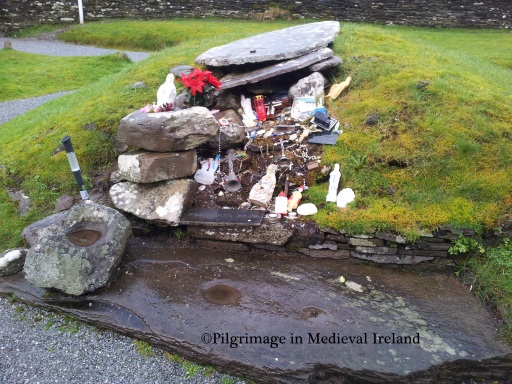
20130211_154604

Station 4 St Gobnait’s grave.

On top of the mound is a large flat slab which pilgrims  have  incised with a  cross. A small pebble is left beside the cross. This station is very colourful and eye catching. Pilgrims have  left  behind votive offerings such as  holy statues, medals,  rosary beads & crucifixes.

20130211_153327

Cross incised by pilgrims on slab on top of St Gobnait’s grave.

From here the pilgrim walks past the 19th century Church of Ireland to Station 5, located at the corner of the  old church. The pilgrim  recites 7 Our Fathers, 7 Hail Mary’s and 7 Gloria.  The pilgrim  then walks  around St Gobnait’s church 4 times, reciting at each  circuit,  one decade of the Rosary.

20130211_141859

Pilgrim’s doing rounds of the church.

The pilgrim then enters the interior of the church. Station 6  is located  at the east gable of the church.  The pilgrim recites 7 Our Fathers, 7 Hail Mary’s and 7 Gloria .

20130211_141501

Station 6 in the interior of the church.

Modern pilgrims have left there mark within the church. There are statues placed in putlog holes ( small square holes used to hold wooden beams,  used in the initial  building of the church) some of the stone in the fabric of the church and   two 19th century grave stones have  had  crosses incised on them.

The pilgrim then moves on to station 7, located at the window at  east end of the south wall of the church. A  rectangular recess (cupboard) has been filled over the years by pilgrims  with statues and beads and other religious memorabilia.  The pilgrim recites 7 Our Fathers, 7 Hail Mary’s and 7 Gloria.
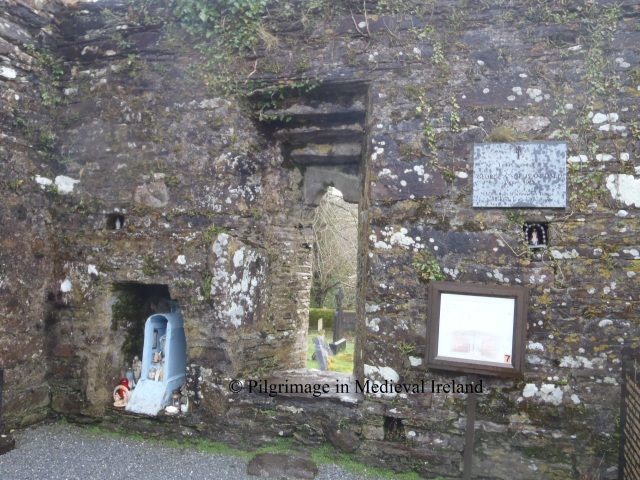
OLYMPUS DIGITAL CAMERA

Station 7

On completion of prayers  the pilgrim reaches out through the window and makes the sign of the cross above the top lintel on a piece of  medieval sculpture known as  Sheela-na -gig. Sheela  are  figurative carvings  of naked women, usually bald and emaciated, with lug ears,  squatting and pulling apart their vulva.  These carvings are found many medieval churches, sometimes castle sites in  Ireland and England. There is much uncertainty as to their original function some think, they were used to ward off evil, warn against lust or even fertility figure.

OLYMPUS DIGITAL CAMERA

Window with Sheela-na-gig

The pilgrim then moves outside of the church to station 8, which is known as the  priest’s grave.  The grave marks the burial of Fr Daniel O’Herlihy  was buried here in 1637. The pilgrim then  recites 7 Our Fathers, 7 Hail Mary’s and 7 Gloria  at this station.

20130211_140812

Station 8, the priest’s grave

Station 9 is at the southwest corner of  the west gable of the church. The focus of devotion  is a polished  agate stone ball, call the bulla. The ball is located in a rectangular recess and  is renowned for its healing power. The  pilgrim  recites  7 Our Fathers, 7 Hail Mary’s and 7 Gloria. Some pilgrims had left a religious medals  and a  piece  of paper probably with a petition to the saint beside the ball.

20130211_143031

Station 9  the polished agate ball surrounded by votive offerings.

There is a folktale associated the with the stone.  Legend has it an invader decided to build a castle in the area. Gobnait could see the castle walls from her church.  Throwing the bulla  at the castle  she razed the castle walls to the ground.  The stone then miraculously returned to the saints hand. Each time the walls of the castle were rebuilt the saint would knock them down again with the bulla. Finally the invaders gave up and move away.

To complete the pilgrimage the pilgrim walks down the road to St Gobnait’s well (Station 10). The pilgrim recites 7 Our Fathers, 7 Hail Mary’s and 7 Gloria,  one decade of the rosary and drinks the water from the well.

20130211_145404

St Gobnait’s well

Like many holy wells in Ireland  St Gobnait’s well is associate with a  rag tree and there is a tradition of leaving votive offerings at this tree. Below is a photo of the tree taken when I last visited here in 2006,  as you can see is covered rags and bead  and tokens left be pilgrims. I think it  looks quiet lovely.   Since my last visit   most of these offering have been removed but a few are still to be found.

RIMG1830

Tree beside St Gobnait’s well taken in 2006.

I came across another book  called Saint Gobnait  of Ballyvourney by  Eilís Uí Dháiligh written in 1983. This book notes that many pilgrims begin there stations with the traditional prayer

Go mbeannaí Dia Dhuit, a Ghobnait Naofa,

Go mbeannaí Muire faoi mar a bheannaím féin dhuit.

Is chughatsa a thána ag gearán mo scéal leat,

Go dtabharfá leigheas i gcuntais Dé dom.

May God and Mary bless you,

O Holy Gobnait, I bless you too,

and come to you with my complaint.

Please cure me for God’s sake.

She also notes the traditional finishing prayer is

A Ghobnait an dúchais

do bhiodh i mBaile Mhuirne

Go dtaga tú chugamsa

le d’chabhair is le d’ chúnamh

(O St Gobnait of Ballyvourney, come to my aid).

Uí Dháiligh  gives instructions for  the pilgrimage as follows (taken directly from her book pages 25-26).

There are five  Stations or Ulacha and each has a particular significance.

I The First Station or Ula Uachtarach is the site of Gobnait’s House. (Stop 1 & 2).

II The Second Station or Ula láir is her grave (stop 3 & 4).

III The Third Station brings us to her Church (stops 5 & 6).

At each of the three stations the pilgrim walks ar deiseal, that is clockwise, and prays. The  customary practice is to say seven Paters; seven Aves; and either seven Glorias or the Apostles’ Creed at the outer ring of each Station which is traversed twice. The same is repeated around the inner circles twenty-eight Paters; twenty-eight Aves; and either twenty-eight Glorias or four Creeds in all.

20130211_142533

Pilgrim praying at Station 5 and a group of pilgrims praying at Station 9 the bulla stone

IV The Fourth Station (Stops 7 & 8) is inside the church where one pater; one Ave; and either one Gloria or one Creed is said. The pilgrim pauses at the south window in honour of the effigy over the window head through by some to be an old image of Gobnait herself.

V The Fifth Station consists of a visit to the Priest’s Grave which lies outside the right corner of the East Gable, where one pater; one Ave, and one Creed are said (stop 9); a visit to the bulla in the south corner of the west gable (Stop 10) and the journey to the well (Stop 11). The pilgrim goes down the main road a little distance and enters the grove where he will find the old Well. Here he says one Pater, one Ave, and one final creed. He drinks the water and says a final prayer.

20130211_145311

Cups and statues left on top of St Gobnait’s well.

Conclusion

Despite the lack of  evidence for pilgirmage in the medieval period, I have no doubt that pilgrims were coming to Ballyvourney from an early date. Gobnait’s reputation as a healer and miracle worker  would have attracted pilgrims from the immediate locality and further afield. We can never know how medieval pilgrims interacted with the shrine, but the  pilgrim rituals would not have been  static and  would have  constantly evolved as evident from the slight variation of the accounts of the modern stations described above.  The  medieval pilgrims to Ballyvourney like those in the 17th , 18th century  would have  come here for much the same reasons as modern pilgrims, to ask for help from the saint and in search of  healing.  Above all it is  the devotion to Gobnait  through the  little wooden  statue  that links the people of Ballyvourney with their medieval forefathers.

© Louise Nugent 2013

References

Chaomhánach, E. ”The Bee, its Keeper and Produce, in Irish and other Folk Traditions’. Department of Irish Folklore.http://www.ucd.ie/pages/99/articles/chaomh.pdf accessed 8/07/2012.

Power, D. 1997. Archaeological Inventory of County Cork: Mid Cork v. 3. Dublin: Stationary Office.

Henry, F. (1952) The decorated stones at Ballyvourney, Co. Cork. Journal of the Cork Historical and Archaeological Society, 57, 41-42.

MacLeod, C.  1946.  ‘Mediaeval figure sculpture in Ireland’ JRSAI Vol. LXXVI, Part II.

Harris, D. 1938. ‘Saint Gobnet, Abbess of Ballyvourney’, JRSAI Vol. LXVIII, 272-277.

Ó’ h-Éaluighthe, M. A. 1958. ‘St. Gobnet of Ballyvourney’, JCHAS Vol. LVII,  43-62.
O’Kelly, M. J. (1952) St Gobnet’s House, Ballyvourney, Co. Cork. Journal of the Cork Historical and Archaeological Society, 57, 18-40.

Richardson, J. 1727. The great folly, superstition, and idolatry, of pilgrimages in Ireland; especially of that to St. Patrick’s purgatory. Together with an account of the loss that the publick sustaineth thereby; truly and impartially represented. Dublin: Printed J. Hyde

http://www.dioceseofkerry.ie/page/heritage/saints/st_gobnait/ (accessed 21/01/2013).

http://www.seandalaiocht.com/1/post/2010/11/st-gobnets-house-ballyvourney-co-cork.html (accessed 18/02/2012).

The modern pilgrimages at Faughart on the feast day of St Brigit

Last week I managed to make it to Faughart, one of Irelands most interesting of pilgrim sites. My visit coincided with  the feast of St Brigit the patron of the area. Faughart  claims to be the birth place of St Brigit and the landscape of the area has a strong cult association with the saint.

dundalk

Map showing Faughart in relation to Dundalk (after google maps)

This has been one of the most difficult posts I have written. It was difficult as  there is so much to say regarding the cult of Brigit,  the history and the archaeology of the pilgrimage at Faughart. After a lot of thought,  I decided to focus on my experience at this years St Brigit’s day pilgrimage and at a later date to write another post on  the origins and history of pilgrimage at Faughart and the cult of Brigit.

Location

Before I begin to describe my pilgrimage  just some words on the location of the site. Faughart is situated about 1-1.5 miles outside of Dundalk. The modern pilgrimage landscape stretches between the old graveyard  at Faughart hill with its medieval church and holy well dedicated to St Brigit  and St Brigit’s shrine a series of station,  holy stones and modern oratory  located along the  banks of the a small stream know as St Brigit’s stream.

new map

Map showing the old graveyard and St Brigits shrine at Faughart

The distance between the two sites is about half a mile.

Faughart is a very popular pilgrim shrine and  pilgrims come here each day throughout the year.  It  is renowned as a place of  healing. The main days of  group/mass devotion  are the 1st of February, the feast day of Brigit and the 1st  sunday in July,  a  day of the national pilgrimage.

My visit coincided with  on the 1st of February. I return also on the 3rd of February when I joined a group of pilgrims walking from Dundalk to Faugart. This second pilgrimage was part of the annual ‘Brigid of Faughart Festival’, a four-day  annual event with lectures, workshops and pilgrimages that  focuses on Brigit . The festival  is a celebration of Brigit, both Goddess and Saint.   For more information  about the event see the link http://www.doloreswhelan.ie/events/brigid-faughart-festival/ .  St Brigit is very important to the people of Louth and  because of her pre-christian origins she bridges the gap between the christian and pagan world. She is a very interesting saint  and I will discuss her cult further at a later date.

St Brigit’s Day at Faughart/pilgrimage part I

Faughart is the other end of the country from where I live, so I travelled up to  Dublin on St Brigit’s eve and headed to Faughart the morning of the 1st of February. I had been to Faughart once before in 2006  but my memory of how to get there was a little rusty.  I decided to stopped first at Dundalk and get directions at the tourist information office .  A big thank you to Sinead who works there for all her help.  I also dropped in to the County Museum where the staff were equally helpful.

I eventually arrived about mid day to St Brigit’s shrine which is the main attraction for modern pilgrims. This site consists of a series of holy stone located on the banks of St Brigit’s stream. The shrine fills  a long rectangular field divide in two by a road. The stream known as St Brigit’s stream runs through its centre.

shrine

Map showing the landscape of the shrine of St Brigit. The shrine is located within the tree covered area and the field showing the stream channel (after google maps).

The  car park was full to capacity  so I packed along the side of the road with the other cars . There was a constant stream of people coming and going . The area of the shrine is quiet large so its easy to underestimate the numbers.  One of the first things I noticed  was   people selling St Brigit’s crosses, candles and  holy mementoes and like any good pilgrim I left with about four St Brigit’s crosses which I have since  distributed among friends and family .

20130201_125554

A vendor selling religious memorabilia and St Brigit’s crosses

Dotted about the shrine  are set instructions for the traditional  stations at the shrine  and   many pilgrims still adhere to them  but others  seem to follow their own  route around the shrine.  As I arrived the day was dry and sunny but it soon turned into  a ‘fine soft day’ Irish code for  a constant light rain.

Instuctions for the traditional stations

Instructions for the traditional stations at the lower end of the shrine

Pilgrimage  begins at the upper shrine.  This is  a lovely place  with lots of  mature trees and a  stream running  through the centre. During the main day of pilgrimage relics of St Brigit (owned by Kilcurry parish) are kept in a simple oratory dedicated to the saint  and many begin their pilgrimage here entering through the main gates and  climb the steps to the oratory past the statues of SS Patrick, Colmcille, Malachy and Oliver Plunkett.

???????????????????????????????

A pilgrim climbing  the steps to St Brigit’s oratory

Pilgrims then pause in front of the oratory to  pray.   For St Brigit’s day a priest in charge of the relic,  is in the oratory during set times  and the  pilgrims can go to  be  blessed by the relic of St Brigit if they wish. The  relic is a  tiny piece of bone (skull)  kept   in a small box with glass lid. The story of the relic  is an interesting one and I will come back to it in another post.

20130201_143632

Pilgrims praying at oratory

The reliquary ( which  holds relic) is place on forehead  of the pilgrim and prayers recited by the priest who asks  St Brigit  to pray for and bless the pilgrims.

The traditional stations begin at the fountain  a stone structure    that reminded me of the corbelled well  (St Brigit’s well) at the nearby old graveyard.  Water from the stream that flows through the site is pipe into the structure  and flows into a large  stone with a hollow  which like many of the other hollowed stones at the site may be  possible bullaun stones.

20130201_143129

Pilgrims praying at station 1

This structure has been renovated since my last visit and  two concrete paths  placed across the once open stream  just opposite it.  At station  1 the pilgrim is to recite one Our Father, one Hail Mary and one Gloria.  I saw many  queue  up here to take the water  home in plastic bottles and to simply bless themselves.

RIMG1587

Station 1 taken in 2006 not the open stream bed in the background which leads to station 2.

Station 2  is located beside station 1 and the pilgrim  must walk a few steps and cross to the  far side of steam. The stream   is railed on either side and the pilgrim must recites one Our Father, one Hail Mary and one Gloria .

RIMG1586

Photo of station 2 & 3 & 4 taken in 2006

Station 3  is a stone located at the center  of the stream bed, the pilgrim recites one Our Father, one Hail Mary and one Gloria here .

RIMG1585

Station no 3 taken in 2006

The photo above shows station 3 in 2006.  Since this date the stone has been incorporated into the concreted  path (mentioned above) to link the two banks.  I wonder was this done for insurance reasons to make the crossing safer for those who are unsteady on their feet ?  Unfortunately it is not as aesthetically pleasing as before, but I suppose it is safer.  The rest of the site seems unchanged.

Once station 3 is complete the pilgrim crosses over  to the other side of the  stream and begins Station 4 . This station is  at the modern looking celtic cross. Here the pilgrim is to perform 10  circuits  reciting one Our Father, one Hail Mary and one Gloria at each circuit . Most of the people I observed just prayed in front of the cross, although I did see some people do the circuits.

The pilgrim continues south along the east bank of the stream, they pray at the  stations of the cross which are dotted along the bank. Some also stop and pray at   a grotto dedicated to the Our Lady.

Pilgrims praying at the stations of the cross

Pilgrims praying at the stations of the cross

This route takes the pilgrims  across the road   into the lower shrine which is much more open and landscaped. One lady I meet told me in the past there was a lot more bushes and trees here which she felt gave more privacy for pilgrims praying.

As one enters the lower part of the shrine  on the left is a small chapel.  According to the noticeboard on the 1st of February mass was said here at 10.30, 12.00 and 13.00.

The stream  continues down slope.  I also notices a modern well type structure built over the stream. Pilgrims  made their way down slope  stopping  to pray at the stations of the cross and some at the well structure  and some people also collected water from here in plastic bottles.

pilgrims saying stations of the cross

Pilgrims at the lower shrine

Pilgrims begin station 5  at the point  just where the stream turns and heads east  along the field boundary wall  of the shrine.  Again the   pilgrim recites one Our Father, one Hail Mary and one Gloria .

OLYMPUS DIGITAL CAMERA

View of pilgrims at stations 5-10.

Close by is station 6,  which is  known as the  hoof stone.  Again pilgrims recites one Our Father, one Hail Mary and one Gloria.

Hoof stone

Station 6 the hoof stone

Stations 6-10 are all invested with origin legends connected with St Brigit.  If I remember correctly, folk tradition states that St Brigit was living with her sister at Faughart but a young prince wanted to marry her and wouldn’t take no for an answer. One night she decided to run away to escape him  and  as she was making her way out of Faughart following the stream the prince  who had heard about her leaving came  in pursuit.  Brigit knelt down to pray beside the stream leaving her knee prints in the stone. She then plucked out one of her eyes to make herself less attractive and unrecognisable.   The prince caught up with her but didn’t recognise her and the hoof mark of his horse was left behind in the  stone known as the hoof stone.

Station 7  is  the knee stone, which marks the spot where the saint knelt to pray. It is a large rock with two hollow. The pilgrim kneels in the hollows of the  stone  and  then on top of the stone while reciting one Our Father, one Hail Mary and one Gloria .

knee stone

Station 7, the knee stone

Others  simply  recite their prayers standing beside the stone.

Pilgrim kneeling in the knee stone

Pilgrim praying in the knee stone on the 3rd February

The pilgrim continues  along the modern path to station 8  which is known as the waist stone . I noticed that some pilgrims sat on the stone but most stood by it . The pilgrim is required to recite one Our Father, one Hail Mary and one Gloria .

waiste stone

Station 8 the waist stone

Station 9  is called the eye stone ( this supposed to be  the eye the saint plucked from her head, a similar stone was said to have existed in Dunleer). The traditional prayers require  here are ten circuits of the stone while reciting one Our Father, one Hail Mary and one Gloria at each circuit.

Eye Stone and modern Grotto

Eye Stone and modern grotto

I saw some pilgrims sit/lie on the stone  they then blessed themselves with water from a little hollow on top of the stone.

Pilgrim sitting on eye stone

Pilgrim sitting on eye stone 3rd February

Many pilgrims also pray at the  modern grotto beside this stone. The final station (station 10)  the head stone  is a large stone with a hollow whose outline has been pained in white.  The stone is part of the boundary wall and rags and tokens, the same type of thing you get on rag trees, are tied onto the fence  in the boundary bank. The pilgrim places his/her  head in the stone  and recites  one Our Father, one Hail Mary and one Gloria.

20130201_142209

Station 10 the head stone.

This ends the  pilgrimage at St Brigit’s shrine and stream. I noticed that many pilgrims stated  at the headstone and ended their prayers at the eye stone, reminding me that pilgrim rituals are fluid.  I will delve more into the history of the shrine and these stones in my next post on Faughart.

St Brigit’s Holy well on Faughart hill

St Brigit’s well is located in the nearby graveyard,  it is also a focus of pilgrimage in the area, although on a much smaller scale. I  headed up to the old graveyard at Faughart hill around three. There were significantly fewer people here but again there was a constant flow of people coming and going .  Buckets  of water from the well had  been place outside the walls of the graveyard  for those too busy to go to the well.  I saw several people arrive  armed with plastic bottles , some filled them from the buckets and then left .  Others went into the graveyards and followed the path down to the holy well  located below the ruins of a 12th century church.

OLYMPUS DIGITAL CAMERA

Water from St Brigit’s well by the wall at Faughart old graveyard

During the 19th century pilgrimage at  the well was much more popular.  The well  a corbelled structure is entered by walking down steps (added in the 1930’s) .

St brigit's well

St Brigit’s well.

Pilgrims continue to come here and take water away with them and  pray. The  bushes that surround the well are covered with rags and rosary beads showing that pilgrims still come here to ask  Brigit for help.

Local lady carring water from the well

Local lady carrying water from the well

Also at the site  are two  penitential  station  which were visited by 19th century pilgrims, again I will discuss these further in the next post on Faughart. One is a circular mound surrounded by kerbing  is called St Brigit’s pillar. The base of a medieval cross sits on top of the cairn.

20130201_152610

St Brigit’s pillar

The second station is a horse-shoe shaped   mound with two upright stones at the entrance, it is known as  St Brigit’s  bed.

OLYMPUS DIGITAL CAMERA

St Brigit’s Bed

I didn’t see anyone visit these  two stations  during my time here, generally people left after visiting the well and collecting  their water. A local man I meet, told me that no one does prayers at them anymore.

So I headed back for some food and  came back again to Faughart for part II of my pilgrimage  the annual torch-light procession.

Torch Light proscession/pilgrimage part II

The procession  is a night walk  from the old graveyard at Faughart to the shrine of St Brigit. This year it began at  8 o’clock and I roped my friend Nikolah  into coming along. It had been a wet day and but when we arrived at Faughart Hill  the night was cold with a clear sky full of shining stars. The lights from Dundalk and the motorway below were spectacular. The procession is really an event for the local community to connect with Brigit and people of all ages from tiny tots to the elderly were there. Everyone was in good spirits despite the cold and I spotted some very fancy lanterns.  The procession began with the  priest reciting a prayer to St Brigit, then   two men carrying a large processional St Brigit’s cross and flags set off  down the road,  those carrying the reliquary containing the saints relics fell in behind and then everyone else assembled on the hill  fell in behind them  and we headed off on our pilgrimage.

20130201_201025

  Finding our way in the dark wasnt as difficult as I had thought. There was something very relaxing about walking under the stars. You have to be aware of those around you so you didn’t trip or trip someone who was walking at a slower pace. Prayers and songs were sung and the journey  felt like no time at all.  When we  arrived at St Brigit’s shrine there were many people already  there. We all lined up along the banks of the stream at the upper shrine , while the reliquary was brough to the small shrine mentioned earlier. The parish priest  stood at the shrine gave blessing to all present and he also blessed the St Brigit’s crosses , which most people had brought along with them. Prayers were recited in English and Irish. It’s hard to gage how many people were there but there were 100’s  one estimate  I heard was 600 people.  There were also guardaí present to make sure there were no traffic or crowd control problems. The atmosphere was great and I really enjoyed  the experience.

Pilgrims at the end of the Torch light procession

Pilgrims at the end of the torch light procession

Many of those present  proceeded to do the pilgrim stations in the dark before heading home. The procession was one of the nicest pilgrim experiences I have  had. It has been running for the last 37 years . Night pilgrimage and vigils were very important in the medieval world and it is really lovely to see this  tradition being adapted  in the modern world.

Saturday was my day of rest  but Sunday was the last  day of  my pilgrimage.

Sunday Imbolc Festival Pilgrimage walk/Pilgrimage  part III

The final part of my pilgrimage to Faughart took place on Sunday the 3rd.  As I mentioned earlier this pilgrimage walk from Dundalk to Faughart was organised as part of the  St Brigid of Faughart Festival 2013 (link to their site in references). The walk was  followed by a historical tour of Faughart given by local historian Pat O’Rourke.

The walk began at the peace shrine at Linenhall Street in Dundalk.  The group was made up of around 20  women, our local historian Pat O’Rourke and a sheepdog called tara .  I couldn’t have met a more lovely bunch of people. The walk leader Dolores Wheelan, one of the organisers of the Imbolc festival  gave an introduction to the walk and the ethos of the  pilgrimage.  A candle which had been brought from Kildare on St Brigit’s eve  was lit in front of the peace monument  and was then  carried at the front of the group  as we walked along.  Each member of the group  got to carry the torch and lead the group.

20130203_101214

The walk  was about 1-2mile to shrine. This would have been the traditional route chosen by pilgrims from Dundalk to Faughart. The road heads out of Dundalk and  crosses over the motorway by a foot bridge.  Members of the group were free to  engage in the pilgrimage walk as  they wished, some chatted to  each other, others walked in silence , while some chanted a simple  line Oscalite mo Chroí  (Open my heart). We were asked simply to think of Brigit and any prayer that we had  for her while walking along  and to be respectful to other people.

20130203_105929

Once we crossed over the motorway we were walked along quiet county roads.  As we neared the shrine  most people around me  fell silent and were deep in contemplation.

20130203_112012

Pilgrim leading group  while carrying the  light of Brigit

When we reached Faughart  we were treated to hot tea, coffee and soup and  tea  brack.  A very welcome treat for the pilgrims.  After our refreshments Dolores  brought us around the lower shrine  and explained the significance of all of the holy stones and we were all given the opportunity to do our own pilgrimage around the shrine.

The final stage of our  journey was  a historical tour of  old Faughart given  by Pat O’Rourke .  Pat explain about Faughart’s past, from pre-historic to modern times. He  brought us around Old Faughart graveyard  and pointed out many interesting  facts about the well, the church and the penitential stations.

20130203_140817

Historical tour of old Faughart graveyard

I must say I had a very enjoyable day. The group also called my attention to a new pilgrimage walk planned for the summer called Slí Bhride.

During the summer Faughart will  be part of a new exciting pilgrim walk.  A new pilgrimage walk is planned on the 7th July -15th of July  2013  called Slí Bhride. The walk will start at  Faughart in Co. Louth, pass through Louth, Meath and Kildare and end in Kildare Town. I will keep you all posted as I find out more  but  if anyone is interested in finding out more check out  www.brigidsway.ie

or email

eolas@doloreswhelan.ie

I am going to write more about Faughart in the coming months so watch the space

© Louise Nugent 2013

References

http://www.doloreswhelan.ie/events/brigid-faughart-festival/( accessed 2/02/2013).

http://www.createlouth.ie/brigid-festival-dundalk (accessed 2/02/2013).

http://j2.catholicireland.net/mass-times?task=churchbyparish&ParishID=1300 (accessed 25/01/2013).

http://www.faughart.com/local-history-page26988.html (accessed 27/01/2013) excellent source for the history of the site.

Save