Holy Cow. The Miraculous Animals of the Irish Saints. Part 9, St Sourney and the pig

Its been a while since I added to my series of blog post on the Irish saints and their miraculous animals. This post tells the tale of St Sourney.

St Sourney (Sairnait in Irish), is the patron saint of the holy well and medieval church at Drumacoo, Co Galway. Sourney was a holy woman who lived in Ireland during the sixth century, little is known about her life. She is also the patron of the small early medieval church of Teampall Asurnaí (St Sourney’s Church) at the village of Eochaill on Inismore. Tradition recalls she also founded a monastery at Drumcoo during lifetime. Her feast day was celebrated on the 3rd May.

Folklore recorded in the 1930’s in the schools essays from Ballinderreen Co Galway tells the following tale relating to St Sourney and a pig. The tale showcases the saint’s ability to miraculously bring an animal in this case a pig back to life after the animal had been eaten. Regeneration of special animals, even after they had been butchered and eaten, through the prayers of a saint, is a common theme in the folklore connected to the Irish saints. In this case the saint hoped to collect all the bones from a pig that had been eaten and to put it back together again. The saint’s plan for the pig was foiled by a dog who ate one of the bones from the animal. In anger the saint cursed the people of Drumcoo so that pig or a hound would never live together in Drumacoo.
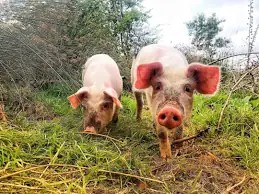
Two Irish Pig from the Irish Pig Society Facebook page

It seemed Saint Surney ran short of meat one day and she told the girl to kill a pig and so she did. When they had the pig eaten she told the girl to collect all the bones so that she would put the pig together again, she kept a hound and hound ate one of the joints of the tail and the people say that is why every pig has a curl in his tail. Saint Surney was vexed then and she said that a pig or a hound would never live together in Drumacoo and they say for a fact they would not live together either in Drumacoo.

The Schools’ Collection, Volume 0033B, Page 03_004– Ballinderreen, Co. Galway

If you would like to read about any of the other Irish saints and their animals follow the links below.

Holy Cow. The Miraculous Animals of the Irish Saints: Part1 St Ciaran’s Cow.

Holy Cow. The Miraculous Animals of the Irish Saints: Part 2 St Manchan’s cow

Holy Cow. The Miraculous Animals of the Irish Saints. Part 3 St Patrick’s cow and the Rian Bó Phádraig

Holy Cow. The Miraculous Animals of the Irish Saints: Part 4 St Ita and her donkey

Holy Cow. The Miraculous Animals of the Irish Saints: Part 5 St Ita and the beetle

Holy Cow. The Miraculous Animals of the Irish Saints: Part 6, the Magical cows of Kilmalkedar

Holy Cow. The Miraculouse Animals of the Irish Saints: Part 7 St Ciarán of Saighir and his cow

Holy Cow. The Miraculous Animals of the Irish Saints: Part 8, St Patrick and his goat

Irish Christmas Traditions and Customs

I have always had a great interest in folklore and folk customs, so I was delighted to get a copy of the newly published Irish Customs and Rituals published by Orpen Press for my Christmas reading. 

This is a wonderful book that details the rituals and customs carried out by past generations  living in Ireland. Its a perfect book to dip in and out of or read cover to cover as I did with a pot of tea in front of the fire. I’m delighted that the book’s author Marion McGarry has agreed to share her knowledge relating to Irish Christmas traditions and has kindly answered a series of questions about how our ancestors in past generations celebrated Christmas. I hope you find this interview as interesting and informative as I do.

Marion, many congratulations on this wonderful book. How did you first become interested in Irish customs and traditions?

Thanks Louise. I grew up with some of these customs and rituals, and was aware of many more of them. But I became really interested in them when I was writing the book The Irish Cottage: History, Culture and Design. In parts of that book I discussed the house as a space to be safeguarded from supernatural activity and where rituals were performed at specific times of the year. The research for Irish Customs and Rituals really expands that and looks at common calendar customs, rituals of daily life and beliefs of important life occasions such as births, marriages and deaths, all from the 19th to mid twentieth century.

What also drove me on was the realisation that many people are not aware of these customs, but there is a huge interest there. And I thought that a well-researched but readable book would inform and entertain people.

As Christmas is almost upon can you tell us what a typical Irish Christmas was like? How did people in the past prepared for and celebrate Christmas?

Advent was a time of great preparation for Christmas in Ireland. First of all, people would go and do a massive spring clean of their house, and any outhouses, barns and so on. Inside and out would be pulled apart, tidied and given a fresh coat of whitewash. WE see this big spring clean is a feature of many Irish festivals, people cleaned their homes in advance of St Brigid’s day, and Halloween, too. Fuel was stockpiled. Decorations of holly and ivy were foraged and brought back home and used to decorate the house (and even the animals barns). This was the children’s’ job, and supplemented with their own handmade decorations. The Christmas tree usually comprised of a branch from a Christmas tree potted up, so that it was considerably smaller than what were used to today. This approach to decorating is much more sustainable, too. So was the approach to food – most things on the Christmas dinner menu in rural Ireland was grown or raised by the person eating it, and if not it came from the local community, goose, bacon, potatoes, winter vegetables.
Like all Irish festivals the big celebration started on sunset on the eve of the festival day, so on Christmas Eve in Ireland past candles were lit in windows (in a ritual manner, either by the youngest child or the mother of the house). This was to be a sign to show the Holy Family they were welcome to the house, as they sought an inn. Also, on Christmas Eve night, the door was left unlocked so the dead could return to the household, this custom was practised by many on Halloween for example. Greenery was placed on graves, too, over Christmas to remember the dead.

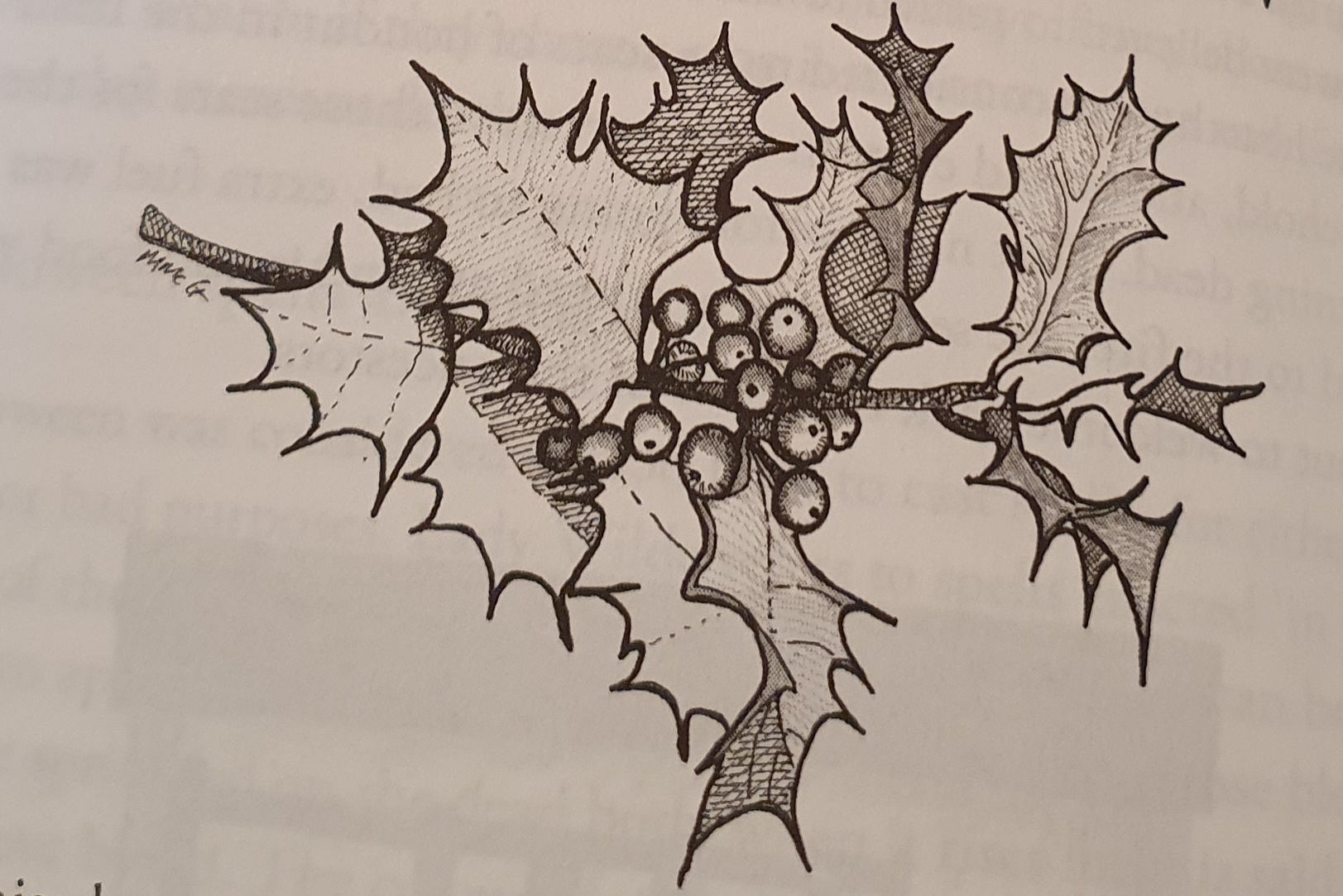
Christmas holly- an illustration from the book Irish Customs and Rituals

What are the main changes in how we celebrate Christmas today from how out grandparents would have celebrated it?

When I was growing up, I would hear my grandparents and people of their generation saying ‘sure its Christmas every day now’ as if to say that people had it good all the time. Christmas was a time for a bit of indulgence for people who had otherwise frugal lives. Decent food, sweet cake, a bottle or two of porter, a respite from work and a chance to wear the good clothes were all welcome diversions of a festival celebrated at a dark and cold time of the year. Today we can do these things any evening of the week. To people of my grandparent’s generation, luxuries, even small ones, were a huge novelty and you can imagine that Christmas was keenly anticipated. And they had a much humbler Christmas than we do today.

Nollaig na mBan or women’s Christmas is a very Irish tradition that has been embraced by Irish women in recent years, can you tell me us more about this tradition?

Occurring on 6th January (the Epiphany), there is an old tradition in certain parts of the country (mainly Munster) that it’s a day off for women. Roles are meant to be reversed, so the men have to do the housework while the women get a chance to socialise with their female friends, usually to have tea and cake. Death divination customs were practised on this day, where candles are lit and named for family members – the idea is that the candles burning out indicated the order in which death will occur.

Many people in modern Ireland will travel to ancient sites aligned with the winter sun for the solstice such as Knockroe and Newgrange passage tombs. Have you come across any customs relating to the winter solstice in the course of your research?

Not specifically. As most Irish calendar customs were appropriated by the Christian religion (a good example is Imbolc which became St Brigid’s day) one can imagine that whatever midwinter celebrations on 21st that occurred migrated across to December 25th. What’s interesting is that there are older non Christian (perhaps even ancient) customs surviving in there, the celebrations starting on the eve before, the spring clean, the death divination rituals, the appearance of wren boys on Stephen’s Day, the remembrance of the dead.

Marion this is a wonderful read and would make a great Christmas gift for anyone interested in Irish folklore and traditions.

Delighted you liked it Louise, it would make a great birthday gift too! The e-book is coming out soon which will make it even more accessible for readers and researchers.

Both The Irish Cottage: History, Culture and Design and The Irish Cottage: History, Culture and Design can both be purchased from Orpen Press and Irish bookshops

https://orpenpress.com/books/irish-customs-and-rituals-how-our-ancestors-celebrated-life-and-the-seasons/

https://orpenpress.com/books/the-irish-cottage-history-culture-and-design/https://orpenpress.com/books/the-irish-cottage-history-culture-and-design/

Pet Cemetery at Kilkea Castle

Yesterday I paid a visited to the newly opened  Kilkea Castle Hotel and Golf Course , in the company of my good friend, archaeologist and historian, Dr Sharon Greene.  The castle and grounds are full of many interesting features  including  a late medieval church and graveyard and medieval carvings.  Sharon is an expert on the history and archaeology of south Co Kildare and she provided an excellent tour of the church and historic graveyard located behind the castle.


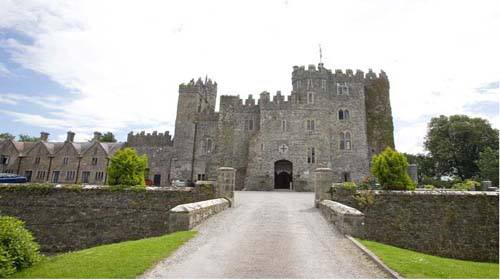
Kilkea Castle

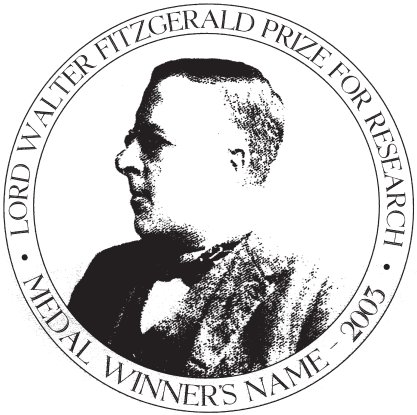
Kilkea Castle ( pronouced Kilkay)  was the residence of the renowned antiquarian Lord Walter Fitzgerald.  Lord Walter was a very  active member of the Kildare Archaeological and Historical Society and was a prolific contributer to  the societies journals on archaeology, history and folklore  of the county. Such was his influence and achievements that  Walter is commemorated by the Lord Walter Fitzgerald prize which is awarded biannually by the Kildare Archaeological Society for an essay of original research on some aspect of the county’s history.


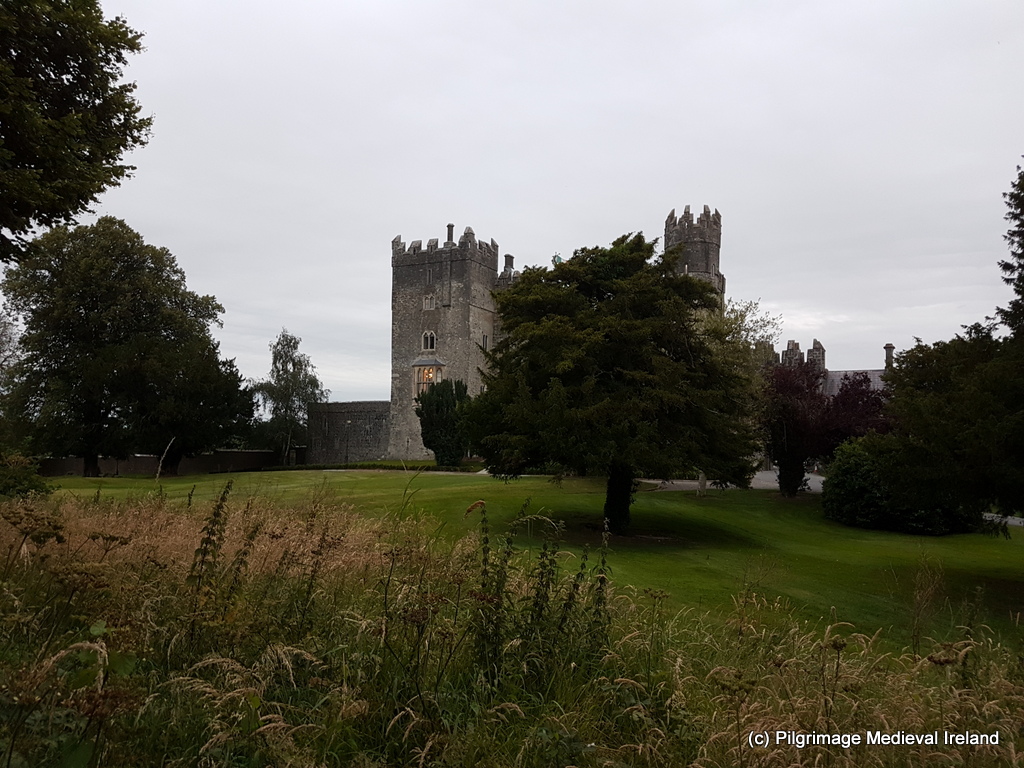
View of Kilkea Castle from old graveyard and church

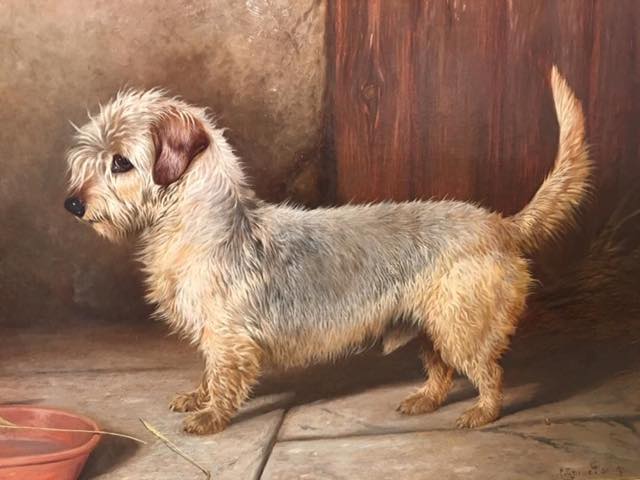
A small pet cemetery located under a tree at the back of the castle close to the road leading to the golf club house shows us another side of Lord Walters personality. As well as being a keen archaeologist and historian Lord Walter was also a dog lover as is clearly evident from  his commissioning of stone memorials to mark the passing of his pet dogs.

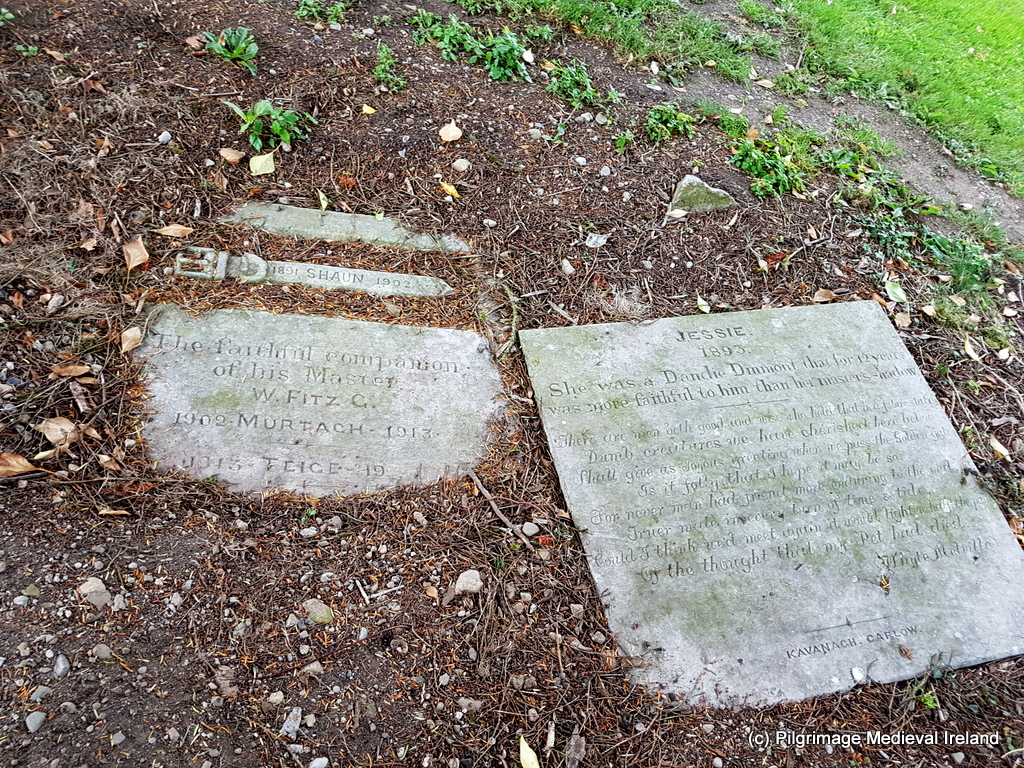
Memorial stones for Lord Walter Fitzgerald’s pet dogs

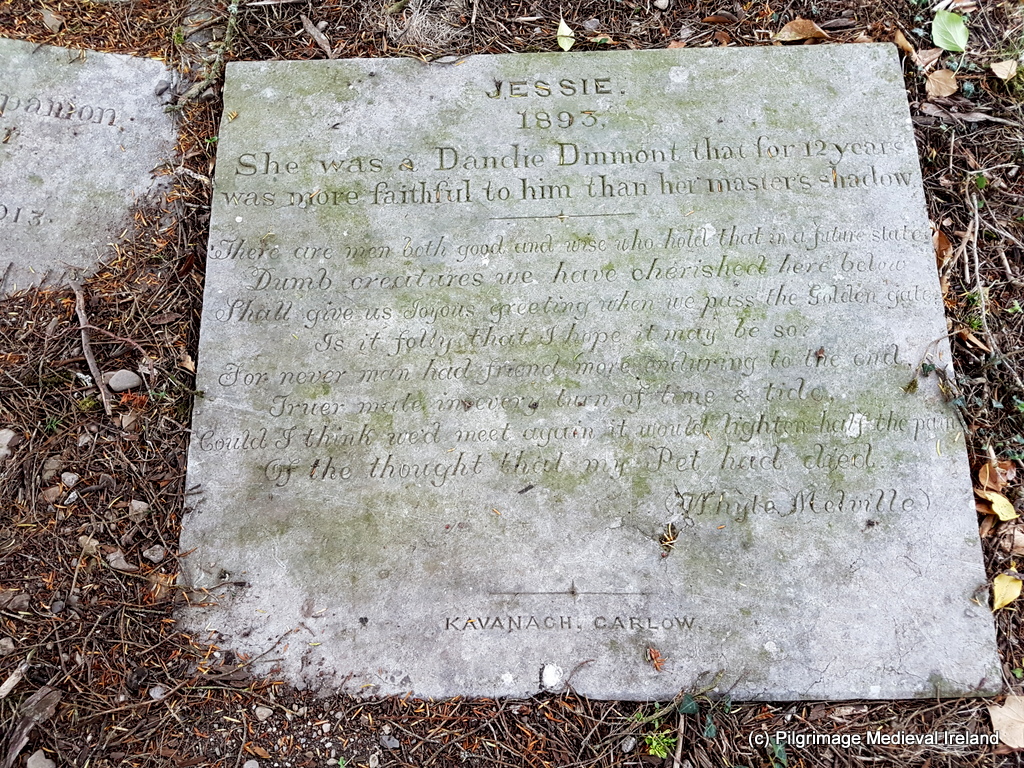
The cemetery consists of two finely cut stones.   The one closest to the road is a rectangular limestone  slab which bear the inscription


JESSIE

1893

She was a Dandi Dinmont that for 12 years

was more faithful to him than her master’s shadow.

_____________________________________________

There are men both good and wise who hold that in a future stage

Dumb creatures we have cherished here below

Shall give us joyous greeting when we pass the Golden Gate.

Is it folly that I hope it may be so?

For never man had friend more enduring to the end.

Truer mate in every turn of time and tide,

Could I think we’d meet again it would lighten half the pain.

if the thought that my Pet had died.

                                          (Whyte Melville)

______________________________________

Kavanach Carlow

Judging from the sentiment of the memorial stone Jessie a Dandi Dinot ,  now a rare breed of terrier, was sorely missed by her master. I like to think she accompanied him on his archaeological explorations.

Lord Walter adapted  the last verse of the The poem the place where the old horse died by George Whyte Melville to express his loss for his little dog.

Another interesting feature of the stone is that it also records the details of the maker  who is named as  Kavanach of Carlow.  It would be interesting to find out more about this stone mason.

Memorial stone for Jessie the beloved Dandie Dinmont terrier of Lord Walter Fitzgerald.


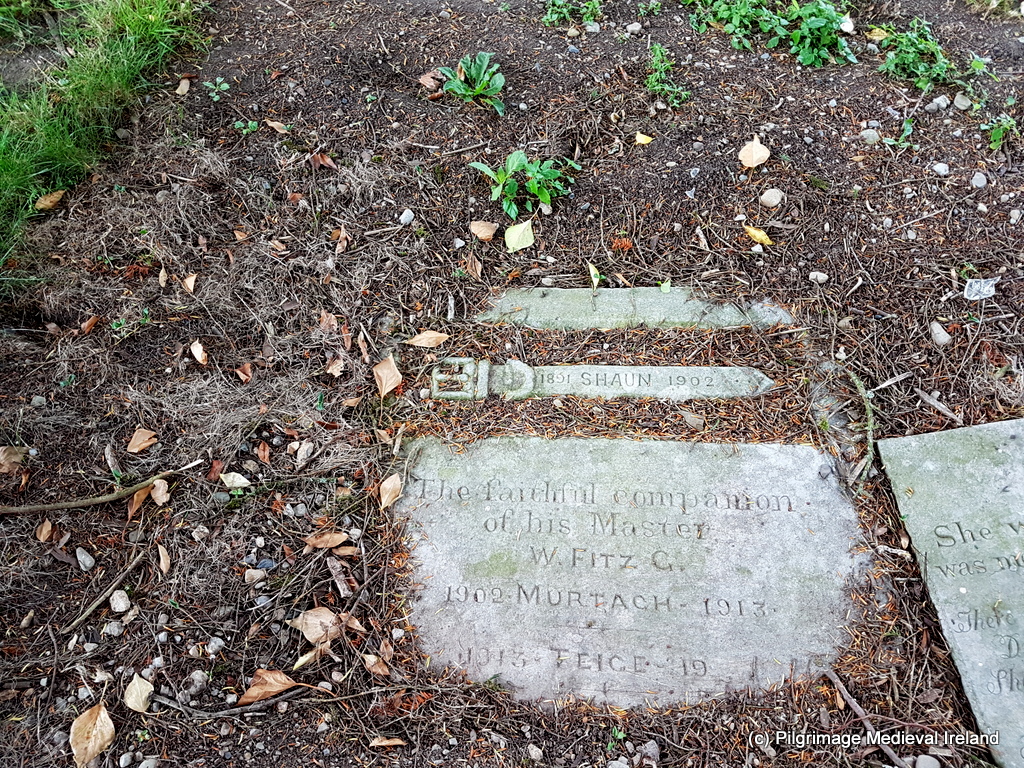
The dogs who followed Jessie are recorded on a second stone which is partially covered in soil and pine needles. The  stone is  rectangular  in shape  and at the top a dog collar has been carved  in relief with the words

1891 SHAUN 1902

The lower part of the stone contains the following inscription

The Faithful companion of

his Master,

W. FITZ G

1902 MURTAGH 1913

1913 TEIGE   19

The date of death for Teige has been left blank which may suggest he outlived his master.

Memorial stone of Shaun, Murtach and Teige the beloved dogs of Lord Walter Fitzgerald

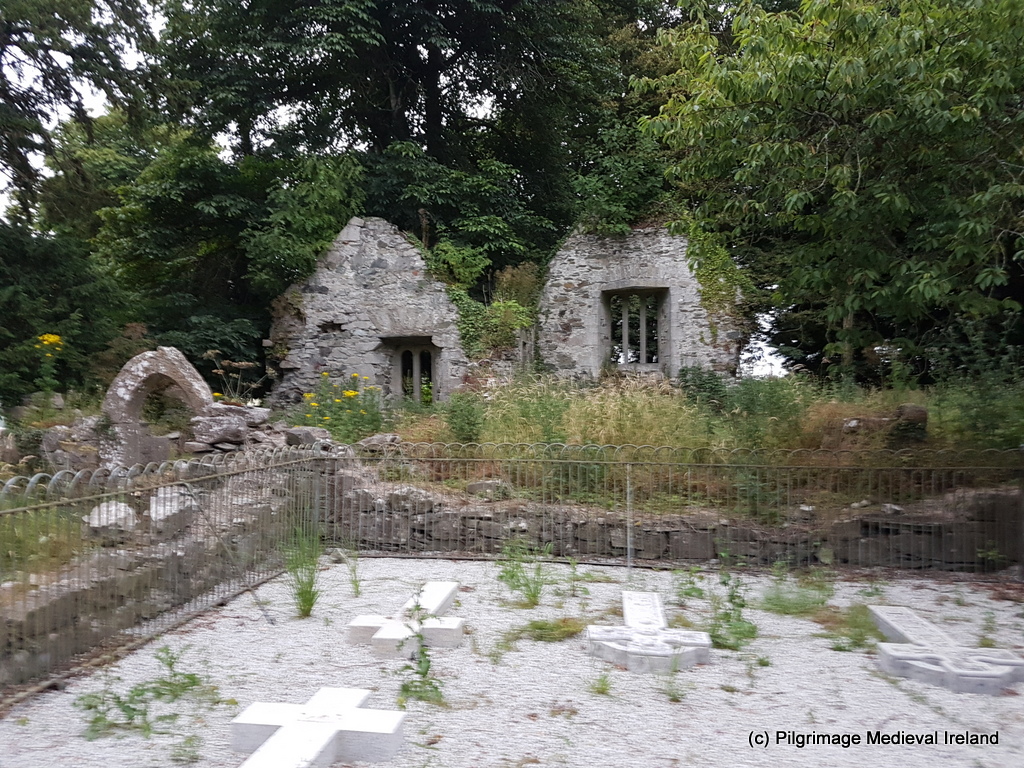
Lord Walter died in 1923 and was buried in the nearby family graveyard a short distance from his beloved dogs.

Fitzgerald family plot at Kilkea Castle graveyard located within the ruins of a later medieval church.


Image of Lord Walter Fitzgerald from the Kildare Archaeological and Historical Society

Save

A Smiling Face at Kilmacduagh Co Galway

I recently was reminded about a really interesting carving I noticed on my last visit to Kilmacduagh, Co Galway.

Burren 207

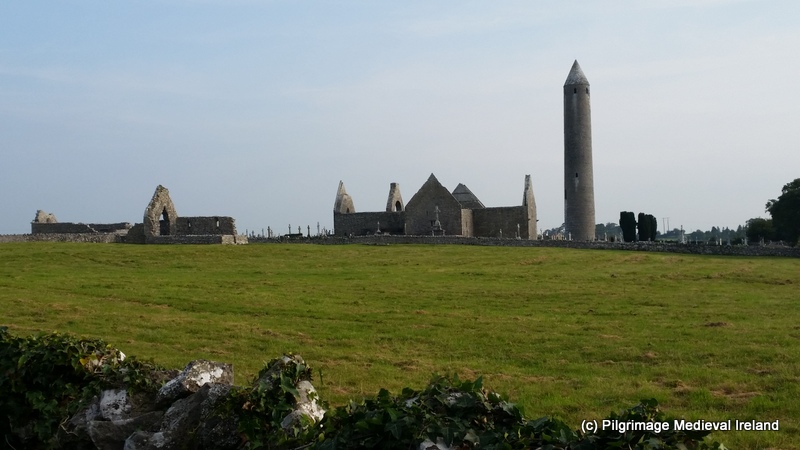
View of the monastic ruins of Kilmacduagh

Kilmacduagh is an early medieval monastic site founded by St Colman son of Duagh in the seventh century. The site is located a short distance from the town of Gort Co Galway. Today the surviving ruins of the monastic settlement consist of a round tower, a cathedral, two smaller churches and a small Augustinian abbey. I am planning to do a much more detailed post on the site in the coming months.

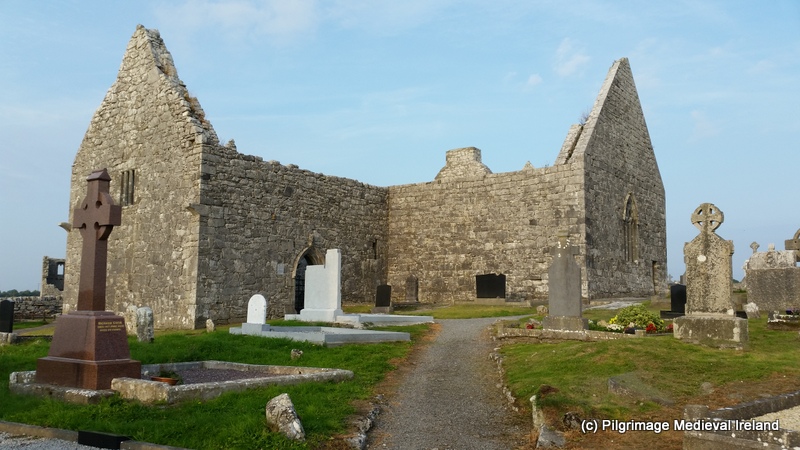
The cathedral is the largest of the  surviving buildings and also possibly the oldest structure at the site.  It was probably  originally built in the tenth or eleventh century it was extended in the twelfth century and remodelled  again in the fifteenth century.

Burren 224

The church has many interesting features that are worth discussing in more detail  but for the purpose of this post I will  only highlight a very unusual carving.

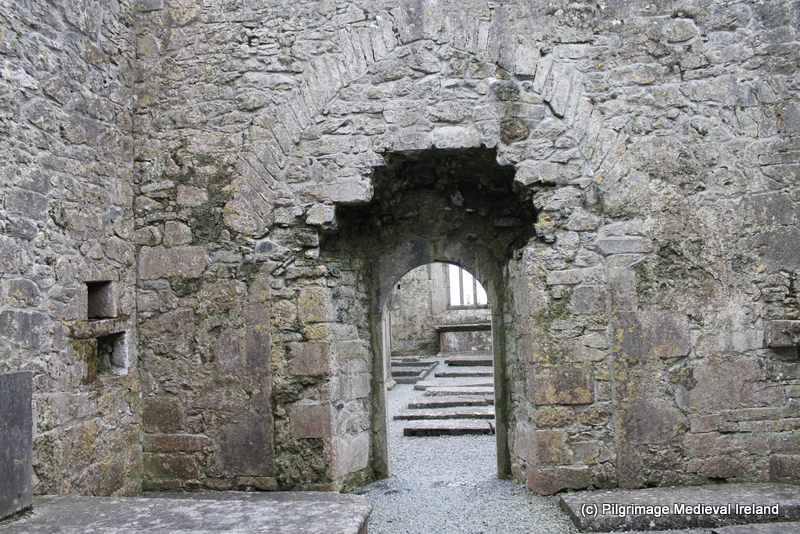
The carving can be seen just inside the doorway of  the north transept, on the  right-hand side as you walk into the transept from the nave.

IMG_6179

View of the doorway of the north transept

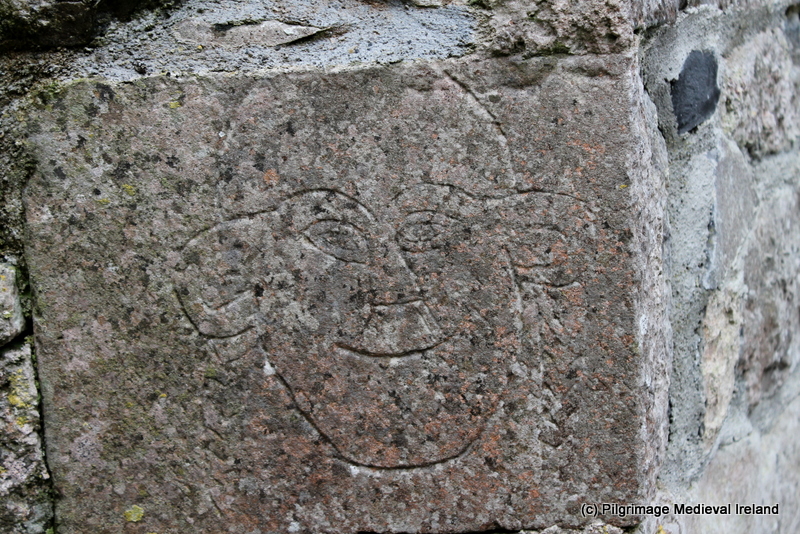
The carving consists of  a large  face cut into a sandstone block of stone. It is an  oval shaped face, of a bald male, with two large ears, almond shaped eyes and a broad smiling mouth. All of his features combine to  giving the figure a rather happy expression and when  I first noticed the face I could not help but smile back.

IMG_6177

Smiling face carved into the entrance of the north transept at Kilmacduagh

The carving is  most unusual and I have not seen anything comparable in all my travels.  Are any of you aware of similar type carvings at other church sites in Ireland or Britain?  If I find out anything else about the happy face I will let you all know.


Save

Save

Save

Save

Fr Twomey’s Holy Well Dungarvan Co Waterford

Yesterday  Dungarvan historian John Donovan brought me to see a holy well in Dungarvan associated with the famine. The well is located  just outside the walls of  the old work house now  Dungarvan Community hospital in the Springmount area of Dungarvan.

The old Work House in Dungarvan

The old Work House in Dungarvan now the Community Hospital.

Tradition for the areas tells that during the famine when the dead  were brought from the workhouse  they were carried on a cart through a gate into the wall that surrounded the  workhouse. The holy well was located opposite this gateway.  It was said that a local priest called Fr Twomey would come to the well each day and bless the dead with its water  as they left the workhouse on their final journey to the burial ground.

155

Gate from Work House opposite the holy well.

These actions had such an impact on local memory that the road the well is located on is known as  Fr Twomey’s road.

165

Fr Twomey’s Road runs along side the wall of the old Work House in Dungarvan

Another account of origin of the well is found Schools’ Folklore Collection recorded in the 1930’s. This account recalls that the priest ‘Rev Fr Toomey of the order of St Augustine was resident in this town‘.  He had a vision in which the Blessed Virgin  appeared to him and asked him to clean up the well and build walls around it. The same account tells that the well was a focus of pilgrimage  from the mid 19th century with devotion continuing into the 20th  century.

Rounds are to be made for nine days and certain prayers recited. Some people sat five Our Fathers and five Hail Marys, others recite the Rosary during the rounds, and bathe the part of the body afflicted. This well is renowned for the cure of skin trouble.

The account goes on to say the priest died in 1879 and was buried  in the Friary Church in Dungarvan.

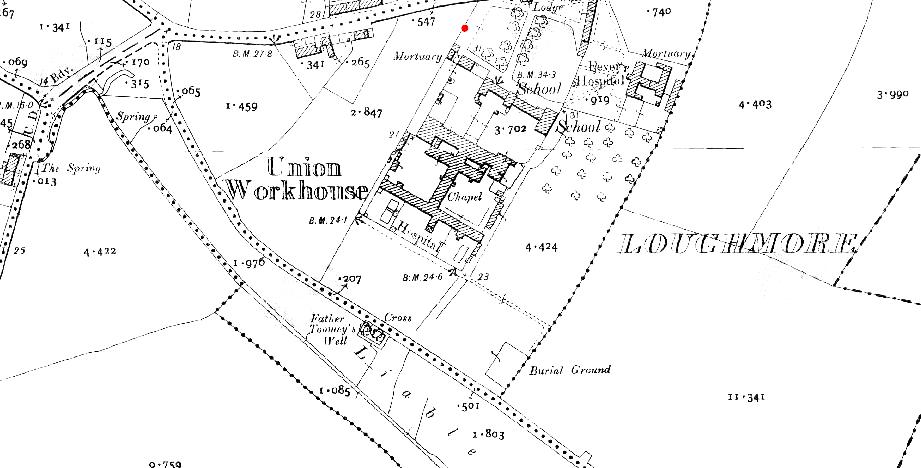
The well was not  marked on the 1st ed. (1841) OS 6-inch map for the area. The wells absence from the map  combined with the folklore evidence may suggest that the well came into existence around this date. The well was marked as a rectangular enclosed area along with a cross on the 2nd ed. (1905) OS 6-inch map and the 25-inch (1907) OS map and named as Father Twomey’s well.

map FR T well

Father Twomey’s well located outside the walls of the old Work House on the 25-inch (1907) OS map

Today the well is a sad sight, devotion has long ceased the cross marked on earlier maps no longer survives. The outer wall was destroyed by a truck  some years back and the council later widening the road extending the road into  part of the well.  What survives  is covered in  concrete and has  a rather ugly appearance.  In its current position it is hard to imagine that this  was once a pilgrimage site and I couldn’t help but wonder what it looked like in times past. I am going to see if I can find out any more about the well and will keep you posted.

References

The Schools Collection, Clochar na Trócaire, Dúngarbhán (roll number 11461) Volume 0645  pages 0055-59 (logainm.ie/en/49483)

Save

Writing on walls in 18th century Kilkenny

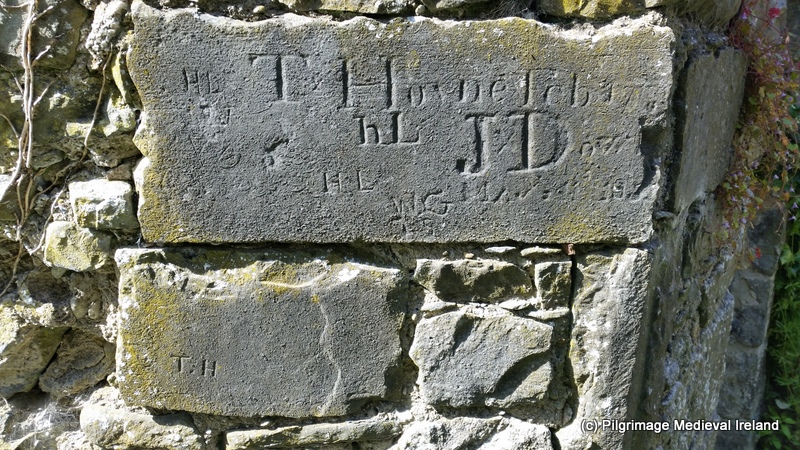
I was sorting through old photos and came across this one of  graffiti dating to the 18th century  on the wall of St Mary’s church in Kilkenny city.  Most of the writing are initials HL MG  JD  but there is one name and date,  T Hoyne Feb 1777.  A second stone has the initials T.H.

1319

Graffiti in the wall of St Mary’s  Cemetery surrounding St Mary’s church Kilkenny city

1322-001

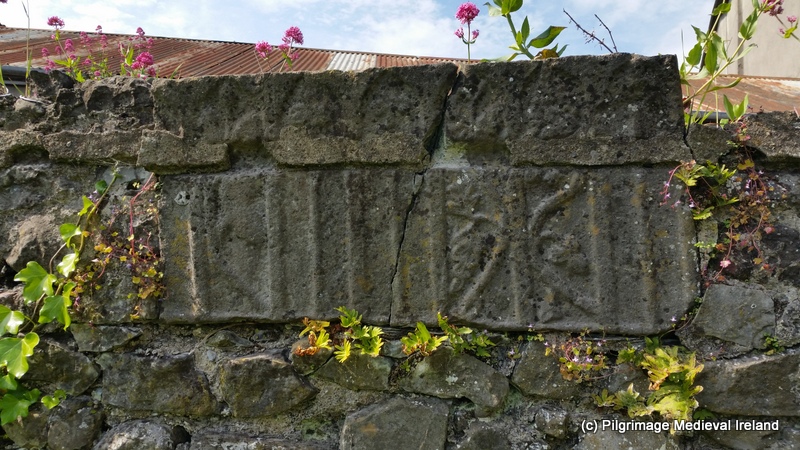
Part of a tomb in wall of St Mary’s cemetery.

I am going to do some investigating to see if I can find out anything about T Hoyne and I will keep you posted on what I find.  Another interesting feature in the graveyard wall is part of late medieval  tomb.

At present the site is off limits to the public as St Mary’s church is currently being restored and a team of archaeologists led by Cóilín Ó Drisceoil of Kilkenny Archaeology are currently excavating at St. Mary’s in advance of a new museum being constructed.


A History of Pilgrimage to Monaincha, the Holy Island of Loch Cré

Monaincha in North Co Tipperary was one of medieval Ireland’s most important pilgrim destinations. It’s a site I have visited many times and have a great fondness for. Located  a few miles from the historic town of Roscrea it is a wonderful place to visit.   I am delighted to present a guest blog post  by historian and organiser of the wonderful Roscrea Conference  George Cunningham about the history of Monaincha.  George has carried out much research on the site over the years.  This post provides an over view of the pilgrimage history  of what was at one time one of Ireland’s most important pilgrim destinations. A History of Pilgrimage to Monaincha, the Holy Island of Loch Cré by George Cunningham Monaincha also know as the 31st Wonder of the World, the Island of the Living, was once Munster’s most famous place of pilgrimage.

View of  of approach route to Monaincha Abbey and pilgrim site.

View of approach route to Monaincha Abbey and pilgrim site.

Yes, indeed, there is an island of the living in the heart of Ireland a little more than three kms east of the town of Roscrea on the provincial borders between Munster and Leinster. This now drained Holy Island (in fact there were two islands as Giraldus Cambrensis attested in the 12th century) sits surrounded by cutaway bog. Its noble ruins consist of a beautiful 12th century Hiberno-Romanesque nave and chancel church with a later transept, and a twelfth century high cross placed on an earlier base.

DSCF0652

Romanesque Doorway of the surviving church at Monaincha.

The cross was re-erected in the late 1940s (using a cement shaft!) and features the crucified Christ in a long robe in the style of pilgrim crosses from Lucca in Italy. Similar features may be seen at nearby Roscrea and at Cashel.

DSCF0650

High Cross at Monaincha depicting the crucified Christ in a long robe in the style of pilgrim crosses from Lucca in Italy.

The island was the retreat of neighbouring saints, Canice of Aghaboe and Cronan of Roscrea, both of whom used the place as a sanctuary of personal peace. It became a main centre for the Céli Dé and pilgrims were attracted to it from all over Ireland and from abroad. The Augustinian Canons continued the pilgrimage tradition in the 12th century and the prior of the Island – usually an O Meachair from the ruling clan of the area – figures prominently in the Papal letters during medieval times. A huge revival of pilgrimage at the beginning of the 17th century saw thousands flock to the site to do the ‘rounds’. A diary of a German pilgrim Ludolf von Munchhausen, who travelled from northern Germany, as a curious tourist rather than as a pilgrim, in Spring 1590/91, has been recently translated. The martyred bishop of Down and Conor, Conor O’Devany was here shortly before he was executed. Monaincha received the same plenary indulgences remission as famous continental sites such as Santiago de Compostella.

monaincha dec 2010 049 ed 4

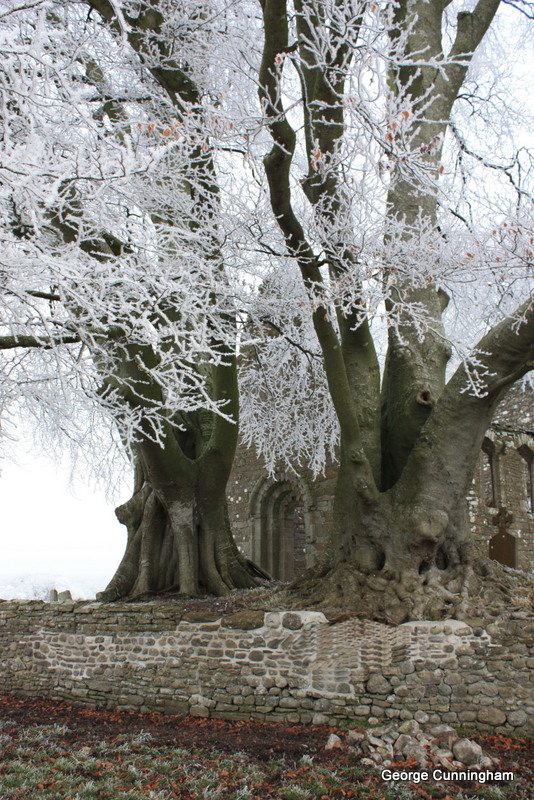
View of Monaincha on a frosty day.

In the 18th century the new landlords, the Birches reserved the place for their own burials and its fame faded into folk memory, albeit always known as ‘the Holy Island’ although it was drained over 200 years ago. Its exquisite Romanesque architecture in its remote bog setting always attracted the aficionado but it wasn’t until the early seventies that its history and international importance began to be appreciated locally and the pilgrimage to the island revived. The Cistercians of Roscrea held vespers there during the millennium conference in 2000 the first time in centuries that the psalms rang out across the great red bog of Éile. An app guided tour from Roscrea to Monaincha narrated by George Cunningham may be sourced from the site  http://www.roscreathroughtheages.org

References and Links

http://www.roscreathroughtheages.org/index.html

App guided tour for Roscrea town  http://www.heritagetrails.ie/explore/roscrea-heritage-trail/

App guided tour for Monaincha   http://www.heritagetrails.ie/explore/monaincha-heritage-trail/

http://www.roscreaonline.ie/content.asp?section=291

The ‘Deer Stone’ a 19th century pilgrim station at Glendalough

Today is the feast of St Kevin of Glendalough. In recent months I have been doing some work on the 18th and 19th century Patron ( pronounced Pattern) Day celebration at Glendalough. Given the day that is in it, I will briefly talk about one of the post medieval stations visited by pilgrims to Glendalough called the ‘Deer Stone’.

1-20120828_123153

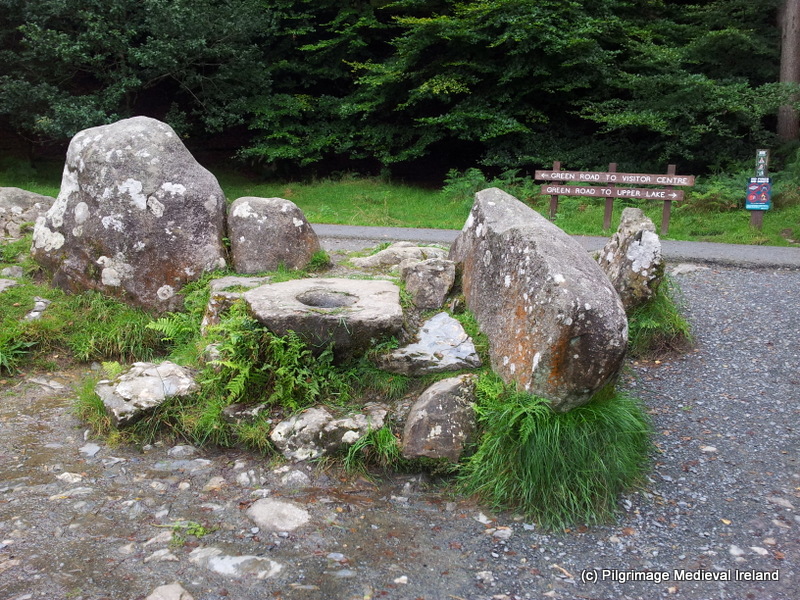
The Deer Stone at Glendalough

Location
The ‘Deer Stone’ is located beside the main ecclesiastical settlement at Glendalough. It sits on the south side of the Glenealo River, directly opposite ruins of St Ciarán’s church,
beside the green road leading to the upper lake.

Picture1

Ordnance Survey 25 ” map showing location of the Deer stone

What is the The Deer Stone ?
The Deer stone is a bullaun stone. It is one of a large cluster found around the main monastic settlement and the lower reaches of St Kevin’s road. I have explained what bullaun stones are in earlier post but just to recap. Bullaun stones are artificial basins or hollow/depressions in rocks, boulders and stones. They are thought to date to the early medieval period. The majority are found at early medieval ecclesiastical sites but some are found in isolation.

There is a lot of debate as to their original use and function. Some argue that they are medieval pilgrimage stations/monument pestles of ritual or devotional use for  turning stones within the hollows. Others think they has a more practical use such as for grinding metal ores or herbs.It is interesting that an archaeological excavation carried out in 1979 prior to the construction of a car park for the visitor centre revealed large amounts of slag. Slag is a waste product of metal processing and its presence implies an iron working industry at Glendalough.

Whatever their original use many of these stones over time developed associations with the saints and were part of the post medieval pilgrim rituals.

1-20120828_123200

The basin of the Deer Stone at Glendalough

The Deer Stone is a large granite boulder ( .77m by .86m by .30m) with a single conical depression or basin. It is not mentioned in medieval sources but it was a point of devotional object for post medieval pilgrims.

Where did the stone get its name?

The stone derives its name from a legend associated with St Kevin. The legend hold that the wife of one of the saint’s workmen died giving birth to twins. The workman came to the saint to ask for help. St Kevin  set about solving the problem and having prayed to God for help  a doe came to a certain spot and everyday shed milk into a hollow in a stone while the workman sat on a nearby boulder. Legend has it that the man’s finger prints caused the hollow in the boulder  which was hence forth known as the ‘Deer Stone’.

The origin legend of the stone appears to be an adaptation of a story mentioned in the Saint’s Life. St Kevin fostered  a  boy child called Foelán. Fostering began when the boy was still a baby. To feed the baby a  doe came down from the mountain each day and waited until she had been milked by one of the monks. The child thrived  and ultimately inherited his father’s estate.

Evidence for Pilgrimage

Glendalough was a place of pilgrimage from the time of St Kevin’s death and pilgrimage is recorded sporadically throughout the early and  late medieval period, it is generally expected that Glendalough was a centre of regional if not national pilgrimage during this period. Following the reformation  pilgrimage continued within the valley and the main burst of pilgrimage activity were focused on the saint’s feast day the 3rd of June. Like the patron day celebration elsewhere in Ireland St Kevin’s day at Glendalough was a mix of pious devotion and boisterous merriment hat involved eating and drinking, dancing and something fighting.  The day also attracted tourist who came to observe the patron day celebrations. In 1813 Joseph Peacock painted  the patron day at Glendalough and it shows the secular side of the celebration.

The patron day celebration  was suppressed by Cardinal Cullen in 1862 as part of a movement by high-ranking Catholic clergy to wipe out the celebration. They believed that the secular elements brought the religion into disrepute and that the religious devotions  rounding, walking in bare feet or crawling in bare knees were backward and superstitious.

Accounts of the pilgrimage from the 19th century suggest that the devotional landscape of the pilgrimage was confined to the area between the upper and the lower lake ( main monastic cluster).  Bullaun stones and holy wells played a central part of the 19th century pilgrim landscape at Glendalough. The Deer Stone was one of several devotional stations for pilgrims.

I am still in the process of researching  this landscape  and the Deer Stone but here are some comments on the stone.

Writing in 1873 William Wilde

The Deer Stone was visited by strangers and pilgrims, and always found to contain water.

Fitzgerald writing in 1906 noted

There is  said to be a cure obtained from the water lodged in the hollow in “Deer Stone”; but to be effective, it should be visited fasting before sunrise on a Sunday, Tuesday and Thursday in the same week and on each occasion a part of the ceremony is to crawl round it seven times  on the bare knees with the necessary prayers.

315348_519201294781728_1756404293_n

Woman in prayer at the Deer Stone (Photo taken the Roundwood & District Historical & Folklore Society Facebook page)


Graveyard recording at Tubrid and St Ciaráns well

I was so impressed by last weeks visit to  Shanrahan graveyard   that I decided to head along to Tubrid/Tubbrid graveyard today and have a go at some graveyard recording for myself.

19th century Church of Ireland at Tubrid

Tubrid is another interesting place, thats well worth a visit. Today it consists of  the ruins of a 19th century church of Ireland surrounded by a graveyard.

Mortuary chapel

The graveyard contains a small 17th century mortuary chapel which is   the burial-place of Geoffrey Keating the author of  The Foras Feasa ( the history of  Ireland). Keating was born nearby at Burgess townland.  Over the door of the mortuary chapel is a latin plaque.

Latin plaque that commemorates Keating

Power (1937)  recorded the Latin inscription as ,

ORAte Pro Aiabs P. Eugenu: Duhy Vic de Tybrud: et D: Doct Galf: Keating huis Sacelli Fundatoru: necno et pro oibs alusta sacerd. quam laicis quoru corpa in eod: jacet sa A Dom 1644

Pray for the souls of Father Eugenius Duhy, Vicar of Tybrud, and of Geoffrey Keating, D.D., Founders of this Chapel ; and also for all others, both Priests and Laics whose bodies lie in the same chapel. In the year of our Lord 1644.

The graveyard is filled with really beautiful 18th and 19th century gravestones which I recorded with the help of other volunteers like Patsy McGrath, Michael Fennessy and Deirdre Walsh and training by Historic Graves (http://historicgraves.ie/).

The oldest stone  I came across dated to 1680. Some of the stones were difficult to read but John Tierney of Historic graves had a few trick using artificial lights that made the recording process easier.

Mark Ryland recording a grave inscription.

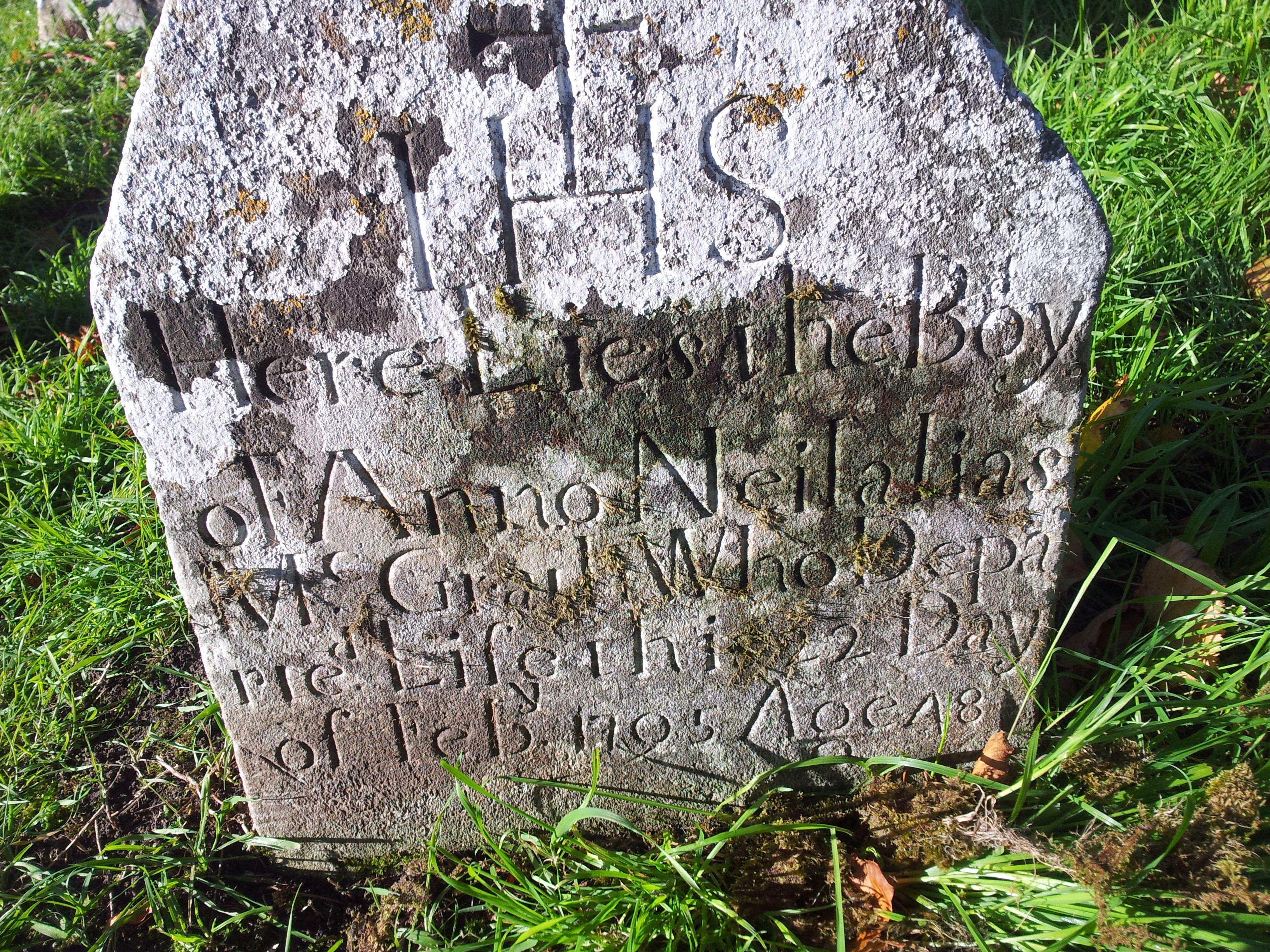
One of the earliest inscriptions I came across

Here Lies the body, of Anno Neil alias McGrath, who departed Life this 22 Day of Feb 1795 Aged 48.

Gravestone dating to 1795

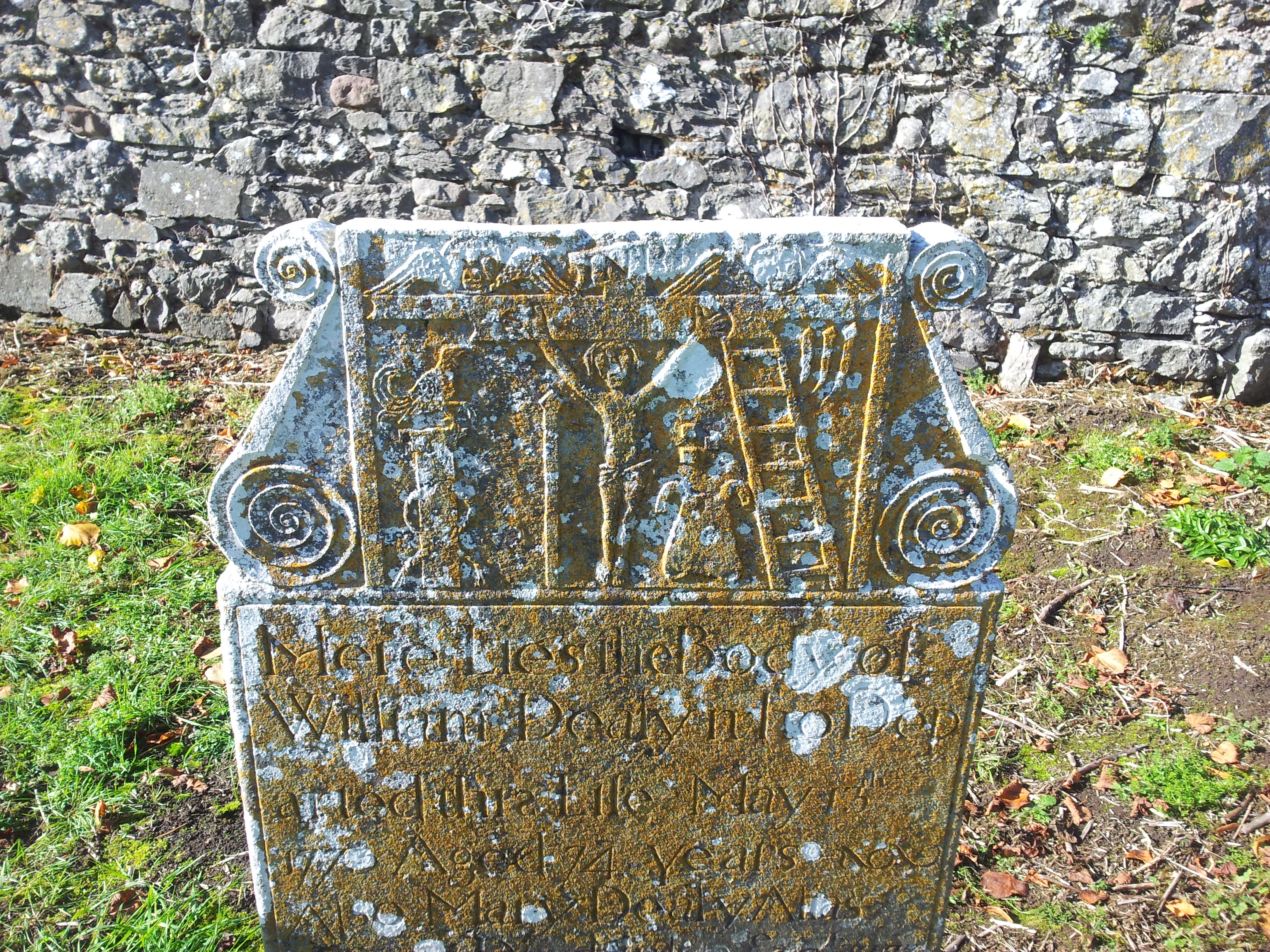
Many of the gravestones are decorated with beautiful imagery, below is one of my favourite decorated gravestones.

St Ciarain’s well at Tubrid

I also visited   the nearby holy well of  St Ciarán, which is  a few 100 yards down the road  on the banks of   the Thonoge River.  This is not Ciarán of Clonmacnoise but Ciarán of Tubrid/ Ciarán son of Eachaid of the Decies.   Power (1914) noted the nearby graveyard and  church  was called Cillín Ciarán or Ciarán’s little church.  Ciarán is mentioned in the Irish and Latin Lives of St Declan. The Irish Life tells how Declan baptised Ciarán at the near by holy well when he was an infant (Power 1914).

And it was this child, Ciaran Mac Eochaid, who founded in after years a famous monastery (from which he migrated to heaven) and another place (monastery) beside. He worked many miracles and holy signs and this is the name of his monastery Tiprut (Power 1914, 59).

O’Riain (’2011, 174) notes  he is also mentioned in the Life of Tighearnach of Clones, whom he accompanied to Tours( the shrine of St Martin) in France. Shortly before the trip he resuscitated a daughter of the king of Munster named Eithne ‘ possibly the eponym of Temple-etney, near Tubrid’ (ibid).

The saints feast day was the 10th of November and the well was visited on this day within memory. Power in 1914 gives  the following description of the well

‘The Holy Well of Tubrid, a large circular basin at which stations were formerly made, has recently been enclosed by a wall.  A public pump too has been erected in connection with it’ (1914, 175).

St Ciarán’s well

Today the well is a rectangular  shaped  trough built into a retaining wall at the edge of a  hillside.  The top  of the wall is   covered with concrete. At the back of the well recess is , a stone spout which carries water draining off the hillside which fills the trough.

A local lady from Ballylooby told me that within memory  school kids at Ballylooby were given the day off on the saints feast day and people would visit the well .  Mass was said here until about 10-15 years ago but the tradition of stations had died as Power noted in the 1900’s .

References

Ó Riain, P. 2011. A Dictionary of Irish Saints. Dublin: Four Courts Press.

Power, Rev. P. 1914. The Life of St Declan. London: Irish Text Societies.

Power, Rev. P. 1937. Waterford & Lismore. A Compendious History of the United Dioceses. Cork. Cork University Press.

Okyle church in Co Waterford

At the moment I am writing a talk about the Rian Bó Phádraig an ancient road connecting , Co. Tipperary to Kilwatermoy in the county of Co Waterford .  Last  weekend I was out walking along part of the Waterford route. I also managed to  dropped by one of my favourite sites, the ruins of a medieval Church in the townland of  Okyle.  The name Okyle or Ógchoill  translates as  “Young Wood” ( http://www.logainm.ie/50107.aspx).

The only surviving wall of Okyle church.

The townland  is located in the ancient parish of Lismore and  Mocollop. I have not been able to find a saint associated with the site.  At present all that remains  of the church is the east gable. According to the   information plaque at the site, this church functioned as a chapel-of-Ease  for  Mocollop parish. A chapel of ease,  was a church building other than the parish church, built within the bounds of a parish for the attendance of those who could not reach the parish church conveniently.

15th-century, twin-light tracery window

The surviving east  gable has a lovely 15th-century, twin-light tracery window. A small cell is attached to the north end of the gable.

Cell attached to the north-east gable of the church

The cell most likely functioned as an anchorite cell and is one of the very few examples found in  Ireland. The  cell was  entered from inside the church through a small doorway with a flat lintel.  The roof of the cell is slightly corbelled.

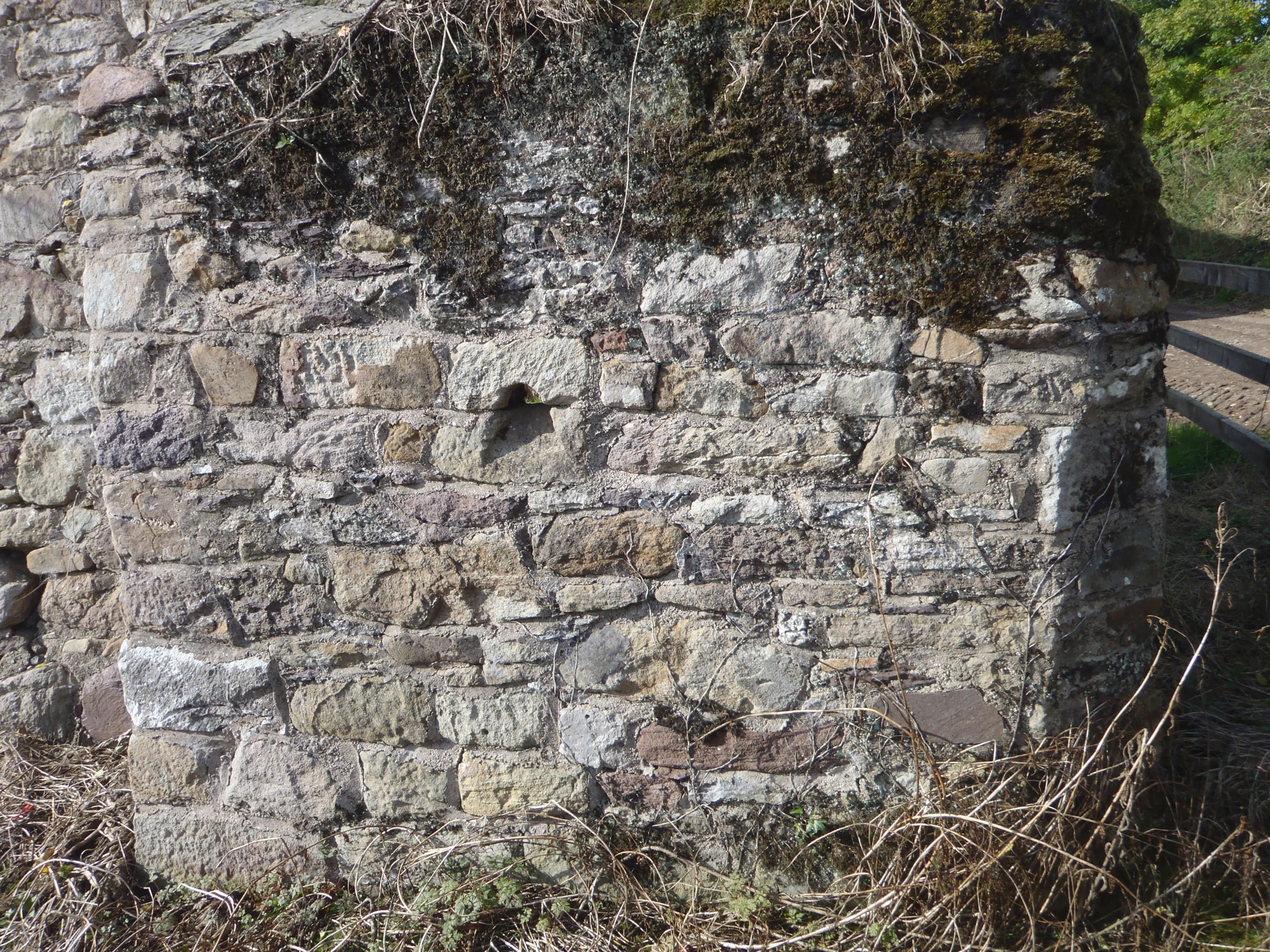
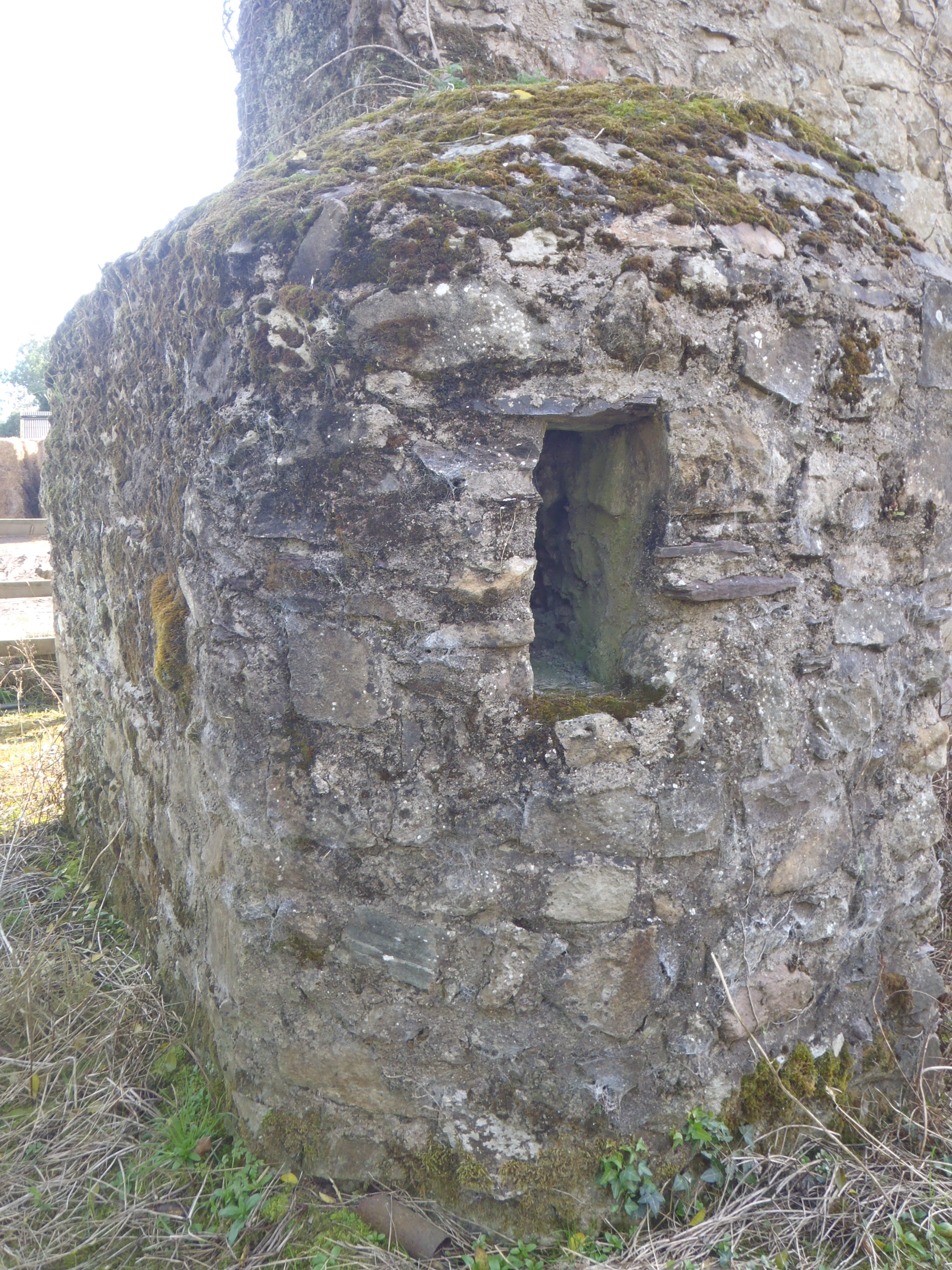
Possible gun-loop at the NE side of cell

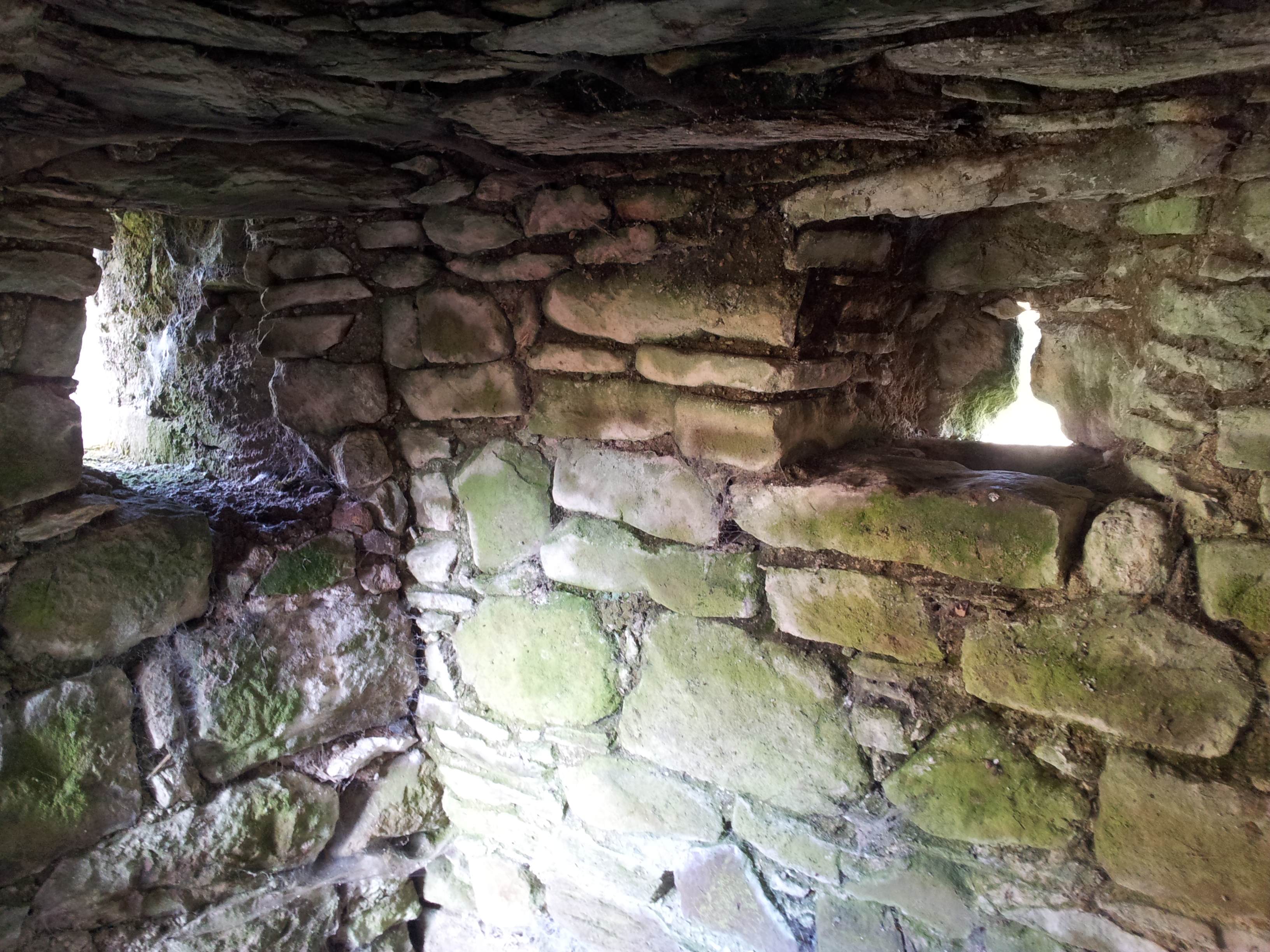
The cell is sub-oval  in shape. It is very curious   that  there are three gun loops in the walls.

Gun loop in the east wall

Power in 1898,  recorded that the cell was known locally as Tigh Chloiche or the stone house.

Interior of cell showing the gun loops

In 1840 the ordnance survey letters described the church as follows:


Only its east gable and thirty feet of the length of the north wall remain. It was twenty one feet in breadth, but its length cannot be ascertained as no part of the west gable is traceable. The east window is formed of cuts and stone and pointed on both sides; it measures on the inside nine feet seven inches in height and five feet four inches in width and on the outside, where it was divided into two lights by a stone mullion, seven feet three inches by two feet nine inches, each division (light) one foot two and a half inches. In the north-east angle is a small apartment, apparently a hermit’s cell or Duirtheach…There was a window in the north wall of this Church at the distance of four feet from the east gable; it was formed of cut stone and was two feet six inches wide in the inside but it is destroyed at top and on the outside. The north wall is nine feet high, three feet four inches thick and built of pebble stones of all shapes, kinds and sizes laid in irregular courses in a very rude style; it nods a good deal from the perpendicular, the foundation having given way…(O’Flanagan 1929, 144-145).

The third ed.   6-inch map  1927  records a holy well called  Tobar an Turais – the well of the pilgrimage c. 700m to the SW of the church (Power 1898, 218). The Waterford Inventory recorded that it is not visible at ground level .  In 1900’s Power notes its presence in the book the Placenames of the Decies but noted that ‘it was not much visted now’.  I think this is a site I will have to look into further.