Abbey Well: The forgotten pilgrimage at Holycross abbey

Holycross abbey, Co Tipperary is one of my favourite pilgrim sites. During medieval times the abbey was famous for its relic of the true cross that attracted pilgrims from across Munster. In a previous post I discussed medieval pilgrimage at the abbey.

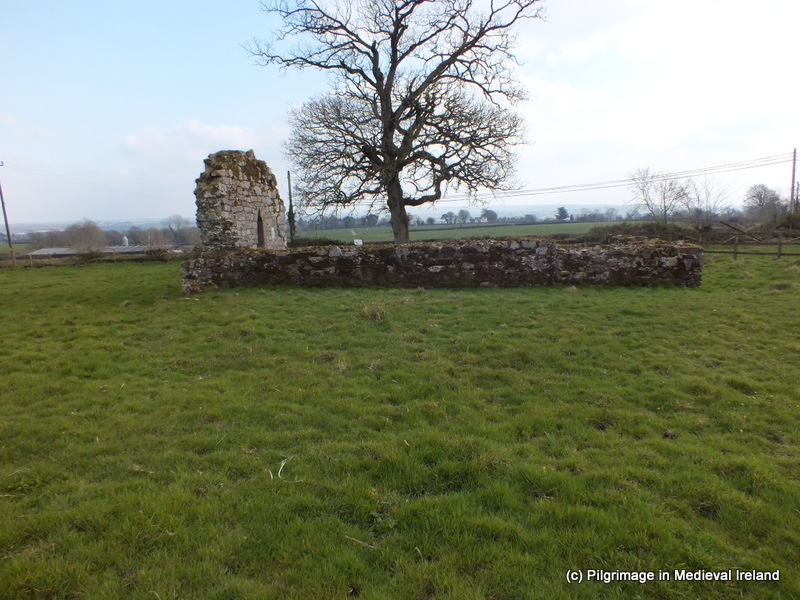
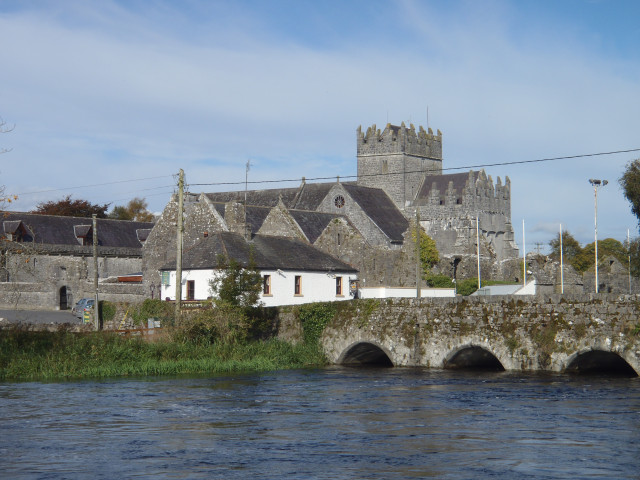
View of Holycross abbey Co Tipperary

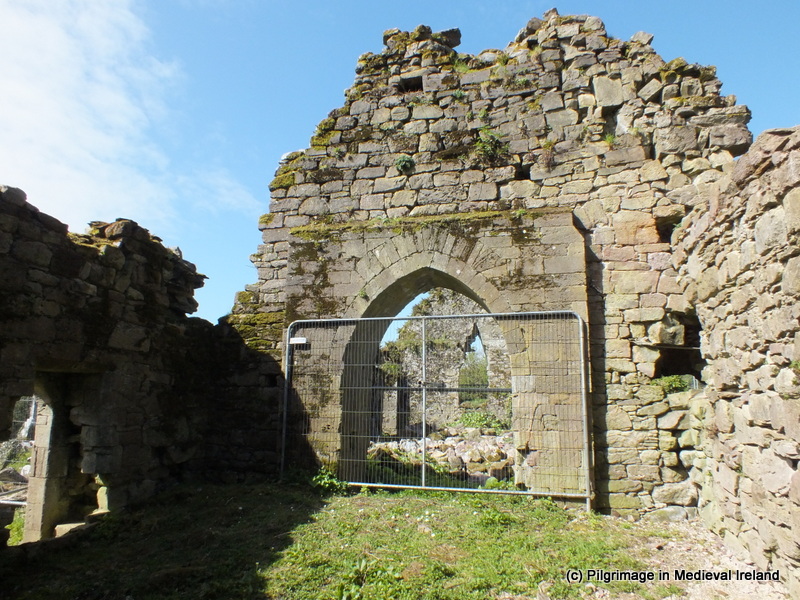
View of Holycross abbey Co Tipperary

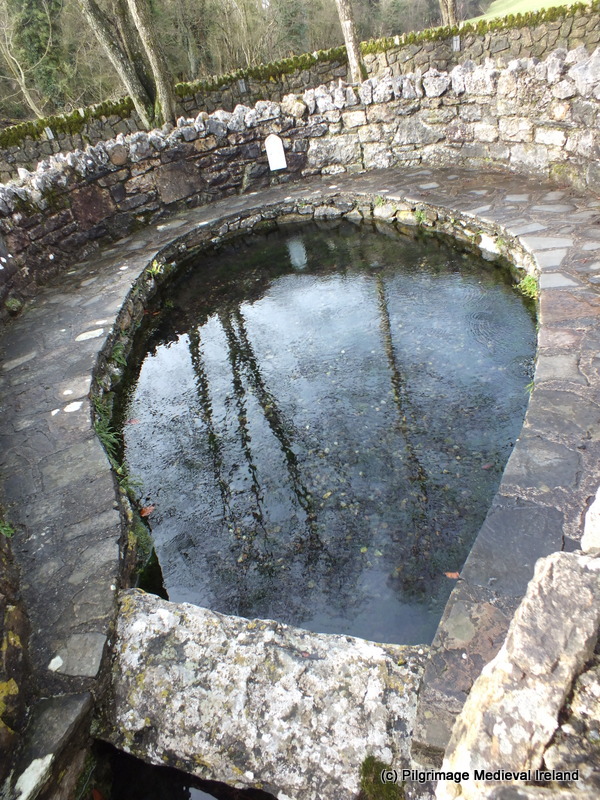
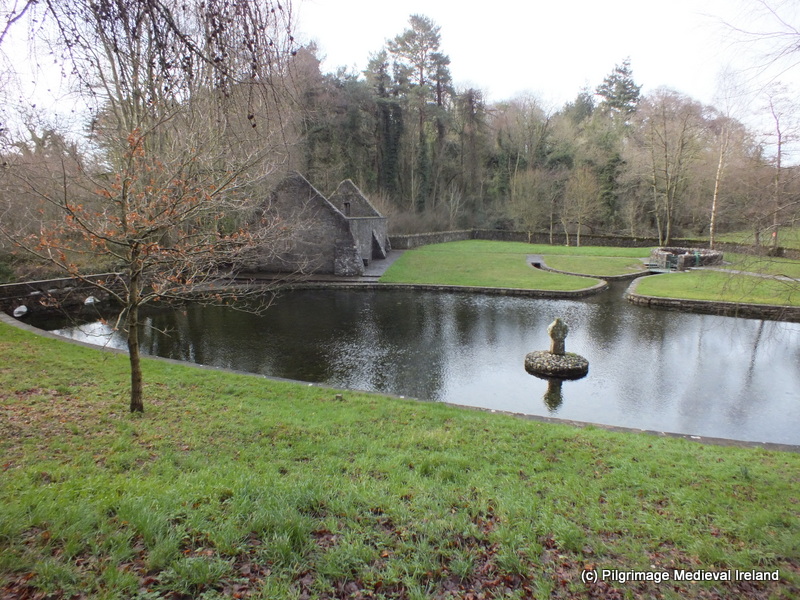
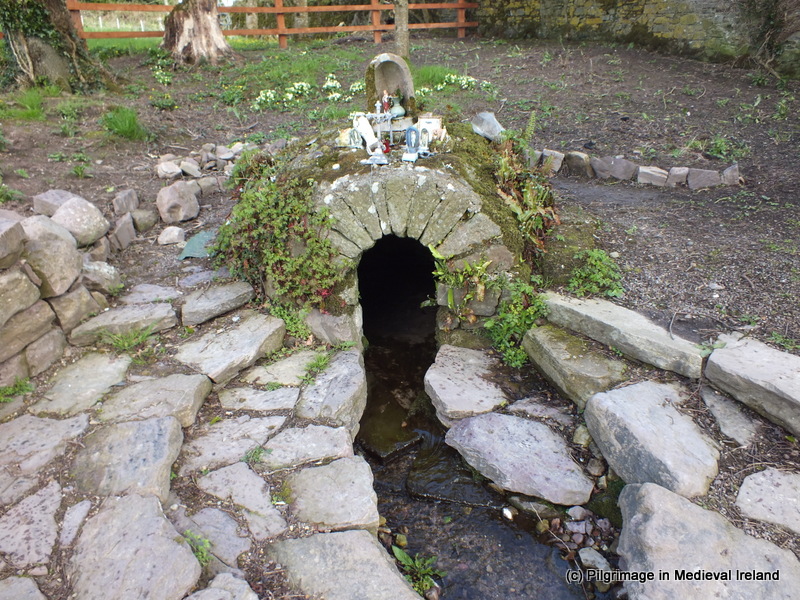
The abbey was also associated with a holy well. The well was recorded as ‘Abbey Well’ on the 1st, 2nd & 3rd ed. 6 inch Ordnance  Survey map of Tipperary. The  well  is located close to the west bank of the River Suir, c. 10m east of the chancel of the abbey church.

3rd ed 6inch Ordanance Survey Map showing location of Abbey Well

3rd ed. 6 inch Ordnance Survey Map showing  the location of Abbey Well

The earliest reference to the well and  its associated pilgrimage dates to 1628 when a man called John O’Cullenan was cured of pain after visiting the well ‘near the front of the abbey church and drinking its water three times’ (Hayes 2011, 13).  A Short Account of Holy Cross Abbey published in 1868 states the well was visited by pilgrims up to the beginning of the 1800’s when the pilgrimage was suppressed by the orders of Archbishop Bray. The book also makes note of  pilgrim rituals at the well. The rituals  included pilgrims going around the well on their knees three times before drinking the water. No doubt set prayers were also recited. In the ensuing years the wells importance declined and by the 1950’s  pilgrimage had ceased and the well was reduced to a wishing well.
The wells importance declined even further  and today the well is covered over. This took place when the  land  surrounding the well was landscaped and turned into a prayer garden  to commemorate the visit of Pope John Paul II in 1979.
If anyone is interested in visiting Holycross abbey guided tours of the abbey are available on request (further information holycrossabbeytours@gmail.com / 086-1665869). Also thanks to Kilkenny Archaeology for the references relating to the holy well.

References

C. M. E. A Short Account of Holy Cross Abbey /. Dublin: Edward Ponsonby, 1868.

Hayes, W. J. Holycross : The Awakening of the Abbey /. Roscrea: Lisheen Publications, 2011.

Pilgrimage at St Patrick’s Holy Well Marlfield Clonmel

Last week on the 25th of June I attended an event at St Patrick’s holy well at Marlfield Clonmel.  This is one of my favour holy wells and it has a rich history which I have discussed in a previous post.

DSCF1677

St Patrick’s Holy Well Marlfield, Clonmel

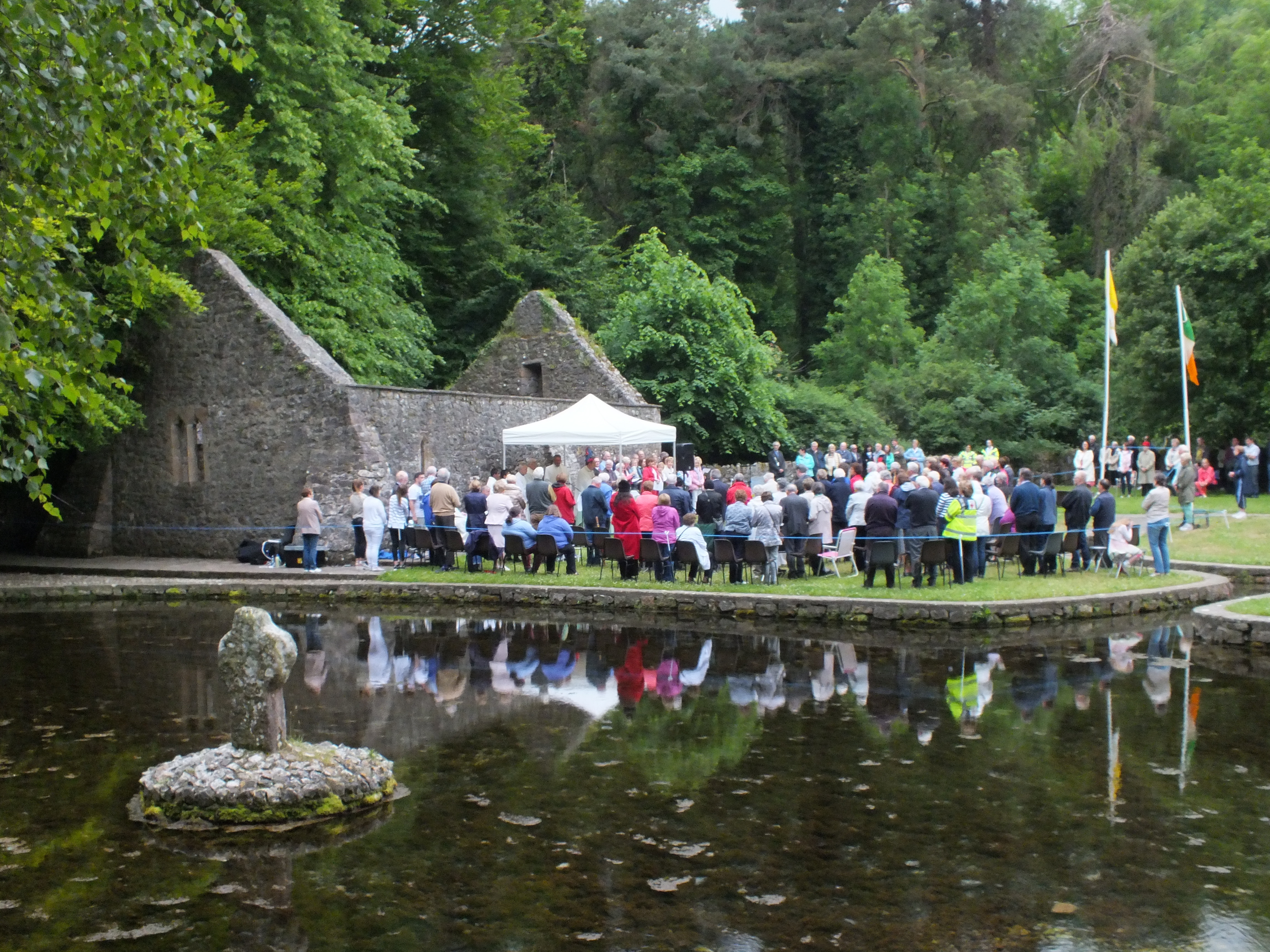
The well is visited throughout the year but each Summer the people from the village of Marfield and surrounding parishes in Clonmel  town, come to the well for an annual gathering that takes the form of a mass.

This year the mass was held at 8pm and a large crowds  attended. Mass was celebrated by Bishop Cullinan, the new Bishop of the Diocese of Waterford and Lismore.

DSCF1729

Bishop Cullinan the new Bishop of the Diocese of Waterford and Lismore.

People gathered in front of the old medieval church others sat around the holy well and the boundary walls.

DSCF1718

People gathered in front of the old medieval church

The waters of the well  were bubbling forth  in the background , birds singing. Despite the crowds the site was very peaceful.

DSCF1700

People standing around the well during mass.

The large crowds emphasized the size of the area around the well which really is quiet vast. There was a real festive feeling with lots of singing and live music.

DSCF1717

Pilgrims at St Patrick’s holy well

I look forward to returning to the well later in the summer .


St Non’s chapel: a destination for Irish pilgrims to Wales in medieval times

During  medieval times  Irish pilgrims  travelled on pilgrimage to British shrines.  One of the most popular destinations was the shrine of St David located in Pembrokeshire in Wales.  It not surprising St Davids was such a popular destination given it possessed the corporeal relics of St David and in the later medieval period two pilgrimages to St Davids  was equal to one to Rome.  For Irish pilgrims a trip to Wales was a lot less expensive and time-consuming  then one to Rome.

1-Trip wales Galaxy S5 033

St David’s cathedral in Wales

Like many  important pilgrim sites  St Davids was at the centre of an extensive pilgrim landscape composed  of minor outlying pilgrim shrines/foci connected to the saint.  As well as praying at the relics of St David,  pilgrims would have also visited some of these minor shrines more often than not prior to visiting the primary shrine.  This post focuses on one such site namely the chapel of St Non’s.  This site is located in a field  over looking St Non’s Bay approximately  a mile from St Davids.

1-Trip wales Galaxy S5 101

View of St Non’s  Bay.

St Non (also known as Nonna or Nonnita) was the mother of St David.  Her feast day is the 3rd of March and her cult spread to  Wales, Cornwall and Brittany. The daughter of Lord Cynyr Ceinfarfog, she was born around AD 475.  As a young woman she  became  a nun at Ty Gwyn near Whitesands Bay (Dyfed).  St David was conceived when  she was raped by  Sanctus, a king  of Ceredigion.  Tradition hold that the  chapel was built on the site  where she gave  birth to St David.  St Non’s chapel is one of a number of sites which claim to be the location of St David’s birth.

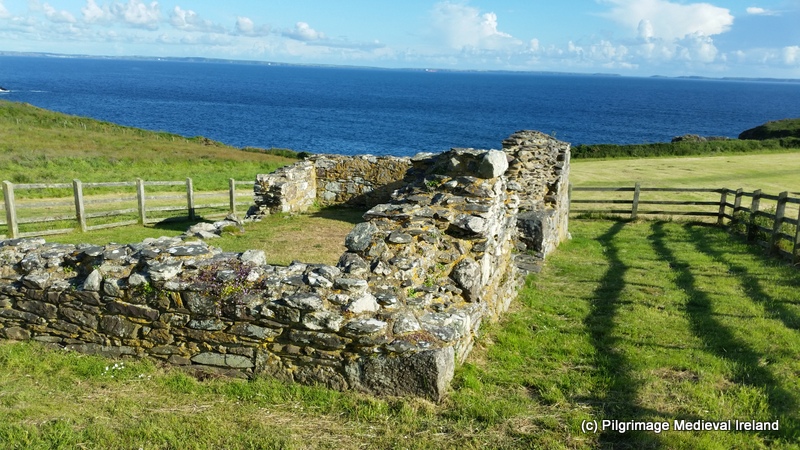
Today the site consist of  the ruins of  a  single room building aligned north-south. The walls do not survive to any great height and  the present structure cannot be dated easily as there are not  any  distinguishable features. The alignment of the building  is very unusual as churches  are normally aligned  east-west.

1-Trip wales Galaxy S5 133

St Non’s Chapel.


Fenton writing in 1818 states

In digging for earth within the walls of the chapel, stone coffins were found, and part of a curious image of pottery glazed, being the head and shoulder of a male figure.  It was hollow, and filled with a prodigious hard cement, and is now in possession of Mr Archdeacon Davies.


An early  medieval cross slab, of 7th/8th century date,  is located in the corner of the interior of the chapel.  When I visited the site in late June there were a number of  beach pebble with names written on them, left in front of the slab perhaps  as modern votive offerings.


1-Trip wales Galaxy S5 110

Early medieval cross slab at St Non’s Chapel.

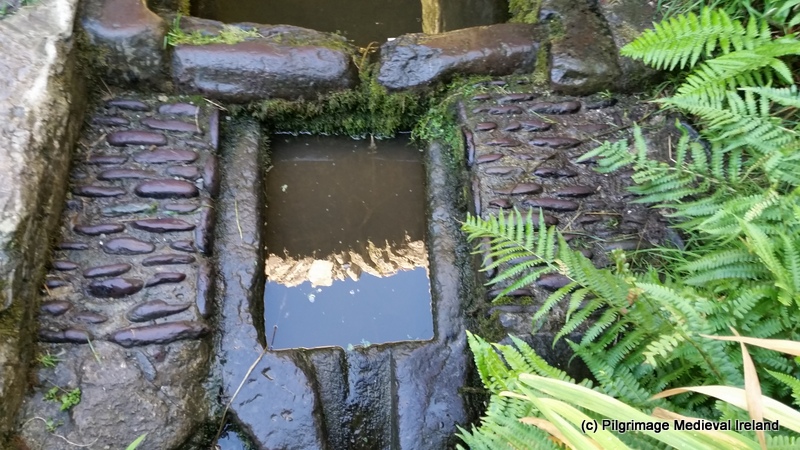
A holy well also dedicated to the saint is located  very close to the chapel. The  waters of the well  flow into a rectangular chamber  covered with  superstructure with a rounded top.  The water then flows into a second  rectangular stone  trough.

1-Trip wales Galaxy S5 141

St Non’s well

Local tradition holds that the well burst forth from the ground upon the birth of St David.

1-Trip wales Galaxy S5 146

The water from St Non’s well flows into a stone rectangular trough.

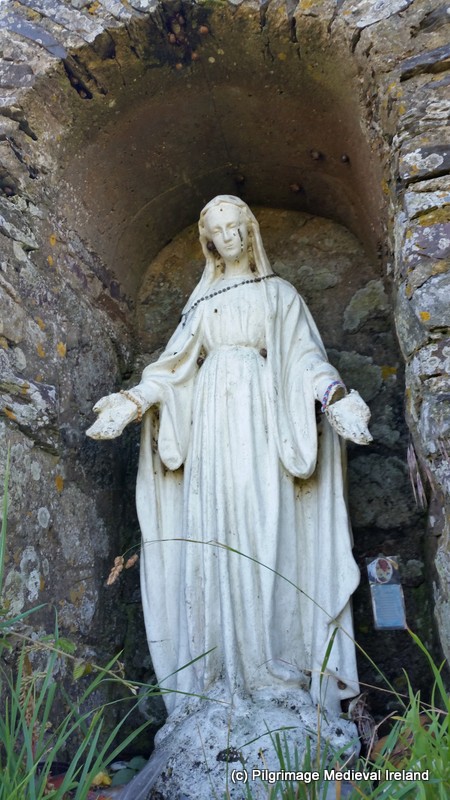
The well and a small area around it  are enclosed with a stone wall.  A niche  in the wall opposite the well holds a small statue of St Non with out stretched arms. Modern pilgrims have left a number of offering at her feet including a brown  scapula , money and rosary beads.

1-Trip wales Galaxy S5 137

Statue of St Non at St Non’s well

The oldest written account of pilgrimage  here is found in a 15th century poem and concerns the pilgrimage of Edudful ferch Gadwgon and her sons.  The text records that Edudful  visited St Non’s chapel and holy well on her way to St Davids. When she  arrived here she washed her head in the holy water.  She also prayed at an image  of the St Non, most likely a statue and lit candles before the altar in the chapel. When her pilgrim rituals were complete she proceeded to her primary destination St David’s where as part of her pilgrim rituals  she left an offering of wax and money (Cartwright 2007, 190).

On Sunday Edudful comes

to pray sincerely to God;

puts her head in the well,

raises her hands merrily,

worships the holy image,

lights the large, yellow candles,

and puts all of them on the altar;

From there she passes to

the good close of St David’s church;

makes an offering of crimson wax

and money and kisses the saint; ( ibid after Johnson 2007, 371)

Browne  Willis (1717)  writing in the 18th century quotes an early 16th century description of the well by George Owen of Henllys

There is a fine Well beside it , cover’d  with a Stone-Roof and inclosed within a wall, and Benches to sit upon round the Well  (ibid., 190).

Cartwright (2007) suggests  the superstructure over the well was  more substantial than it is today. The present covering may date to the 19th century  but it was  extensively restored in 1951.

The waters of the well are said to have healing powers and to be of particular use for eye complaints. In 1811  the following account of the well is given in Fenton’s Historical Tour Through Pembrokeshire

…a most redundant spring arched over, and at one time inclosed with a wall. The fame this consecrated spring had obtained is incredible, and still is resorted to for many complaints. In my infancy, as was the general usage with respect to children at that time, I was often dipped in it, and offerings , however trifling , even of a farthing or a pin, were made after each ablution, and the bottom of the well shrone with votive brass.

The immersion of children in the waters of holy wells were carried out at many Irish sites in the 19th and 20th century such as at St Moling’s well at Mullens in Co Carlow and at St Keeve at Glendalough.

A second chapel can be found a  short distance from the well,   in the grounds of St Non’s Retreat house . This chapel which has an ancient appearance was built-in 1934 by Mr Morgan-Griffith a solicitor from  Carmarthen who had it built for his wife who had converted to Catholicism.

The building was constructed with  recycled stones from cottages and possibly also from monastic buildings at Whitehall.

1-Trip wales Galaxy S5 204

Our Lady and St Non’s Chapel built-in the 1930s.

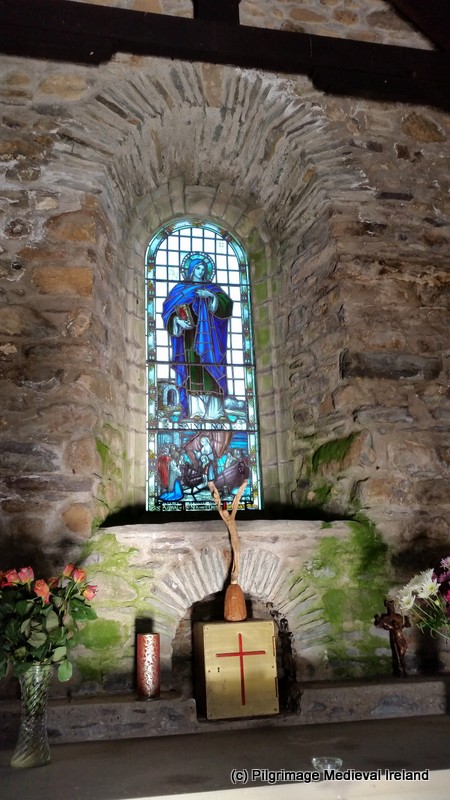
The modern chapel is dedicated to Our Lady and St Non.  Within are a number of beautiful stain glass windows of the William Morris school  depicting Welsh saints including St Non see image below.

1-Trip wales Galaxy S5 186

Stain glass window of St Non

The base of this window depicts a scene of  St Non and her son St David arriving in Brittany by boat.


1-Trip wales Galaxy S5 196

St Non and St David arriving in Brittany by boat.

Another interesting feature within the chapel  is the altar which incorporates numerous pieces of medieval architectural fragments.

1-Trip wales Galaxy S5 183

Altar incorporating pieces of medieval architectural fragments.

Today the  Passionists are the owners of the property and they have granted the Sisters of Mercy a licence to occupy and manage St Non’s Retreat Centre and chapel.

1-Trip wales Galaxy S5 194

Looking out from the interior of Our Lady and St Non’s Chapel.

The ruins of St Non’s Chapel and holy well has a long tradition of pilgrimage. The stunning scenery and peaceful setting at the site makes it a must see for modern pilgrims. The modern church of Our Lady and St Non is also a lovely place to spend some time.  Although there  are no accounts of Irish pilgrims travelling here I suspect the majority of Irish pilgrims to St Davids would have also visited the site.


References

Cartwright, J. 2007. ‘The Cult of David’, In (eds.) Evan, J. W. & Wooding, J. St David of Wales Cult Church and Nation. Woodbridge: The Boydell Press, 182-206.

Fenton, R. 1811. Historical Tour Through Pembrokeshire Printed for Longman, Hurst, Rees, Orme & co., 112-113

Johnston, D (ed)   Gwaith Lewys Glyn Cothi. Walse: Welsh University Press.

Rees, N. 1992. St David of Dewisland. Llandysul: Gomer Press, 21-24.


The Pattern day at Durrow Co Offaly

Last Monday the 9th of June I  attended the pattern day celebrations in the parish of Durrow Co Offaly.

1-durrow samsung s5 306

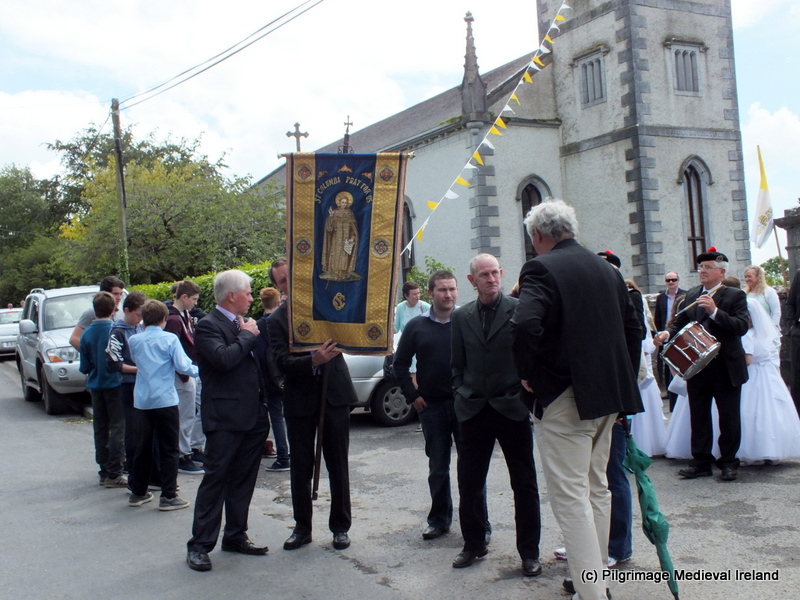
Banner of St Colmcille/Columba.

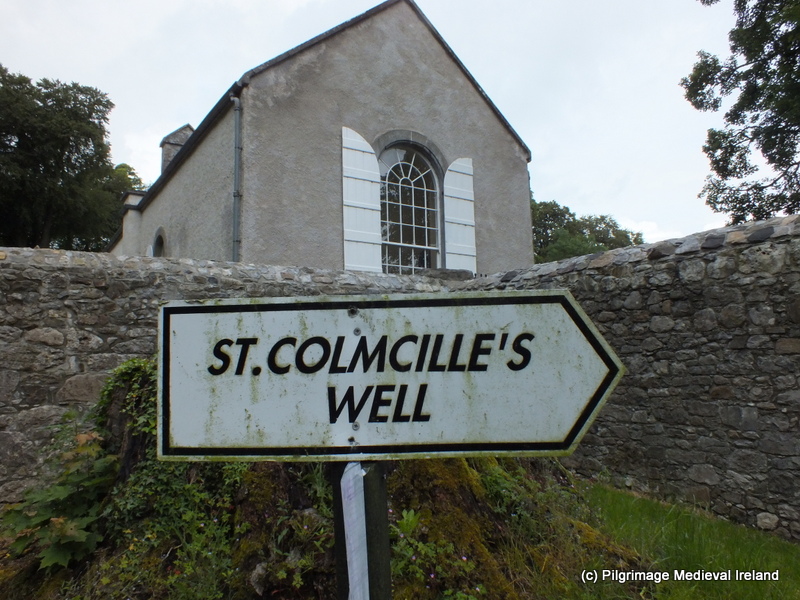
Durrow is a small village about 5-7 km outside of Tullamore town.   St Colmcille/Columba is the patron saint of the parish  and the local community celebrate his feast day on the 9th of June each year.  Tradition holds the saint founded a monastery here in the 6th century close to the holy well.  Durrow was an ecclesiastical settlement of great importance  and part of the  early medieval Columban federation of churches.  I will discuss the  history, the archaeological  remains at Durrow and the medieval evidence for pilgrimage in more detail in a later date.  This post will focus  only on this years pilgrimage.

Modern pilgrimage

Each year  the people of Durrow continuing on a centuries old tradition,  commemorate the feast day of  St. Colmcille.  It is also the traditional day that   the children from the parish make  their first communion.

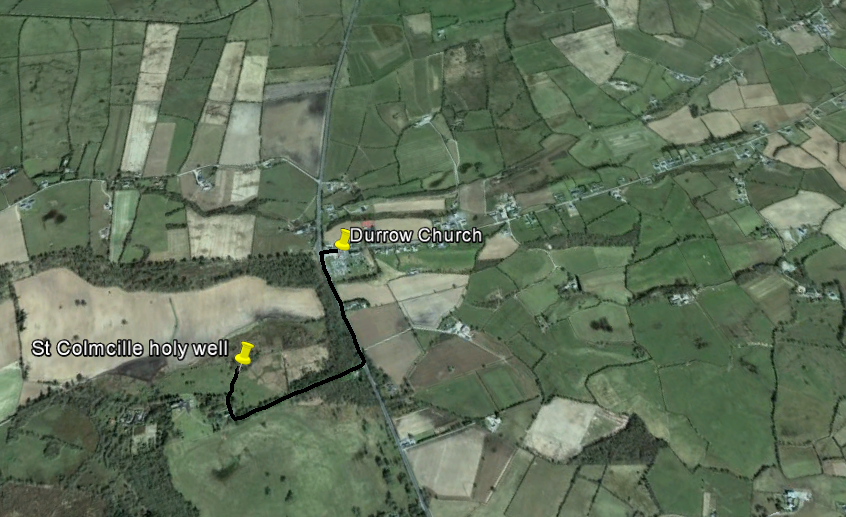
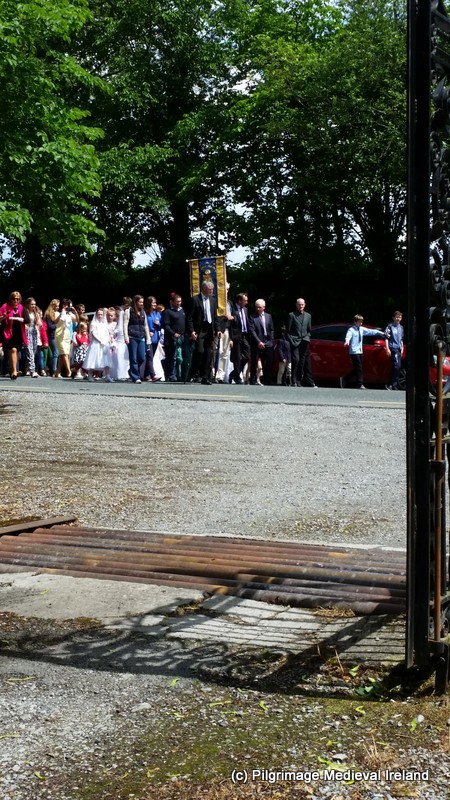
This year the communion mass  was held at 10 am and a second mass in honor of Colmcille was held at 12am.  Following mass the community walk in procession to St. Colmcille’s holy well and  after  all the religious celebrations  a sports day  was held in the afternoon .

Procession durrow

Processional route from Durrow Roman Catholic Church to St Colmcille’s holy well ( map taken google maps)

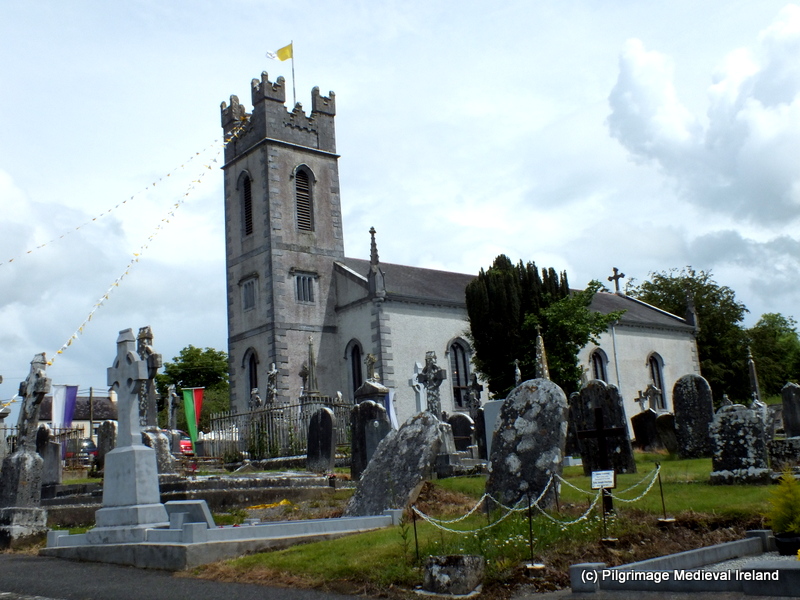
When I arrived in Durrow  it was about 12.2o and mass was underway.   The church  was decorated in bunting and flags.

1-DSCF8557

Roman Catholic Church at Durrow.

Following mass  everyone assembled  at the church gates and  fell into line  behind a banner with an image of the saint.  The parish priest and other  clergy from the diocese and two musicians walked in front with the rest of the pilgrims following.

1-DSCF8562

Pilgrims beginning to assemble outside the church gates for the procession.

1-DSCF8561

Musicians John Buttivant and Dick  relaxing before the procession. There are normally joined by a piper who was unfortunately not able to attend this year due to illness.

1-durrow samsung s5 210

The procession as it leaves the church and turns soutj down the N52.

The procession heads from the church gates south along the N52 road .  The event  literally stops traffic as the community walk along this busy road.   St Colmcille’s day is very important to the local community and one lady told me that  many people will take the day off work  to attend.

Everyone was in good spirits  as they walked along  oblivious to the lorries and cars behind them, thankfully the an Garda Síochána were  also present to regulate the traffic.

1-DSCF8584

The procession as it heads down the N52.

After walking for approximately  0.5 km the procession leaves the N52 road and heads  into Durrow Abbey Demesne.

1-durrow samsung s5 216

The procession as it enters the N52.

The next stage of the procession, which is about 0.6km in lenght,  could not be more different from the first section of the walk.  The pilgrims  proceeded down a leafy driveway that leads to the St Colmcille’s Church of Ireland and Durrow Abbey House.

1-DSCF8600

Pilgrims walking along the road within Durrow Demesne.

The procession continued past  St Colmcille’s Church of Ireland

1-DSCF8403

St Colmcille’s Church of Ireland at Durrow.

and  along a small  trackway which leads  to a D shaped , tree covered marshy area known as the island.

1-DSCF8615

Pilgrims walking down the trackway leading to St Colmcille’s holy well.

St Colmcille’s  holy well is located at the center of this area.

1-durrow samsung s5 140

St Colmcille’s holy well at Durrow.

Everyone  congregated around the well and tried to avoid the more marshy areas.  Some boards had been placed towards the entrance to make access easier.  Once everyone had arrived a  number of prayers were recited blessing the well and those present.

1-DSCF8637

Prayer being said at St Colmcille’s holy well.

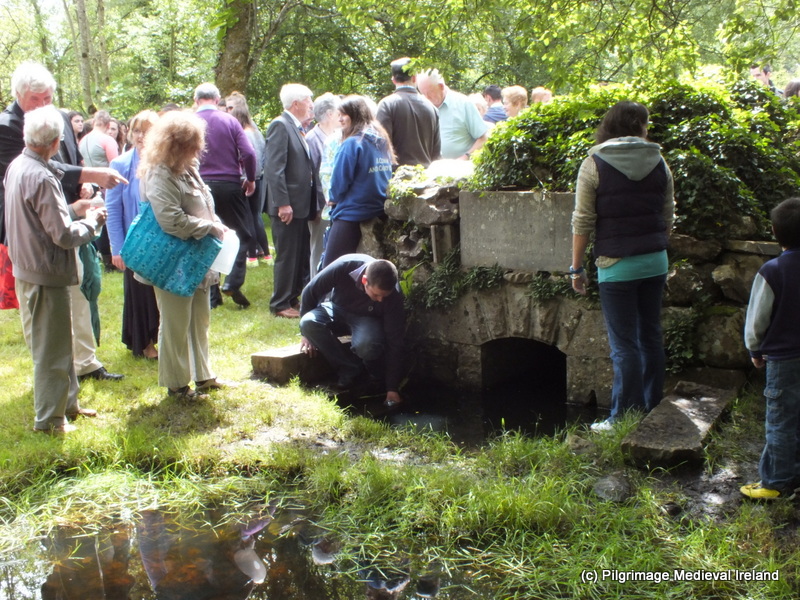
Following prayers many people  went to the holy well to take home water in plastic bottles and milk cartons.   A young man  and woman  stood by the well and  filled bottles with water for the pilgrims .

1-DSCF8639

Pilgrims taking water from St Colmcille’s holy well at Durrow.

Durrow was certainly one of the most stylish pilgrimages I have attended, probably because it coincides with communion day and everyone looked great in their suits and dresses.   This  event has such a great community feel and its really a  great social occasion too.

1-durrow samsung s5 265

Pilgrims chatting at St Colmcille’s holy well.

As I headed back up the trackway towards the church, which houses the 9th century high cross (will discuss in another post),  I could hear singing  and when I went to investigate further   I found a fantastic choir  who were singing within the church.

1-DSCF8656

The choir singing within the church at Durrow.

I really enjoyed my time at Durrow and it was really lovely to attend such  a vibrant pilgrimage.

References

http://www.tullamoreparish.ie/durrow-mainmenu-177%5B/embed%5D


The Rag Well Clonmel

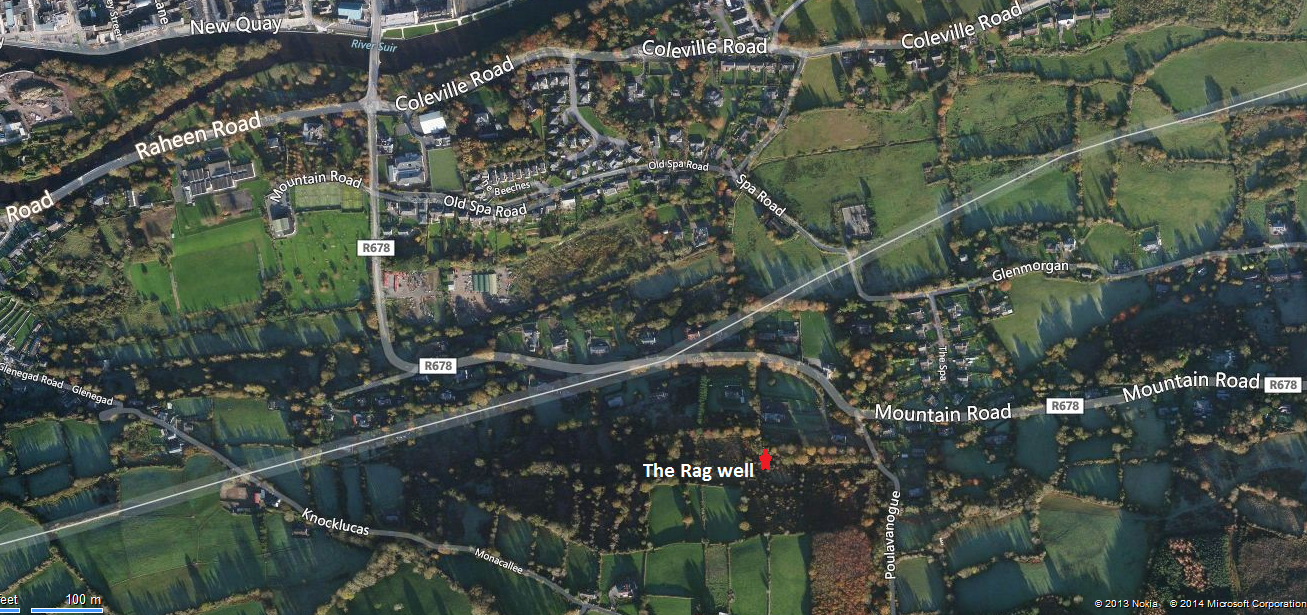
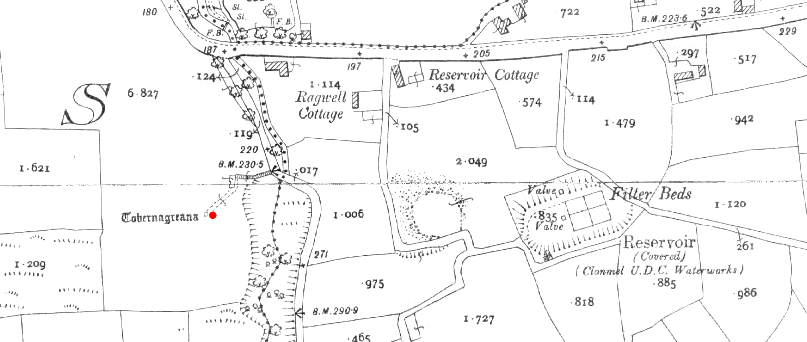
The Rag Well  is a small well located in the townland of Knocklucas, on the southern outskirts of the town of Clonmel.  The well gives its name to the surrounding area which is generally referred to as the ‘ragwell’.  This is not a holy well   it is more of a wishing well  and there is a long tradition of people coming here and  tying rags to a white thorn tree beside the well  to make a wish .

Location map of the rag well taken from Bing Maps

Location map of the rag well taken from Bing Maps

While writing my last post on St Patricks well at Marlfield I came across some old photos of the Rag Well  in the National Library of Ireland online photographic database.  I became very curious about the well, its history,  if it had changed  or had been refurbished.

So last weekend I paid a visit to the site with my uncle Eddie who grew up in the  Old Bridge area of Clonmel town  and as a child visited the site.


The landscape of the site  at the end of the 19th- early 20th century

In 1841 John O’Donovan records that  the well  as being  known as Tobar na Gréine / the well of the sun.  Although he refers to it as a holy well, he makes no mention of pilgrimage or an association with a saint.  By the early 20th century the well was known as the Rag Well and  continues to be  known by this name  to this day.

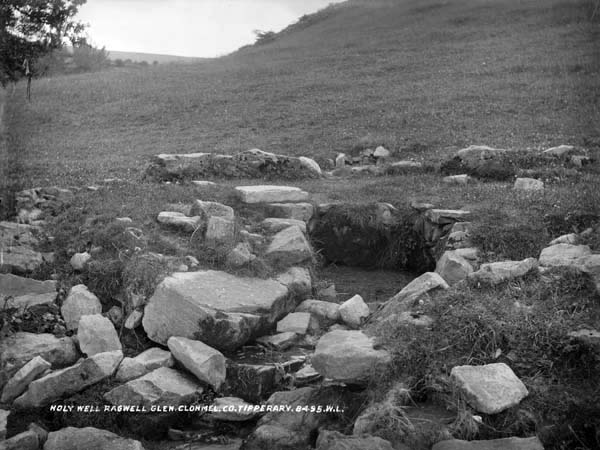
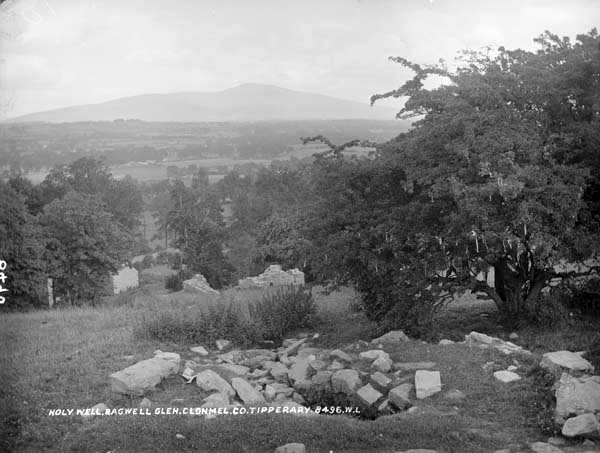
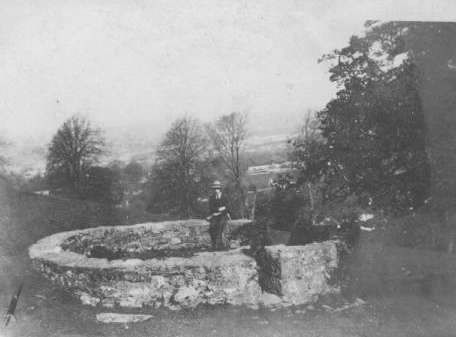
The well is an underground stream which flows into a stone lined channel.  At the time the photo below was taken in the early 1900’s  the well was surrounded by a  low circular wall.  The enclosing wall was in poor condition and it looks like only the footings of the wall were visible when the photo was taken.

French, R., & Lawrence, W. (. M.. (18651914). Holy Well, Ragwell Glen, Clonmel, Co. Tipperary. http://catalogue.nli.ie/Record/vtls000319096

French, R., & Lawrence, W. M.. (18651914). Holy Well, Ragwell Glen, Clonmel, Co. Tipperary (Taken from http://catalogue.nli.ie/Record/vtls000319096

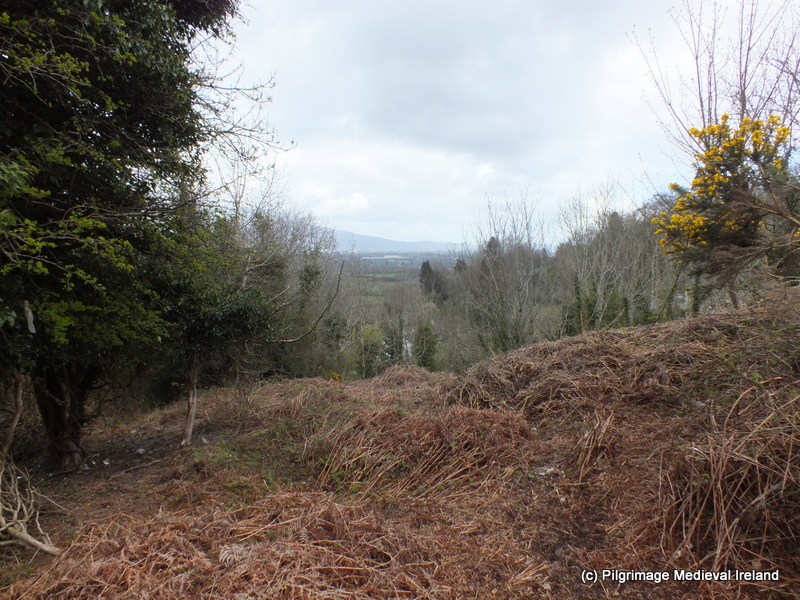
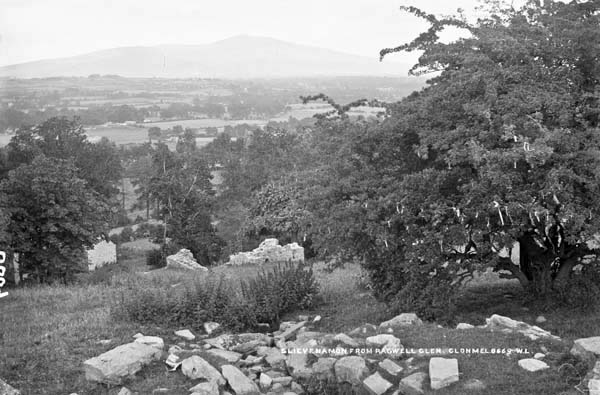
In the  photo the white thorn tree  beside the well is covered in rags.  The well looks directly across  at Slievenamon mountain and the mountain  is  was clearly visible in the photo above.  The modern tree coverage  is alot more  dense and the view is not as clear  but its still pretty  impressive.

French, R., & Lawrence, W. (. M.. (18651914). Slievenamon from Roguell Glen, Clonmel, Co. Tipperary. http://catalogue.nli.ie/Record/vtls000331355

French, R., & Lawrence, W. (. M.. (18651914). Slievenamon from Roguell Glen, Clonmel, Co. Tipperary. http://catalogue.nli.ie/Record/vtls000331355

A later photo,  of unknown date,  shows that the wall around the well had been rebuilt and the well  has remained unchanged to this day.

rag_well clonmel

The Rag Well photo taken some time in the 20th century ( image taken http://www.igp-web.com/tipperary/photos/oldphotos/index.htm)

The Rag well today

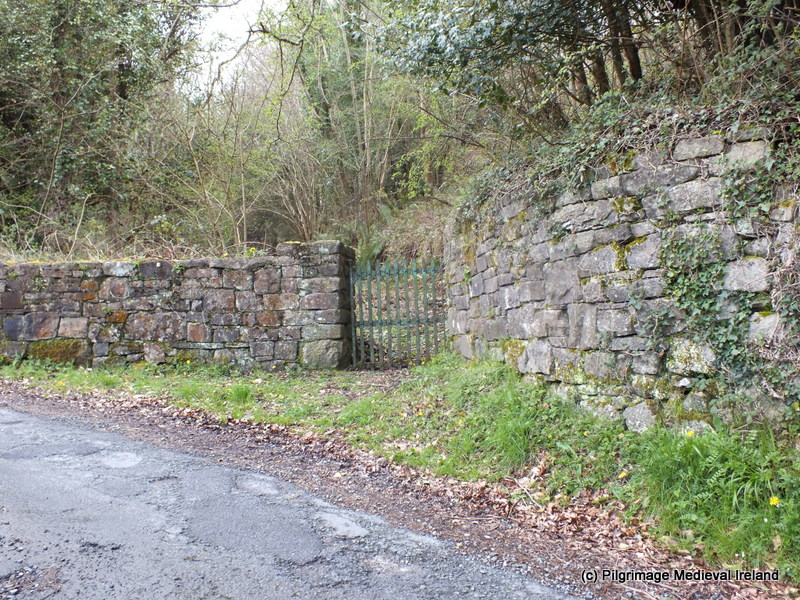
To get to the  Rag Well you head out of Clonmel along  the mountain road  and at  the first  junction,  on a sharp bend you take the  smaller road (see map above).   A short distance up this road you will see a small green gate that opens on to an old grassy laneway.

1-DSCF6615

Gateway leading to the path to the Rag Well

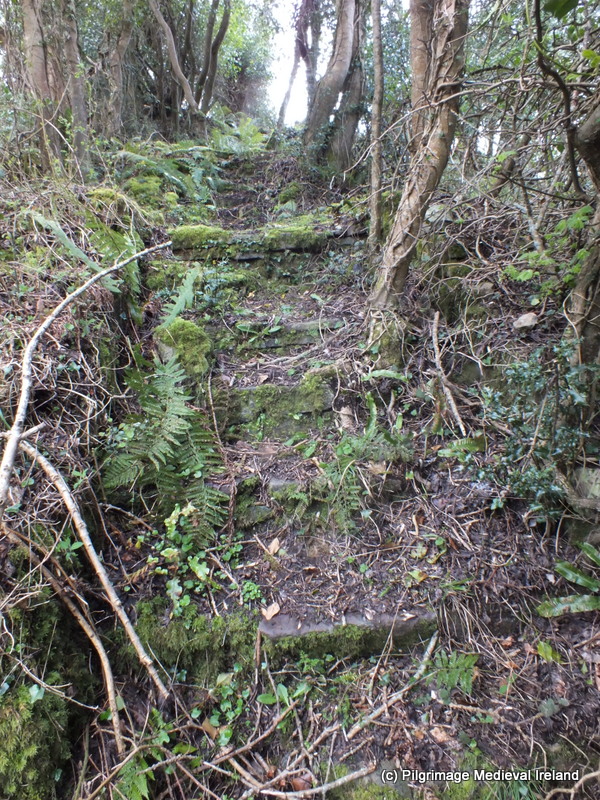
Go through the gate and the path to the well is on the right hand side  above the lane.  It is easy to miss the path  and you have to climb up to it.  The path consist of stone steps which are now  covered in leaves and dirt.  The steps  are  very slippy  so do take care climbing and if you are anyway unsteady on your feet id  give it a miss, I stumbled a few times on the way up and down.

1-DSCF6600

Stone steps leading to the Rag Well

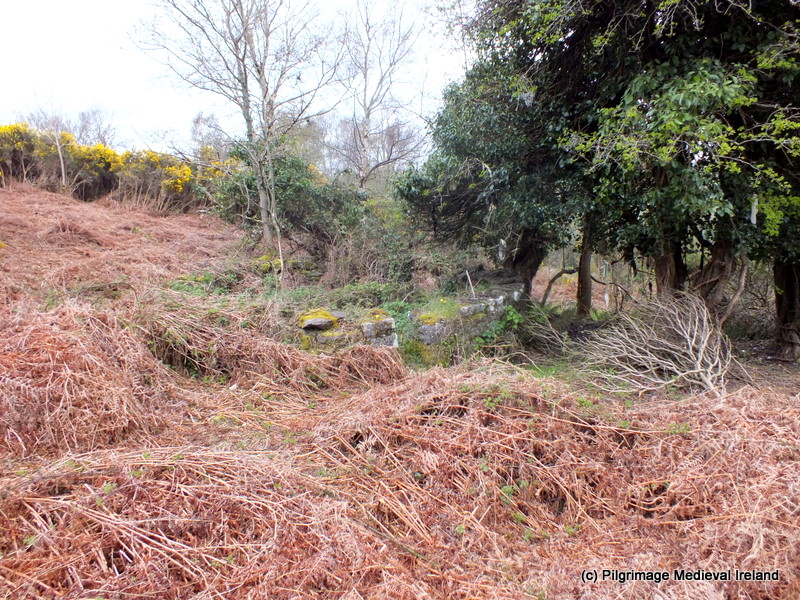
The path is a little bit over grown in places but it will lead you to the well.  Like the path the well is neglected and  over grown.  In the older photos the well was surrounded by pasture but today the field  is covered in bracken and gorse.

1-DSCF6545

The Rag Well surrounded by bracken

The well is still surrounded by  the circular stone wall.  The wall is in a reasonable state of preservation but there are patches  in need of repair.  The well can be entered through a small opening in the south.  The interior is now very over grown,  although it is clear the interior hasn’t change since  French  photographed the well in the 1900’s see photo below. The water flows out from the ground into the stone channel which in turn flows out of the enclosure and heads down hill.

French, R., & Lawrence, W. (. M.. (18651914). Holy Well, Ragwell Glen, Clonmel, Co. Tipperary. http://catalogue.nli.ie/Record/vtls000319095

French, R., & Lawrence, W. (. M.. (18651914). Holy Well, Ragwell Glen, Clonmel, Co. Tipperary. http://catalogue.nli.ie/Record/vtls000319095

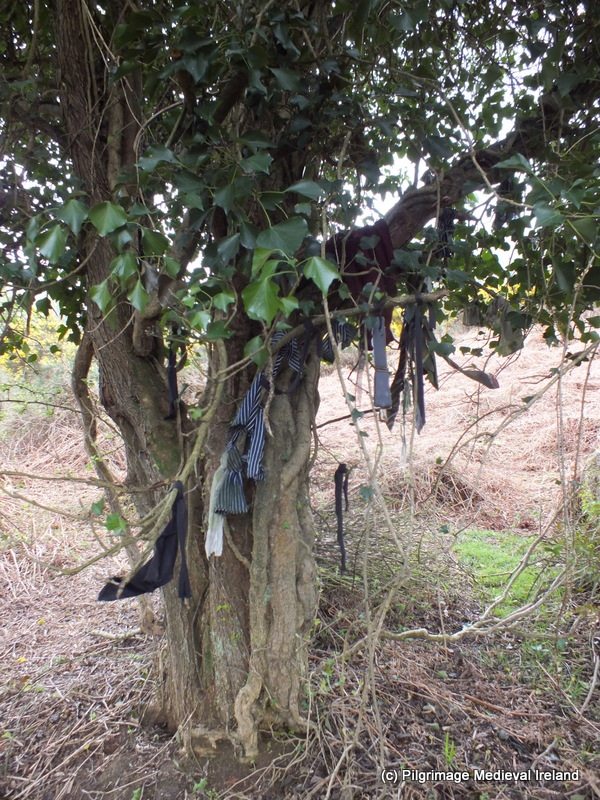
The rag tree which is a white thorn tree  is  covered in  ivy.   It looks like the ivy is choking the tree which is really sad given its history.  There  are still some rags on the tree which suggests some adventurous people still come here.

1-DSCF6570

The Rag Tree which gives the Rag Well its name.

As I said before this is not a not a holy well but a wishing well.   O’Connell in 1956  noted

There  until recently the young ladies used to tie  a bit of a rag around a branch of a tree, perhaps adding a prayer like ” Dear St Anne, send me a man….”


As a child my uncle was told the well was associated with the fairies and  he and his friends would tie rags to the tree to make wishes before heading off to the near by reservoir to go for a swim.

ragwell 2 Id love to hear from anyone who has any memories of the rag well  and I hope this post will encourage people to visit it so this magical place does not become forgotten.

1-DSCF6549

View of Slievenamon from the well today

References

French, R., & Lawrence, W. M.. (18651914). Holy Well, Ragwell Glen, Clonmel, Co. Tipperary . http://catalogue.nli.ie/Record/vtls000319096

French, R., & Lawrence, W. (. M.. (18651914). Slievenamon from Roguell Glen, Clonmel, Co. Tipperary. http://catalogue.nli.ie/Record/vtls000331355

French, R., & Lawrence, W. (. M.. (18651914). Holy Well, Ragwell Glen, Clonmel, Co. Tipperary. http://catalogue.nli.ie/Record/vtls000319095

O’Connell, P 1956. ‘St Patrick’s well Clonmel, Co. Tipperary: an early Christian sanctuary of the decies. Phamplet . Clonmel: St Patrick’s Day Society.

O’ Flanagan, Rev. M. (Complier) 1929. Letters containing information relative to the antiquities of the county of Waterford collected during the progress of the Ordnance Survey in 1841. Bray: Typescript.


St Patrick’s Holy Well at Marlfield Clonmel

St Patrick’s well is  located close to the village of Marlfield, a few miles outside of the town of Clonmel.  It is well is signposted  and can be accessed  from the Cahir to Clonmel road and from the Marlfield village.

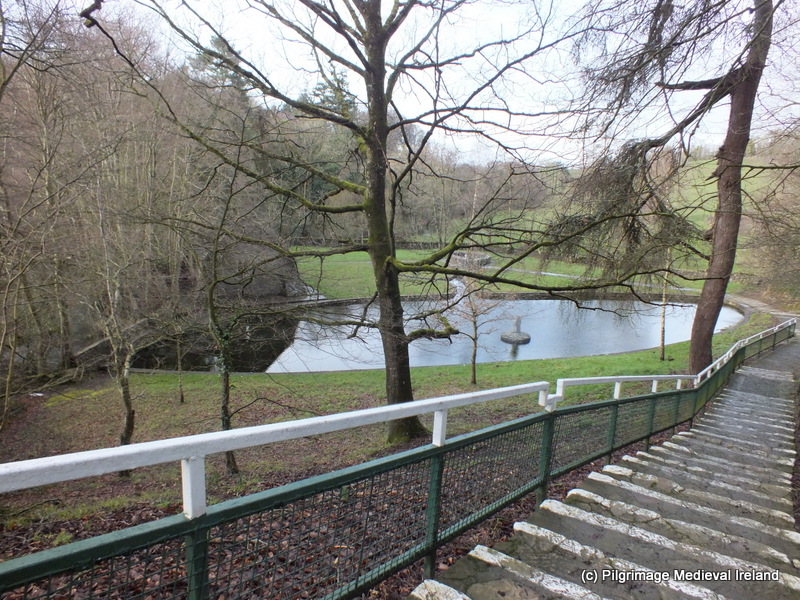
St Patrick’s well is located beside a stream at the base of a limestone cliff.  This is a really lovely peaceful spot.  As well as being a place of pilgrimage (excuse the pun) it is also a focal point on hot sunny days for families and children who come here to hang out and paddle in the icy waters of the  man-made pond beside the well.  I had hoped to write a post about the well for St Patrick’s day  but unfortunately the time just got away from me, so better late then never.

Modern Landscape

To access the well you  climb down  modern steps  built into the side the cliff face.  The steps provide a  great vantage point for  views of the  site.

1-DSCF4876

View of St Patrick’s well from top of steps

At  the bottom  of the steps  there is a large  statue of St Patrick  who  gazes serenely across at the holy well.

1-DSCF4883

Statue of St Patrick

People often leave votive offerings at the statue and on the day I visited there was a large rosary beads  draped around the statue’s neck and children’s shoes and a candle at the base.

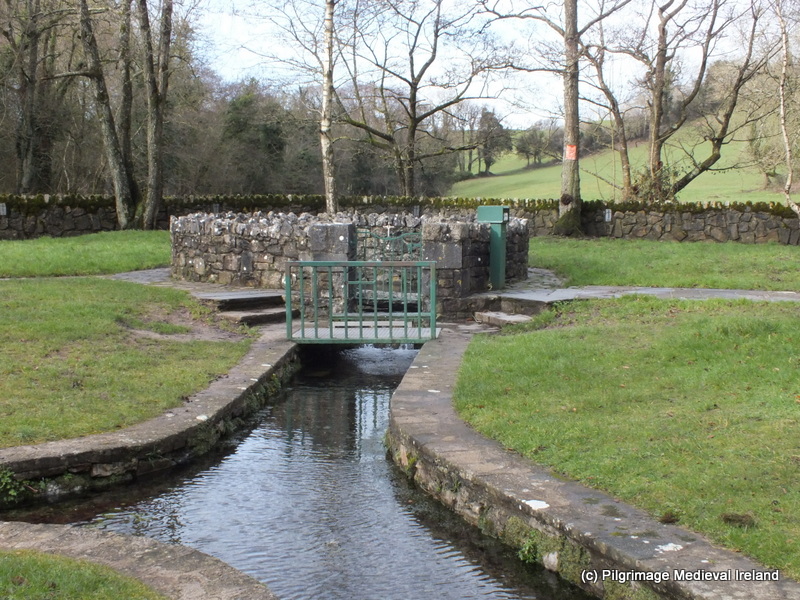
The rest of the site consists of a  bubbling  spring well defined by a tear shaped stone walls whose waters flow  through a small stone channel which in turn flows into a large man-made  pond.

1-DSCF4891

Interior of St Patrick’s holy well

The water flows through two long hallowed-out  granite water  spouts.  Conn Manning (2007, 13) has identified the stones as flumes from an early medieval horizontal mill.

1-DSCF4889

The water from the well flows through flumes from an early medieval horizontal mill

The water that fills the well comes from an underground stream and the force of the water is very strong and would have been sufficient to power a mill without a need of a millpond (Manning 2007, 13).  Perhaps the well had a more practical function before becoming a place of devotion.

The water from the well flows through the flumes and through a modern stone lined channel  which flows into a large pond.  At the centre of the pond is a small undecorated early medieval stone cross .

1-DSCF4877-001

Beside the large pond are the ruins of a small church of late medieval date.  This may have been used as a parish church in medieval times and appears to have been used as a place of worship until the 18th century. The building is rectangular in plan and built  of limestone rubble. The exterior has been re-pointed and the building has undergone restoration in modern times.  The church and the well belonged to the nearby Cistercian  abbey of Inishlounaght.  The abbey was founded in the 12th century by Donal O’Brien the King of Munster and dedicated to the Blessed Virgin.   The abbey no longer survives but its site is located at the first fruits Church of Ireland  on the banks of the Suir in Marlfield village.

1-DSCF4910

The church is entered through a doorway with hooded moulding  in the west gable, which has been rebuilt in modern times.

1-DSCF4913

Doorway in the west gable of the church

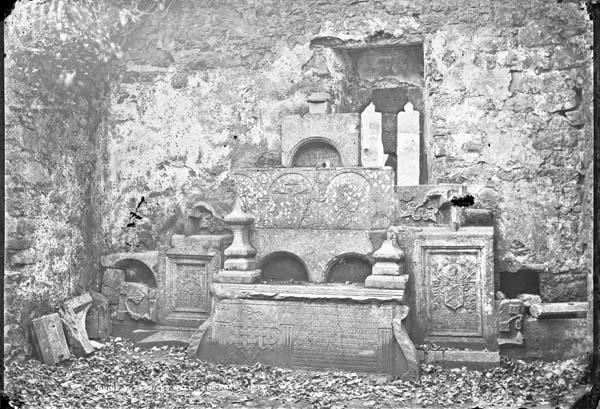
Within the church there is a late medieval  alter tomb which came originally from the White Mortuary Chapel in St Mary’s church in Clonmel. The tomb was brought here following the demolition of the  chapel  in 1805.

L_CAB_01294

Interior of St Patrick’s church prior to modern restorations by Robert French from The Laurence Collection National Museum of Ireland http://catalogue.nli.ie/Record/vtls000339063

Incorporated into the east gable are a number of architectural fragments  such as window heads which  came from the abbey of Inishlounaght and  also an armorial plaque .

1-DSCF4961

East gable of St Patrick’s church

The Landscape of the Well in the 19th and early 20th century

The landscape we see today at St Patrick well is a relatively new creation and has  changed drastically in the last 50 years or so.

Picture2

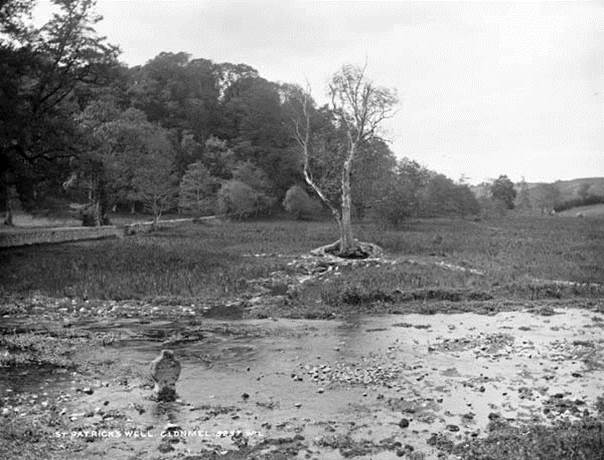
Photo dating to circa 1900’s showing the original landscape of St Patrick’s well. Taken by Robert French (1841-1917) in The Lawrence Photograph Collection National Library of Ireland http://catalogue.nli.ie/Record/vtls000339062

In 1914 Power described the well as a

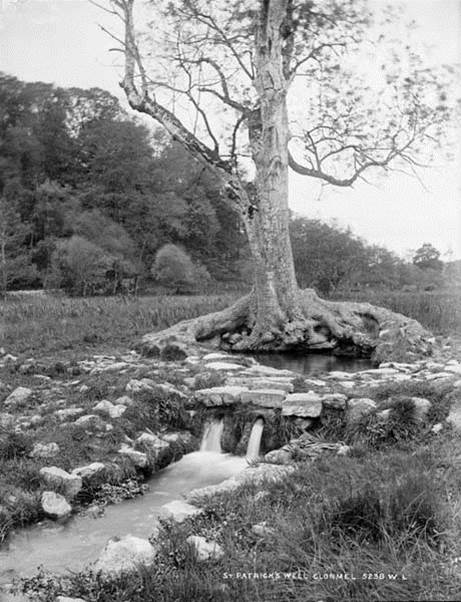
great basin filled to the brim with bubbling crystal water.., close by it in the march is a stunted, rude and early celtic cross which marks a penitential station.

Picture1

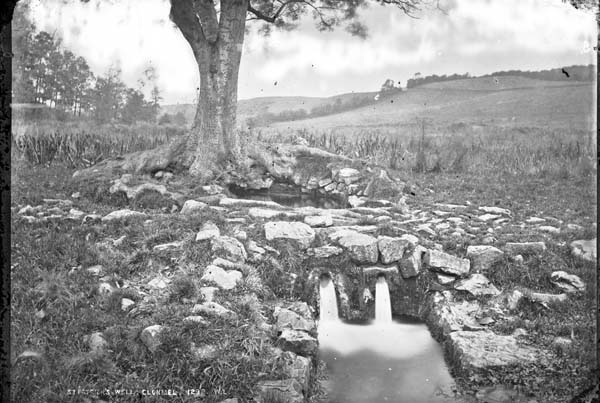
Photo of St Patrick’s well taken by Robert French (1841-1917) in The Lawrence Photograph Collection National Library of Ireland http://catalogue.nli.ie/Record/vtls000333667

Early 20th century images of the well suggest it was originally surrounded by a low circular enclosing wall with a large ash tree growing out of the side of the well.  The site had a rather beautiful wild and natural appearance but would have been marshy underfoot.

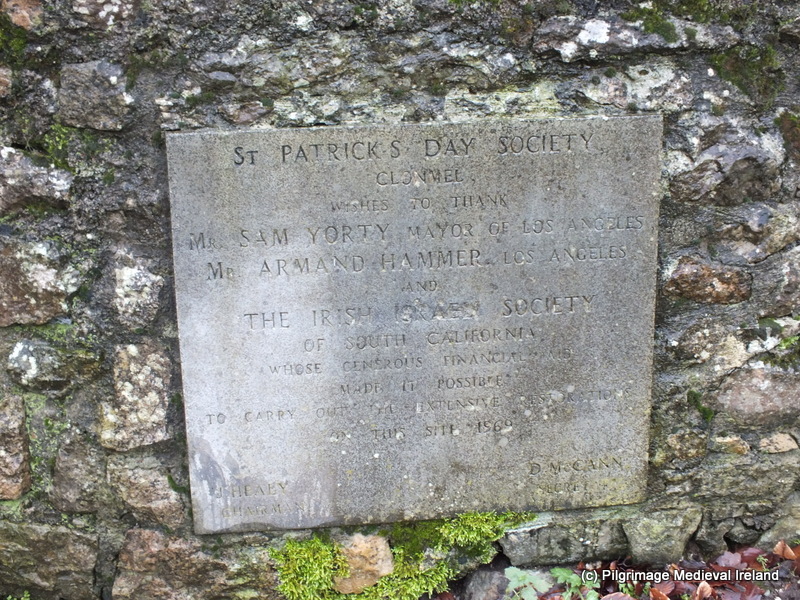
The remodelling of the site began in the 1956 with the addition of the statue of St Patrick described above. The majority of the works took place in the late 1960’s, undertaken by the St Patrick’s day society with financial aid from the Mayor of Los Angles Sam Vorty.  Vorty’s mother was Johanna Egan formerly of Love Lane in Clonmel who emigrated to America and who often talked to her son about this well. Following her death he contacted the Society of St Patrick’s day  in Clonmel and  offered financial help in improving the well.

With the funding provided by the Mr Vorty, Mr Armand Hammer and the  Irish Israeli society from South California, the St Patrick’s day society instigated  a ‘clean up’ and  remodelling and landscaping  of the site which resulted in its current appearance.

1-DSCF4911

Plaque dedicated to restoration and landscaping of St Patrick’s well


Evidence for pilgrimage

I am a bit short of time this week so I have decided to discuss the well’s association with St Patrick in another post.

St Patrick’s well is not mentioned in any early medieval documents prior to the 12th century. The earliest direct reference to pilgrimage was recorded in 1619 when Pope Paul V granted the a plenary indulgence to all pilgrims visiting St Patrick’s church, provided they went to confession and communion and visited the church on the feast of Pentecost or on the feast day of St Patrick, any time from Vespers to sunset on the feast.

The Ordnance Survey letters written by John Donovan who visited the site in the 1840’s  notes

it  is still esteemed holy and visited by pilgrims far and near for the cure of disease especially headaches.

1-DSCF4981

St Patrick’s well

The waters of the well are renowned for healing properties. In 1813 the well was described as follows

there is an excellent mineral spring and a well which is celebrated for curing sore lips,  sore eyes, the srofula* and several chronic diseases either by drinking or washing in the  stream that issues from it. Thousands flock here in summertime from all places astound to pilgrimage in the stream.

Others who visited the well recorded that  clusters of stones within the stream along with  the early medieval cross marked the pilgrim stations.  It was also custom like at so many 19th and 20th century pilgrim sites for people to perform their pilgrimage in their bare feet.

O’Donovan’s visit appears to have coincided with the pilgrimage of a man who had developed a head ache having joined the temperance movement.   He noted the man’s ritual  washing in the waters to obtain a cure.

The day I visited it there was  at it for the cure of a headache, which he got since he joined Father Mathew. He washed his hands, head and feet in the stream at the point where it issues form the well.

L_CAB_01292

Photo dating to circa 1900’s showing the original landscape of St Patrick’s well. Taken by Robert French (1841-1917) in The Lawrence Photograph Collection National Library of Ireland http://catalogue.nli.ie/Record/vtls000339061


 Hall writing in 1842  notes

It was  once a favourite resort for pilgrims but it now quiet deserted

While the The Dublin University Magazine in 1953  states

 Pilgrims in former days resorted to this spot.

These accounts suggest the well was still visited but  by local people in the mid 19th century but the hinterland of the shrine was in decline.  The fortunes of the well change in the early 20th century with a revival in devotion at the well.

1-DSCF4895

Image of St Patrick built into enclosing well wall at St Patrick’s well Marlfield

I will  come back to St Patrick’s  well very soon and  discuss its connections with St Patrick, 20th century and modern pilgrimage to the site  and any new sources for past pilgrimage

References

*Scrofula was a swelling of the lymph nodes in the neck caused TB.

Anon. 1853. The Dublin University Magazine Vol. 42, page 332.

Farrelly, J. 2011. ‘St Patrick’s well TS083-004′ RMP Files’, http://www.archaeology.ie

Hall, S.C.  1842, Ireland its Scenery and Character etc. London: How and Parsons.

Manning, C. ‘Could well be a mill’ [St. Patrick’s Well, nr. Clonmel, Co. Tipperary & St Brigit’s well nr. Tully, Co. Kildare. Stone flumes], Vol. 21. No. 1, 12-15.

O’ Flanagan, Rev. M. (Complier) 1930. Letters containing information relative to the  antiquities of the county of Tipperary collected during the progress of the Ordnance  Survey in 1840. 3 Vols. Bray: Typescript.

Power, Rev. P. 1914. Life of St. Declan of Ardmore and Life of St. Mochuda of
Lismore. With introduction, translation and notes. London: Irish Texts Society
St Berrihert’s Kyle Co Tipperary Part 1: The Archaeological remains

The 18th of February is the feast day of St Berrihert/Berrahert of the parish of Ardane, Co Tipperary.  An Anglo-Saxon saint, he is traditionally believed to have  come to Ireland in the seventh century following the  Synod of Whitby. To mark the saint’s feast  this two-part blog post will explore the  archaeological remains and the evidence  pilgrimage  at a site associated with the site, known as St Berrihert’s Kyle in Co Tipperary.

BH

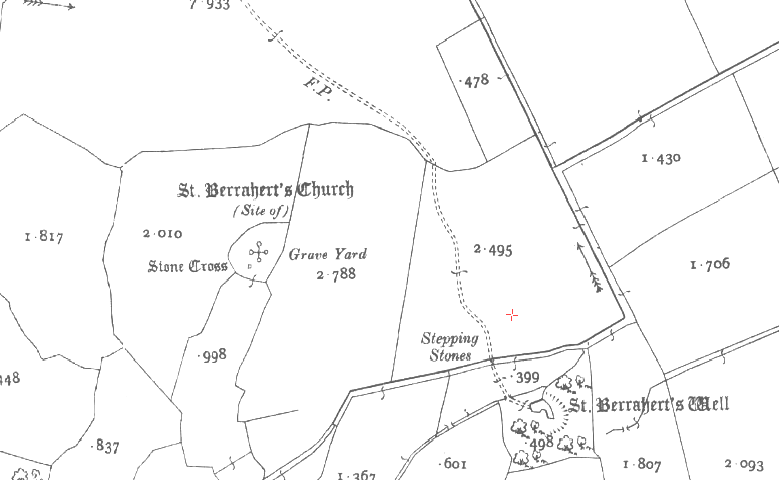
1st ed OS map of St Berrahert’s Kyle/Berrihert’s Kyle 1840

Location

St Berrihert’s Kyle  is  one of Tipperary’s best hidden treasure.  The site is located in the townland of Ardane, in the parish of Templeneiry. It is difficult to find as there is no signposting.  It is located close to the village of Ardane.


From the main road, you will see a sign for “Golden Mile, Winner 2003”, turn left on the opposite road. Half a mile down this road is a gate with a no parking sign. Go through this gate and cross the first field (Be aware that there might be cows or bulls!). From there you will find the wooden trail that will lead you to the Kyle and the Well (visitballyhoura.com).

Who is St Berrihert?

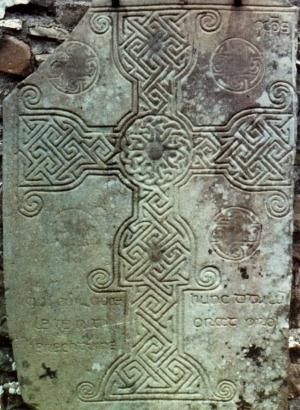
It is suggested that St Berrihert  came to Ireland following the Synod of Whitby (Ó HÉaildhe 1967, 104).  He is  named in some documents  as brother of the Saxon saint Garailt of Mayo (Ó Riain 2011, 103).  He is associated with a number of places in the south of Ireland mainly around  Co Cork.  He is likely also to be the same saint as St Berichter the patron of an early medieval ecclesiastical site at  Tullylease in the barony of Duhallow, Co Cork.  An interesting cross slab of 8th/9th century date survives at Tullylease. The stone has an elaborate decorated cross and  the text of  with a prayer  for  Beirchachtuire an Irish version of  the Anglo-Saxon Beorhtwine.

tullylease

Tullylease Cross slab. Image taken from http://www.irishmegaliths.org.uk/crosspillars2.htm

The Annals of the Four Masters  records the death of a cleric with this name at the site in 839,

Berichtir of Tulach Leis died on the 6th of December.

The Martyrologies of Donegal and Gorman record the saint feast day as the 6th of December. His feast was honoured on the 18th of February at St Berrihert’s Kyle, the subject of this post, and at  the 15th of February in West Kerry.  The variation of feast day  perhaps  indicates ‘ that the cult had  become entwined with that of Bearach of Termonbarry‘ whose feast is on the 15th of February (Ó Riain 2011, 102).

St Berrihert’s Kyle 

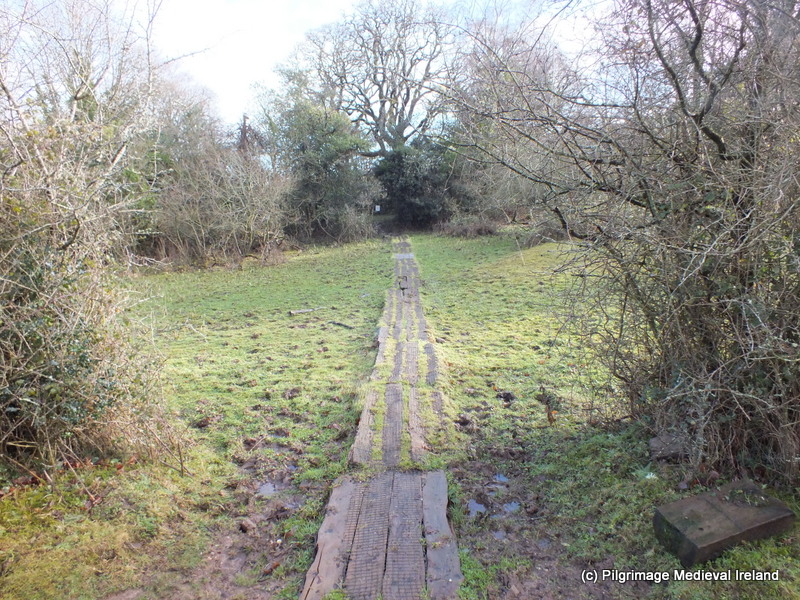
St Berrihert’s Kyle  is located on farm land. To approach the site you must cross through two fields.  The land is boggy but a timber path marks the way. There are often horses or cattle in the field.

1-DSCF4316

Path approaching the St Berrihert’s Kyle

The Kyle through the years

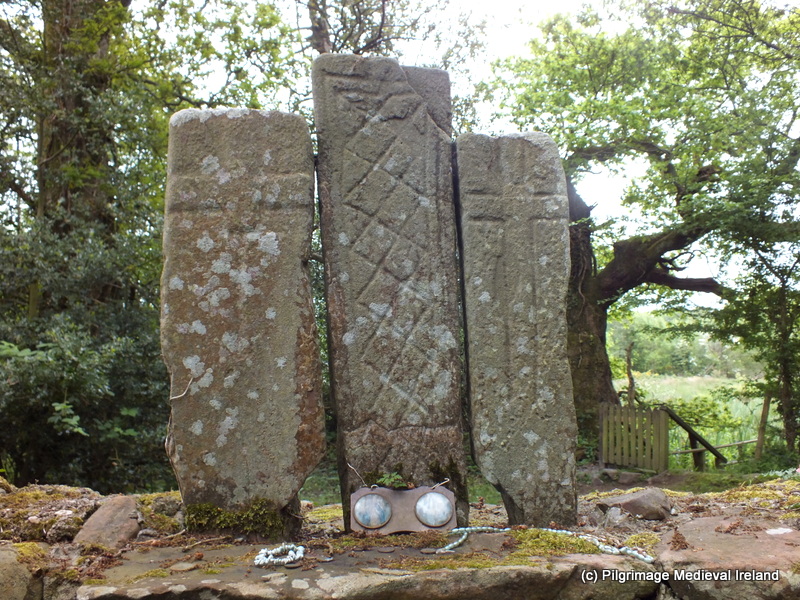
The Kyle is the oval area enclosed by an earthen bank and contains a large number of early medieval cross slabs.  The landscape of this area has changed  in the last 100 years or so.

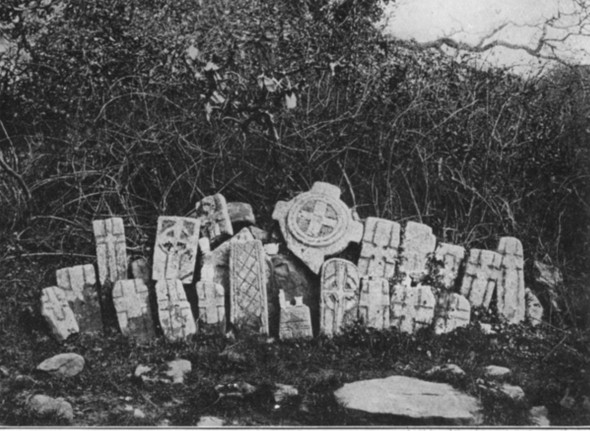
In 1907 Crawford described the area as  ‘a circular enclosure in a field west of the well and greatly overgrown with oak tress and thorn bushes‘.  He also noted that all the carved stones, which he counted 22 have been collected and built into a station (Crawford 1907, 61).

ber

Cross slab at St Berrihert’s Kyle in 1907 ( after Crawford 1907)

The photo above dates  to 1907, it  shows the site as very overgrown with a large number of the cross slabs placed in front of a small tree covered in rags.  Crawford( 1907, 62) mentions  the tree was a thorn-bush and  that a series of  offerings were left here including  statuettes, vases, cups and toy-teapots.

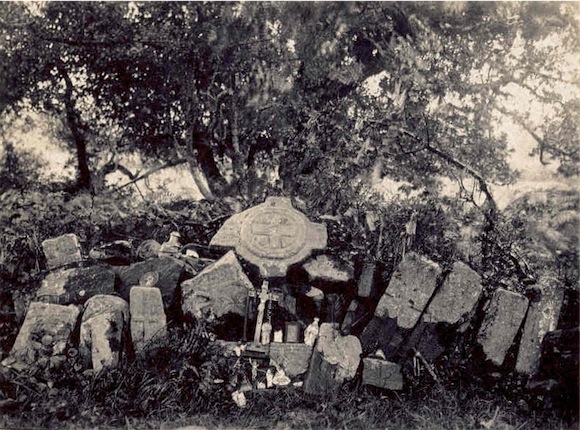
A second photo from the Limerick City Museum collection show that the cross slabs had been moved and built up into a station in front of a wall.  A large rectangular stone was placed in front of the crosses .  This photo is dated to between  1896-1910 and on the reverse image in pencil ‘Berrihert’s Kyle Co. Tipp. 1936’.

62088_ca_object_representations_media_7392_mediumlarge

Photo of Crosses at St Berrihert’s Kyle  dated 1936 ( from http://museum.limerick.ie/index.php/Detail/Object/Show/object_id/8087)

The site today

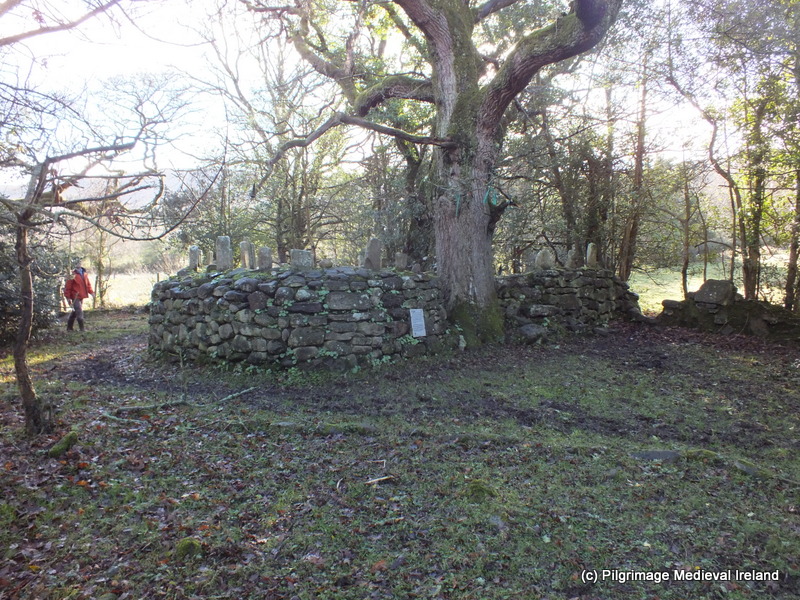
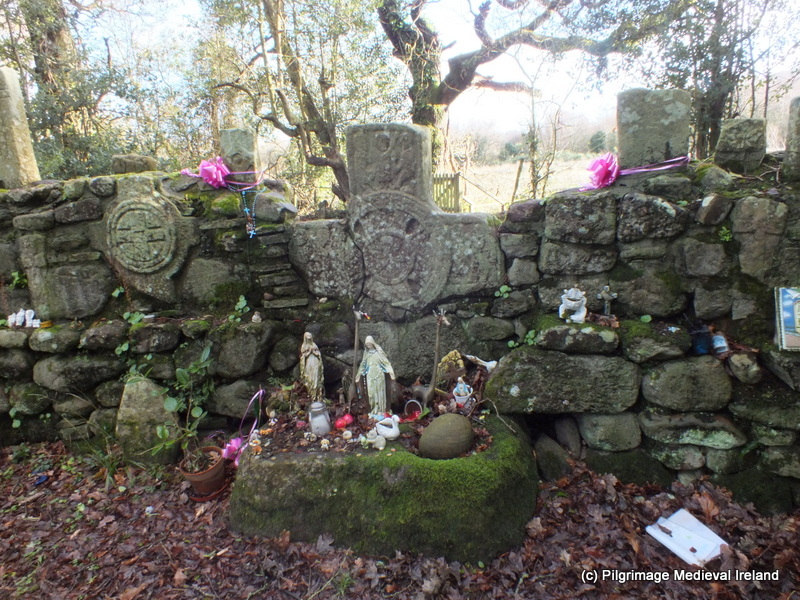
Today the landscape of the site owes much to work carried out in 1946 by  the Office of Public Works/OPW who  “cleaned up the site”.  They cleared the enclosure of bushes and vegetation. Then they collected all the crosses and built them into a circular  stone structure which incorporates a large oak tree, to protect the crosses from cattle at the south end of the site. The walls are full of cross slabs and it has an ancient look to it.

1-DSCF4372

Stone structure built by OPW in 1946

The stone structure is entered via a style,  beside a large oak tree.  Ó HÉailidhe (1967, 103)  recorded 72 cross inscribed stone at the site but only 67 were noted  by the Tipperary Survey in 2011 suggesting some may be missing.

1-DSCF4373

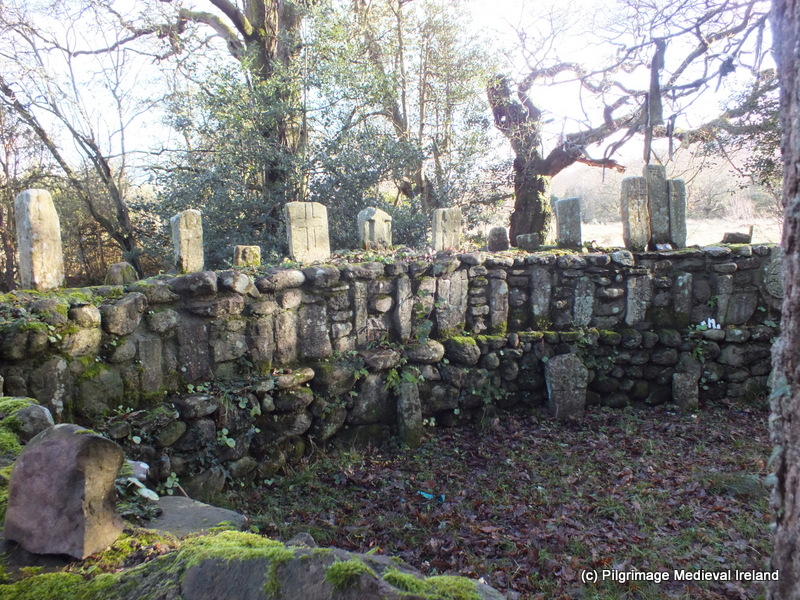
Interior of stone enclosure showing the stone crosses incorporated into the walls.

The majority of the crosses depict a simple Latin cross on a single face.  A small number have decoration on both faces.

1-DSCF7053

Close up of cross slabs at St Berrihert’s Kyle.

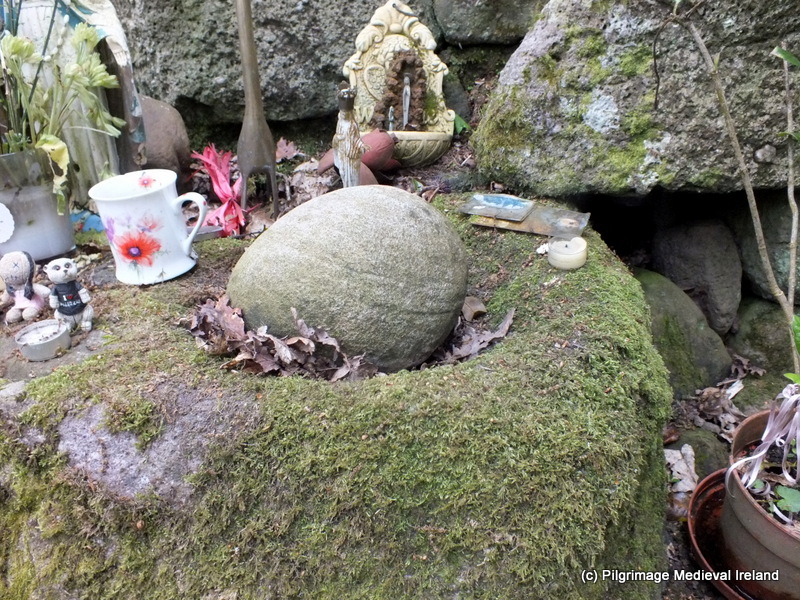
A larger rectangular stone  with one  hollow depression is found within the stone enclosure, in front of the head of a high cross which is incorporated into the  wall.  The surface of the bullaun stone is covered by trinkets left by pilgrims and includes holy statues, small toys, coins and crystals .

1-DSCF4347

Bullaun stone in interior of circular stone enclosure at St Berrihert’s Kyle

A large egg-shaped  stone sits in the hollow of the bullaun stone.  These egg stones occurs at other pilgrim sites and are known as cursing stones.

1-DSCF7070

Egg shaped stone in the bullaun stone.

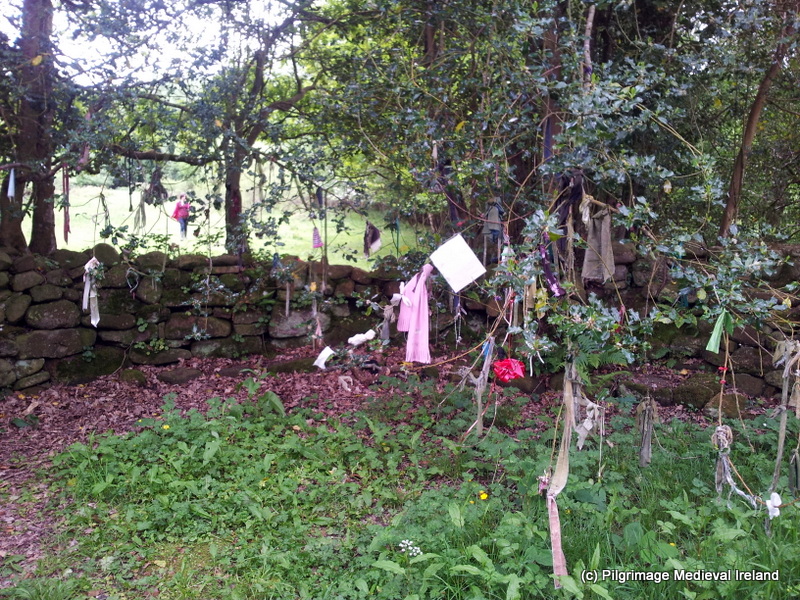
A  holly tree  within the enclosure is covered rags and ribbons tied by modern pilgrims.

1-676

Rag tree within circular stone structure at St Berriherts Kyle.

The presence of such a large number of  cross slabs at the site may suggest the presence of a monastic settlement.  There are no upstanding remains of any buildings at the site.  If this was a monastic site it is  possible the buildings were built of wood.  In the 1940’s the ground surface of the Kyle was lowered and the soil  from this area was used to build a causeway across the bog to the nearby St Berrihert’s well.  The OPW recorded no trace of walls when lowering the ground level at the site.  It is impossible to know what damage this act did to any sub-surface archaeological remains that may have been present.

Around the edge of the Kyle are a number of small stone cairns surmounted by a cross slab.  These cairns were created  in 1940’s  to mark stations of the cross but there were not part of the original pilgrim stations at the site .

1-DSCF4474

Cairn with cross slab built in 1946.

The central area of the Kyle is defined by stone curbing which demarcate a children’s burial ground.

1-DSCF4361

Kerbing at the site.

St Berrihert’s holy well

The nearby holy well is dedicated to St Berrihert  and is located a short distance from the Kyle. The path is marked by a timber track through marshy ground.

1-DSCF7126

Path leading from the Kyle to the nearby St Berrihert’s holy well.

The path continues crossing over a small bridge.

1-DSCF7131

Bridge over stream to on way to St Berrihert’s holy well

The  well is a large  circular pool is found in a  surrounded by trees and defined by an earthen bank in the NE-NW.

1-DSCF4406

St Berrihert’s holy well.
Some of the trees are decorated offering left by  modern pilgrims and range from ribbons, rags, socks and toys.

1-DSCF7138

Rag tree at St Berrihert’s Kyle.

The well is formed from limestone springs  and the waters bubble forth giving it a really magical appearance. This was very likely a place of prehistoric pilgrimage.

1-DSCF4410

Bubbling water at St Berrihert’ well.

Coming soon is part II of this post, which will look at the history of pilgrimage at the site.

References

Crawford, H. S. 1907. ‘A descriptive list of the early Irish crosses’, JRSAI 37, 187-239.

ÓHÉailidhe, P. 1967. ‘The crosses and slabs at St Berrihert’s Kyle in the Glen of Aherlow’ in Rynne, E. North Munster Studies. Limerick: The Thomond Archaeology Society, 102-126.

1987.0727, Limerick Museum Catalogue, http://museum.limerick.ie/index.php/Detail/Object/Show/object_id/8087http://museum.limerick.ie/index.php/Detail/Object/Show/object_id/8087


St Bartholmew’s well, Garrynataggart Co. Cork

The first post of 2014 is about St Bartholomew’s well  in the townland of Garryantaggart Co. Cork. By coincidence the first post of 2013 was also about a holy well of the same name at Kinsalebeg Co. Waterford.

St Bartholomew’s well is  located close to a junction with the R639, the old road linking the towns of Fermoy and Midelton. The well is easy to find and there is  a signpost at the Ballinwillin Bridge junction.

St Barth

Location map of St Bartholomew’s well Garrynataggart taken from Bing maps

According to Power writing in 1923 the townland name Garrynataggart or Garraidh an tSagairt in Irish means ‘the priest’s garden’.  The well is dedicated to St  Bartholomew who was  one of the 12 apostles.  Following the ascension of Christ he  engaged in missionary work and is believed to have brought Christianity to Armenia, where he was later martyred. Tradition holds he was flayed alive and crucified. In the Western church his feast is commemorated in the 24th of August.

Power  (1923, 172)  noted that devotions were held here at the Garrynataggart well on St Bartholomew’s feast day in the early 1920’s

Around hang, or are deposited, votives of the usual kind, and devotions are paid on August 24th.

The well is on private land but  the site is very accessible.  A small lay-by at the side of the road  provides parking for visitors to the well.  To approach the well one must  enter a the field via some concrete steps and  then continue a short distance across the field to a small river.

1-20131222_151848

River beside St Bartholomew’s holy well at Garrynataggart.

The river is  bridged by a timber bridge with a gate.

1-20131222_151815(1)

Bridge leading to holy well

The well is located on the other side of the bridge  on a south-facing  slope.  The area is very neat and tidy and there is a bench above the well, implying the  site is still cared for by local people.

The well is a natural spring it is surrounded by a tear shaped stone wall with a rounded top.

1-20131222_151935

St Bartholomew’s well Garrynataggart is surrounded by a modern enclosing wall.

The well is entered at the south  through a door with a gable faced facade.  At the top of the gable is an iron cross and a plaque stating the dedication of the well.

1-20131222_152000

Entrance to St Bartholomew’s well Garrynataggart.

A number of  ceramic mugs are found inside the well structure  on the left is a small recess.

1-20131222_152056(1)

Cups in small recess of the interior of the well structure at St Bartholomew’s well Garrynataggart.

The well is still in use  and visited, as evident from the neatness of the surrounding area and a small number of coins left in the water.

1-20131222_152048

The water of St Bartholomew’s well Garrynataggart comes from a spring and is crystal clear.

As I mentioned above devotions were being carried out at the well on the 24th of August on the saints feast day. Power (1923, 172) also mentions people leaving offerings at the well.

  Around hang, or are deposited, votives of the usual kind…..

  Today apart from the coins in the water of the well there is an image of the saint hanging from the well structure.

1-20131222_152301(1)

Image of St Bartholomew at St Bartholomew’s well Garrynataggart.

Id love to find out more about modern traditions at the well so if anyone has any information  please get in touch either by commenting on this post or emailing pilgrimagemedievalireland@gmail.com.

(C) Louise Nugent

Reference

Power, P. 1923. ‘Place-Names and Antiquites of S.E. County Cork. Barony of Barrymore. Part III.’ PRIA Vol. 36, 164-205.

Coole Abbey Co Cork

Coole Abbey  is a really interesting site, located about 4-5 miles outside of the scenic town of Castlelyons in Co Cork.  The site of an early medieval  monastery,  founded  by St Abban in the 6th century,  today  all that remains of  the early monastery  are two churches and a holy well. Of the surviving churches the  smaller of the two  sits in a field beside the road from Conna to Castlelyons. The  larger church is located c. 200m to the northeast  in an  historic graveyard.

map coole

Location map of the churches and Holy well at Coole (taken from Bing Maps)

Placename Evidence

Cúil  is the Irish for Coole and it translates as corner or nook.  Early medieval documents  refer to the abbey as Cúil  Chollaigne.

The Saints Associated with Coole

Coole is associated with two saints  Abban (Abán)  and Dalbach.

St  Abban  was born into the Uí Chormaic (Dál gCormaic ) dynasty in Leinster. He is associated with the churches of Mag Arnaide (‘Moyarney’/Adamstown, near New Ross, Co. Wexford) and Cell Abbáin (Killabban, Co. Laois) . In Munster  he established a monastery at  Ballyvourney, Co Cork  which he later surrendered to St Gobnait. He is also associated with Killagh Abbey near Milltown Co Kerry and Kilcrumper near Fermoy and  he founded  the church at Coole  (Cúil Chollaigne). Abban has two feast days the 16th of March and the 27th October (O’Riain 2012, 51-52; 254).

The second saint  association with Coole is St Dalbach. Dalbach  and the church at Coole were associated with the anchorite movement known as the ‘Céili Dé’ (clients of God)  who flourished in Ireland  between 750-850. The saints pedigree links him to a Cork based tribe known as the Uí Liatháin. The saints obit was entered in the annals for the year 800 and his feast was assigned to the 23rd October ( O’ Riain 2012 ,254).

There are few  early medieval historical references to the site. One that is of interest is found in Mac Carthaigh’s Book a collection of annals that date from 1114 to 1437.  The annals for the year  1152  states the churches of

 Cork, Imleach Iubhair (Emly), Lismore, and Cúil Chollainge (Coole) were burned in the same year.

The Annals of the Four Masters also record that in 1151

Gillagott Ua Carrain, lord of Ui-Maccaille, was killed at Cuil-Colluinge, by the Ui-Mictire

Architectural remains

The Cork Archaeological Survey mentions the  presence of a  low curving earthen bank   that can be picked out  c. 70m north of the smaller church. The bank  curves northwest – eastnorthwest  in the field and it may  represent evidence of an early  ecclesiastical enclosure.

The two surviving churches date to the  12th & 13th centuries. The smaller  church is  built of sandstone and most of the fabric dates to the 12th century. It  is rectangular in shape, with  only the east gable surviving to any great height.

Smaller church beside the road

Smaller church beside the road

A modern style has been inserted into the west gable.  The church has some pre-Romanesque feature such as antae which  project from the  east ends of the north and south wall. It is thought antae which are corner projections  found on some early stone churches  were attempts to imitate  wooden churches  which  had stout corner posts jutting out beyond the gable-wall. Another early feature is  a gable headed (triangular headed) east window with exterior rebate  which is found in the east gable.

06-DSCF2046

East gable of church showing gable headed window and antae

Archaeologist Tomás Ó Carragáin (2010, 102-103)  suggests the gable headed window  dates to the  11th century.  Within the church there is a stone altar which sits in front of east window.  It is likely it was  restored at some point in the past by the office of public works (ibid., 336). There is  also a local traditionally that  mass was said here in penal times .

Altar in front of the wast window

Altar in front of the east window

The second church is larger in size and  it functioned as the parish church in late medieval times. Today it  is situated within a historic  graveyard  filled with 18th and 19th century gravestones.

Larger church at Coole

Larger church at Coole

The  church consist of a nave and chancel.  The nave appears to be Romanesque  c. 12th century  in date  and the west wall has traces of a roll-moulded jambs in the lower course of the door. The nave  is a later addition and dates to the 13th century.  The east gable of the nave has a piece of Romanesque sculpture in the form of  a finely carved  rosette.  Similar rosettes stone in England date 12thc century. This stone was  probably re-used from an earlier church here.   A similar type stone is found c. 20 miles away  at another small monastic site at  Kilmolash in Co Waterford.

Rosette  carving in the -- gable

Rosette carving  east gable

A large  well carved pointed arch,  which appears to be  a later insertion, joins the nave and chancel.

Arch between  chancel and nave

Arch between chancel and nave

The  chancel  is later then the nave and was  added in the late medieval period  (Ó Carragáin 2010,  307).

Door into ----

Pointed doorway in the south wall of the  church

Records dating to 1615 state the church’s nave  was ruinous but  the chancel was in repair. The building ( chancel) was in use until the 18th century  when it was finally abandoned.

Relics of Coole

The Pipe Rolls  of Cloyne  mention a relic  called the Coole missal  upon whose page margins  important memoranda of the lands and rights of the church were recorded (Power  1919, 47)

Waters (1927, 53) writing in 1927  mentions that a relic of Saint Patrick’s tooth was kept here but he does not say where he came across this information and I cant find any reference to this relic in the   Lives of Abbán  etc or in antiquarian books relating to Cork. If there was a relic of  St Patrick’s tooth here it is likely to have come here in the  later medieval, as Patrician links in Munster  for the early medieval period are minimal or its equally possible it is folklore that developed around the site in the post medieval period. These are just some initial thoughts and I will delve into this  more deeply in the coming weeks and keep you posted on what I find out.

Holy well

Below the church is  a lovely holy well. There is little information about the well  but it is  still in use as a number of statues and votive offerings sit on top of the small corbelled well house that covers the well.
The well is marked simply as  holy  well  on the 1st edition OS  maps and Power in 1919 who is usually most detailed in his recording of sites also refers to the site as simply the holy well (Power  1917, 51) and  that  it was ‘still venerated’

013-DSCF5262

The information plaque at the sites  connects the well to St Devlet  and suggests this is an Anglicisation of St Dalbach. The plaque gives the following  folk tale of the origin  for the well.
Long ago the blessed well at Coole was just a spring. A female inhabitant of Coole Abbey House was reputed to have  seen a monk praying at this spring and she ordered an oratory to be built over it.

It also states that the waters here hold a cure for sore eyes and warts but one has to visit the well and ‘pray at  each of the seven kneeling  stones exposed around the outside  of the well chamber’.

Id love to hear from anyone who knows more about the well and the traditions associated with it. If anyone does have any information you can email me at pilgirmagemedievalireland@gmail.com.

References

Thanks to Terry O’Hagan the author of the blog Vox Hibernionacum  for discussing the cult of St Patrick in Munster, but any omissions or misunderstandings are my own.

http://www.askaboutireland.ie/learning-zone/secondary-students/art/irish-churches-monastic-b/early-monastic-churches/

Coole Abbey & Church

Ó Carragáin, T. 2010. Churches in Early Medieval: Architectural, Ritual and Memory. Yale Press.

O’Keeffe, T.  2003. Architecture and Ideology in the Twelfth Century Romanesque Ireland Dublin: Four Courts press.

 O’Keeffe, T 1994 “Lismore and Cashel: Reflections on the Beginnings of Romanesque Architecture in Munster “JRSAI 124, 1 18-52.

Ó Riain, P. 2011. A Dictionary of Irish Saints. Dublin: Four Courts Press.

Power, Rev. P 1919. ‘The Churches of Coole County Cork’ JRSAI Vol.1 , 47-54.

Pilgrimage to St John’s well at Mushera Mountain Co Cork.

On Monday evening last on mid summers day  I headed to the annual  pilgrimage at St John’s holy well on the slopes of Mushera Mountain.  So after work armed with directions from my friend Cork based archaeologist Flor Hurley, I headed off to find the well and got very lost …. Nothing to do with Flor’s directions and a bit to do with my bad sense of direction  but I  did find my way eventually. My short unplanned diversions helped me to appreciate  that this is truly a beautiful part of the country. I noticed a lot of signposts for wedge tombs, stone circles and standing stones in my travels  so I will have to take a trip back to do some exploring.

The well

The holy well sits at the edge of a forestry plantation close to the road through the mountains.

1-DSCF9573

St John’s well and surrounding landscape

The well is a natural spring that is cover by a large grotto.   Within  is a statue niche with a large statue of St John. There were lovely bunches of wild flowers and  some cups left beside the statue. The well is accessed through a rectangular opening below the statue and I noticed that some coins had been thrown in. There was also a box for petitions or notes what would be written by pilgrims to ask the Saint to intercede on their behalf.

1-DSCF9575

Statue of St John and recess for access to Holy Well

A circular area has been tarred in front of the grotto/well and  twelve stations of the cross are found along the edge of this area. This circular area is linked to a lower car park and the main road via a small tarred roadway.

1-DSCF9572

Station of the cross along the edge of the car park in front of the well

The modern grotto was erected in the 1950’s and the car park and stations of the cross are also a recent creation. There are a number of benches which have been donated by families in memory of loved ones which make for a peaceful place to sit.

The site looked very different  in the past as this photo from the 1920s shows  it consisted of a small corbelled structure set in heath land.

1-DSCF9570

St John’s well in 1920

Traditional Stations at the Well

Those partaking in the traditional pilgrim rituals at the well  are said to be “paying of the rounds” this is an expression I haven’t heard before as  at other well sites the pilgrim is described as “doing the rounds”.  The rounds consist of  Seven Our Fathers and Seven Hail Mary’s and Seven Gloria said while kneeling in front of the well. Then one decade of the rosary is said three times as the pilgrim circles the well. The prayers conclude with the Rosary being said in front of the well.  I noticed two flat portable stones with crosses incised by pilgrims on the step in front of the grotto. The incising of the crosses appear to be part of the modern pilgrim traditions here.
1-DSCF9582

Stone incised with crosses made by pilgrims

This well is one of   three holy wells located on Mushera mountain. All three  are called St Johns’s Well and all dedicated to the same saint. One is in the adjoining  parish of  Aghina  on top of the mountain and the   second is located on the old Butter road   in Banteer parish.  The well discussed here is  found is  in the parish of Millstreet.  Devotion to the other wells has waned over the years and now  the well in the parish of Millstreet is the main focus for devotion in the area. Time didn’t allow for me to visit the other wells but I do plan to head back before the end of the summer.

Like many other Irish wells the waters here are believed to have a cure . The wells waters are reputed to cure warts and one lady I spoke with at the pilgrimage mass told me her son had been cured of warts after coming to the well.

Folklore of the Saint

Tradition holds that  the saint came to the  Muskerry hills with  his three sisters.   His  three sisters  were saint’s  Lasair,  Ingean Bhuide and Latiaran who I discussed  earlier in the year on Facebook page. The feast days of the sisters   were honoured at quarterly periods and may be associated with pre Christian religion. The connection with the well here with mid summer may also suggest that St John like his sisters evolved from pre Christian deity at the well when an earlier cult at the well was Christianised.

Past Pilgrimage & the Pattern Day Tradition

Like many  holy wells this was the focus  of a pattern day festival

The Millstreet.ie blog  gives the following  discussion of the pattern day

June 24th is the feast day of St John and down through the ages it has been a big occasion on the mountainside.  Up to about 1940, St John’s Day had a pattern as will.  The pattern consisted of tents set up abut a mile and a half from the well on the Macroom side, in the townland of Moulnahourna.  There were sweet and cake stalls, lemonade, cigarettes and porter tents, and of course the indefatigable three-card-trick men.  Occasions for celebration at that time were few and far between, Christmas, St John’s Day and March fair which lasted three days in Millstreet.  Due to this and the presence of the porter, these occasions rarely ended without a fight, these may have been faction fights.Two sisters from Millstreet, Han and Judy Murphy sat on either side of the Well “selling the water”.  One of them would fill a saucepan with water from the Well and received payment for it.  Pilgrims wisited the Well in the morning.  It was normal practice from Ballinagree and Rylane areas to visit the Well on top of the mountain in their own parish.  Most other pilgrims visited the Well  on the Millstreet side as is the case today.  After doing the “round” they continued on to the pattern to enjoy the remainder of the day.  An old character from Ballinagree, Bill O’Dea always turned up to entertain the crowd with his songs.  Another man from Bawnmore, nicknamed   St Joseph because of his long white beard also sang to the crowds.  His real name was Lucey.  Over the years the crowds got smaller at the pattern until eventually it was no longer held.  The dancehalls took over at that time, but local people still come to pay their “rounds” as usual.

Modern Pilgrimage at St John’s Well

This years  pilgrimage consist of mass which began at 8pm at the well on the 24th of June.  Many people visited the well before and after mass and took water home in bottles.  Despite it being June it was really cold probably due to the altitude of the site.

1-DSCF9611-001

Pilgrims assemble for mass at St John’s Well

Many of the older people parked in the area in front of the well and some stayed in their cars throughout. The rest of the people gathered around the edge of the  circular carpark.

1-DSCF9602

The Priest saying mass

Three priests  officiated at the mass Canon Jackie Corkery, Fr Frances Manning and Fr James McSweeney. The Millstreet Pipe band and the choir provided music throughout.

1-DSCF9641

The Millstreet Pipe Band at St John’s well

This is a real community  event and people from all the surrounding areas assemble here each year. I look forward to returning to find the other Holy Wells and seeing what I can find out about the history of the site.

References

St Johns Well