Holycross Abbey: Medieval Pilgrimage and Historic Tours

Holycross was  one of the more popular pilgrim destinations in medieval Ireland. For centuries pilgrims travelled here to venerate the abbey’s sacred relic of the true cross,  which gave  its name to the Abbey.

View of Holycross Abbey from across the river

My last few posts have been about community archaeology projects and this post continues the theme.   The Holycross Community Network have trained  19 of their members as tour guides and will be running guided tours of the abbey, to help visitors  gain a greater appreciation of the abbeys history and  architectural features .

Tour guides Liz Nevin, Marie Byrne, John Bourke, Mike Carley and Adam Tozer

From now until easter the community is offering free guided tours of the abbey (further information holycrossabbeytours@gmail.com / 086-1665869). Being a bargain lover  I headed along with my friend Ciara to one of  the Saturday tours. The  tour  I attended was given by three guides Adam, Liz and John who  entertained us  all with a combination of historical facts  and folklore associated with the site, as well as pointing out  many of the hidden carvings and masons marks scattered around the church and other buildings.

The  full history of the abbey and its association with pilgrimage is too complex to discuss in detail here so I will just give a quick overview  of the abbeys history and association with pilgrimage.

Adam pointing out the whispering arch to visitors  in the cloister area

On the tour we learned that the abbey started out as a Benedictine Abbey (1169) , it was re-founded  as a Cistercian monastery in 1180  by  Domhnall Ó’Briain the King of Thomond  (Limerick).  The abbey was granted a charter in 1185-6, which confirmed lands totalling almost 8000 acres (Stalley 1987, 245). The charter mentions an older name for the area Ceall Uachtair Lamann. The name suggests the presence of early medieval church  in the area.

A copy of  the charter granting lands to Holycross Abbey

It is said that  the original relic  at Holycross was probably the same relic presented in 1110 by Pope Pascal II to Muirchertach Ó”Briain, Domhnall’s grandfather. The relic was likely gifted to abbey either in 1169 or 1181/2 by Domhnall Mór Ó’ Briain. Over time the relic became an object of veneration and attracted large numbers of pilgrims. Scholars believe that there may have been at one time  up to three  relic here at the Abbey (Ó’Conbhuidhe 1999, 166; Halpin & Newmans 2006, 388).

View of  cloister arch

Peter Harbison (1992, 305)  is of the opinion that the later rebuilding was  financed by the stream of pilgrims who came here to venerate the cross. This was also a period when the abbey enjoyed the patronage of the Earl of Ormond, James Butler ,so I am sure this patronage also contributed to the revamp of the abbey. The re-modelling of pilgrim sites  was often the result of increased numbers of pilgrims or the desire to attract more pilgrims.  Alterations were often designed to make the relics more visible and accessible to the multitudes.

Romanesque doorway leading from cloister into the church

The church was  entered from the cloister through an Romanesque style doorway. The cloister and domestic buildings of the monks would have been off-limits to pilgrims who would have entered the church through the western doorway.

The abbey church is  cruciform in plan, with intricate vaulted ceilings.

https://i0.wp.com/www.tara.tcd.ie/bitstream/2262/40640/1/ertk2522.jpg

Vaulted ceiling in the transept of the church, photo taken prior to restoration. Edwin Rae Photo archive http://hdl.handle.net/2262/40640

There are many interesting features within the church, too many to mention here.  One worth noting is  a beautifully decorated sedilia, traditionally called the ‘Tomb of the Good Woman’s Son’. The sedilia is located within the chancel of the church. The base is highly decorated  and the top of the structure has a series of shields/coats of arms;   the  abbey, the Butler arms and the FitzGerald arms  and the royal arms of England (Stalley 1987, 115).  In the medieval church, the  sedilia functioned as a  stone seat, it was used by priest officiating at the  mass. Over time a colourful legend about the ‘Good Woman’s son’ developed around the sedilia. The earliest recorded version of the tale dates to the mid 17th century. The tale recounts an English prince (some accounts name him as the son Henry II)  travelling through the Holycross area collecting St Peter’s pence, he was killed by an O’Forgarty, the ruling Gaelic family in the area and buried where he fell in a wood called Kylechoundowney (Hayes 2011, 10-12). Some years later a blind monk at the abbey had three visions directing him to go to the wood. Having explained his visions to the abbot, he was given permission to set forth and investigate.  Having reached the wood the blind man’s companion saw a hand sticking out from the ground. The blind monk miraculously returned his sight and a spring of water burst forth from the ground  (ibid). The body was brought back to Holycross and buried and the young man’s mother upon hearing the news  gifted the abbey a relic of the true cross (ibid). This   legend may have developed following the acquisition of a second relic of the true cross.
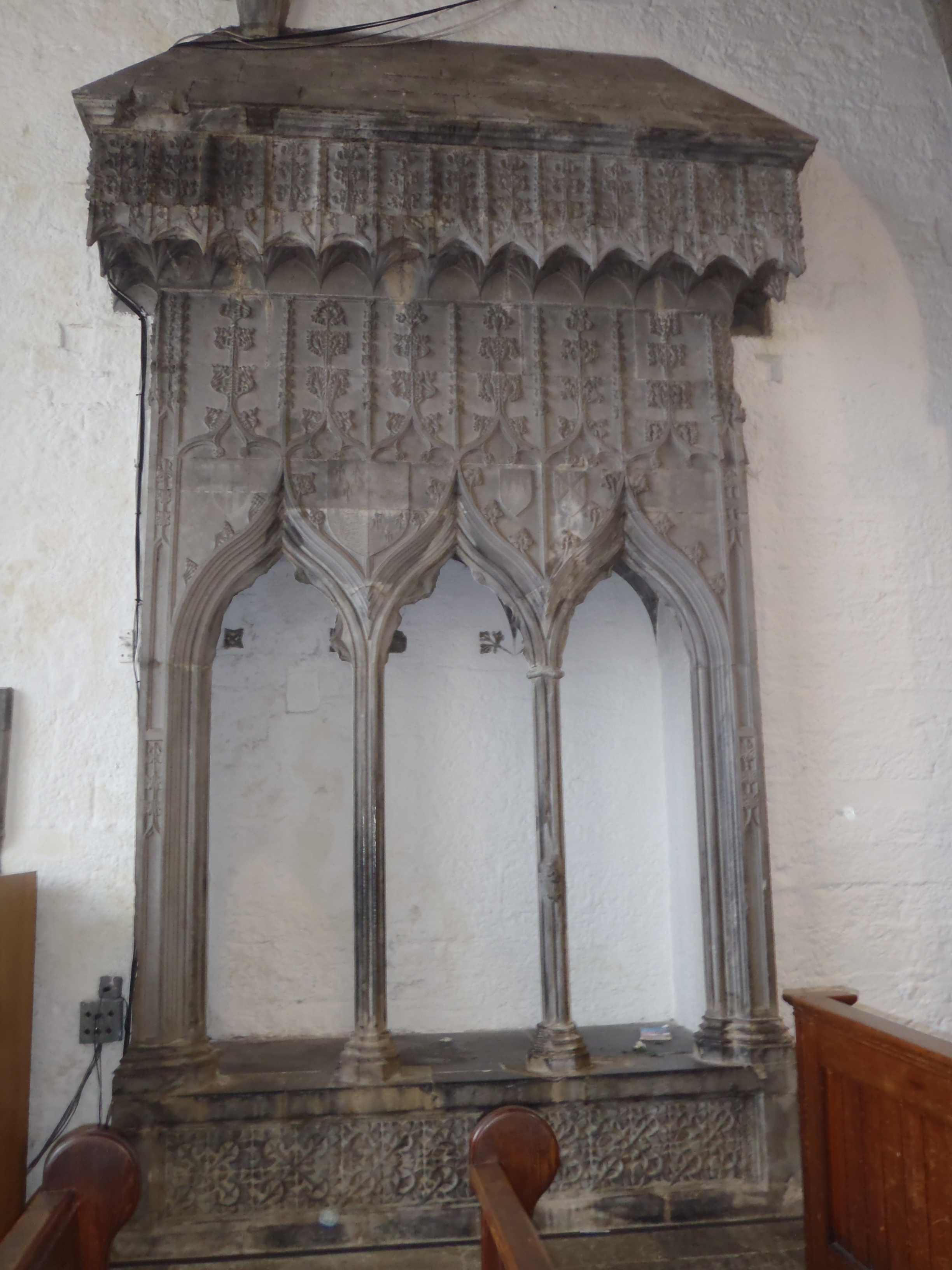
sedilia known as the Good Woman’s Tomb

Another very interesting feature is an elaborately carved tomb-like structure called the  ‘Waking Bier of the Monks’, situated between the two south transept chapels. Stalley(1987, 116), suggests that it may have possibly functioned as an elaborate shrine where one of the  relics of the True Cross could be viewed through the open-work  canopy .  The base of the  stucture (shrine)  resembles a tomb chest and  the upper section with its canopy, arcades  resembles  English shrines  such as St Albans, St Edward the Confessor at Westminster and St Swithun at Winchester. Hayes (2011, 105)  notes also that Dr Dagmar O’Riain-Raedel suggest the it may also have functioned  as the sepulchrum Domini (the Lords tomb), where following the Good Friday liturgy the relics of the cross and the consecrated Host were placed here to symbolise the burial of Christ  after the crucifixion.  Architectural fragments suggest a  second  shrine  which may  also have displayed a second relic of the cross. These fragments are  not on display at present in the abbey but it  was recorded in 1913, prior to renovations, as being located in the north-west angle of the north transept.  Both structures are contemporary and date to the main period of rebuilding.

Liz telling us the history of the ‘Waking Bier’

The earliest reference to pilgrimage is found in the Papal letters of 1488.  The letters mention ‘the oblations which are made by the faithful to the wood of the Holy Cross in the church of the same monastery and which are collected by collectors appointed for the purpose’. This reference implies that the pilgrimage was well established by 1488. Pilgrims often brought gifts to the shrine, animals, foodstuffs and in the later medieval period coins and wax votives and candles.
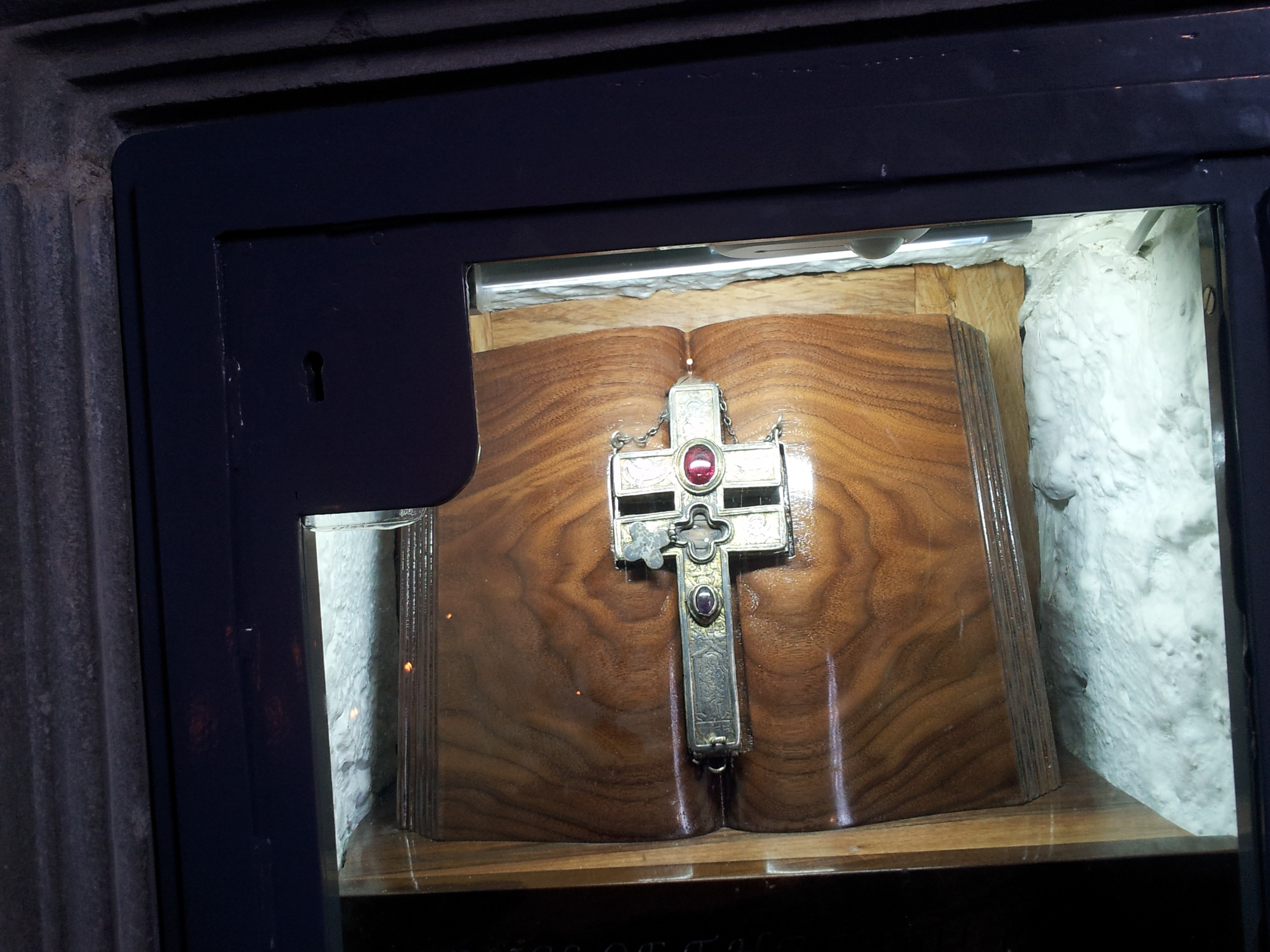
The Ormond relic’ a 15th century reliquary containing a relic of the true cross

The presence of ‘collectors’ implies that  significant numbers of people arrived with offerings. We  can only guess how pilgrims would have interacted with the  holy relic but given that this was a working monastery, the monks would have controlled the access of pilgrims ensuring that they did not dispute their daily prayers.  The pilgrims who came here were from all social classes and  came seeking healing both  physical and spiritual for themselves or loved ones, to ask protection and help in times of crisis,   to experience a miracle, others came out of devotion to God, some came out of  curiosity, others to experience to social side of the pilgrimage .

The main burst of devotion would have focused on feasts connected with the holy cross such as  the 3rd of May, the feast marking the finding of the cross and the 14th of September, the Feast of the Exaltation of the Cross (Exaltatio Sanctae Crucis)  a feast greatly observed in the medieval world and Easter.

The abbey also held one of its two annual fairs on the 14th of September,  most likely to take advantage of the large numbers of pilgrims.  A common practice at other pilgrim sites, the fair offered pilgrims a chance to combine prayer and devotion with  more secular pleasures. Medieval fairs were often associated with other activities, such as games and matchmaking and there are many parallels to the descriptions of pattern day festivities associated with mass pilgrimages of the 18th and 19th centuries. From medieval times, the area also has strong links with St Michael whose feast was the 29th of September . So September was a busy month for Holycross.  On special occasions like the feast of the cross,  the relic(s) at Holycross would have been displayed within the church either in the two shrines noted above or possibly displayed in a Rood Screen or the high altar.  It may also be possible that  relics were brought on procession  on busy feast days, as happens still with the relics of St Willibrod in Belgium.

Relics were not just a focus of devotion,  they were also used  in the swearing of oaths  and they were used to ward off evil, pestilence and plague. There are 16th-17th century references to the Holycross relic of the cross being brough out of the abbey as far away as Kilkenny to swear oaths on and even to improve fertility of crops  and there still survives a late medieval image depicting the relic of the True Cross at Holycross, being carried suspended from the abbot’s neck .
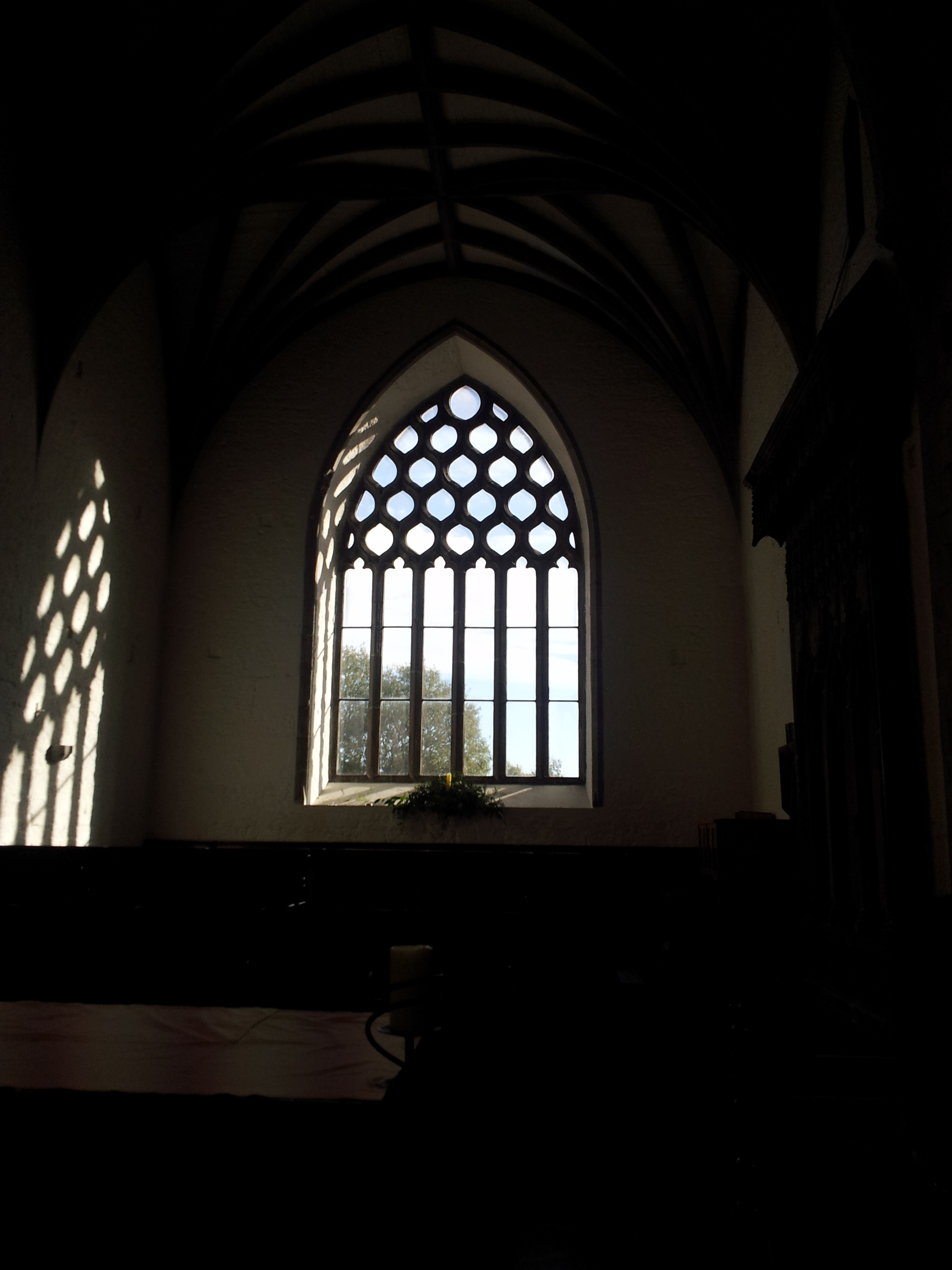
15th century window

Unlike many other Irish shrines pilgrimage at Holycross did not end with the reformation.   The relics at the abbey which also included a miraculous statue of the Blessed Virgin,  escaped  destruction by the reformers possibly because of the abbeys connections with the Bulters and there are many references and accounts of pilgrimage at Holycross post-dating the reformation.
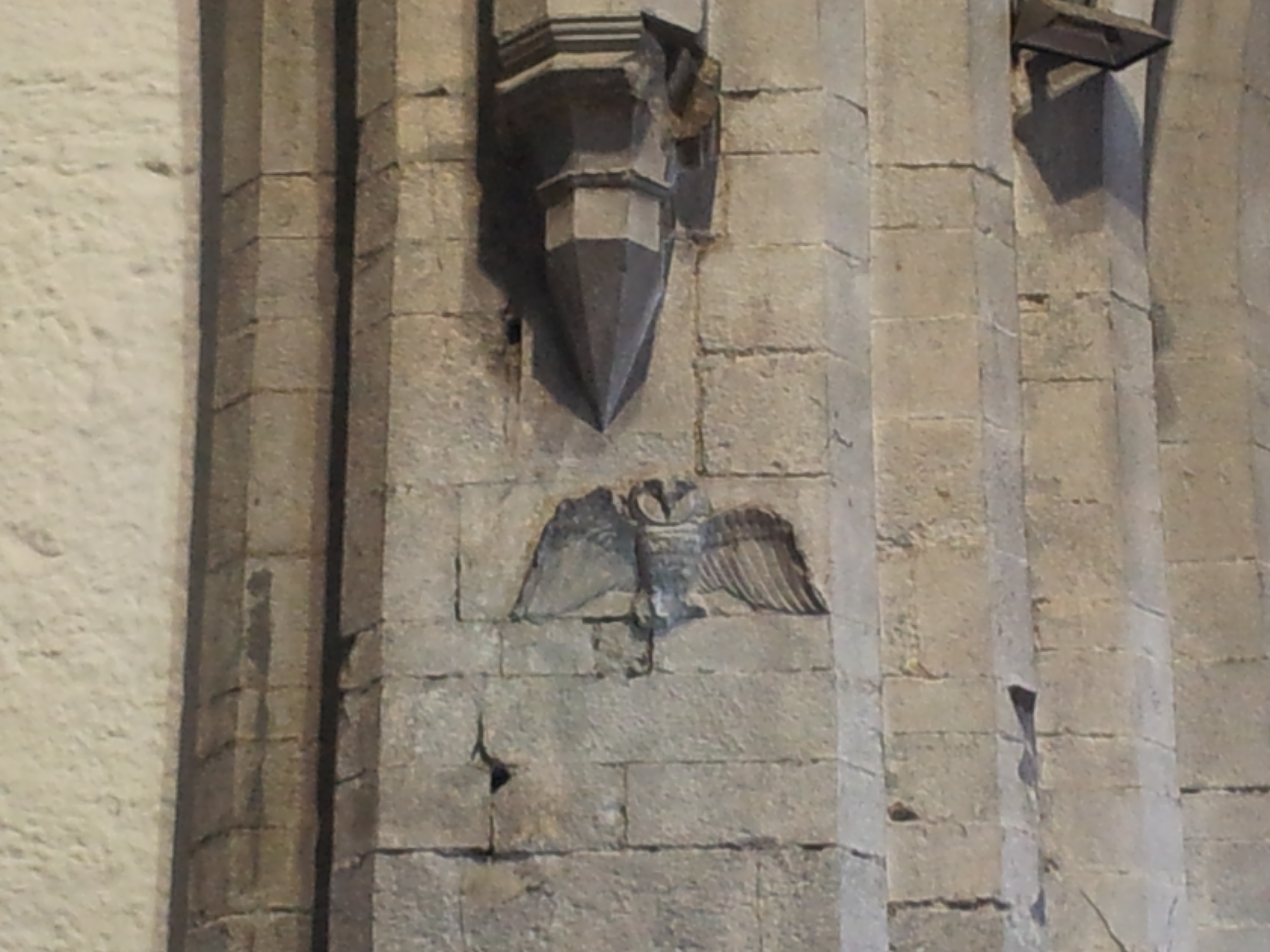
Carving of an owl at centre of the church

To   briefly mention just a  few references to post reformation pilgrimage;  in   1567  the Lord deputy complaining to the Queen wrote  ‘there is no small conflunence of people still resorting to the holy cross’. In 1579 James Fitzmaurice Fitzgerald is said to have venerated the relic  of the cross at the abbey a few weeks before his death at the hands of the Burkes, while 1583 Dermot O’Hurley archbishop of Cashel made a pilgrimage to the shrine shortly before his capture by the English. The relic of the cross would have attracted people from all classes  and in 1586 Camden writes of the ‘famous abbey’ to which the people still come to do reverence to the relic of the Holy Cross’. He goes on to say ‘It is incredible what a concourse of  people still throng hither out of devotion. For this nation obstinately adheres to the religion of superstition of their forefathers.’

Holycross Abbey, Thurles, County Tipperary - Pre Restoration

Holycross Abbey, Thurles, County Tipperary – Pre Restoration Image from the Edwin Rae Photo archive http://hdl.handle.net/2262/40632

The reformation began the decline of the  religious community at Holycross. In 1534 Willian Dywer, then Abbot, resigned his office  to Philip Purcell and the abbey became a provostry rather than a Cistercian abbey. By the 17th century the abbey had fallen into ruins and links with the Cistercians were finally broken with the death of Fr Edmond Coogan in  c1740.

The abbey and its church remained in ruins until the 1970’s when a  special act of parliament known as the HOLYCROSS ABBEY (COUNTY TIPPERARY) ACT, 1969 (http://www.irishstatutebook.ie/1969/en/act/pub/0007/print.html), allowed  for its re-consecration and restoration. This process is described in fully in an excellent book Holycross. The Awakening of the Abbey, by William Hayes details this process. There is lots more to add about the pilgrimage tradition and I will hopefully discuss it further in the coming months.

View of the restored  abbey church from the cloister

© Louise Nugent 2012

References

Halpin,  A. & Newman, C. 2006. Ireland. An Oxford Archaeological Guide to Sites

  from the Earliest Times to AD 1600. Oxford: Oxford University Press.

Harbison, P. 1991. Pilgrimage in Ireland. The monuments and the people. London:

Syracuse University Press.

Harbison, P. 1992. Guide to National and Historic Monuments of Ireland. Dublin:

Gill & Macmillian.

Nugent, L. 2009. Pilgrimage in Medieval Ireland, AD 600-1600. Vol.1-3.Unpublished PhD Thesis, University College Dublin.

Stalley, R.1987. The Cistercian monasteries of Ireland: an account of the history, art

  and architecture of the white monks in Ireland from 1142-1540. London: Yale U.P.

Graveyard recording at Newcastle

This week I  headed along to  another historic graveyard at Middlequarter,  Newcastle, Co. Tipperary.  The old graveyard at Newcastle  along with the graveyards at Molough, Shanrahan and Tubrid, are  currently being recorded by local community groups trained by Historic Graves (http://historicgraves.ie/).

The Medieval Church and graveyard at Middlequarter, Newcastle, image taken from Bing maps

Newcastle graveyard  is located close  to  the Anglo-Norman castle which gives its name to the area.  The remains of the castle consist of a  hall house with a vaulted roof, a tower and a bawn. The castle  is strategically located  on the banks of the River Suir close to the fording point .  The castle  is  part of a group  of 12th -13th castles  built in a line along foothills  of the Knockmealdown mountains. This  area was the  frontier  between the Anglo-Norman territory and the Gaelic territory of the Déises . Newcastle was in the control of the Prendergast family from the 13th to the 17th century, it then  passed into the hands of  the Perry’s family.

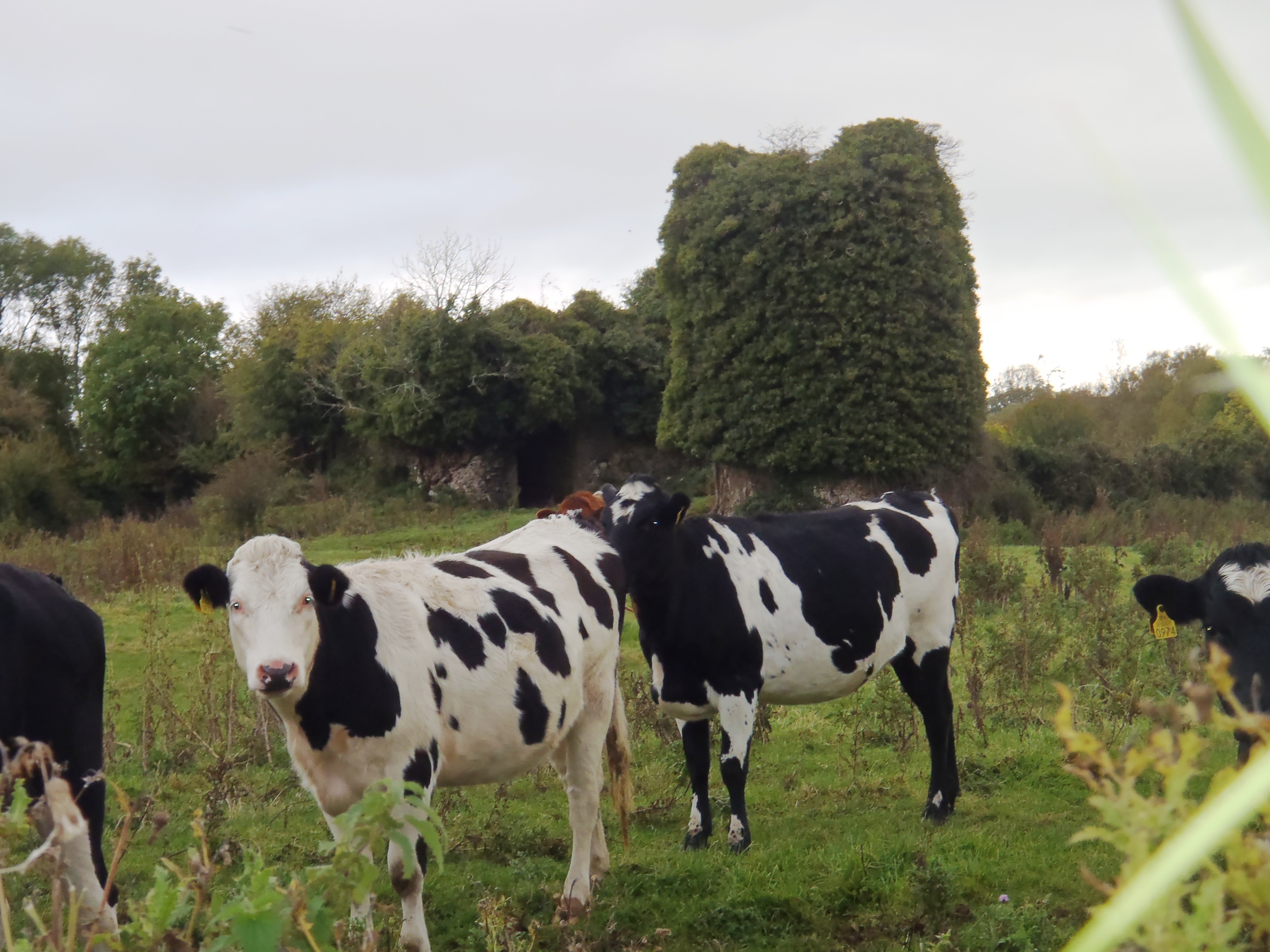
View of Newcastle castle from the nearby graveyard

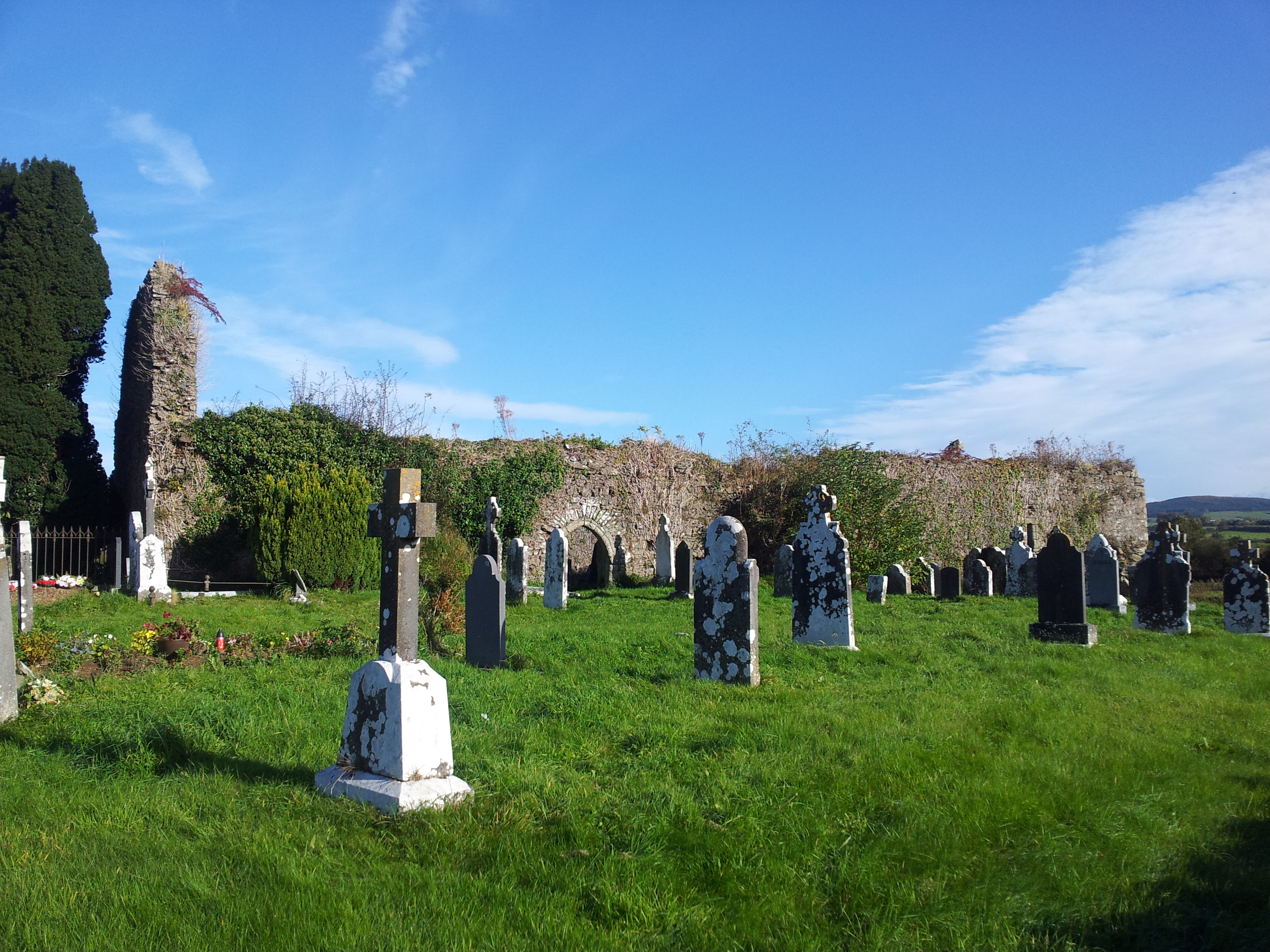
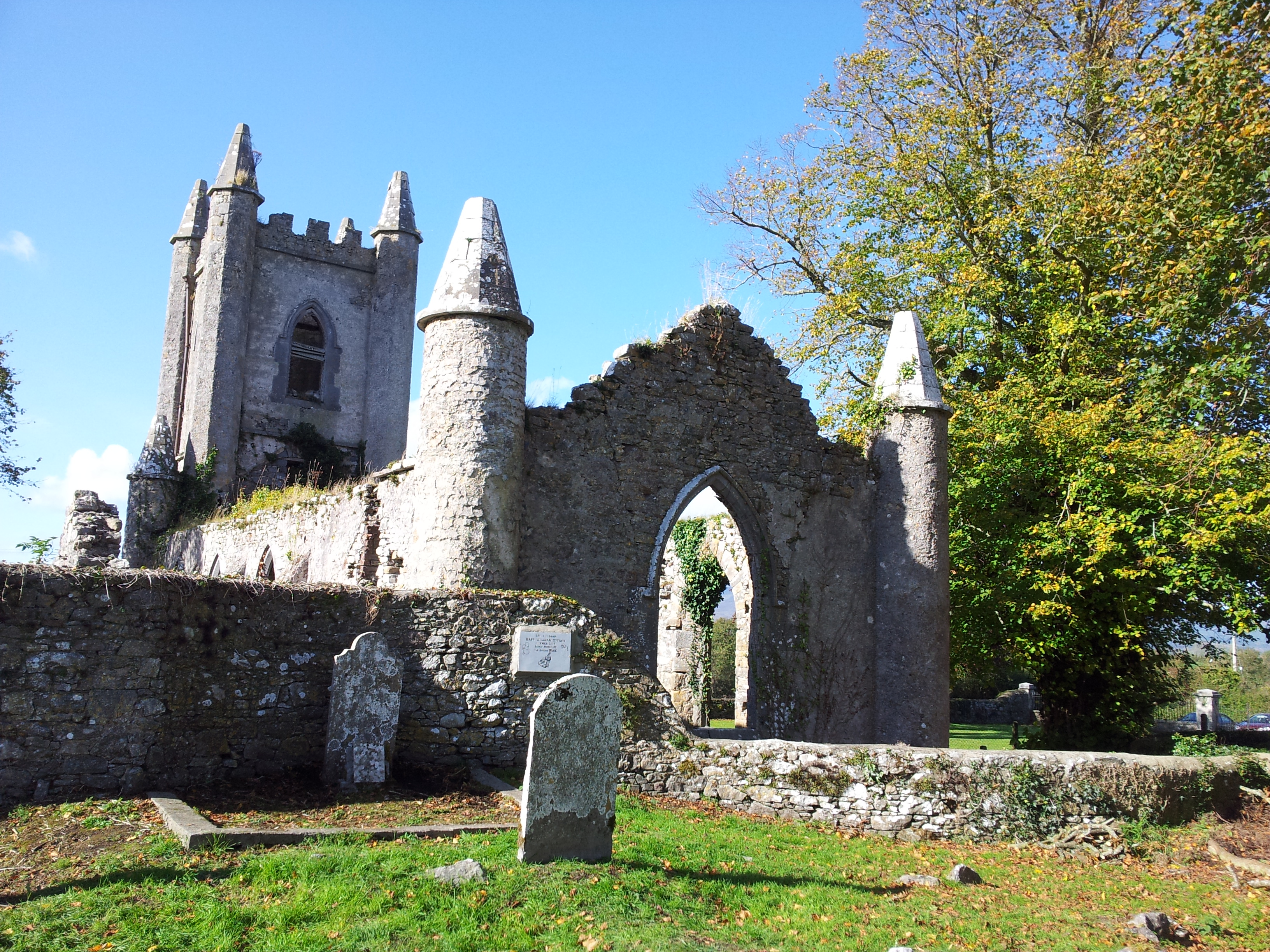
The historic graveyard  surrounds  a 12th /13th century church, which functioned as the medieval parish/manorial church .

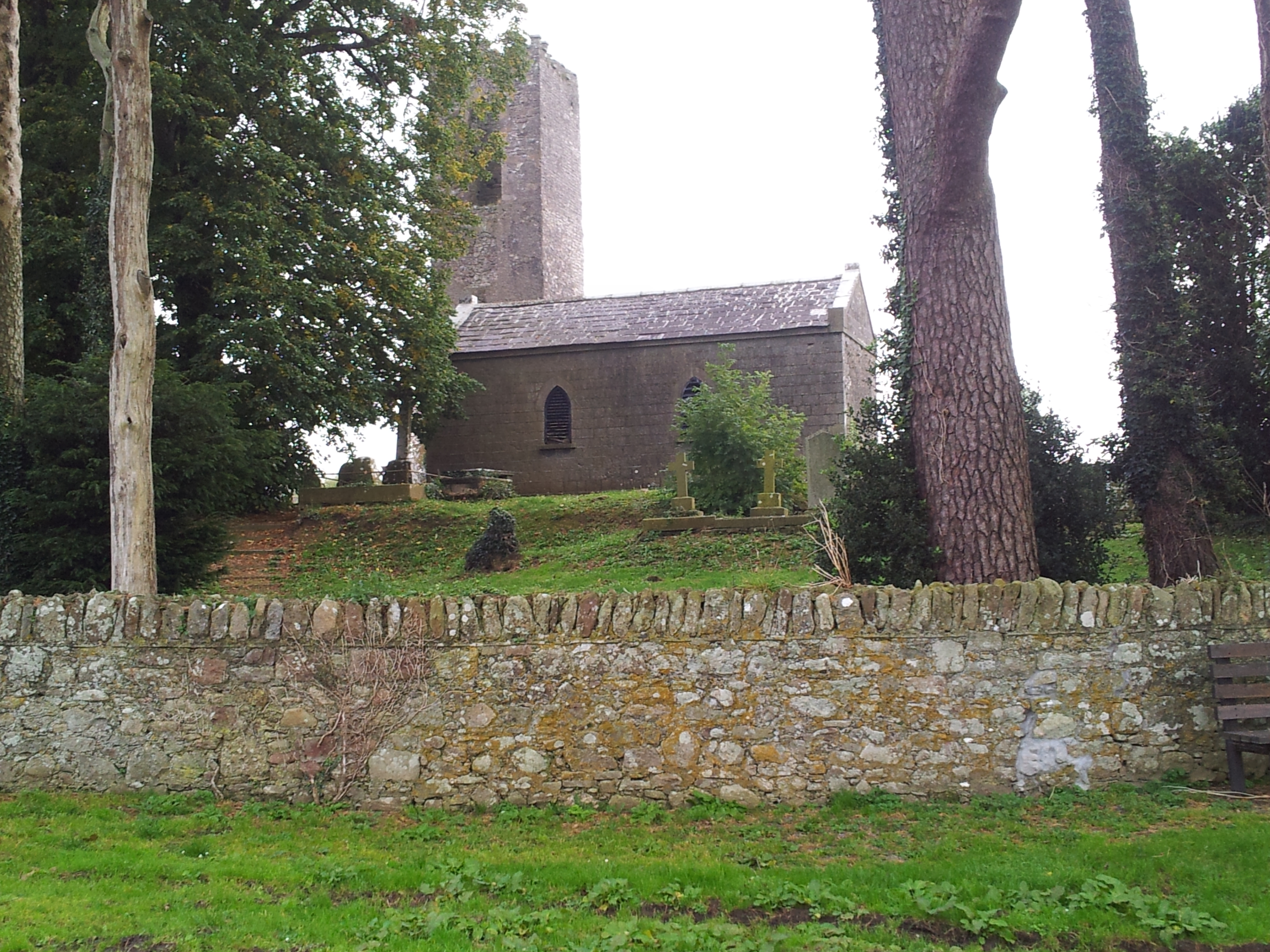
The medieval church at Newcastle

Newcastle church is one of the largest medieval parish churches in the surrounding area, being 29m  in length and 10m in width. Any past dedication to a saint has long been forgotten and today the church is simply known as the old church.

Southern doorway of the church

The church is entered through two ornate doorways  at the west end of the church, located in the  north and south wall.  The south doorway is simpler in design with a moulded surround. The north doorway is slightly taller and has roll and fillet-mouldings with traces of hood- moulding over the apex of the door. Both doors are directly opposite each other.

The North doorway of the church at Newcastle

There is no evidence of an internal division   between the chancel and the nave within the church, nor is there any traces of a choir.

The east gable  of the church is now partially collapsed. Luckily the Ordnance Survey Letters of 1840 provide the following decription

Its east window is in the pointed style and constructed of brownish sandstone chiselled… 6 feet in height and 1 foot 8 inches in width. It is divided into two compartments the stone which separates them has been removed (O’Flanagan 1930 Vol.1,  22)

View from window at NE end of the church

The  Ordnance Survey letters also state that ‘ the church was burnt by a Prendergast who lived in Curraghcloney Castle’  (O’Flanagan 1930, vol. 1, 23).  However today  many   local people tell the tale, that it was Cromwell  who burned the church .

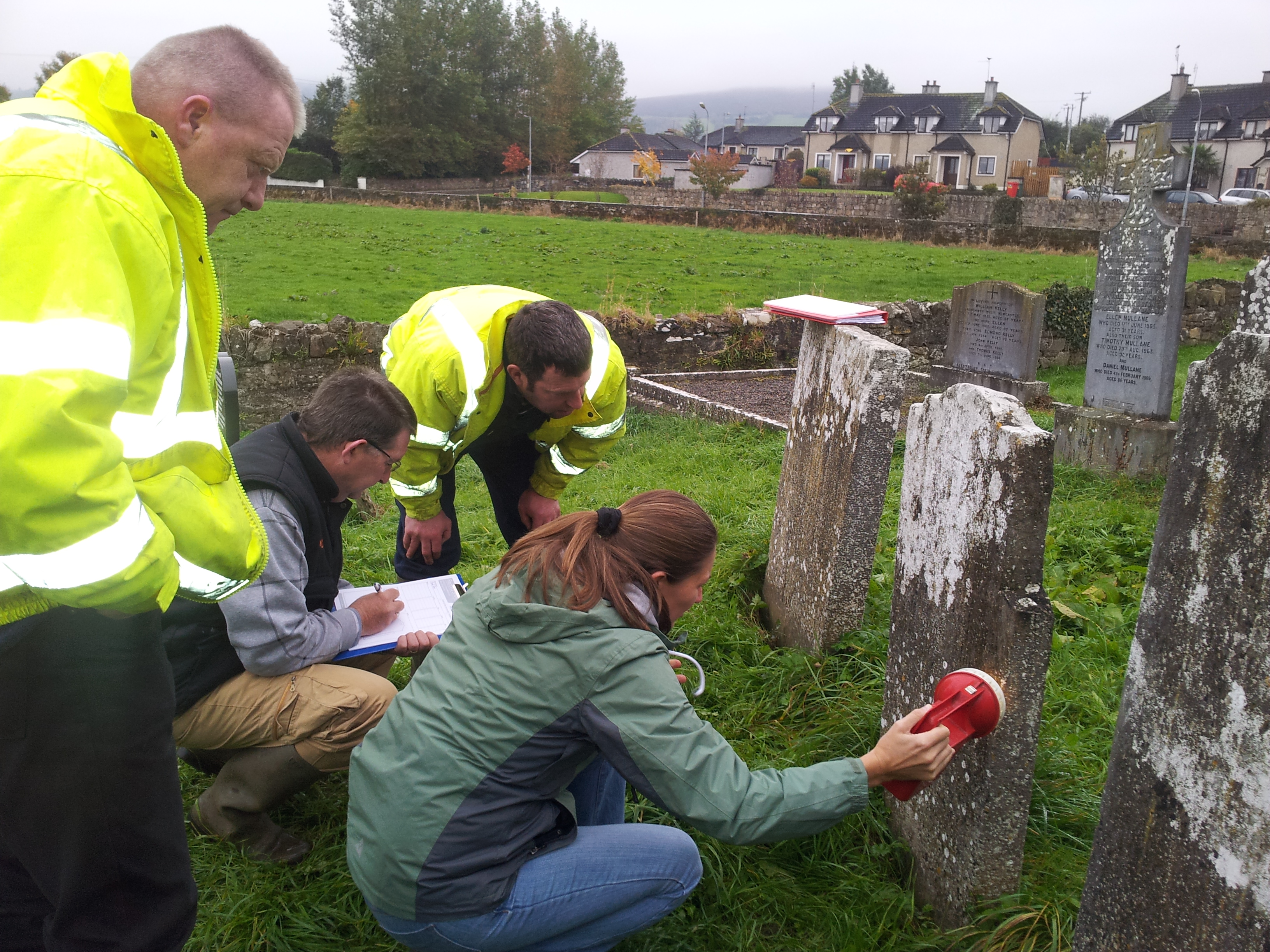
Volunteers recording gravestones at Newcastle

The graveyard  has a mixture of 18th , 19th and 20th century graves, including some very recent ones. In total there are  204  grave markers in  the graveyard.

Volunteers recording a gravestone

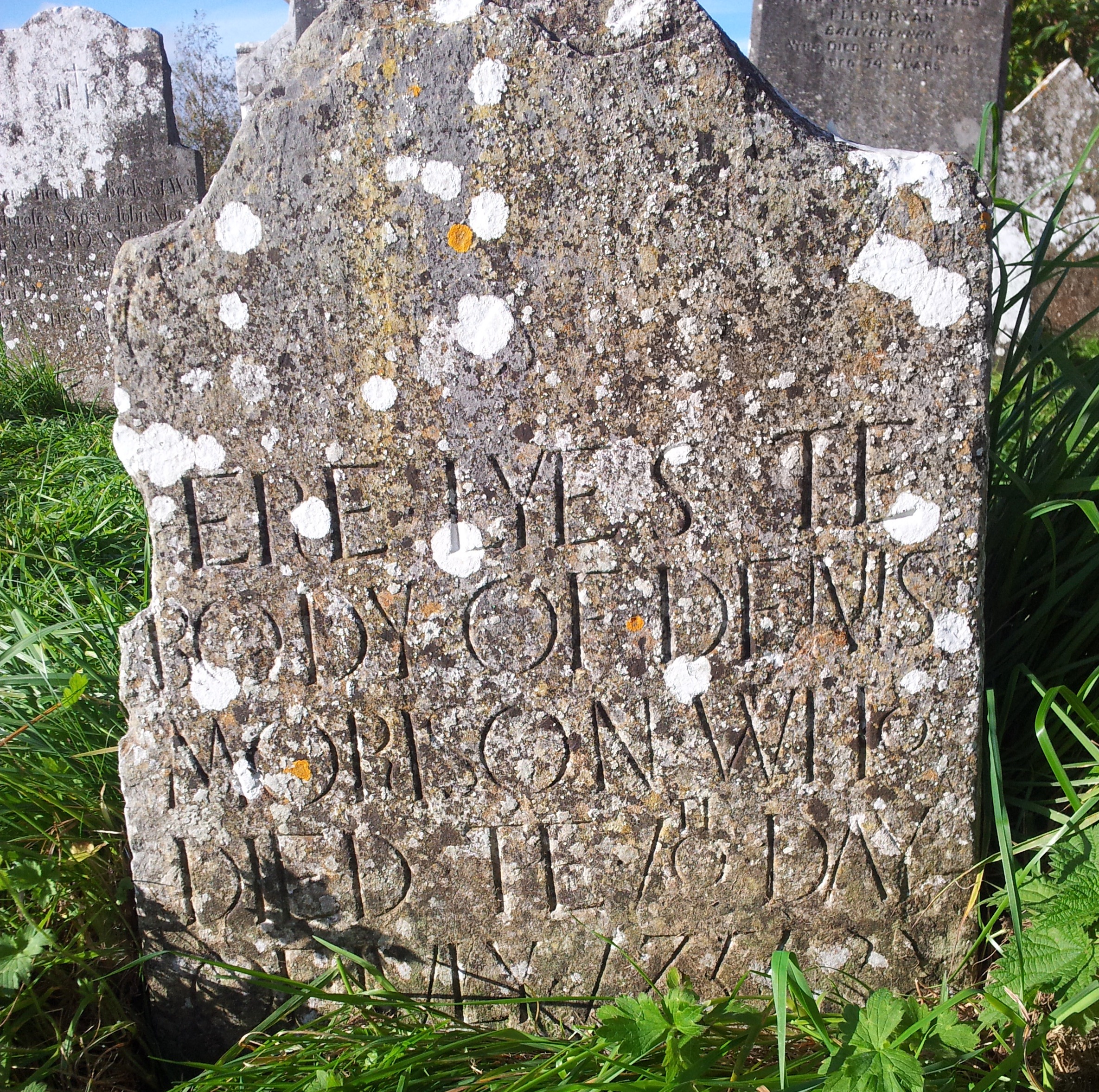
It is difficult to decide which gravestones to include here  as there are so many interesting ones. The stone below was carved in  1755  to commemorate the death of Denis Morison.

A simple gravestone dating to 1755

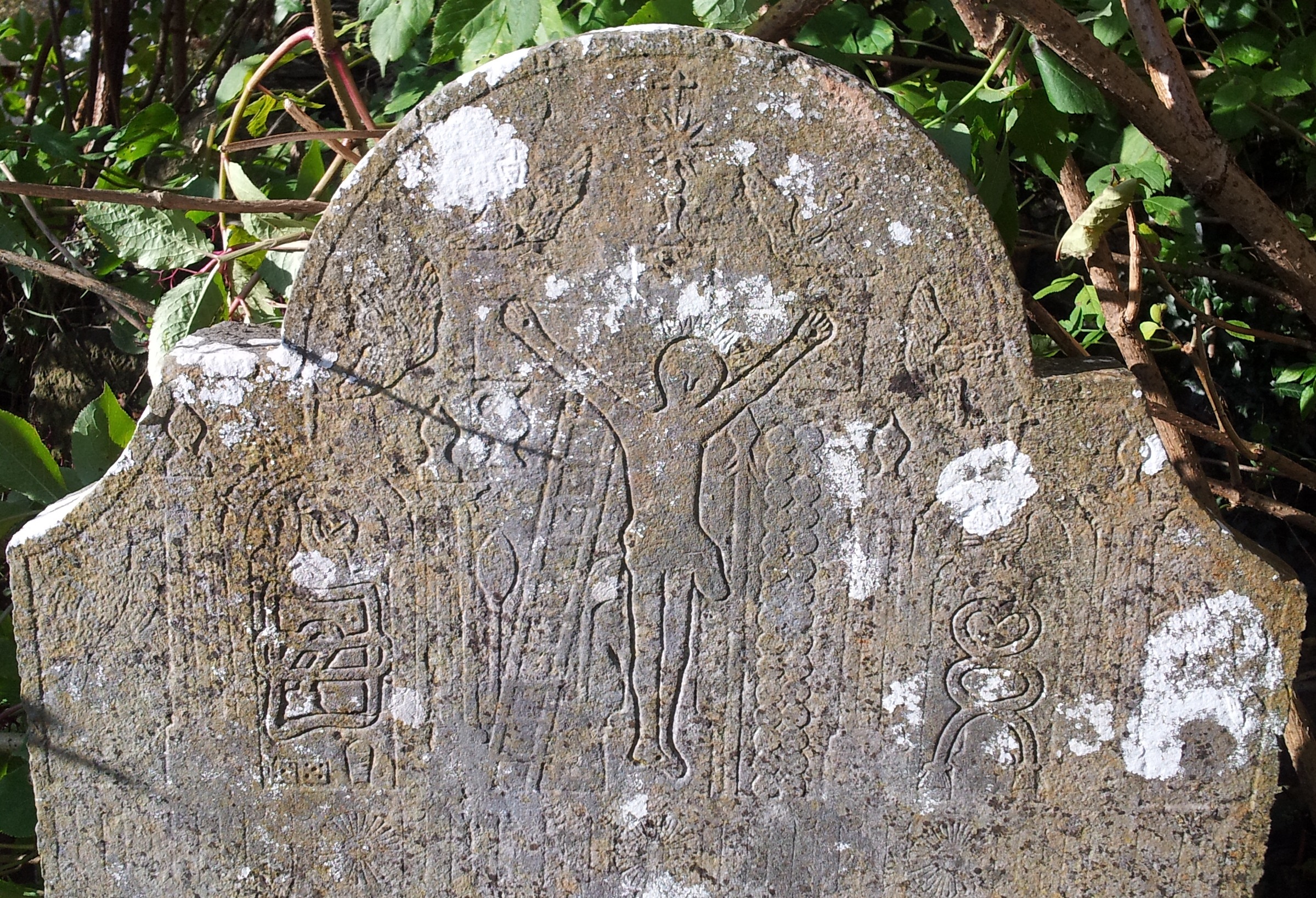
Some of the early gravestones have lovely decoration. The  stone below depicts the crucifixion scene and a stone by the same mason has been identified in Shanrahan & Tullaghmelan graveyards.

Crucifixion imagery on the gravestone of Daniel Long of Neddins died 1817

The interior of the  church is packed with approximately 60 burials. At the east end are three unusual  burials. A chest tomb sits in the NE corner of the church. The  inscription of the tomb is worn away and impossible to read.  O’ Hallian  in his book Tales from the Deise  gives the following   account of the inscription

Here lyeth the body of Jeffry Prendergast of Mullough in the county of Tipperary who served in Flanders as Captain under the Great Duke of Marlbourugh, from  whom he had the honour of reciting public thanks for his services at the siege of Ayr in 1710. Died 1713. he was an affectionate husband and tender father, in friendship steady and sincere; to all beneath him courteous, truly just and therefore universally esteemed and beloved. He lived under the influence of religion and died cheerfully supported by it the  27th day of March in the 64th year of his life.

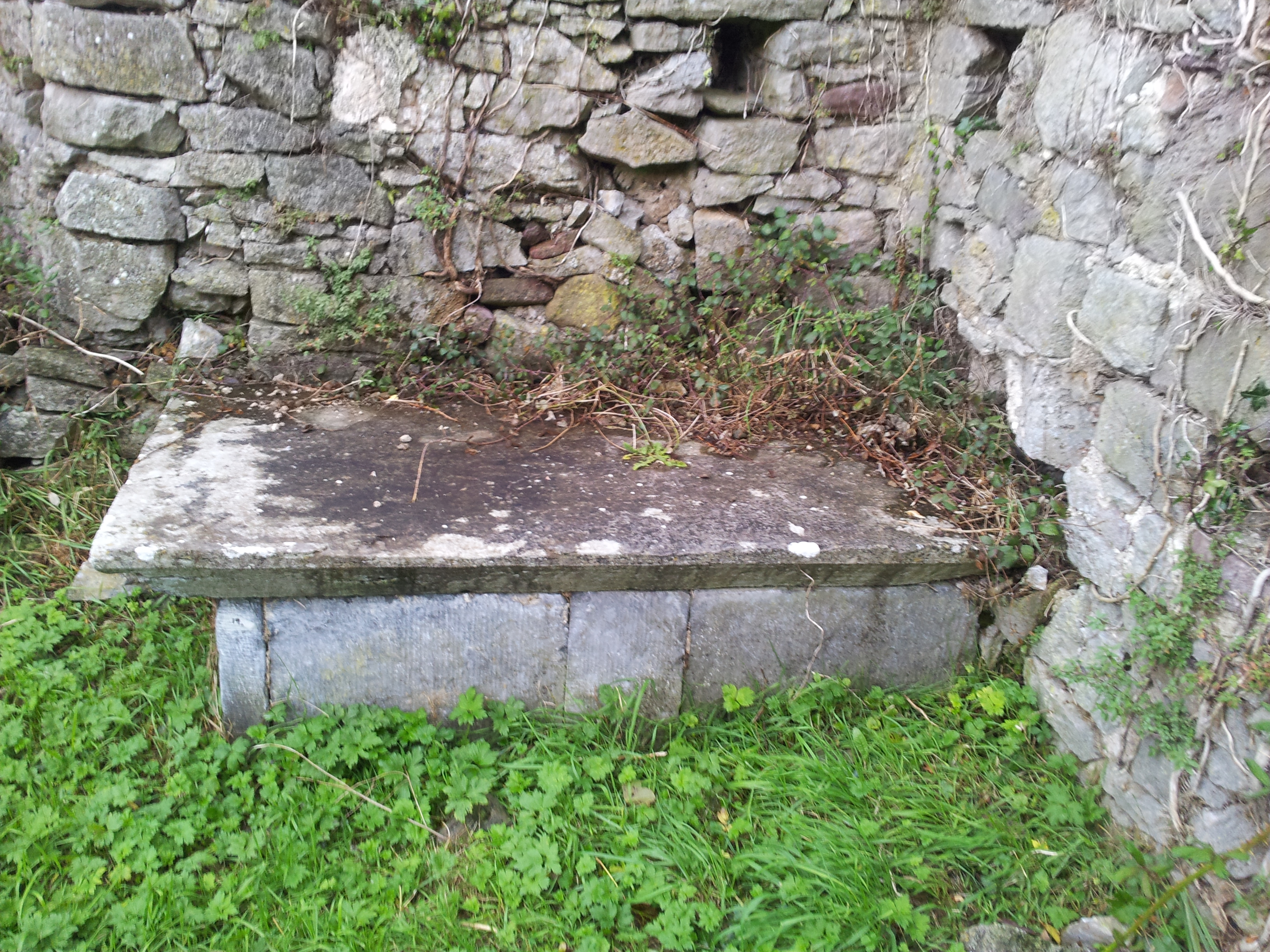
Chest tomb of Jeffery Prendergast

John Burke’s A Genealogical and Heraldic History of Extinct and Dormant Baronetcies….. records that Jeffrey’s father Thomas Prendergast, esq was born in 1614 and married Elinor the sister of Walter the 11th Earl of Ormond. The text also says  Thomas died in 1725, aged 111 years ‘as appears on his tombstone at Newcastle, near Clonmel’.  Once the survey is complete if the tombstone commemorating Thomas survives I am sure the volunteers will uncover it.  I would wonder if he was not interred with his son Jeffery.

Beside the Prendergast tomb are two grave slabs which I recorded as part of a project for  college in 1998.  The  inscription on slabs have  deteriorated since  I last visited here. One  has a motif of  a horse standing on its hind legs in an oval frame. This is the grave of Samuel Hobson sq of Muckridge,  who died in 1782.  The second slab records the burial of ‘Lieu Henry Prendergast of Mulough’ and his wife who died in 1776 , along with  their a coat of arms.

Crest on the Prendergast grave slab

© Louise Nugent 2012

References

Hallinan, M, 1996. Tales from the Deise: an anthology on the history and heritage of Newcastle, the Nire Valley, and especially the Parish of Newcastle and Four-Mile-Water. Dublin: Kincora Press.

O’ Flanagan, Rev. M. (compiler) 1930. Letters containing information relative to the antiquities of the county of Tipperary collected during the progress of the Ordnance  Survey in 1840. 3 Vols. Bray: Typescript.

Power, Rev. P. 1937. Waterford and Lismore; a compendious history of the united

  dioceses. Cork: Cork University Press.

Graveyard recording at Tubrid and St Ciaráns well

I was so impressed by last weeks visit to  Shanrahan graveyard   that I decided to head along to Tubrid/Tubbrid graveyard today and have a go at some graveyard recording for myself.

19th century Church of Ireland at Tubrid

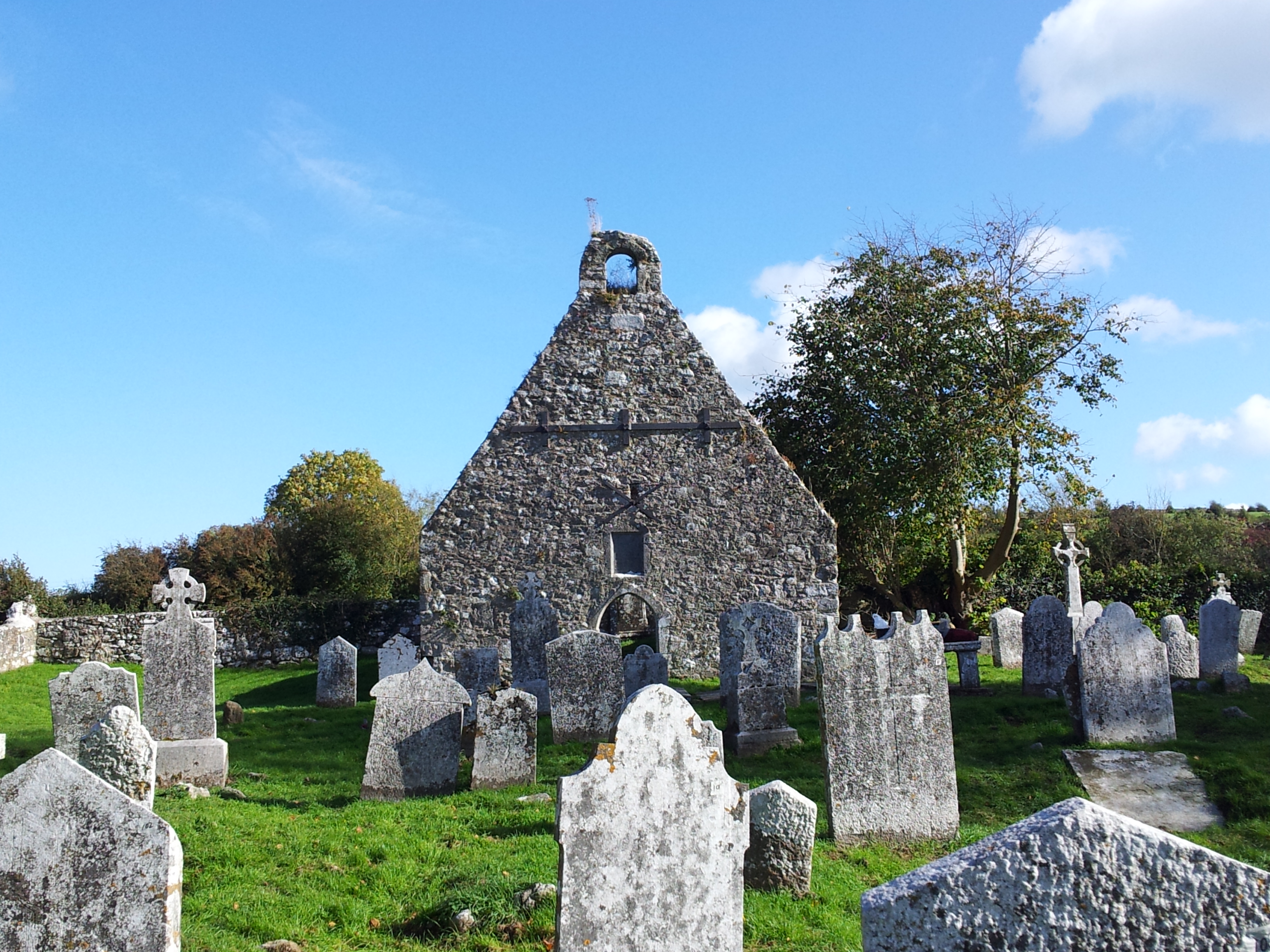
Tubrid is another interesting place, thats well worth a visit. Today it consists of  the ruins of a 19th century church of Ireland surrounded by a graveyard.

Mortuary chapel

The graveyard contains a small 17th century mortuary chapel which is   the burial-place of Geoffrey Keating the author of  The Foras Feasa ( the history of  Ireland). Keating was born nearby at Burgess townland.  Over the door of the mortuary chapel is a latin plaque.

Latin plaque that commemorates Keating

Power (1937)  recorded the Latin inscription as ,

ORAte Pro Aiabs P. Eugenu: Duhy Vic de Tybrud: et D: Doct Galf: Keating huis Sacelli Fundatoru: necno et pro oibs alusta sacerd. quam laicis quoru corpa in eod: jacet sa A Dom 1644

Pray for the souls of Father Eugenius Duhy, Vicar of Tybrud, and of Geoffrey Keating, D.D., Founders of this Chapel ; and also for all others, both Priests and Laics whose bodies lie in the same chapel. In the year of our Lord 1644.

The graveyard is filled with really beautiful 18th and 19th century gravestones which I recorded with the help of other volunteers like Patsy McGrath, Michael Fennessy and Deirdre Walsh and training by Historic Graves (http://historicgraves.ie/).

The oldest stone  I came across dated to 1680. Some of the stones were difficult to read but John Tierney of Historic graves had a few trick using artificial lights that made the recording process easier.

Mark Ryland recording a grave inscription.

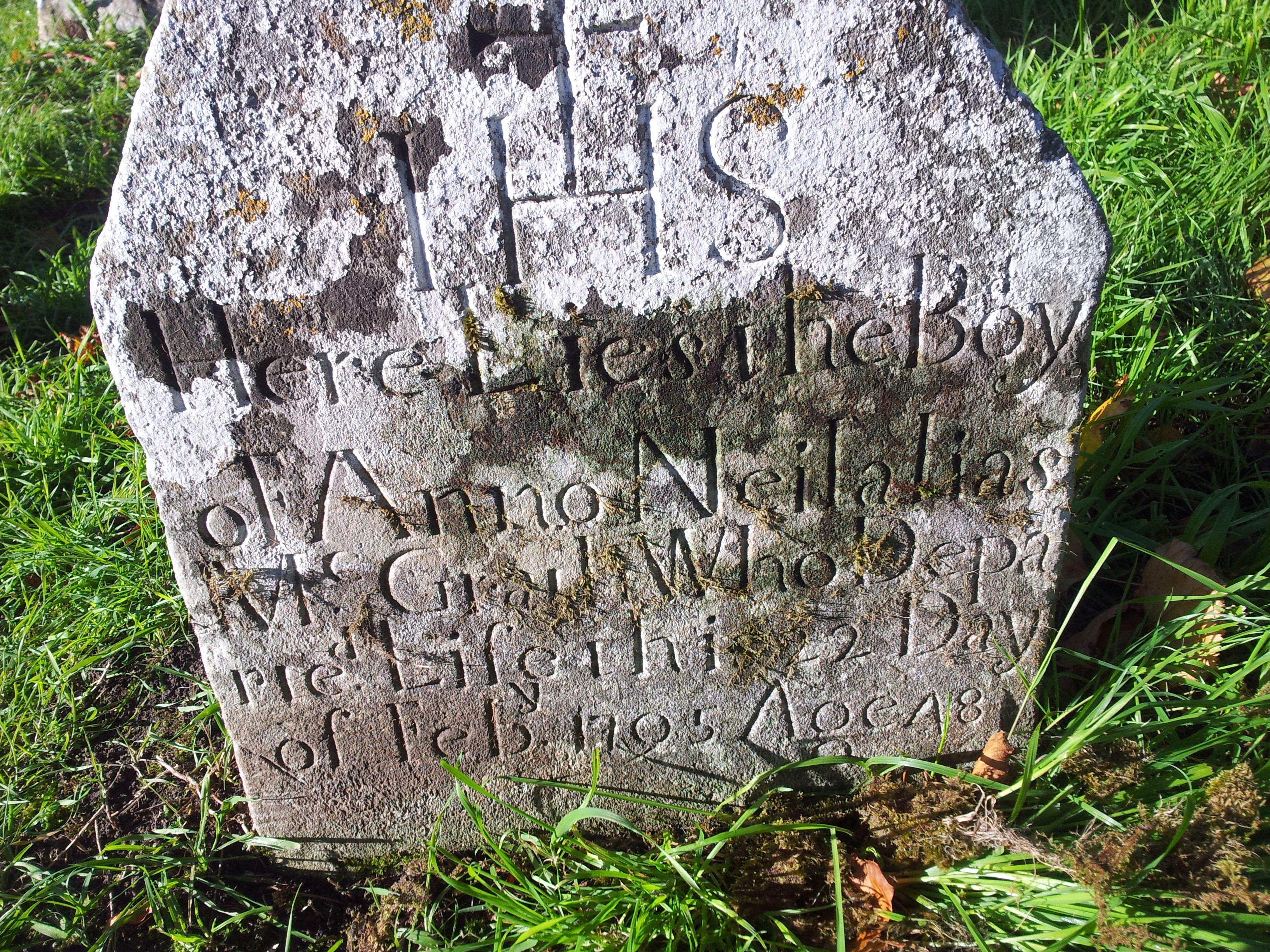
One of the earliest inscriptions I came across

Here Lies the body, of Anno Neil alias McGrath, who departed Life this 22 Day of Feb 1795 Aged 48.

Gravestone dating to 1795

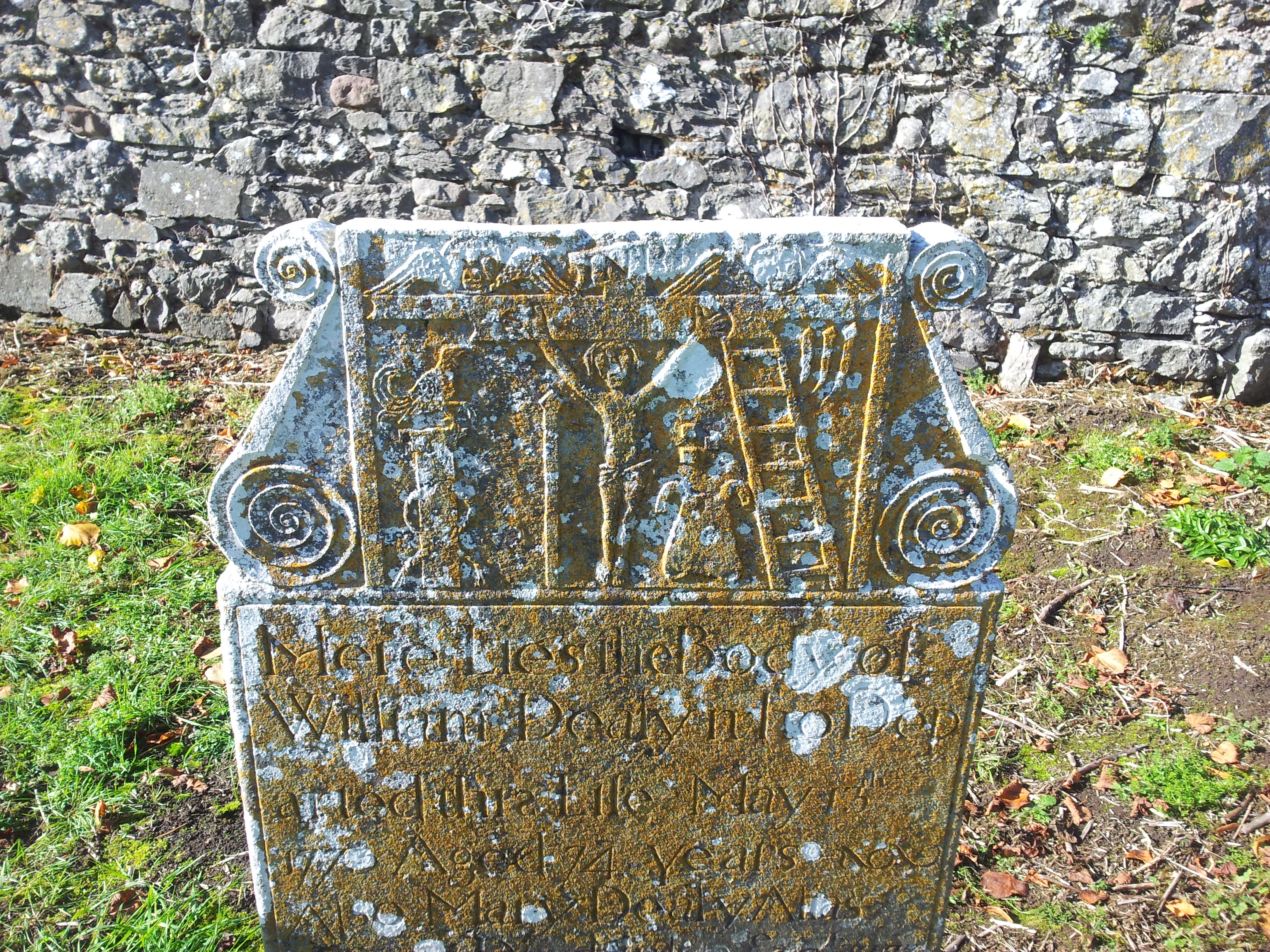
Many of the gravestones are decorated with beautiful imagery, below is one of my favourite decorated gravestones.

St Ciarain’s well at Tubrid

I also visited   the nearby holy well of  St Ciarán, which is  a few 100 yards down the road  on the banks of   the Thonoge River.  This is not Ciarán of Clonmacnoise but Ciarán of Tubrid/ Ciarán son of Eachaid of the Decies.   Power (1914) noted the nearby graveyard and  church  was called Cillín Ciarán or Ciarán’s little church.  Ciarán is mentioned in the Irish and Latin Lives of St Declan. The Irish Life tells how Declan baptised Ciarán at the near by holy well when he was an infant (Power 1914).

And it was this child, Ciaran Mac Eochaid, who founded in after years a famous monastery (from which he migrated to heaven) and another place (monastery) beside. He worked many miracles and holy signs and this is the name of his monastery Tiprut (Power 1914, 59).

O’Riain (’2011, 174) notes  he is also mentioned in the Life of Tighearnach of Clones, whom he accompanied to Tours( the shrine of St Martin) in France. Shortly before the trip he resuscitated a daughter of the king of Munster named Eithne ‘ possibly the eponym of Temple-etney, near Tubrid’ (ibid).

The saints feast day was the 10th of November and the well was visited on this day within memory. Power in 1914 gives  the following description of the well

‘The Holy Well of Tubrid, a large circular basin at which stations were formerly made, has recently been enclosed by a wall.  A public pump too has been erected in connection with it’ (1914, 175).

St Ciarán’s well

Today the well is a rectangular  shaped  trough built into a retaining wall at the edge of a  hillside.  The top  of the wall is   covered with concrete. At the back of the well recess is , a stone spout which carries water draining off the hillside which fills the trough.

A local lady from Ballylooby told me that within memory  school kids at Ballylooby were given the day off on the saints feast day and people would visit the well .  Mass was said here until about 10-15 years ago but the tradition of stations had died as Power noted in the 1900’s .

References

Ó Riain, P. 2011. A Dictionary of Irish Saints. Dublin: Four Courts Press.

Power, Rev. P. 1914. The Life of St Declan. London: Irish Text Societies.

Power, Rev. P. 1937. Waterford & Lismore. A Compendious History of the United Dioceses. Cork. Cork University Press.

Okyle church in Co Waterford

At the moment I am writing a talk about the Rian Bó Phádraig an ancient road connecting , Co. Tipperary to Kilwatermoy in the county of Co Waterford .  Last  weekend I was out walking along part of the Waterford route. I also managed to  dropped by one of my favourite sites, the ruins of a medieval Church in the townland of  Okyle.  The name Okyle or Ógchoill  translates as  “Young Wood” ( http://www.logainm.ie/50107.aspx).

The only surviving wall of Okyle church.

The townland  is located in the ancient parish of Lismore and  Mocollop. I have not been able to find a saint associated with the site.  At present all that remains  of the church is the east gable. According to the   information plaque at the site, this church functioned as a chapel-of-Ease  for  Mocollop parish. A chapel of ease,  was a church building other than the parish church, built within the bounds of a parish for the attendance of those who could not reach the parish church conveniently.

15th-century, twin-light tracery window

The surviving east  gable has a lovely 15th-century, twin-light tracery window. A small cell is attached to the north end of the gable.

Cell attached to the north-east gable of the church

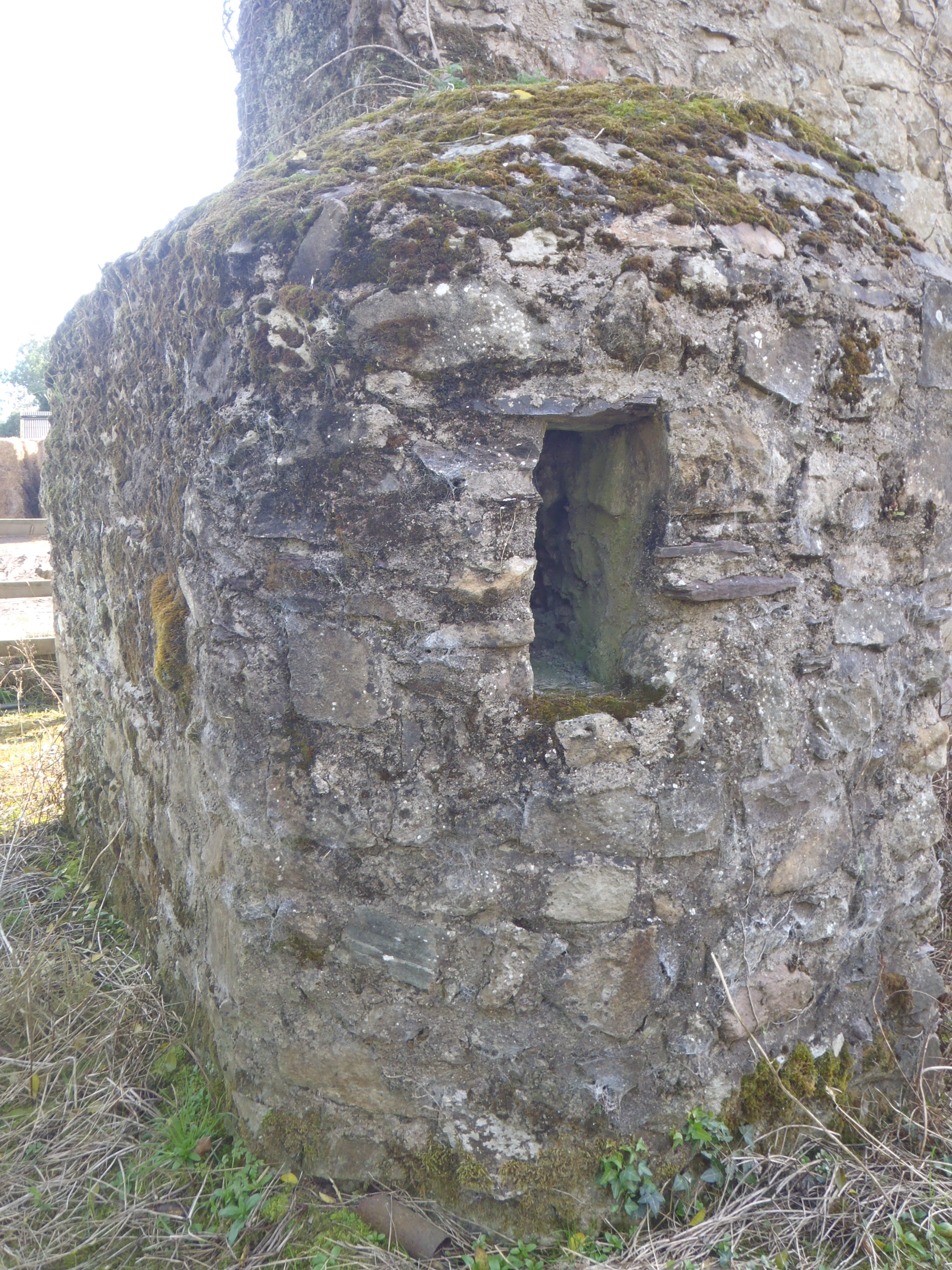
The cell most likely functioned as an anchorite cell and is one of the very few examples found in  Ireland. The  cell was  entered from inside the church through a small doorway with a flat lintel.  The roof of the cell is slightly corbelled.

Possible gun-loop at the NE side of cell

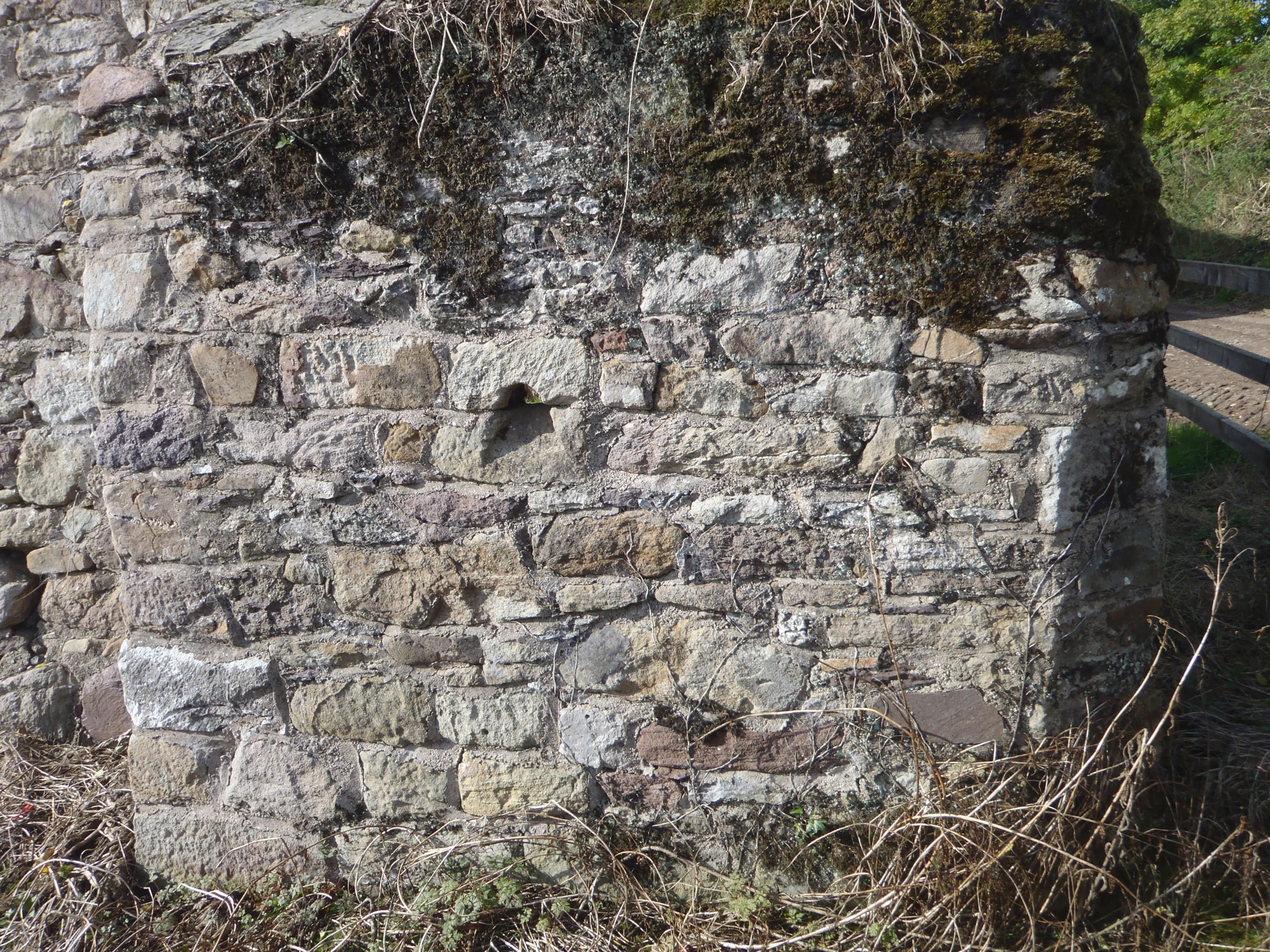
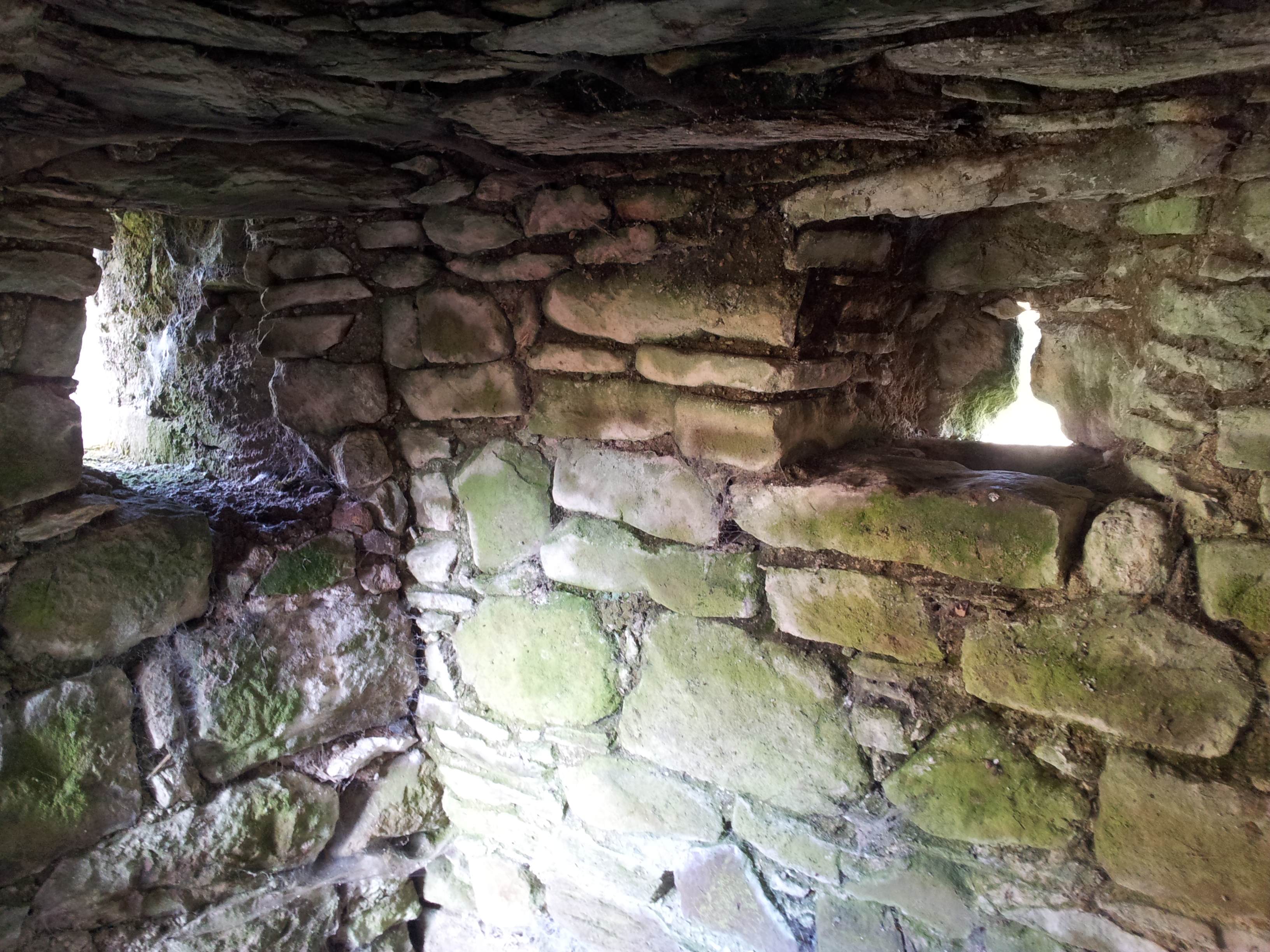
The cell is sub-oval  in shape. It is very curious   that  there are three gun loops in the walls.

Gun loop in the east wall

Power in 1898,  recorded that the cell was known locally as Tigh Chloiche or the stone house.

Interior of cell showing the gun loops

In 1840 the ordnance survey letters described the church as follows:


Only its east gable and thirty feet of the length of the north wall remain. It was twenty one feet in breadth, but its length cannot be ascertained as no part of the west gable is traceable. The east window is formed of cuts and stone and pointed on both sides; it measures on the inside nine feet seven inches in height and five feet four inches in width and on the outside, where it was divided into two lights by a stone mullion, seven feet three inches by two feet nine inches, each division (light) one foot two and a half inches. In the north-east angle is a small apartment, apparently a hermit’s cell or Duirtheach…There was a window in the north wall of this Church at the distance of four feet from the east gable; it was formed of cut stone and was two feet six inches wide in the inside but it is destroyed at top and on the outside. The north wall is nine feet high, three feet four inches thick and built of pebble stones of all shapes, kinds and sizes laid in irregular courses in a very rude style; it nods a good deal from the perpendicular, the foundation having given way…(O’Flanagan 1929, 144-145).

The third ed.   6-inch map  1927  records a holy well called  Tobar an Turais – the well of the pilgrimage c. 700m to the SW of the church (Power 1898, 218). The Waterford Inventory recorded that it is not visible at ground level .  In 1900’s Power notes its presence in the book the Placenames of the Decies but noted that ‘it was not much visted now’.  I think this is a site I will have to look into further.

Graveyard Recording at Shanrahan and medieval pilgrim rituals

At the moment there are some really exciting community archaeology projects taking place in Ireland. I want to tell you about one project  happening over the next two  weeks  in South Tipperary.  This project  involves the training of local communities  to record   historic gravestones at the old graveyards at Newcastle, Molough Abbey, Shanrahan and Tubbrid.  The  training and mentoring for the project  is being provided by Historic Graves.  As you can see from their  website   http://historicgraves.ie/  Historic Graves have  successfully completed similar project  all over the country.

Map showing the location of the four graveyards taken from google earth

Today I headed  over to  Shanrahan  graveyard, located  just outside of Clogheen, to see how the project works.

View of Shanrahan Church and Graveyard

Shanrahan is a really interesting place,  at the center of the graveyard are the ruins of a  medieval parish church. The church is unusual in that it has  two Sheela-na-gigs.   Sheelas  are  figurative carvings  of naked   women, usually bald and emaciated, with lug ears,  squatting and pulling apart their vulva.  These carvings are found on medieval church, sometimes castle sites in  Ireland and England.

There are lots of theories about  the purpose of these carvings,  some believe that were used to ward off evil,  others that they were symbols of fertility, others that they were used to warn against the dangers of lust  etc . If you want to find out more  about  these strange carvings check out the  bibliography below.

Sheela-na-gig on the church tower.

John Tierney of Historic Graves, kindly brought me on a guided tour and explained how  the recording is   done. I also got to meet the volunteers who were all having a great time  and doing an excellent  job recording the inscriptions.

Volunteers taking a brake for the recording

The project  also involves the  local primary schools.

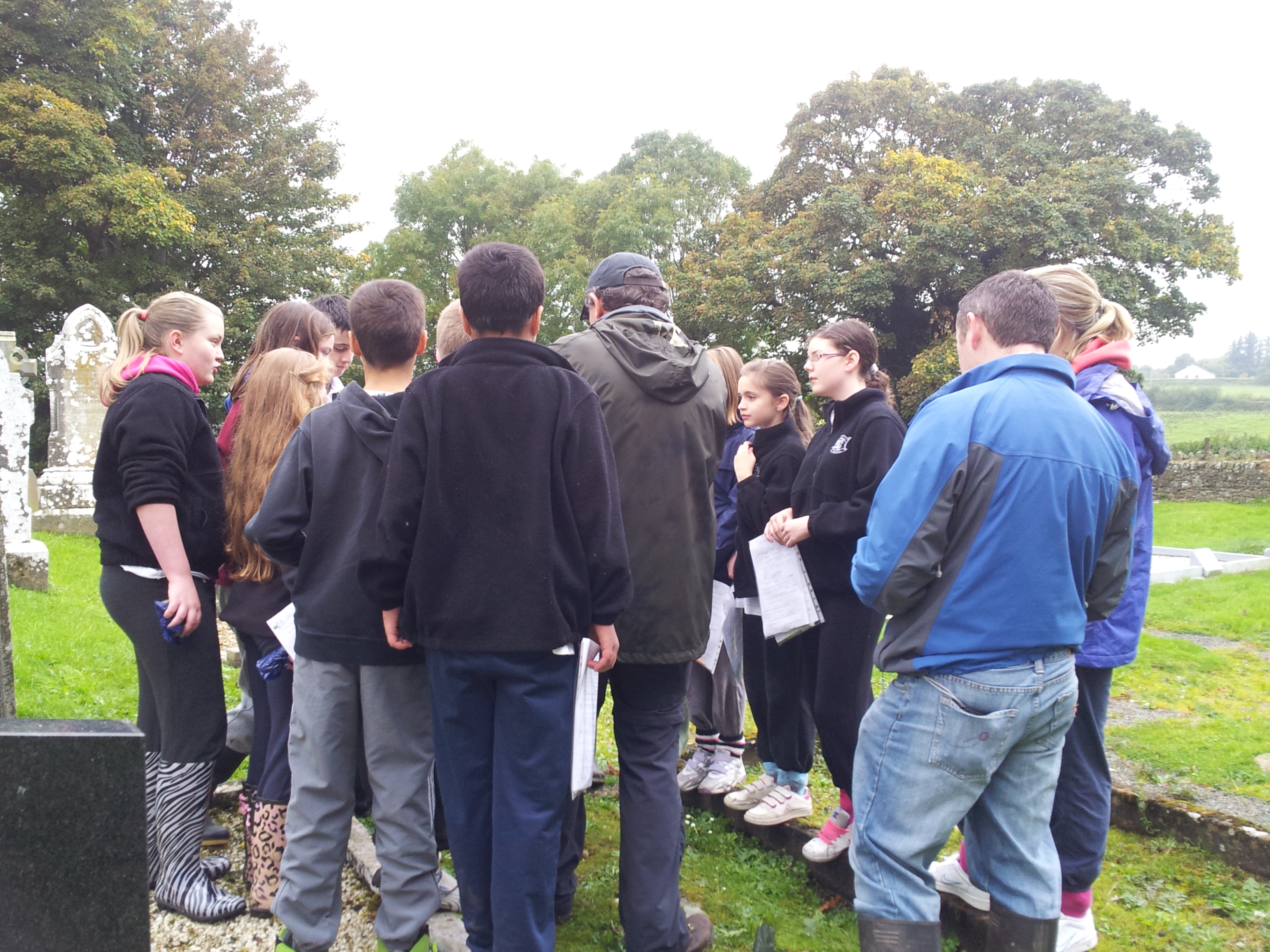
John explaining the recording to the local school kids

The gravestones are numbered, then photographed using a special camera which provides each photo which a geo tag.  This information can be used to produce a plan of the  graveyard.  Next the inscriptions on the stones are recorded.

Patsy McGrath, Michael Moroney, Michael Fennessey recording an 19th century headstone

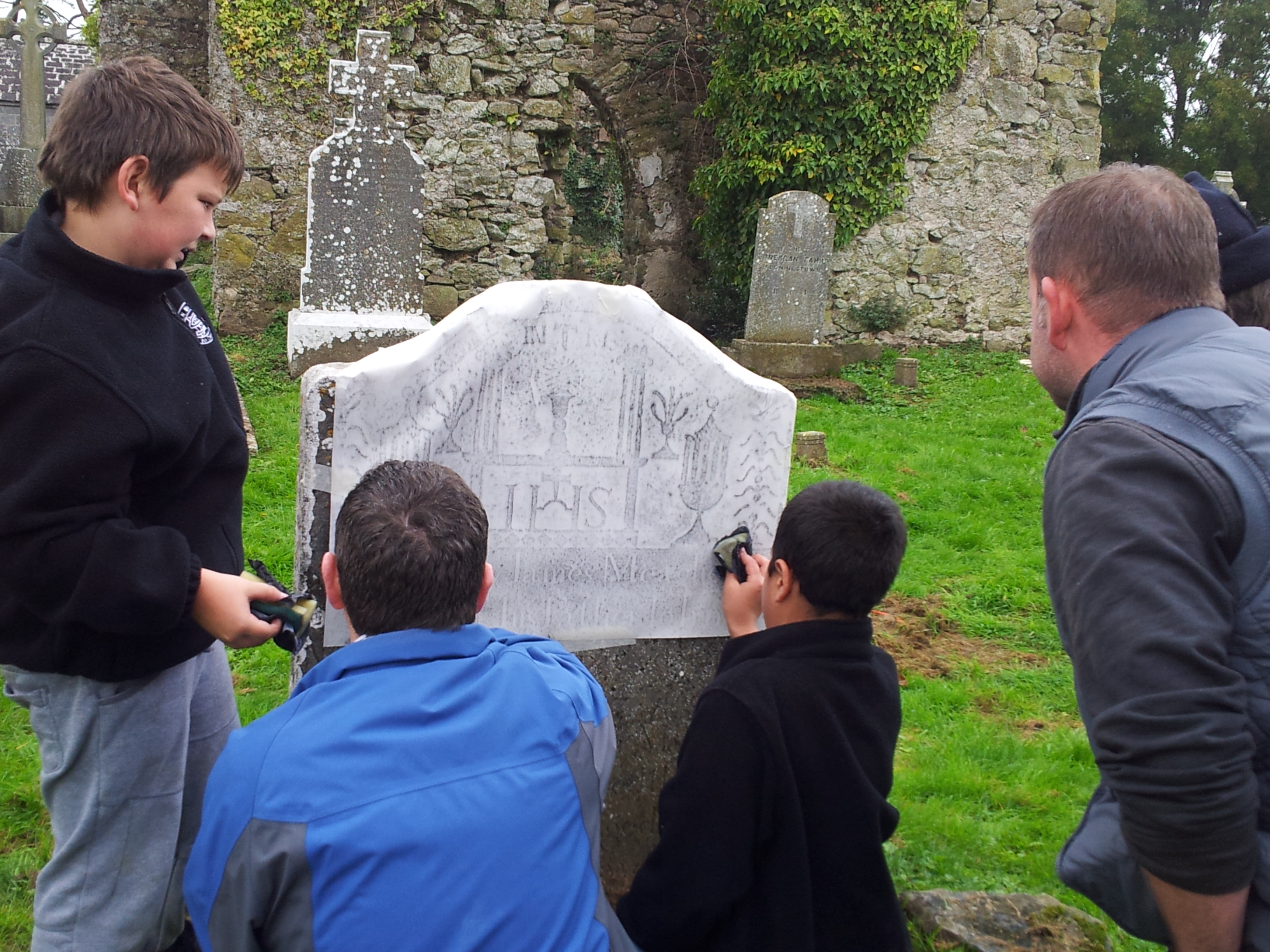
Once the stones  have been photographed and  the inscriptions recorded ,  a rubbing is taken of  each gravestone .

Rubbing of 19th century gravestone

The local  kids  from Clogheen  primary school came along  for a visit and  to help out  with the recording.

School kids taking a rubbing of gravestone

Projects like  this are really important. They help  local communities become aware  of the importance of  Irish graveyards. Each stone has its own story and can tell alot about the social  history of the time . The location of graves and style of headstone  can  tell us about class and religious differences .  They provide a record of people who lived in the area , as well as  a record  of  folk art for the 18th – early 19th century. They also provide imformation about the people who made the stones.  Additionally projects like this make people aware of good practice in maintaining and looking after graveyards. This in turn  means they are less likely to engage in bad practice like sandblasting  or cleaning stones with wire brushes which ultimately  damages the stones.


Close up of the angel Gabriel blowing a trumpet


Just  when I thought I was having a pilgrim free day  John brought me to see the grave of Fr. Nicholas Sheehy 1734—1766.  An  opponent to the penal laws, the preist was   hung , drawn and quartered  after he was falsely accused  of  murder.  The candles on the grave and the flowers immediately pointed to people coming to the grave.

The grave of Fr Sheedy


John then pointed out a small hatch or door in the side of his tomb and noted he had seen a similar hatch at priests grave in Cavan also dating to the penal times.

This opening allowed people to remove soil  from the grave within, the soil which was  seen to be holy and have healing powers,  was  take away  to be used for cures.

The soil within the tomb

Fr.  Sheehy’s tomb  immediately reminded me of medieval pilgrims who were known to take   dirt/earth from the saint’s grave, or  cloths touch against the saint’s shrines or oil from the lamps that burned at the shrine, home with them. The tradition of healing soil is recorded  in early Greek medicine, where certain soils were seen to have curative powers.   In the medieval world the healing  power of the earth came from the belief that the soil was a type of  relic. Pilgrims believed the earth or dirt from the saints graves had been scantified because of its proximity to the saints body . There are many  accounts of 19th century  and even modern pilgrims  taking  the holy earth from the grave of the saints home with them, to use for cures and protection.  At Ardmore  the soil from St Declans grave was sold to pilgrims in the 19th century, while at  Clonmacnoise the practice of taking earth from the grave of St Ciarán caused the walls of Temple Ciarán to become unstable and lean in. I think this could be a topic for another blog post.


References
McMahon, J. & Roberts, J. The Sheela-na-Gigs of Ireland and Britain: The Divine Hag of the Christian Celts – An Illustrated Guide Mercier Press Ltd. (2000).
Kelly, Éamonn Sheela Na Gigs. Origins And Function Country House (1996).
Freitag, Barbara Sheela-na-gigs: Unravelling an Enigna   (2004)