Two stones dedicated to St Patrick, in South Co. Tipperary

Over the course of my research on pilgrimage in south County Tipperary, I came across two curious stones associated with St Patrick.

Map showing the location of St Patrick stones and Cahir town in Co. Tipperary, taken from Google maps


The first, St Patrick’s stone at Grangemore  is located in the middle of a T-junction of a small by-road leading the Cahir Equestrian centre, a short distance from the town of Cahir. The stone is embedded in a diamond-shaped island in the middle of the junction, probably not the safest place for such an ancient monument. I could see traces of green paint on the stone, suggesting it was painted green to make it more visible.

St Patrick’s stone in diamond-shaped island

The stone is a what archaeologist call a ‘bullaun stone’. Bullaun stones are artificial basins or hollows/depressions in rocks, boulders and stone and are held to be of early medieval date. The majority are found at early medieval ecclesiastical sites but some like this stone are found in isolation. There is some question over the original use and function of bullaun stones in early medieval times. Some scholars believe that they are medieval pilgrimage stations/ monument pestles to ritual or devotional use of turning stones within the hollows. Others advocate a more practical use such as grinding metal ores or herbs. Whatever their original use many of these stones over time developed associations with saints. St Patrick’s stone has two,  circular depression, the largest (diam. 0.19m x 0.2m; depth c. 0.1m) and the smaller (diam. 0.17m x 0.15m; depth c. 0.7m).

St Patrick’s stone, a bullaun stone with two hollows


As its name suggest the stone is associated with St Patrick the national saint. According to Power in 1908,  the stone was held with veneration  as it was believed to have been  used  as a cushion by St Patrick and the depressions were made by his knees.
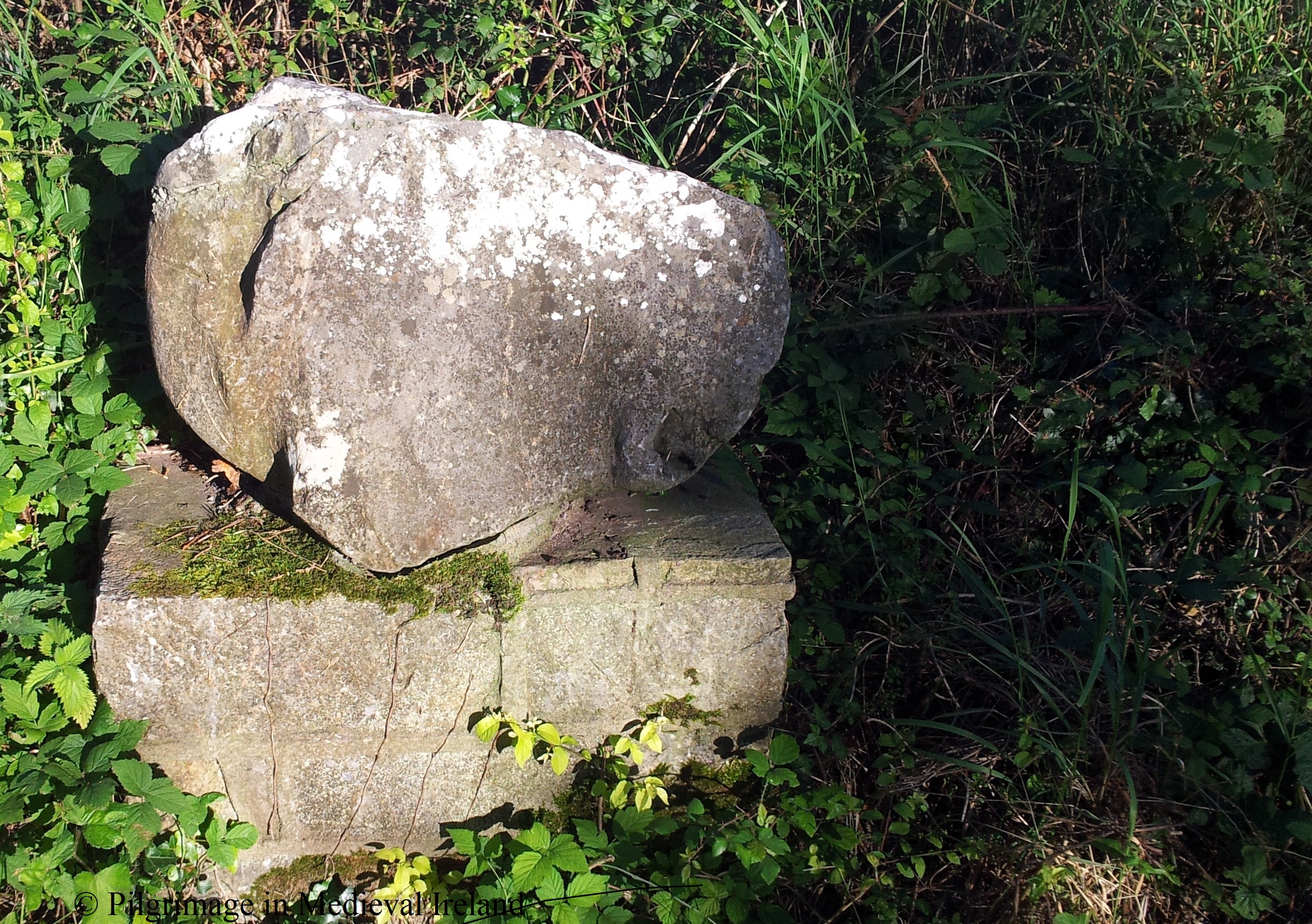
St Patrick’s stone, Killaidamee townland

A few miles away close the ruin medieval church of Ballybacon, is another stone known as St Patrick’s stone located in the townland of Killaidamee. It is located opposite the junction of the Ardfinnan to Goatenbridge road and the Ballybacon road, it is not a bullaun stone but a natural shaped limestone e boulder  c.  .40m in height and  .70m in length.  It has a natural shallow curved groove in the upper surface on top of the stone.

The upper surface of St Patrick’s stone Killaidamee


It was formerly located in the ground in a roadside location and an OS bench mark is located on the side. It was moved to its present location, a concrete slab  when the road was widened in the 1980s. There is no tradition of local veneration of the stone.


Both stones are located in isolation and there is no  tradition of  modern pilgrimage to either stone, although we know the Grangemore stone was held in some regard in the early 1900’s  however the  stones do represent the spread of the cult of St Patrick in South Tipperary.

A quick note on a medieval baptisimal font at Ballybacon, Co. Tipperary

About two weeks ago I finally got to visit the beautiful medieval baptismal font at Ballybacon Co. Tipperary. I first came across an article on the font (M. Cahill and E. Twohig, Baptismal Font from Ballybacon Old Church, Co. Tipperary , Journal of the Cork Archaeological and Historical Society , 81, 1976, 92-3, fig.1) when I was doing research for my MA thesis on the Rian Bó Phádraig in 2000. I have always wanted to see the font    in person and after several failed attempts  I finally managed to achieve my goal.
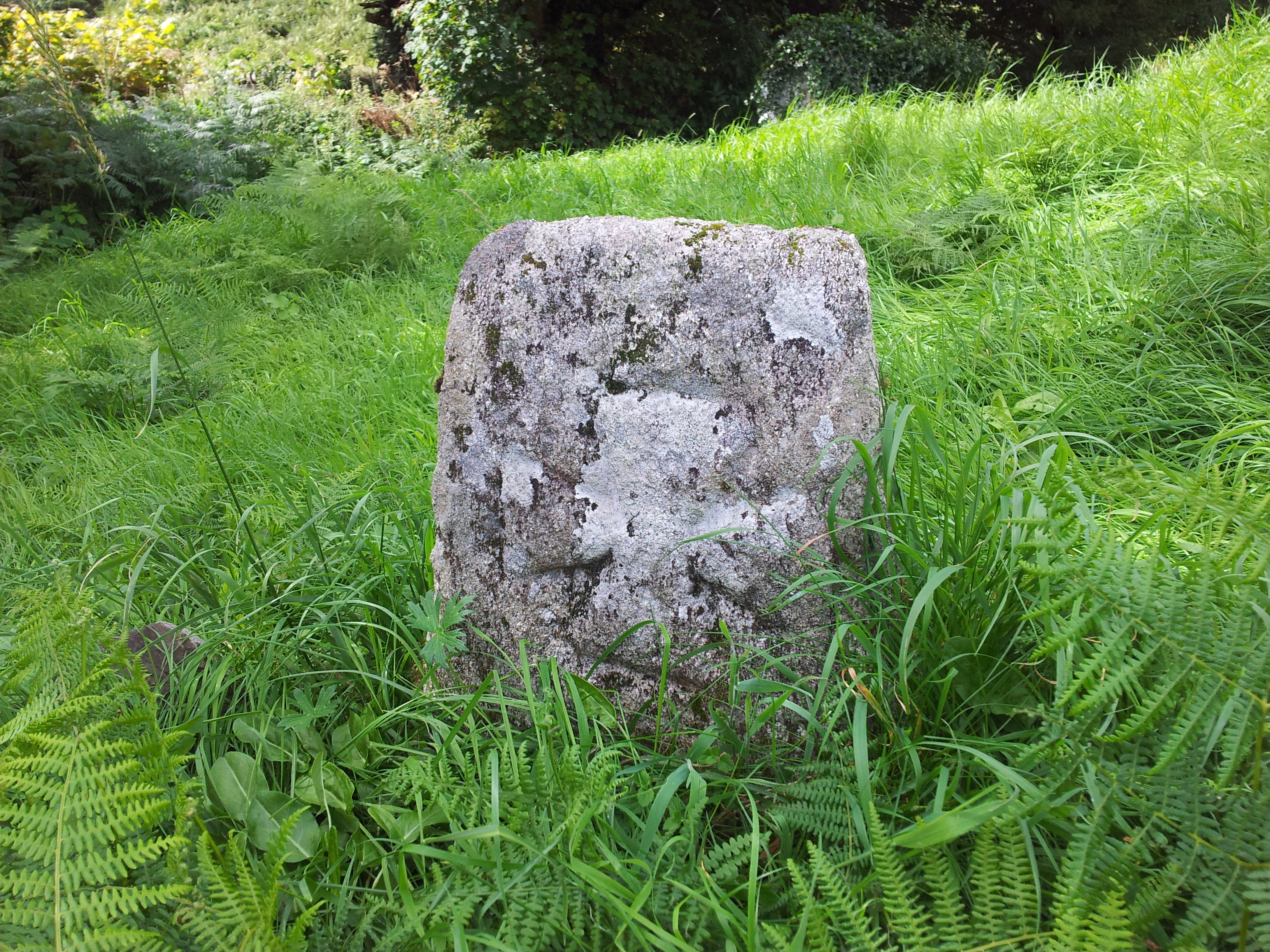
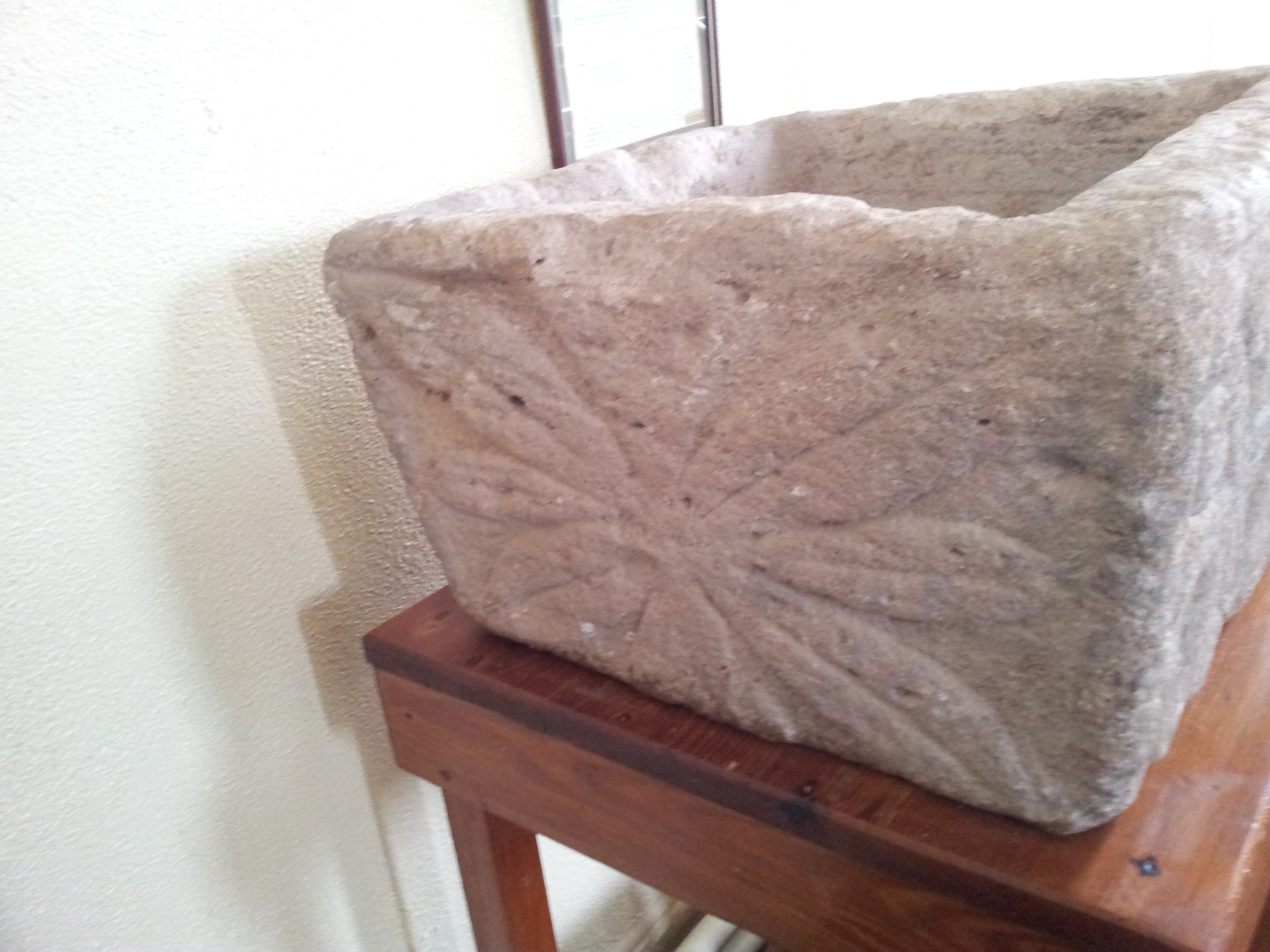
The front panel of the medieval font, showing floral decoration.

The font  is smaller than I imagined but very impressive. It is rectangular in shaped and carved from a single piece of fine grained granite it measures 32cm in height x 58cm wide x 56cm deep. The interior is also rectangular with a central drain hole. All the outside faces of the font are decorated in low relief with circular and floral pattern which is very pretty. The underside of the font has a large circular depression 0.32 m in diameter which could suugest  that it rested on a single columnar base.  Pike (1979, 9) suggests that the font is ‘pre-conquest’ while Cahill and Twohig (1976) date it to the mid-to late- 13th century. Today the font sits on a small wooden table in the modern parish church at Ballybacon.

Side panel of the medieval font, showing a floral motif

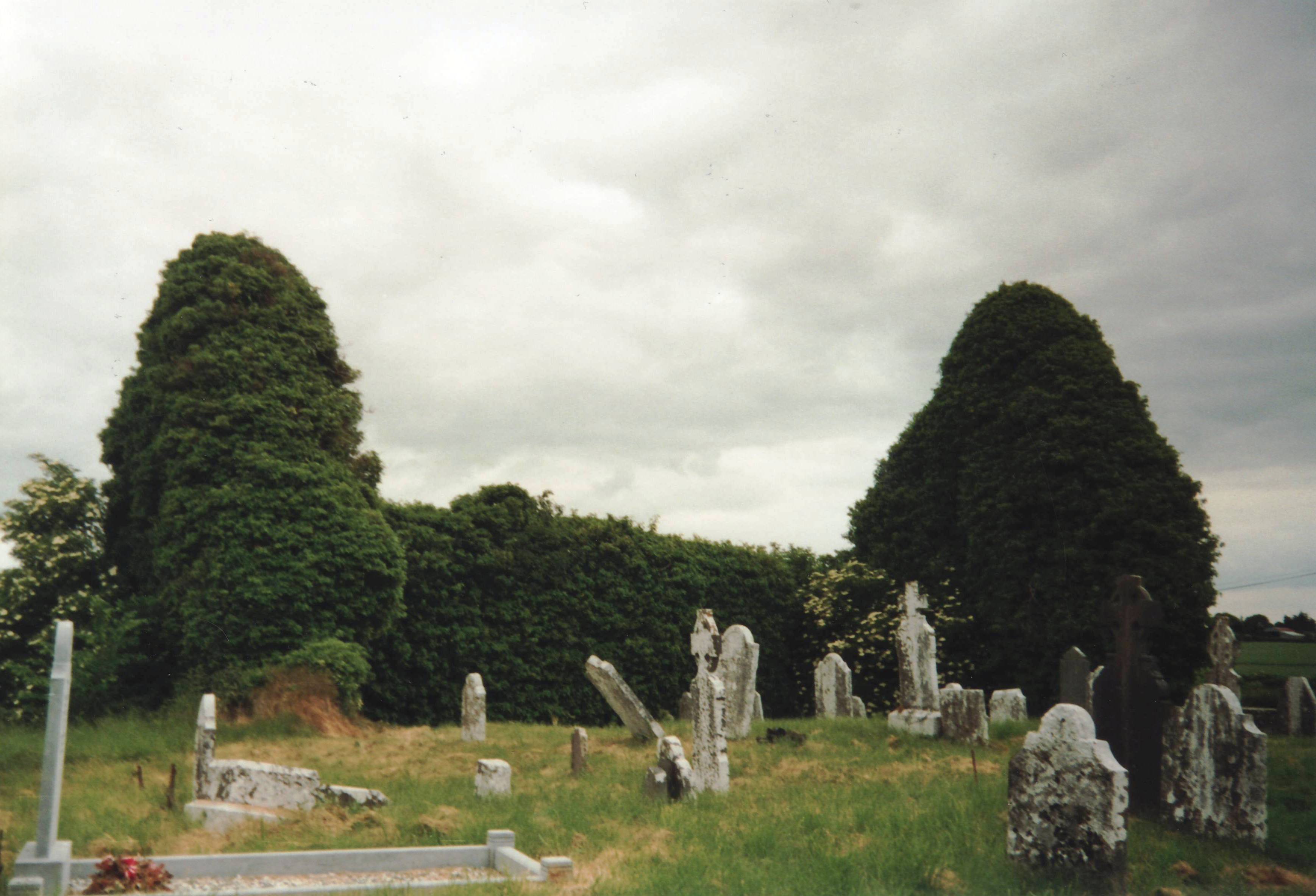
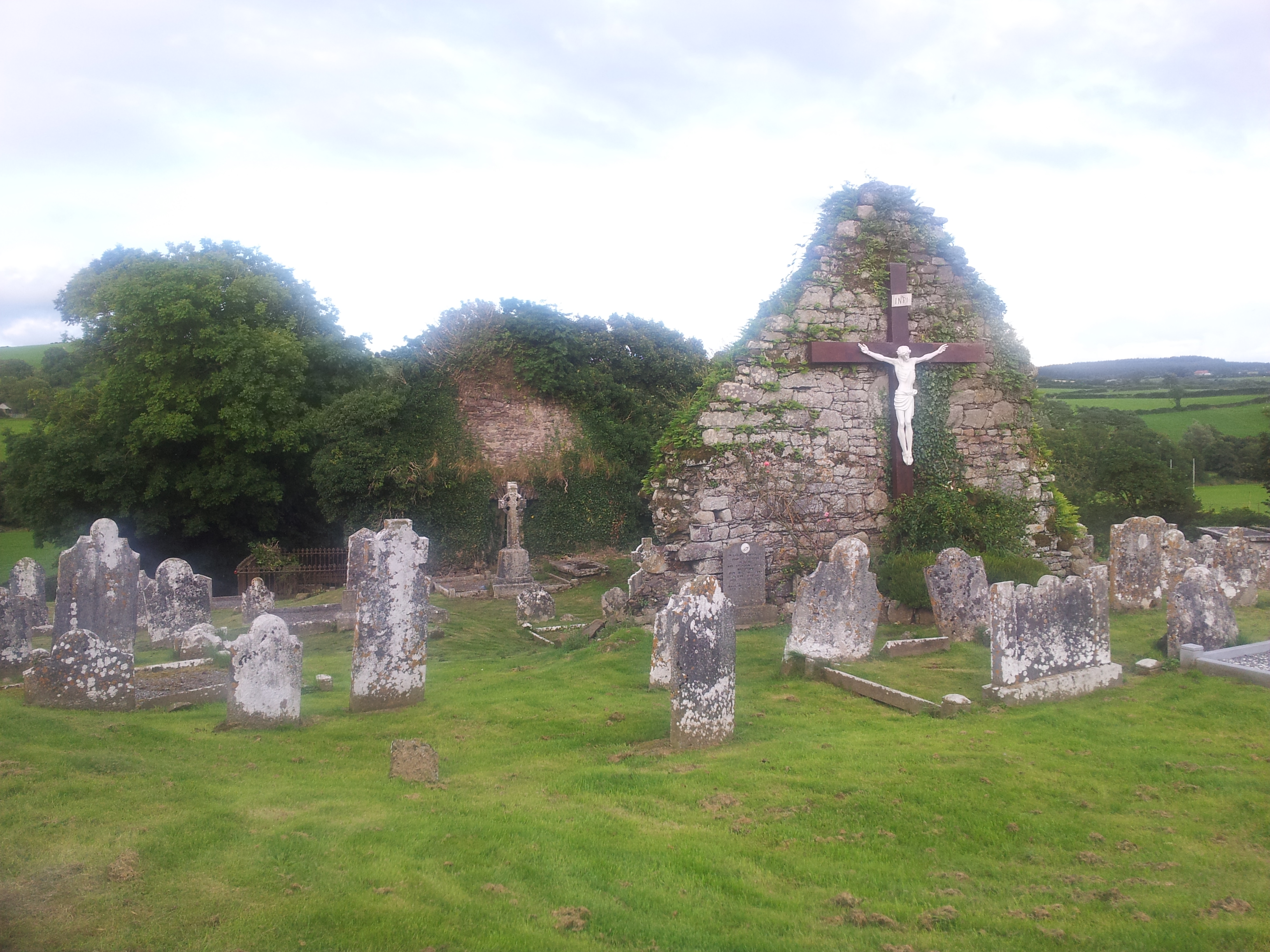
Originally  the font was located at the nearby medieval parish church of Ballybacon in the townland of Raheen. The church is today covered in ivy it has a simple undivided plan and is aligned E-W, and probably of 13th-century date, built of roughly coursed limestone and sandstone rubble, with a base-batter (Farrelly 2011).

Google earth map showing the modern and medieval parish churches of Ballybacon, Co. Tipperary.
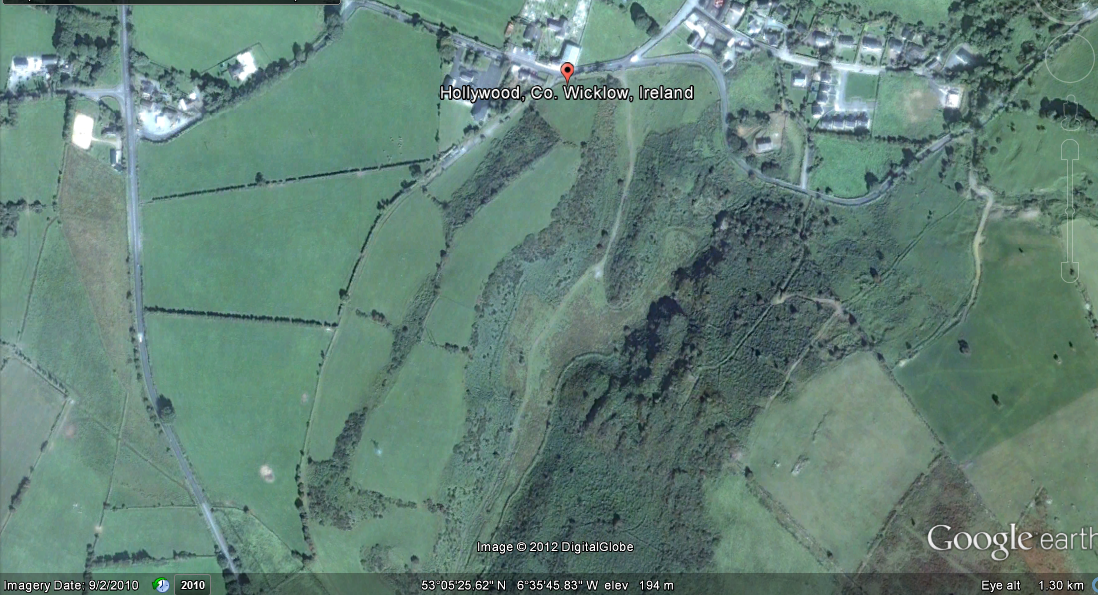
Ballybacon or Baile Uí Phéacháin in Irish means  “O’Peakin’s Homestead”. It is interesting to note that there is a site  dedicated to a saint to St Peacáin/Beagán at Toureen Peakaun (Kilpeacan)  located in the parish of Kilardry, Co Tipperary. It may be possible to speculate that Ballybacon church was originally dedicated to this saint and there was an earlier church here prior to the 13th century.  Tentative evidence to support this idea  is the  presence of a possible early medieval cross slab at the site and the fact that the church is located beside the  townland boundary of Glebe and Raheen. Many early medieval churches were located in boundary positions and the kink in the road beside the site is very curved and may suggest the presence of a circular enclosure.
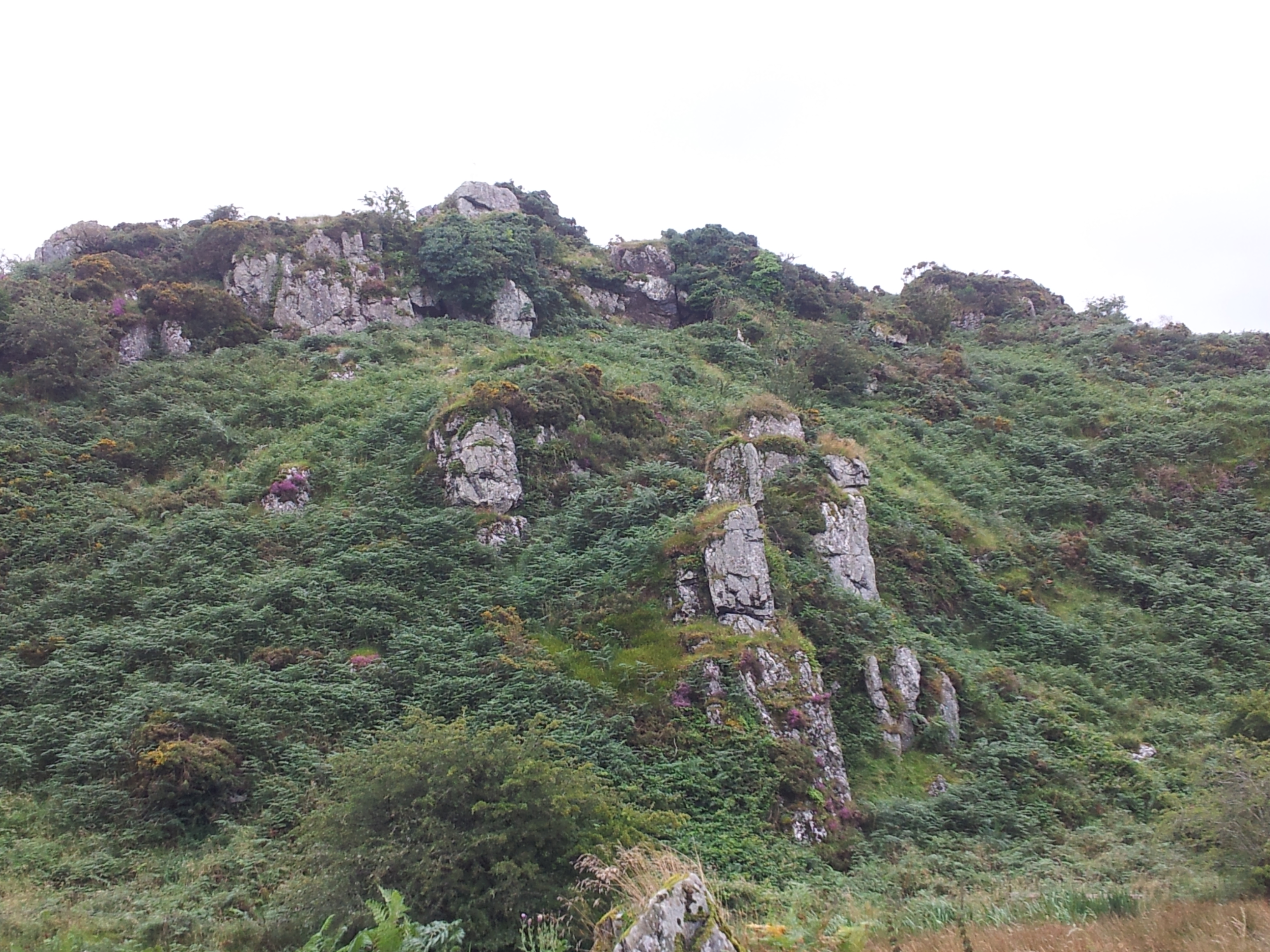
the ruins of the medieval church at Ballybacon.

According to a local man Francis Carrigan the font was removed at some point to a nearby farm where it was used as a tough for pigs.  It was later rescued and returned to the medieval church before it was moved  in 1975 a few hundred yards away to the modern parish church where it resides today.

References

Cahill, M. &. Twohig, E. 1976. ‘Baptismal Font from Ballybacon Old Church, Co. Tipperary’ , Journal of the Cork Archaeological and Historical Society , 81, 92-3, fig.1.

Farrelly, J. 2011. ‘Church at Ballybacon ‘. http://webgis.archaeology.ie/NationalMonuments/FlexViewer/accessed 28/02/2012.

Garton, T. 2008. ‘Ballybacon, Tipperary’, http://www.crsbi.ac.uk/search/county/site/id-ti-balba.html accessed 18/09/2012.

Pike, J. 1979. Medieval Fonts of Ireland, privately published, Greystones, 9.

Power,P. 1937. Waterford and Lismore – A Compendious History of the United Dioceses, Cork, 71.

Lady well or Tobar Mhuire in Modeligo, Co Waterford

The village of Modeligo has one of the nicest holy wells,  it is  a real gem. The well like the parish church is dedicated to the Blessed Virgin and local people still gather here on the 15th of August the Feast of the Assumption, to say the rosary.

Medieval Parish church at Medeligo, Co. Waterford

The Ordnance Survey maps record the well as Lady well, while Forsayeth in 1911 says the well was known as Tobar Beannuighthe. Beary also writing in 1911 notes that local people referred to the well as Tobar Mhuire or Mary’s well. Today local people just call it the Holy well.

I first heard about this well from a friend Gillian McCarthy who happens to be from Modeligo and for the last two years I have been trying to visit. Finally in August 2012, I was able to visit and Gillian kindly gave my mum and I a guided tour of the village and the well, which is located in the townland of Knockgarraun a short distance from the local community centre, in farmland own by Gillian’s father Roger.

Lane way leading to Holy Well

The main focus of devotion at the well is the 15th of August and a pattern day is held in the village around this date but it is now a separate event to devotions at the well. The pattern appears to be a revival of an older tradition as in 1911 it was recorded that the pattern day;

‘used to take place here in olden times. People may still be seen to congregate on the aforesaid date, and they invariably hang mementoes, the shape of rags and other objects on the ancient hawthorn that grows beside the well’ (Fortheysth 1911, 187).

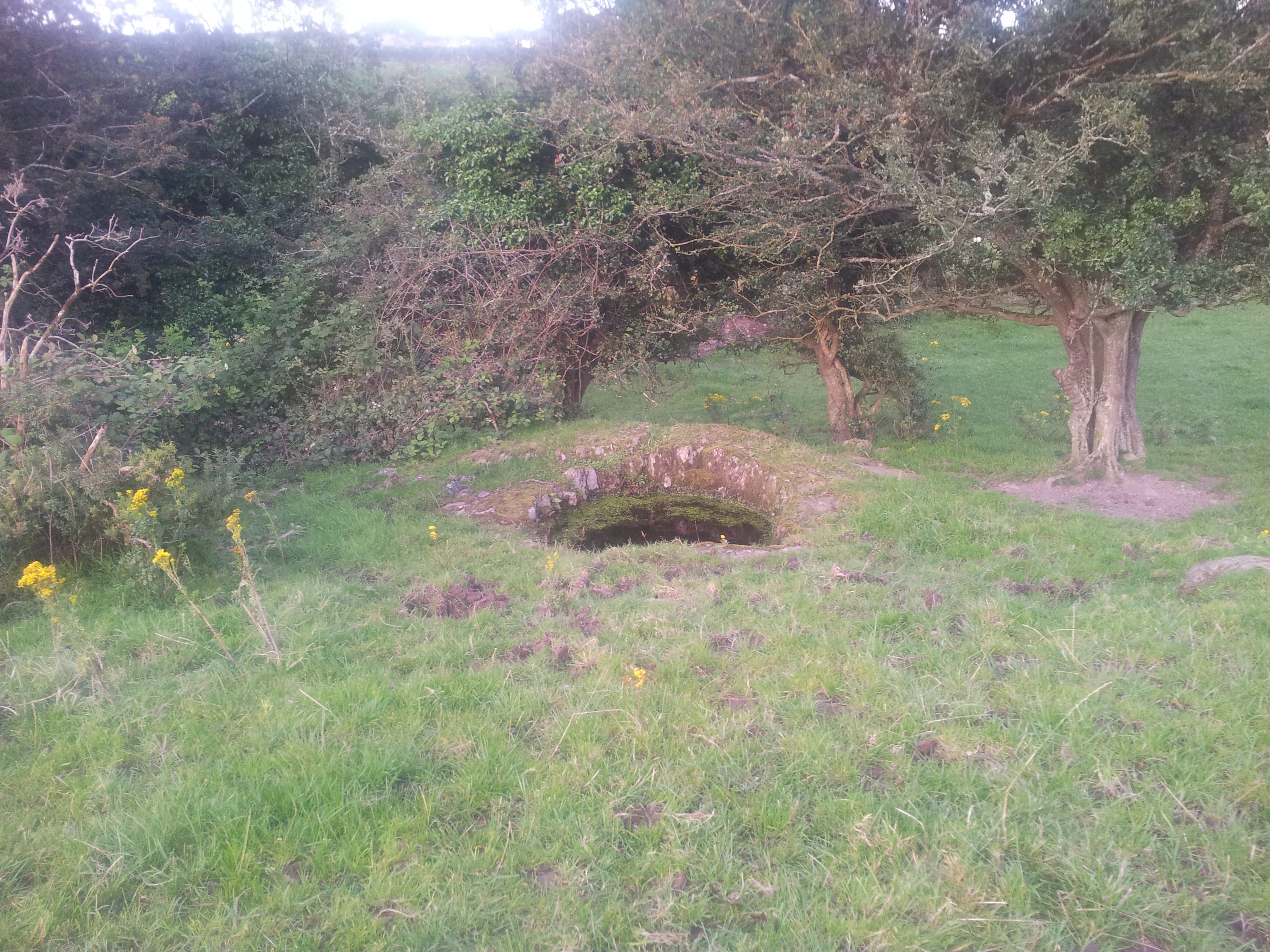
This year mass was to be said for the first time at the well but it was cancelled like many other events this summer due to the torrential rain and wind.  To get to the well you have to park at the community centre and walk down a long grassy boreen which leads into farmland. The well is located on steep slope on a rock outcrop that overlooks the Finisk River.

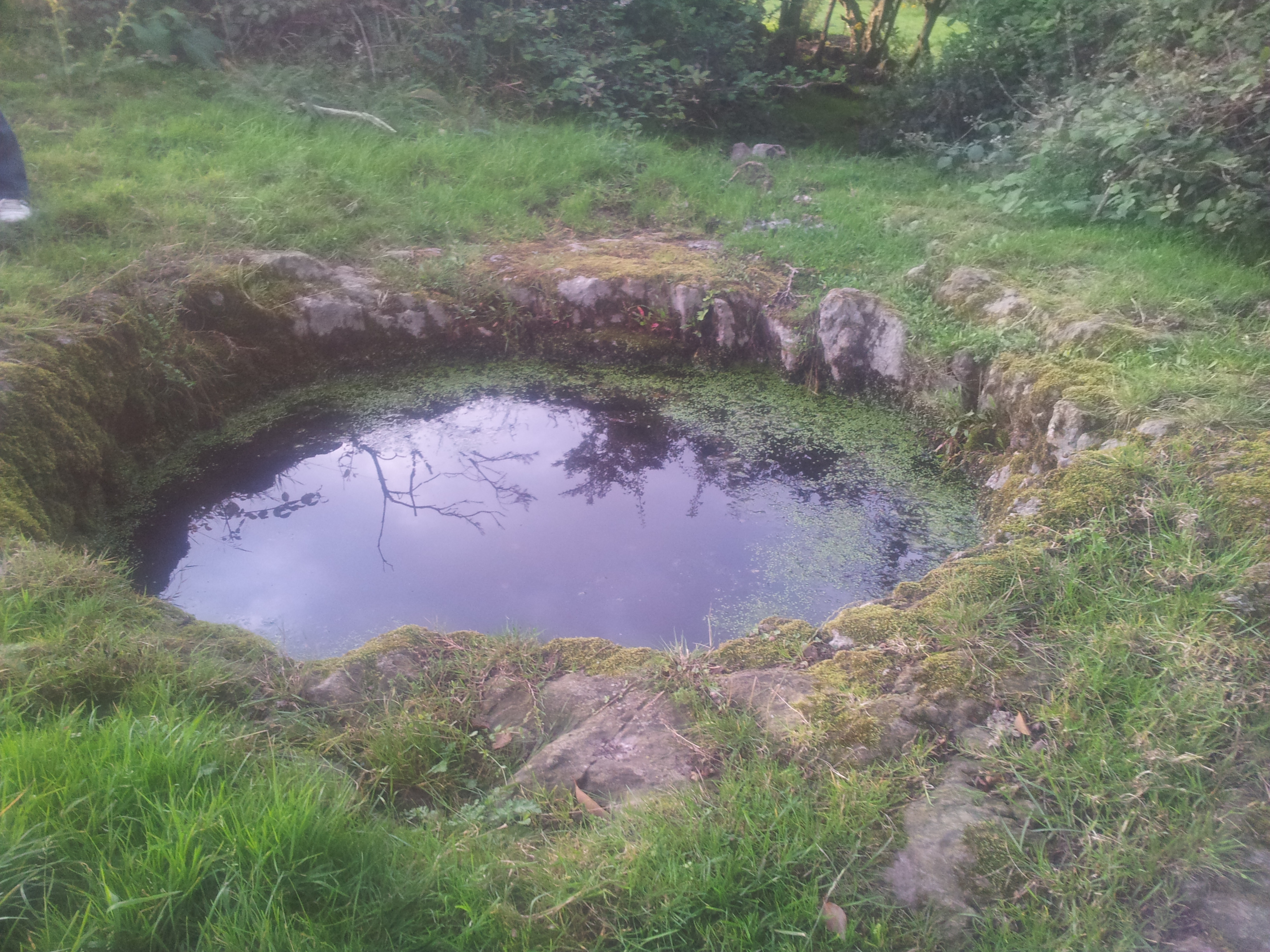
The well is a roughly circular hollow in the rock outcrop, the result of natural erosion by rainwater. The water within the well is a result of the hollow filling with rain water. Coming up to 15th of August a member of the McCarthy family will clean out the well getting rid of any algae growing in the water.

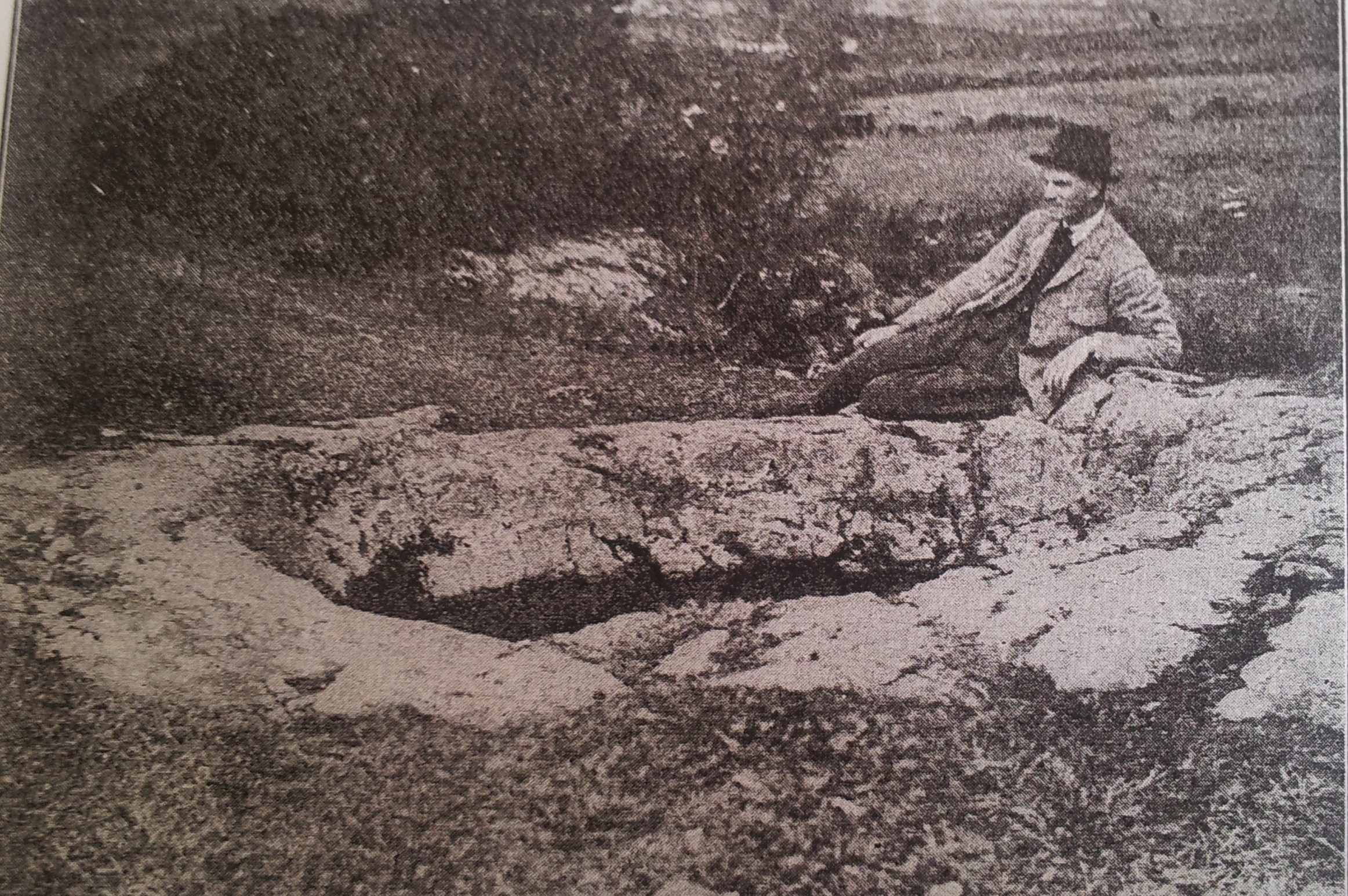
Forsayeth (1911, 186) noted that when the well was emptied a cross carved into the base was visible and Gillian confirms seeing this.

The hawthorn tree mentioned above still grows beside the well and Gillian’s father Roger, told me that rags and rosary beads were tied to the tree up to the 1960’s but the tradition has died out now.

Image of the Holy Well in 1911 ( Forsayeth 1911, 186).

Little is known about the well prior to the early twentieth century, Lewis writing in 1837 about the parish noted ‘There is a vitriolic spring in the parish the water of which is clear and sharp’.

Smith in his book the The Ancient and Present State of the County and City of Waterford in 1746 notes

‘On the south side of the parish lies the church; and near it, is a reputed holy well’

A local elderly lady called Mrs Cronin of Knocknageragh (a nearby townland) told Beary in 1911

‘ The rounds were made here. The water of this well may be used for any purpose, such as applying or pouring on the head, or rubbing on parts of the body, and some sup it out of the palm of the hand…. The rounds each time however, are finished  at the flowing spring well 60 yards below, on the flat Inch, and near the brink of the Finisc River. Here  three  sups or swallows are to be taken in honour of the Blessed Trinity’

The tradition of going to the Trinity well has died out in the area and I only came aware of the wells existence following my visit so I wasn’t able to seek it out.

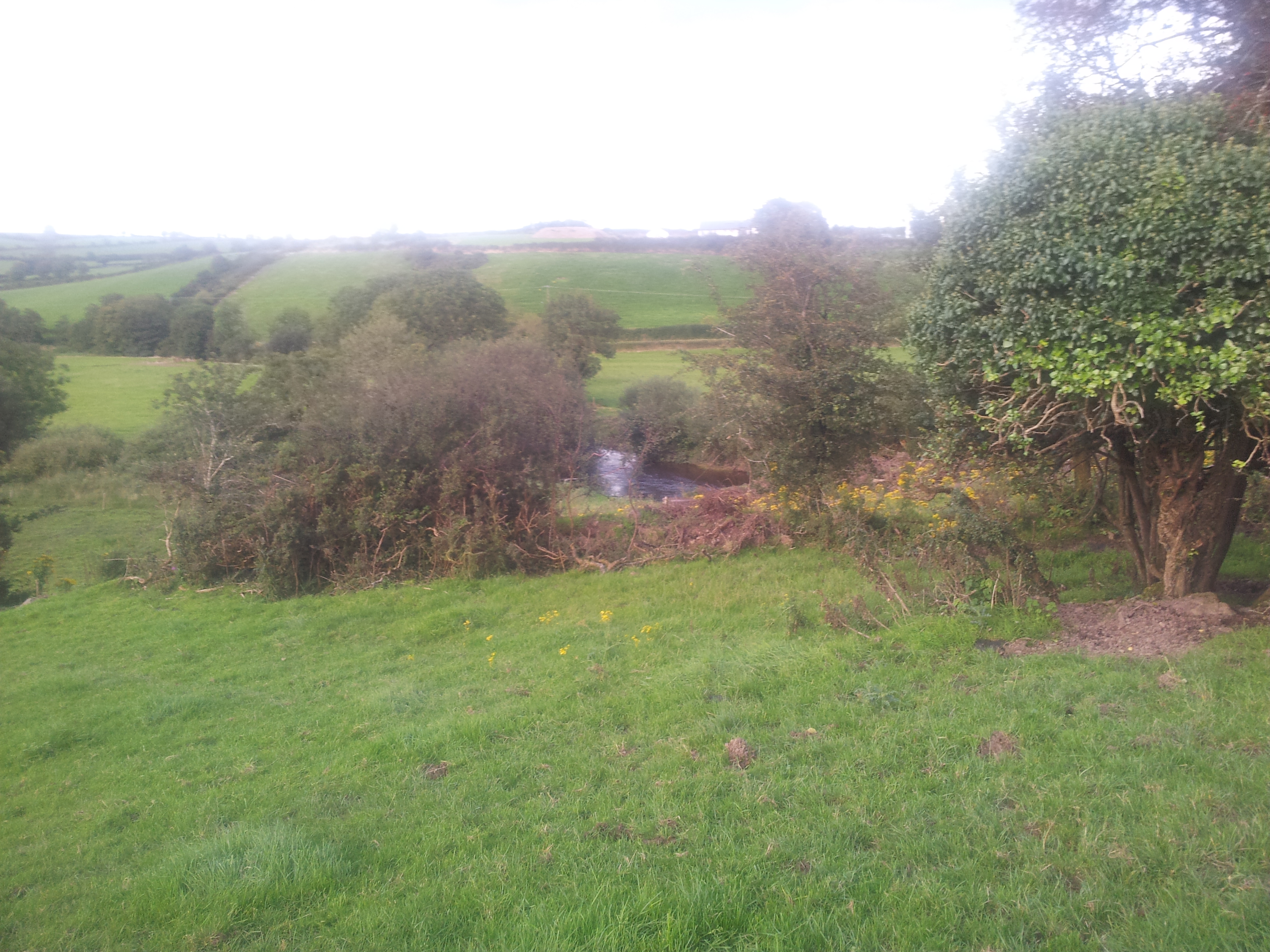
View of the River Finisk from the Holy Well

Another very interesting fact about Lady well is that according to folklore from the 19th century this well  has moved its location in the past.

It was originally in the townland of Scart on the land of a Mr Healy and was resorted to for a cure for bad eyes and blindness.

‘….Mr. Healy used to hear all the people that was cured at this well talking about the well. So he told his steward to take a blind horse he had to the well. But the steward wouldn’t take the horse, so he had to take him himself to the well. So the horse got his sight back there and then, and Mr. Healy, who had  the impudence to take a dumb animal to the well, was struck blind himself, and the well disappeared. So there was no trace of the well to be found where it was. But after some days the well was found where it is at present, up a boreen under the chapel of Modelligo’  (Ussher 1914, 120).

There is another tradition which  states that it was a one Cromwell’s men who led his blind horse to the well in mockery and to test out the healing waters of the well, the horse was cured the solider stuck blind and the well up and moved to Modelligo (Forsayeth 1911, 187).

Bibliography

Beary, M, 1911. ‘Holy Well at Modeligo’JRSAI  Ser. 6, Vol. I, 393-394.

Forsayeth, G. 1911. ‘Holy well near Modeligo, Co. Waterford.’  JRSAI  Ser. 6, Vol. I,  186-187.

Lewis, S. A. 1837. A topographical dictionary of Ireland.

 Smith, C. 1746. The Ancient and Present State of the County and City of Waterford:

  Being a Natural, Civil, Ecclesiastical, Historical and Topographical Description

  Thereof. Dublin: Printed by A. Reilly.

Usher, E. 1914. ‘Waterford Folklore 1’, Vol. 25, No. 1 (Mar. 31, 1914),  109-121.

The Pattern Day at Clonmacnoise

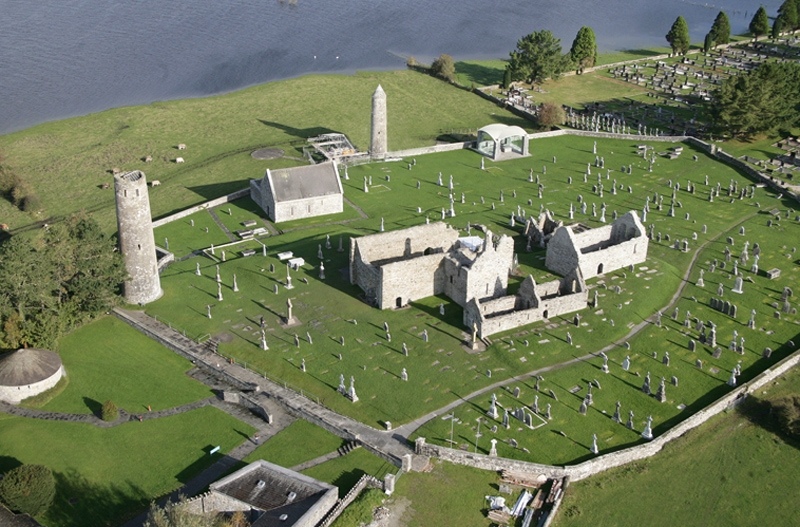
The ecclesiastical complex at Clonmacnoise is truly an amazing place. Founded by St Ciarán in 545, the site  developed into a vast ecclesiastical complex and became one of the great power houses of the medieval church in Ireland.

Aerial photo of Clonmacnoise (from http://www.athlonespringshotel.com/attractions.htm)

I have  visited Clonmacnoise on many occasions and each time I spend hours walking around , there really is so much to see here.

Plan of the ecclesiastical complex at Clonmacnoise

This visit coincided with the Pattern Day celebrations of St Ciarán’s feast day on the 9th of September. Clonmacnoise is one of the very few Irish ecclesiastical sites to have an unbroken tradition of pilgrimage that stretches from the 6th /7thcentury to modern times. The history of pilgrimage during the early to late medieval period and  the early modern period is very interesting and complex and is best discussed in more detail in another blog post.


According to the Clonmacnoise Heritage Centre there are two special days of devotion here at Clonmacnoise. The Church of Ireland hold an open air  service on the last Sunday in July which I hope to attend next year, while the annual St Ciarán’s Pattern Day  is held on the third Sunday in September, or if possible celebrated on the 9th of September (St Ciarán’s feast day) as it was yesterday.


Pilgrims beginning to arrive for the Pattern day


The Pattern celebrations began around 3pm. From around 2.30 pm people began to come into the main ecclesiastical complex in small groups and before  the main celebrations began there must have been well over a 100- 150 people present. A local man I spoke too said that even more people would normally be present but  the All Ireland final between Kilkenny and Galway had kept many away.

Unlike the pilgrimage I documented earlier this year at St Mullins, pilgrims were spread out around the site. A large group of people were seat on chairs in front of the open air oratory, which was  built for Pope John Paul II ‘s visit in 1979,

Pilgrims seated in front of the open air oratory

Pilgrims seated in front of the open air oratory

the rest of the pilgrims were scattered among the gravestones and the ruins of other churches at the site.


Pilgrims scattered around the ruins of the churches

Like the  Pattern at St Mullins, there is also a social element to this occasion,  this it is time for people to catch  up and chat, it is also a time for people to remember those who have died. Many of  people who attended the pattern also visit the graves of loved ones buried within the main complex and the modern graveyard beside it. Visiting of the graves takes place  before and after the Pattern Day mass.


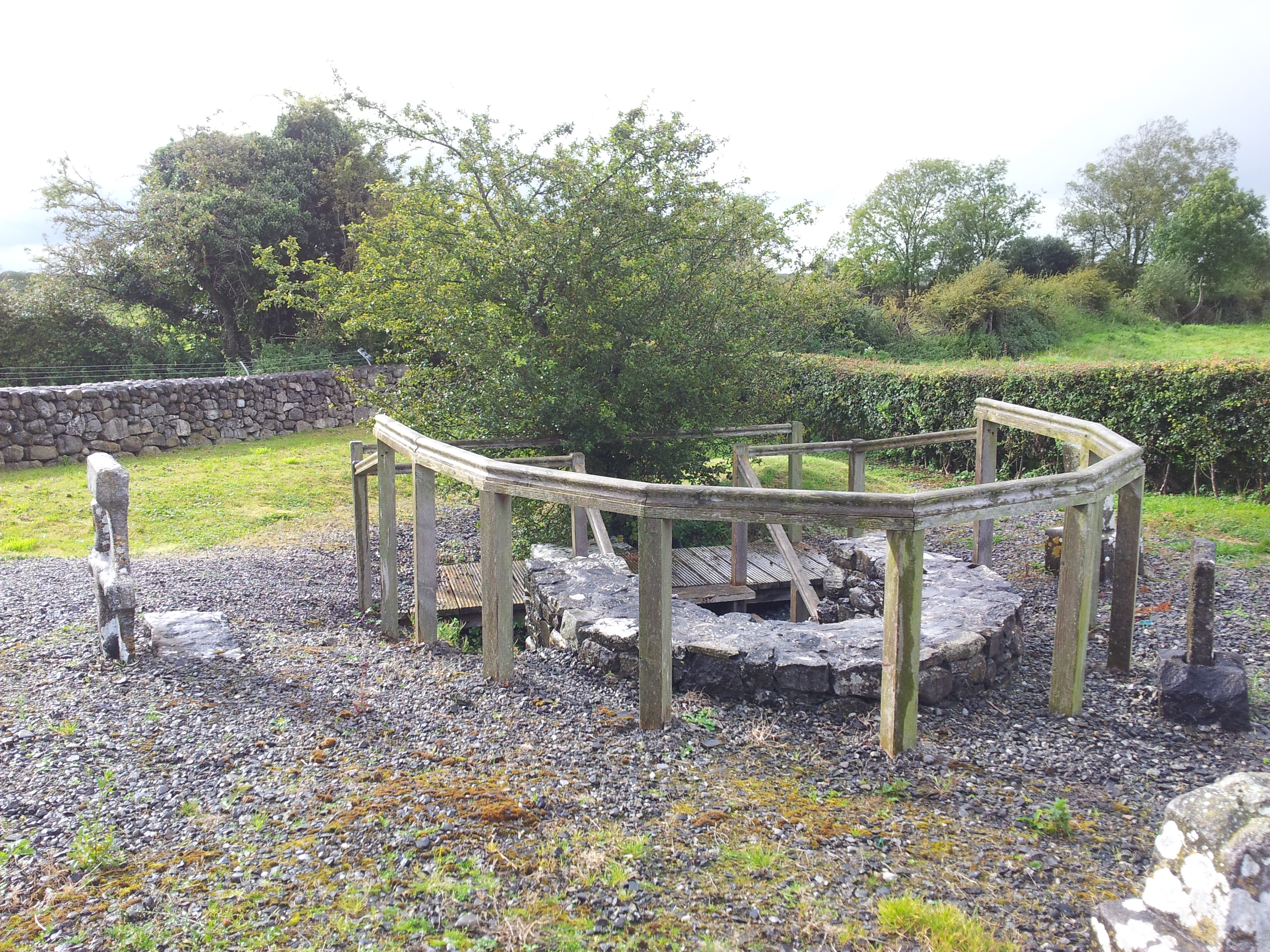
During the nineteenth century and up to recent times   St Ciarán’s well, located a short distance away on the Shannonbridge road,  was a central part of the Pattern Day.  According to one lady that I spoke too,  mass and the stations here are now the main focus of pilgrims  but  some people still visit the well on the saints feast before or after the mass.

St Ciarán’s Holy Well


Clonmacnoise is part of the Catholic Diocese of Ardagh and Clonmacnoise.  St Ciarán is one of the patron saints of this diocese. The pilgrimage  is an import part of the Diocesan Calendar, so much so that  the Bishop of Colm O’Reilly officiated at the mass, aided by 11 priests.

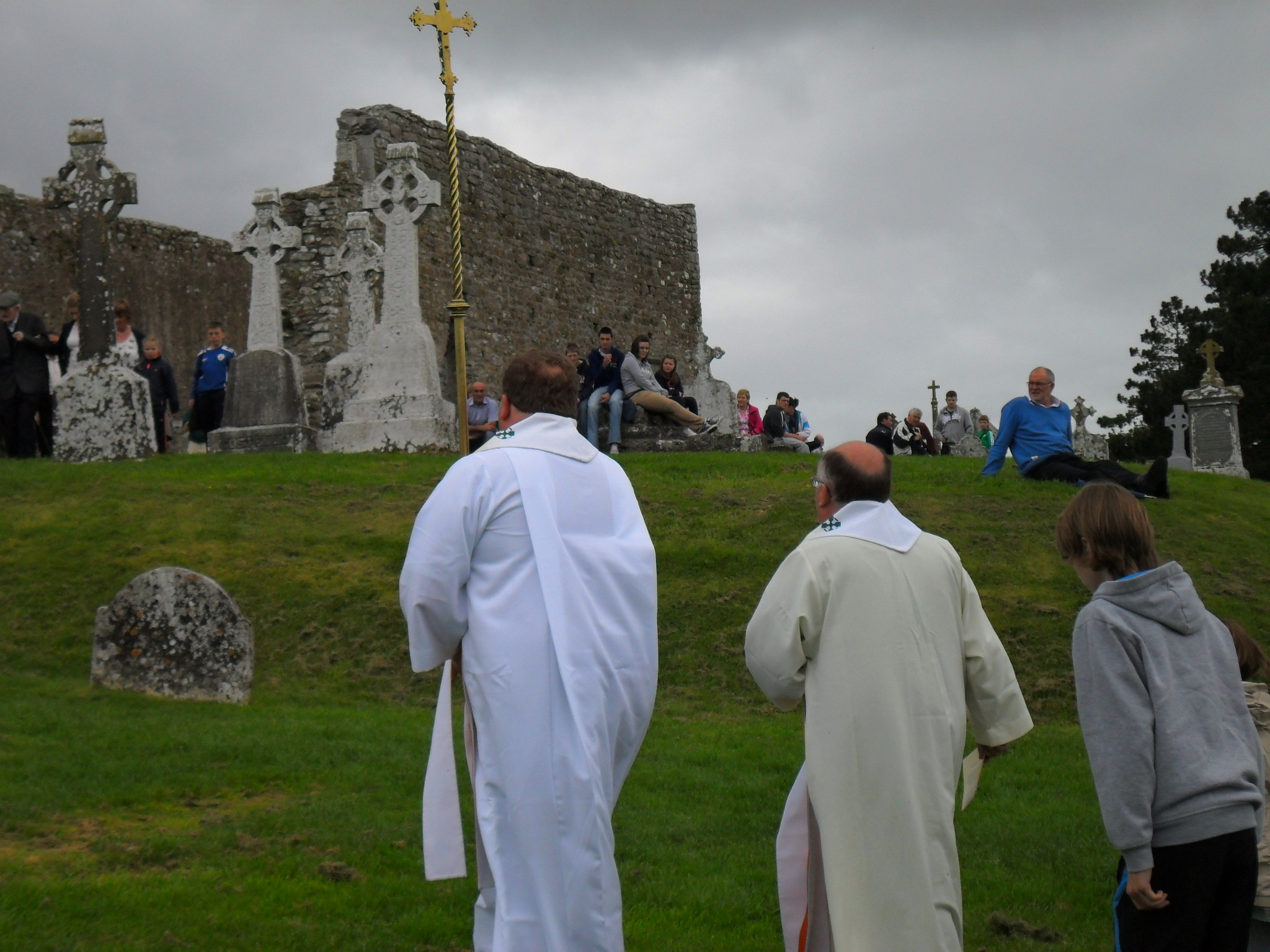
The pilgrimage began with the procession of the ‘Pilgrim Cross’ (a processional cross) around the  monastic complex while the rosary was recited.

Pilgrim Cross being carried in procession to the first station

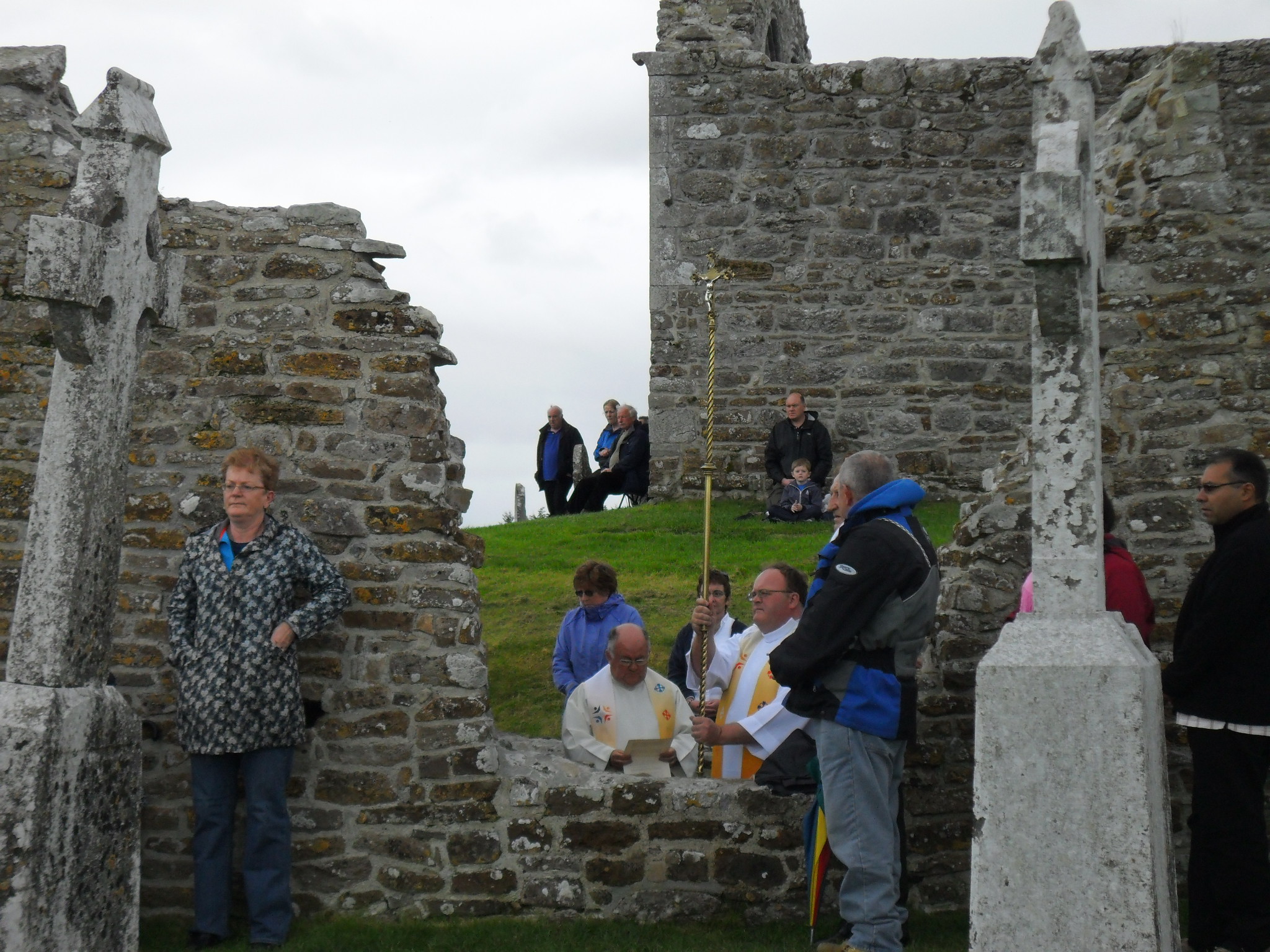
Local people were invited to join in the procession but most preferred to pray where they were and only a small group of people joined in the procession. The first station began at the small oratory known as Temple Ciarán, the  traditional burial-place of St Ciarán.


The first station at Tempel Ciarán

The Pilgrim Cross then  moved  to the second station at the top of the enclosure  among the gravestones.

The second station among the gravestones


The cross was then carried on to the third station at the Cross of the Scriptures opposite the Cathedral church.

The third station at the Cross of the Scriptures


The Pilgrim Cross then moved on to the fourth station was at the Round Tower.

The fourth station at the Round Tower


The Pilgrim Cross was then brought on procession down to Temple Connor the fifth station. This is the only church at Clonmacnoise which is still use, built in 1010 by Cathal O’Conor, it has been used as a place of worship by the Church of Ireland since the eighteenth century and services are still held here.

Procession past Temple Connor, the fifth station

The stations ended with the bishop reciting a litany of the saints of Ireland .  The mass began and  just as the sermon was being delivered by Fr Liam Hickey PP of St Ciaran’s parish Hartstown , Dublin, who was originally from this  area, the heavens opened and the Clonmacnoise became a very pretty sea of colourful umbrellas.

The umbrellas come out with the rain

As quickly as it began the rain cleared away. As the mass continued a few curious tourists looked on taking photos, perhaps wondering what was happening.

Bishop O’Reilly giving communion to the pilgrims


Looking around at the Clonmacnoise I really felt like the site was transformed from a museum into a living place belonging to the community. There was also a real sense of history and tradition, the pilgrims scattered around the site were following the same age-old traditions of their ancestors,  arriving here to celebrate St Ciarán just as their parents and grandparents had done before them and their parents before them and so on. As I will discuss in another post on Clonmacnoise the pilgrim rituals have changed through the centuries but the core act of pilgrimage, the community coming together in honour of their saint  on his feast day is unchanged and I feel really lucky to have been here to experience this.


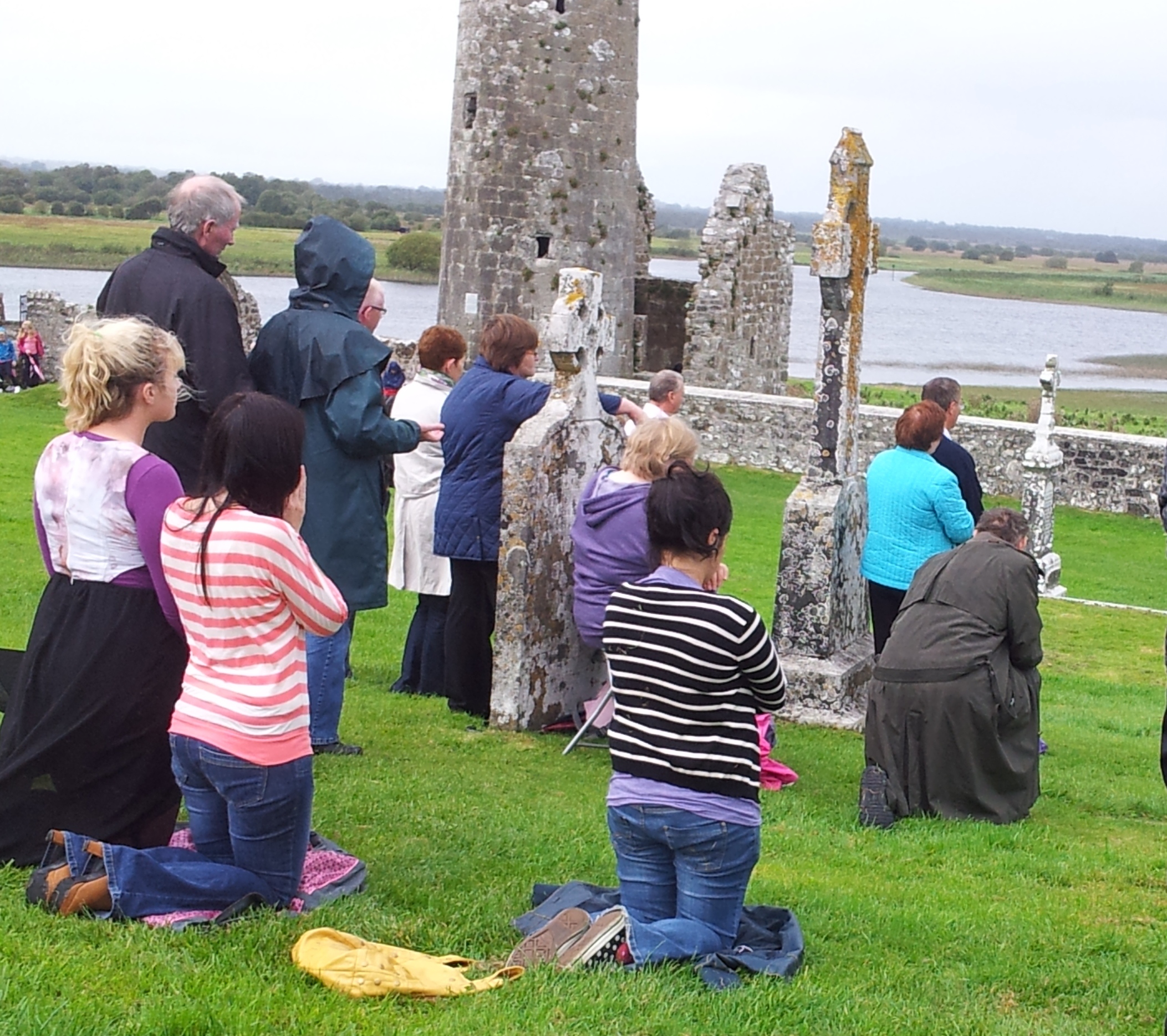
Pilgrims praying during mass at the Clonmacnoise Pattern Day


Medieval Pilgrimage at Hollywood Co. Wicklow

Hollywood,  Co Wicklow could not be further from its glitzy namesake in Los Angeles. This  quiet rural village is  a really interesting place and has its own unique charm. There is much about the history of pilgrimage at  Hollywood that we do not know, but I firmly believe that this little village played a very important role in the early and later medieval  pilgrimage  landscape of the King’s River Valley and was a stop  for pilgrims en-route to the shrine of St Kevin at Glendalough.

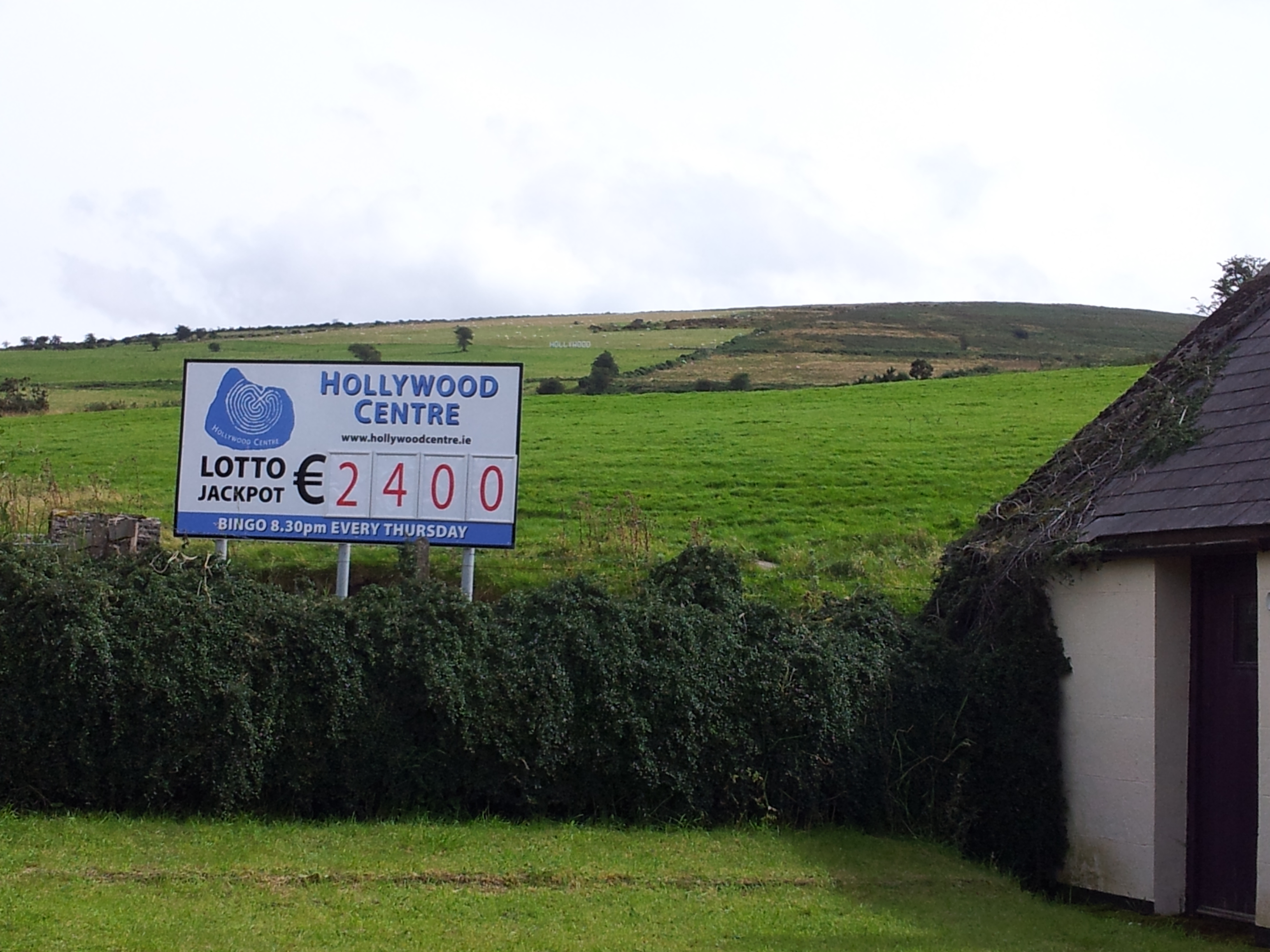
Hollywood Co. Wicklow.

Located at one of the main entry points into the King’s River Valley, the village is traditionally held to be the starting point of St Kevin’s road, a well known medieval pilgrim route .  The route of St Kevin’s road cuts through the Wicklow Mountains via the King’s River and the Glendassan Valleys. The road  linked Hollywood to the ecclesiastical site of Glendalough. Over the centuries countless pilgrims would have passed through Hollywood when travelling to Glendalough.

Unfortunately  there are few historical sources relating to Hollywood. The first mention of the area is in a charter granting land and the right to build a castle here, to the de Marisco family in 1192 (Price 1983, 207-08). All that remains of the castle is a large Medieval Motte located at the edge of the modern village.

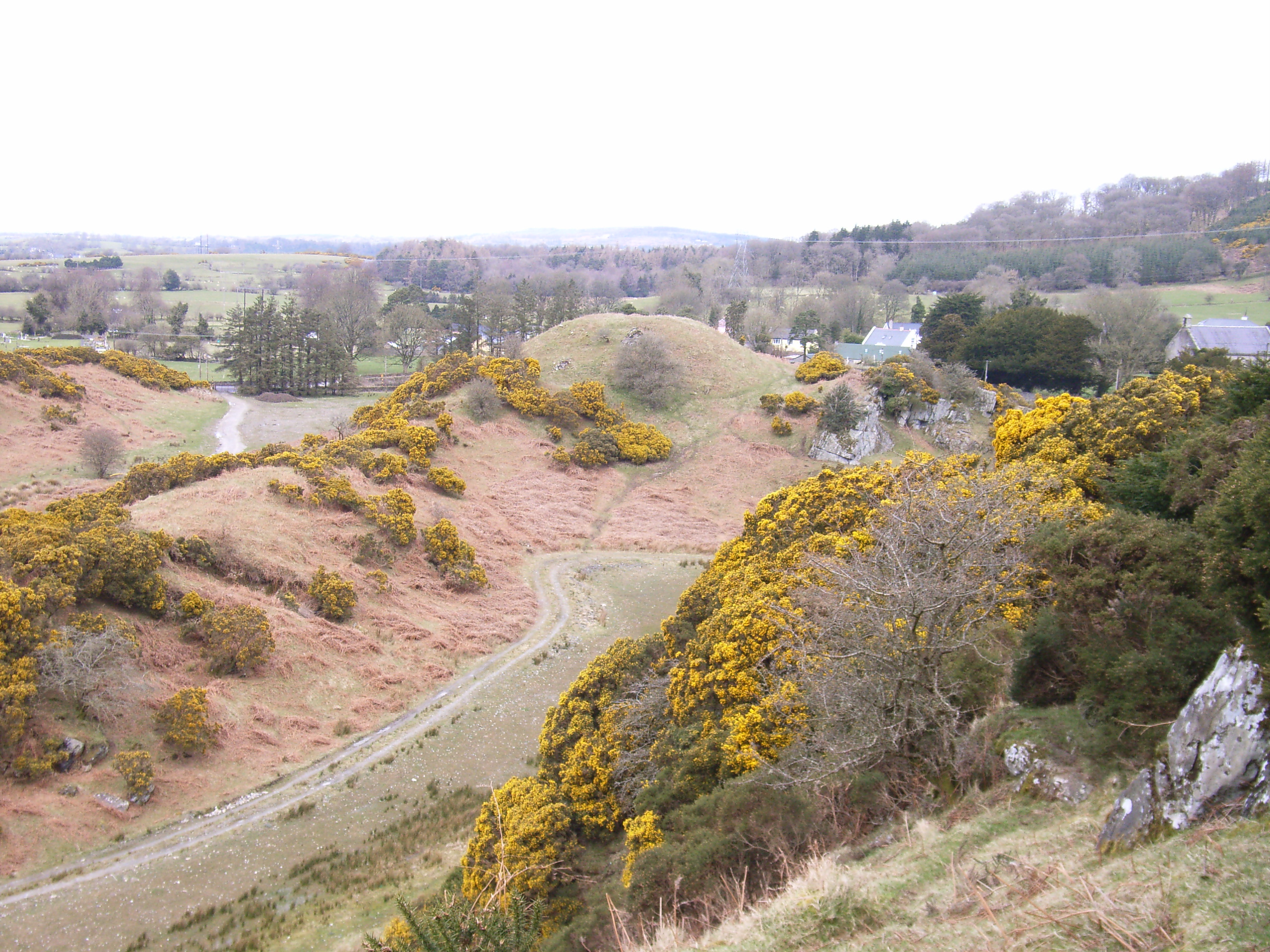
View of Motte from St Kevin's Bed

View of Motte from St Kevin’s Bed

The charter and subsequent documents refer to Hollywood as Bosco Sancto or ‘holy wood’  interestingly a later sixteenth century source refers to the area as Cillín Chaoimhín or the little church of St Kevin. This late reference confirms links with St Kevin the founder of Glendalough and alludes to the existence of a church and cult associated with the saint. I believe that this association has a much earlier history. Folklore suggests that St Kevin spent time here in retreat before he headed across the Wicklow mountains and founded the ecclesiastical site of Glendalough. It is possible that a small church or hermitage may have existed at Hollywood  in the early medieval period. The earliest mention to a church at Hollywood is found in a thirteenth century charter but  no physical traces of the medieval church survive. Its location is likely to be the site of the seventeenth century Church of Ireland.

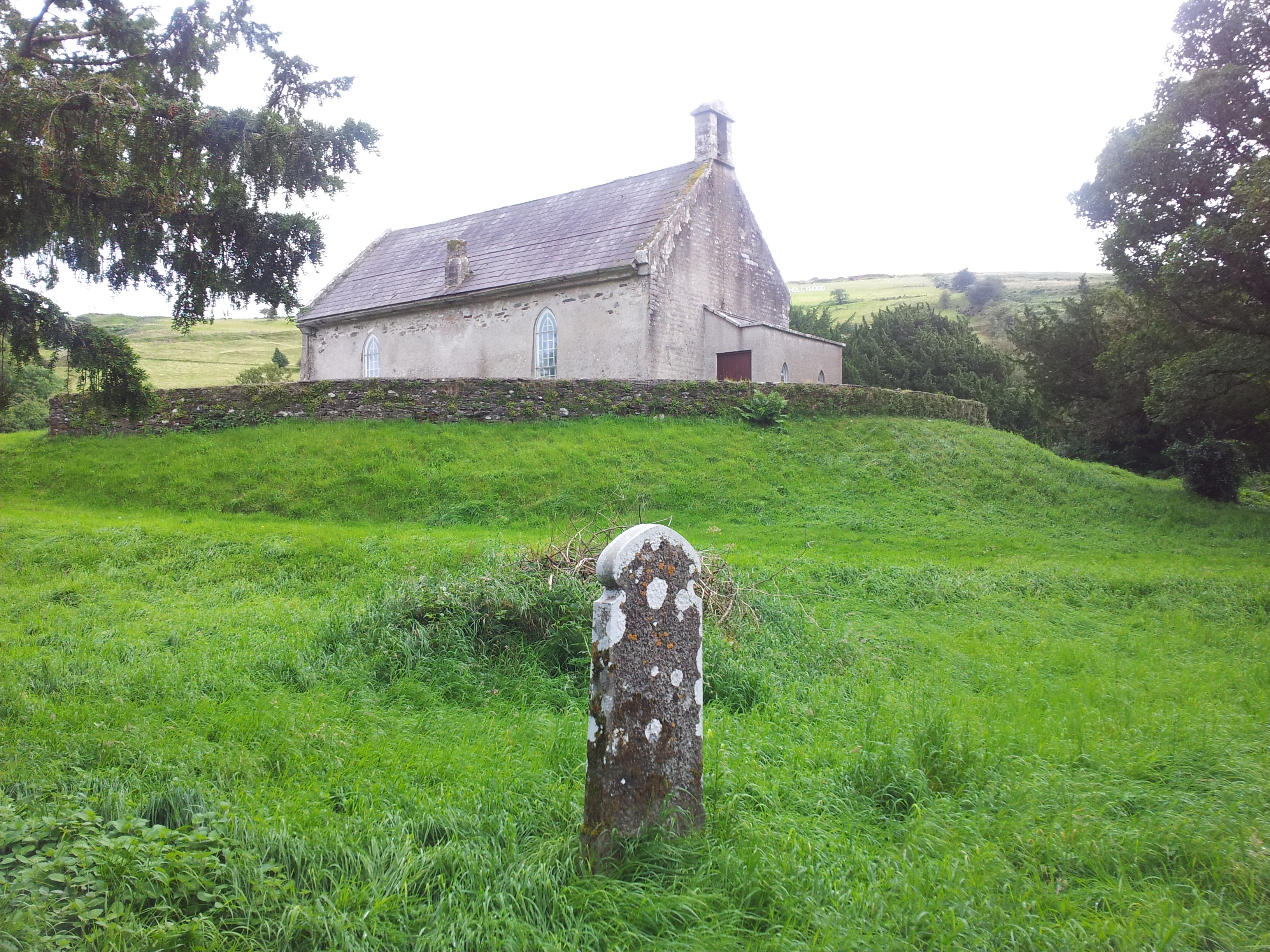
The seventeenth century church built on the site of the earlier medieval church at Hollywood.

Five  medieval cross slabs dating to the thirteenth-early fourteenth century are to be found in its surrounding graveyard and they represent the only visible evidence of  medieval ecclesiastical activity  (Price 1983, 208; 216; Corlett 2003, 99-100; 105).

Medieval Cross Slab at Hollywood

Medieval Cross Slab at Hollywood.

All traces of past pilgrimage are located a short distance from this church in an E-W running valley at the edge of the village.

The Village of Hollywood after google maps

The valley containing the pilgrim stations, is located below the village of Hollywood.

The  aforementioned Norman Motte (site of the de Marisco castle) is found at the entrance to the valley. The Motte overlook a mini pilgrim landscape of two natural caves and a boulder all linked to St Kevin. Although the earliest records of pilgrimage date to the nineteenth century the strong folklore tradition linking the area to St Kevin and its location on the route of St Kevin’s road  suggests that this place would have held significance for passing pilgrims during the early and later medieval period.

View of St Kevin's Cave and St Kevin's Bed from valley floor

View of St Kevin’s Cave and St Kevin’s Bed from valley floor

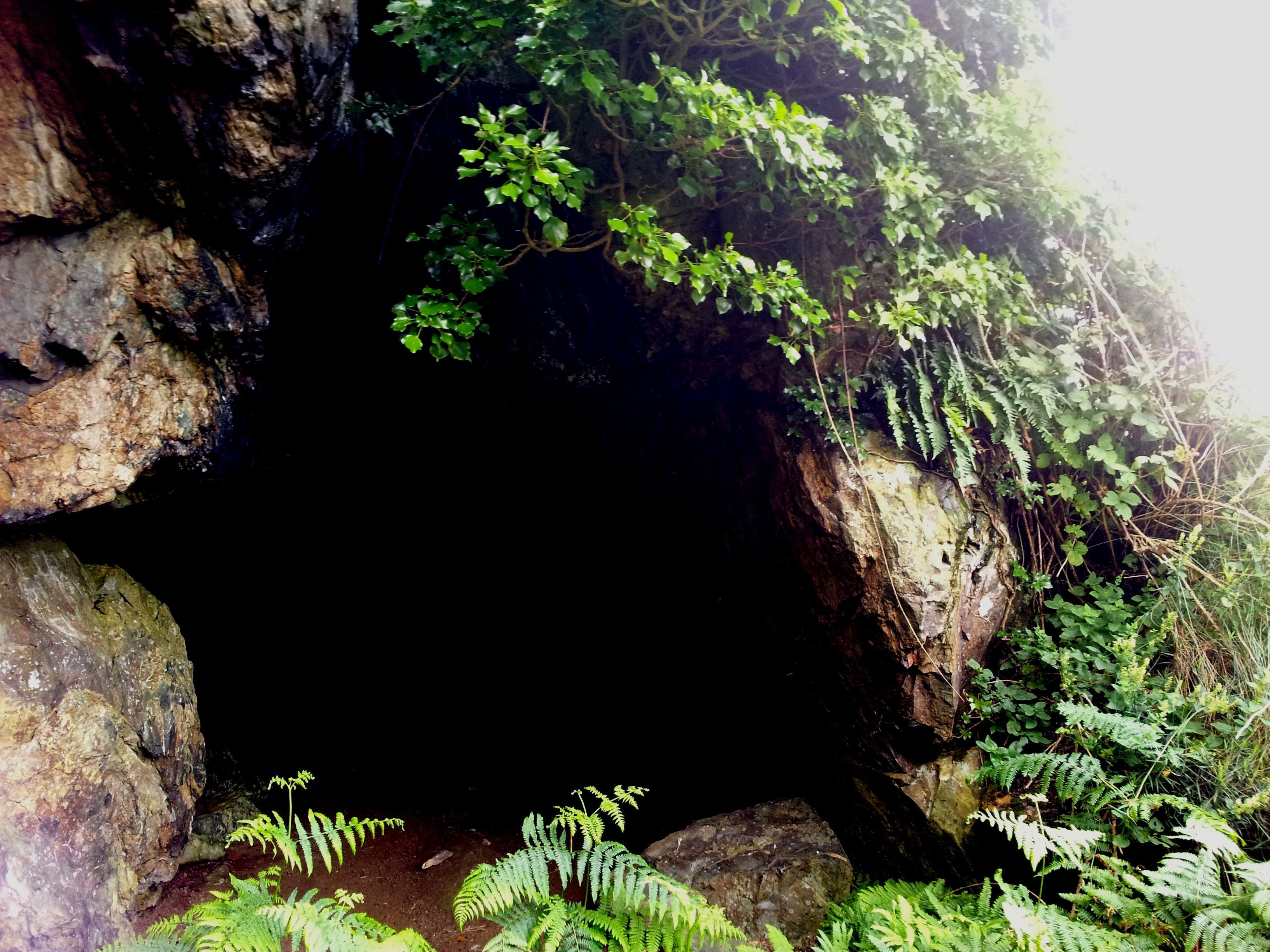
The two natural caves known as St Kevin’s Cave and St Kevin’s Bed  are sited on a steep east-facing cliff face. I have  visited the caves on a number of occasions, winter is definitely the easiest time to approach them as vegetation is low. The climb is steep and challenging.

  St Kevin’s Cave  is the larger of the two caves.

St Kevin's Cave

St Kevin’s Cave

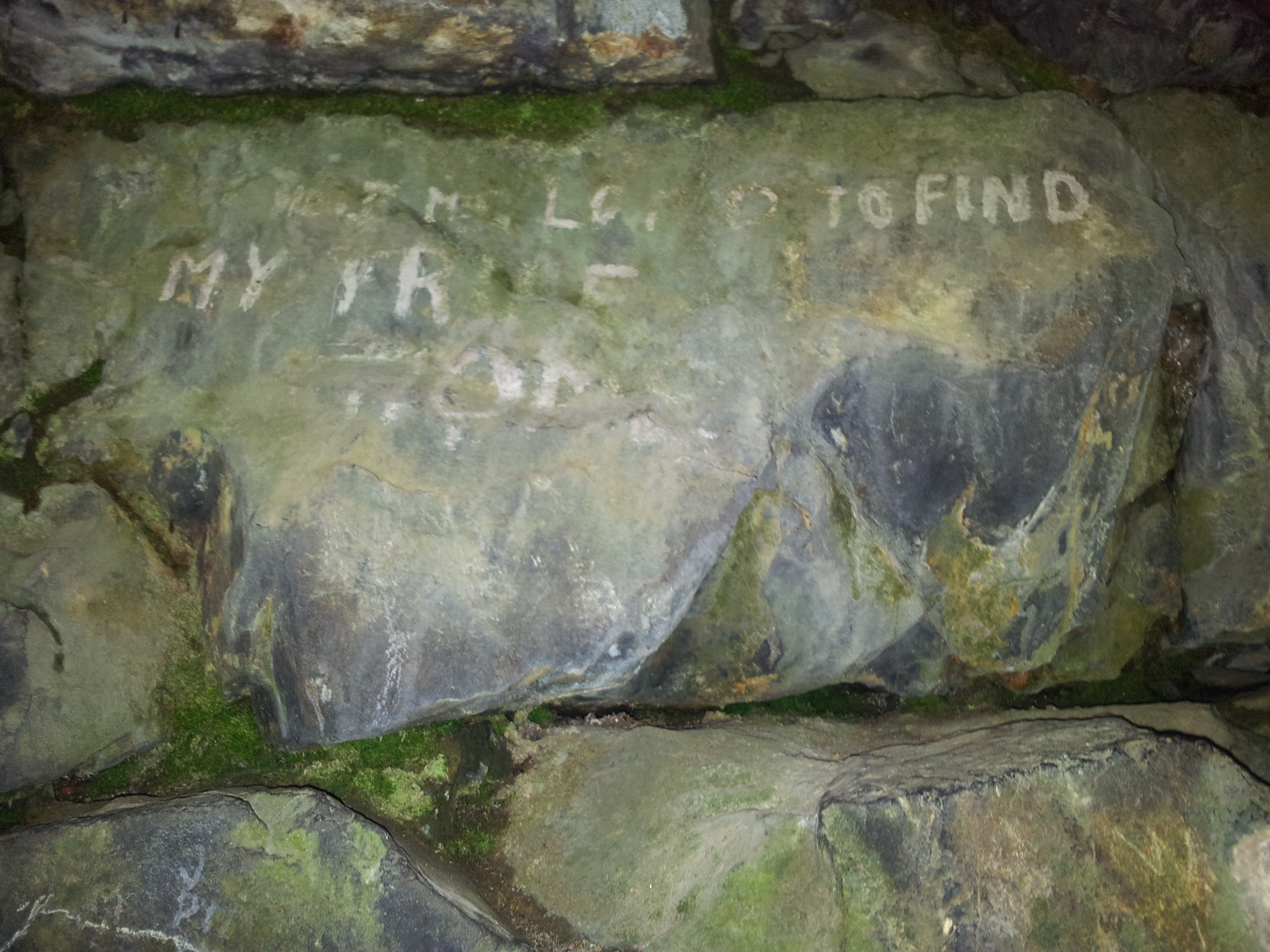
I found some  graffiti at the back of the cave in 2006 ‘Help me Lord to find my home’ a simple Latin cross was painted over this inscription,  when I visited  again this summer the inscription had  faded and the cross had disappeared.

Graffiti at back of St Kevin's Cave

Graffiti at back of St Kevin’s Cave (2012)

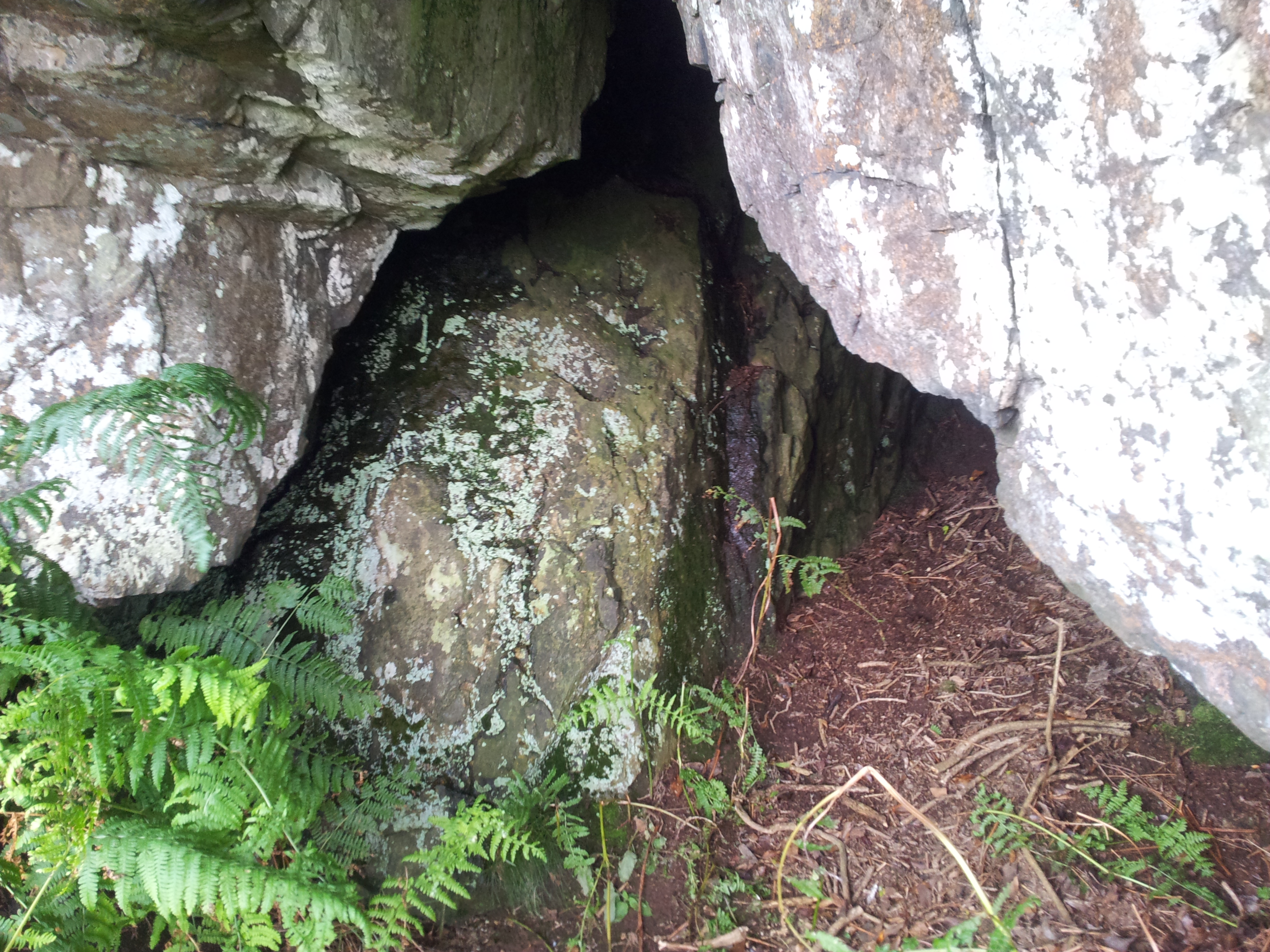
Close by is St Kevin’s Bed,  a narrow  vertical shaft   that leads  through the rock above .  St Kevin spent time in both caves and supposedly  used to sleep here.

The entrance to St Kevin’s Bed

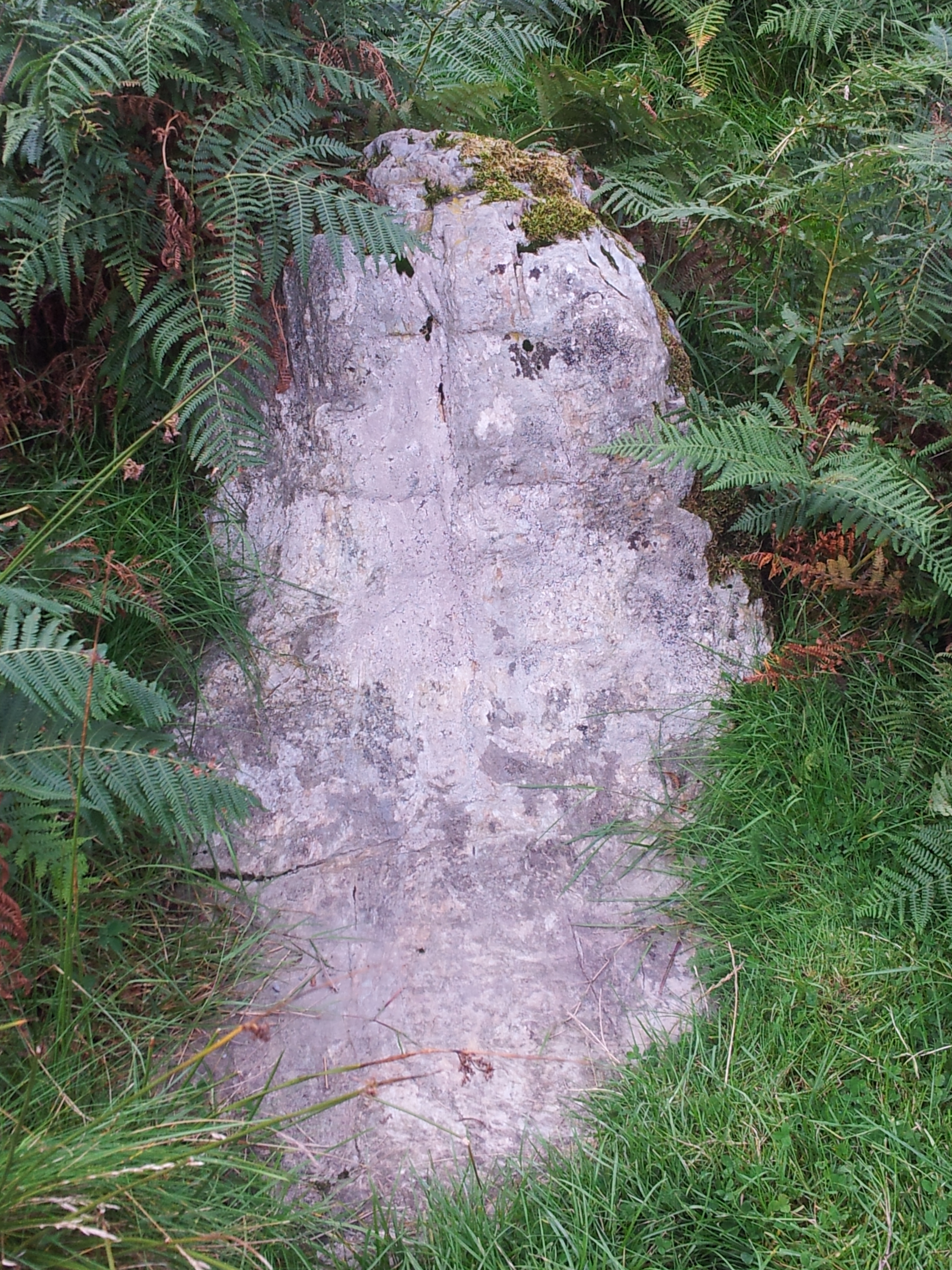
St Kevin’s chair is located on the floor the valley, directly opposite the caves . The boulder is hard to see despite its size, I always seem to walk past it.  According to  the Ordnance Survey Name Books (1840’s) St Kevin, in a fit of rage, threw the rock/chair from St Kevin’s Cave at a woman who annoyed him. Irish saints were not known for their patience.   Sitting on the “chair”  was supposed to  cure   backache.

The stone known as St Kevin’s Chair.

It should be noted that  the pilgrim rituals  at Glendalough included  visiting a cave known as St Kevin’s Bed and a piece of natural rock called St Kevin’s chair . I am hoping to dig a little deeper into the history and folklore of the area in the coming months and I would be delighted to hear from anyone who has any other information on the area and past pilgrimages here.

Bibliography

Corlett, C. 2003. ‘The Hollywood Slabs- some late medieval grave slabs from West Wicklow and neighbouring Counties’, JRSAI vol. 133, 86-110.

Nugent, L. 2009. Pilgrimage in Medieval Ireland, AD 600-1600. Unpublished PhD Thesis.

Price, L. 1940. ‘Glendalough: St. Kevin’s Road’, In Ryan, J. (ed.) FéilSgríbhinn

  Éoin Mhic Néil. Dublin: Four Courts Press, 244-71.

Price, L.  1983(reprint 1953). The Place-names of Co. Wicklow. Vol. IV-The Barony

  of Talbotstown Lower. Dublin: Dublin Institute For Advanced Studies.