Billberry Sunday

MacNeill (1962) has made a strong case that many pilgrimage  that take place on the last sunday of July such as pilgrimage to Mount Brandon Co Kerry, Croagh Patrick Co Mayo and Maumeen  Co Galway evolved from the celtic  Festival of Lughnasa held in honour of the God Lugh.  Another relic of this festival  was the collection of billberries  also on the same day the last sunday in July.
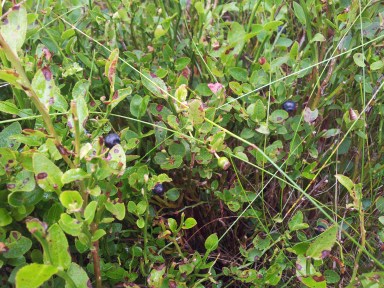
Billberry Bush

Billberry Bush

Bilberries are a small blue/black berry that looks very like a blueberrybut are much smaller. They  grow in mountainous land. They are known by different names around the country  fraughan or the irish  frachóg, whorts, hurts or heatherberries. The last sunday of just which is also known by a variety of terms Garland Sunday, Domhnach Crom Dubh (Sunday Black Crom) Domnach na bhFraochóg (Billberry Sunday) as well as Billberry Sunday or Fraughan Sunday.

Traditionally the gathering of the berries was carried out by young people  who would climb up into the hills and have a
good time picking the berries. In the evening young girls would incorporate the berries into a cake and at the dance that evening present the cake to whatever ‘fella’ they had their eye on.
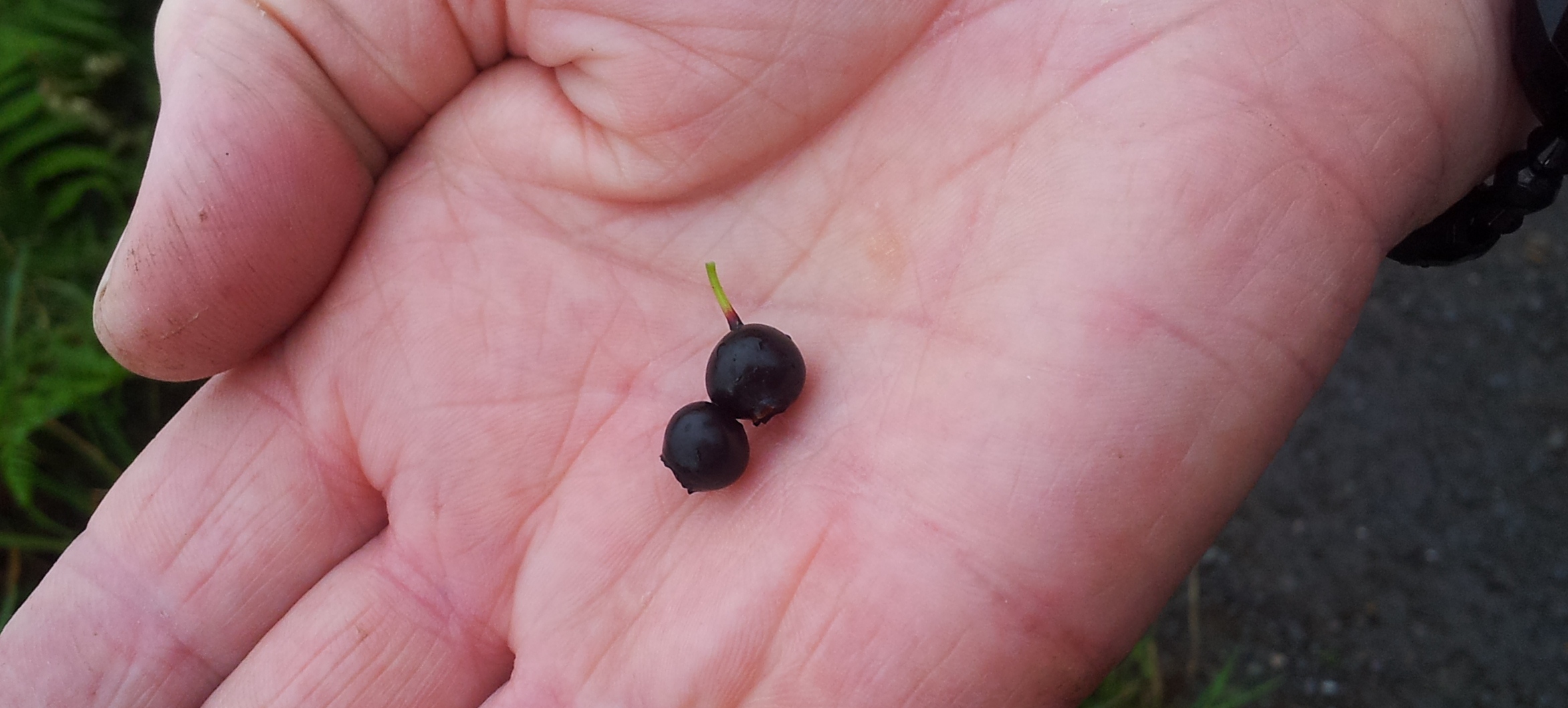
Billberries

As a child, my cousins  my sister and I, would collect these berries which we called hurts as a snack when we played at my grandparents house, unaware of the ‘ Billberry Sunday’ tradition .

In the past the berry was used  for cooking in  medicine and as a dye. Seeds from the fruit have been found in excavations of Viking and Anglo Norman Dublin. The medieval sources for Ireland also suggest it was a a valuable crop being mentioned in a middle Irish text on the entitlements of kings (Kelly 2000, 307). In 1941 the berries were ‘ Bought and cleaned by local dealers, the berries were shipped off within 24 hours – some 400 tons of them in 1941, an exceptionally good year (when British pilots, reportedly, found bilberry jam improved their night vision)’ (Viney 2012).  It is sad that most people dont know what this berry is or what it looks like. This year with the wet summer the crop is very poor, but there are still some yummy berries to be found for the adventurous.

Bibliography

Kelly, F. 2000. Early Irish farming. Dublin: Institute for Advances Studies

MacNeill, M. 1962. The festival of Lughnasa: a study of the survival of the

  Celtic festival of the beginning of harvest. London: Oxford University Press.

Viney, M. 2012. ‘When we found our thrill picking billberries on a hill’ Irish Times Saturday, July 7, 2012

Sexton, R.( no date) ‘Bilberry Sunday, a Festival of Food and Courtship’ http://www.ireland-fun-facts.com/bilberry-sunday.html
St James, Irish Pilgrims & Pirates

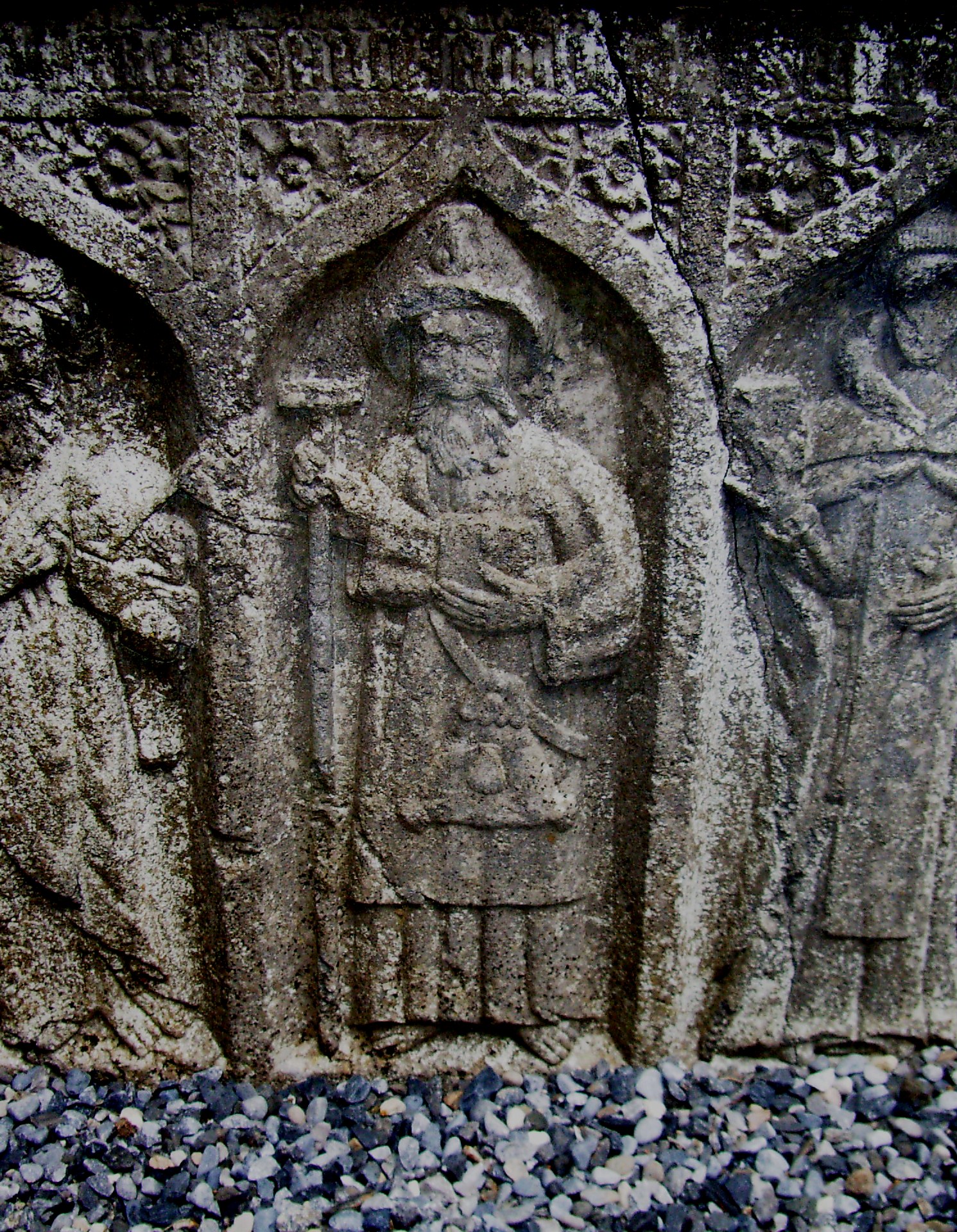
Today is the feast of St James  the apostle.  The saint’s shrine  at Santiago de Compostela in Spain attracted large numbers of pilgrims from all over the Christian world  during the medieval period. Medieval souvenirs purchased by pilgrims to Santiago have been recovered  across Europe including  Ireland.  St James enjoyed  great devotion  in medieval Ireland and  his image turns up on a number of Irish medieval  tombs.

St James

Image of St James on a medieval tomb at the Franciscan Friary at Kilconnell, Co Galway

Given the long distance of the journey from Ireland to Santiago and the requirement to travel part of the journey by boat, a pilgrimage to Santiago from Ireland  was very expensive. Historical sources suggest that the majority of Irish pilgrims travelling to Santiago were  from the upper echelons of  Irish society. Pilgrims would have embarked from a variety of Irish ports such as Drogheda, Dublin, Wexford, New Ross, Waterford, Youghal, Cork, Kinsale, Dingle, Limerick and Galway (Stalley 1988, 398).

Roger Stalley gives an excellent discussion of the literary and archaeological evidence for Irish Pilgrimage to Santiago in his article ‘Sailing to Santiago: Medieval pilgrimage to Santiago de  Compostela and its artistic influences in Ireland’.

Travel by sea was shorter than by land but it was not without its own hazards. Pilgrims traveling by sea  were at risk from storms, disease and pirates. Bad weather was the biggest threat as storms had the potential of causing ship wrecks (Davies 1988, 47-48). There are many accounts of  pirates attacking ships  from Continental sources. Pirates  were known to  kill, kidnap and ransom or enslave pilgrims. A Lübeck chronicle dating to 1453 recorded the capture of some three hundred pilgrims returning from the Holy Land by hostile Saracens who killed all the men and enslaved the women (Ohler 1989, 48-49; Harpur 2002, 79). One of the most interesting reference to Irish Jacobean pilgrims dates to the year 1473.

The 1473 account concerns Irish pilgrims  traveling on ship called the La Mary London.  The  pilgrims appear to have been on their return journey from pilgrimage to Santiago when their boat was captured by pirates. It is not known  exactly how the events unfolded but the pilgrims were later released in the port of Youghal, Co. Cork, although the ship had originally been destined to dock at Waterford. It is likely that the pilgrims were ransomed by the pirates. They  had a lucky escape as they could have easily been, murdered or sold as slaves like the villagers of Baltimore in 1603  (Stalley 1988, 397 after Cal. Pat rolls. 1476-85, 78).

Bibliography

Harpur, J. 2002. Sacred Tracks. 2000 Years of Christian Pilgrimage. London: Frances Lincoln Ltd.

Ohler, N. 1989. The medieval traveller; translated by Caroline Hillier. Woodbridge: Boydell Press.

Stalley, R. 1988. ‘Sailing to Santiago: Medieval pilgrimage to Santiago de Compostela and its artistic influences in Ireland’, In Bradley, J. (ed.) Settlement and  Society in Medieval Ireland. Studies presented to F.X. Martin, o.s.a. Kilkenny:  Boethius Press, 397-420.

The Pattern day at St Mullins, Co. Carlow

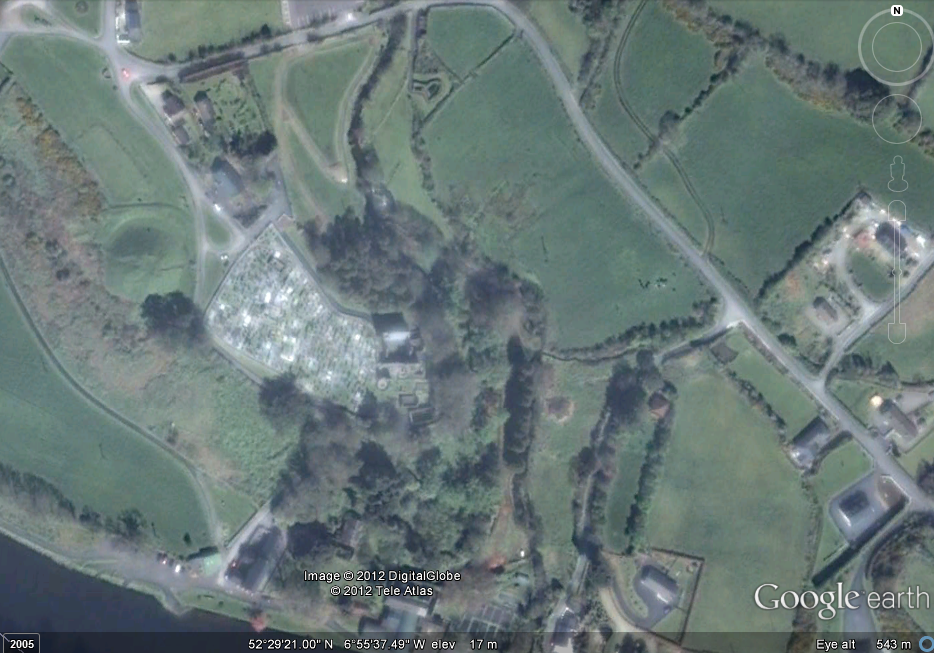
St Mullins is one of my favourite places and on Sunday the  22nd of July I headed along to the annual pattern day.

View of St Mullins graveyard and ecclesiastical settlement from Google Earth

A pattern day, is a day when people come together to perform pilgrimage at a holy well or saints grave, usually on the saints feast day. This  is a tradition that can be traced back to early medieval times.  Nineteenth century accounts suggest there were originally two main pilgrimage days  at St Mullins on the 17th of June the  feast day of St Moling and the 25th of July the feast of St James. Today the pattern  takes place on the last sunday before the 25th of July and prayers take place at the well and in the graveyard on the 25th of July.

St Moling founded a monastery here in the seventh century and he is reputed to be buried within the ruins of the monastic buildings found in the modern graveyard. Pilgrims having being coming to pray to St Moling  for centuries and St Mullins was one of the great pilgrimages in medieval Ireland.  A single blog post is not enough to discuss the history  and tradition of pilgrimage at the site,  I will just   focus on the  modern  pilgrimage.  I hope to write a second post about the  medieval and early modern pilgrimage in the  coming weeks.

On Sunday the pattern   began with the blessing of the water of the  holy well by the Parish Priest ,  the blessing was then followed by mass in the  nearby graveyard (attached to the ruins of the medieval monastic site).

Bless of the Well at St Mullins

View of the blessing of the waters at St Moling’s Well, St Mullins

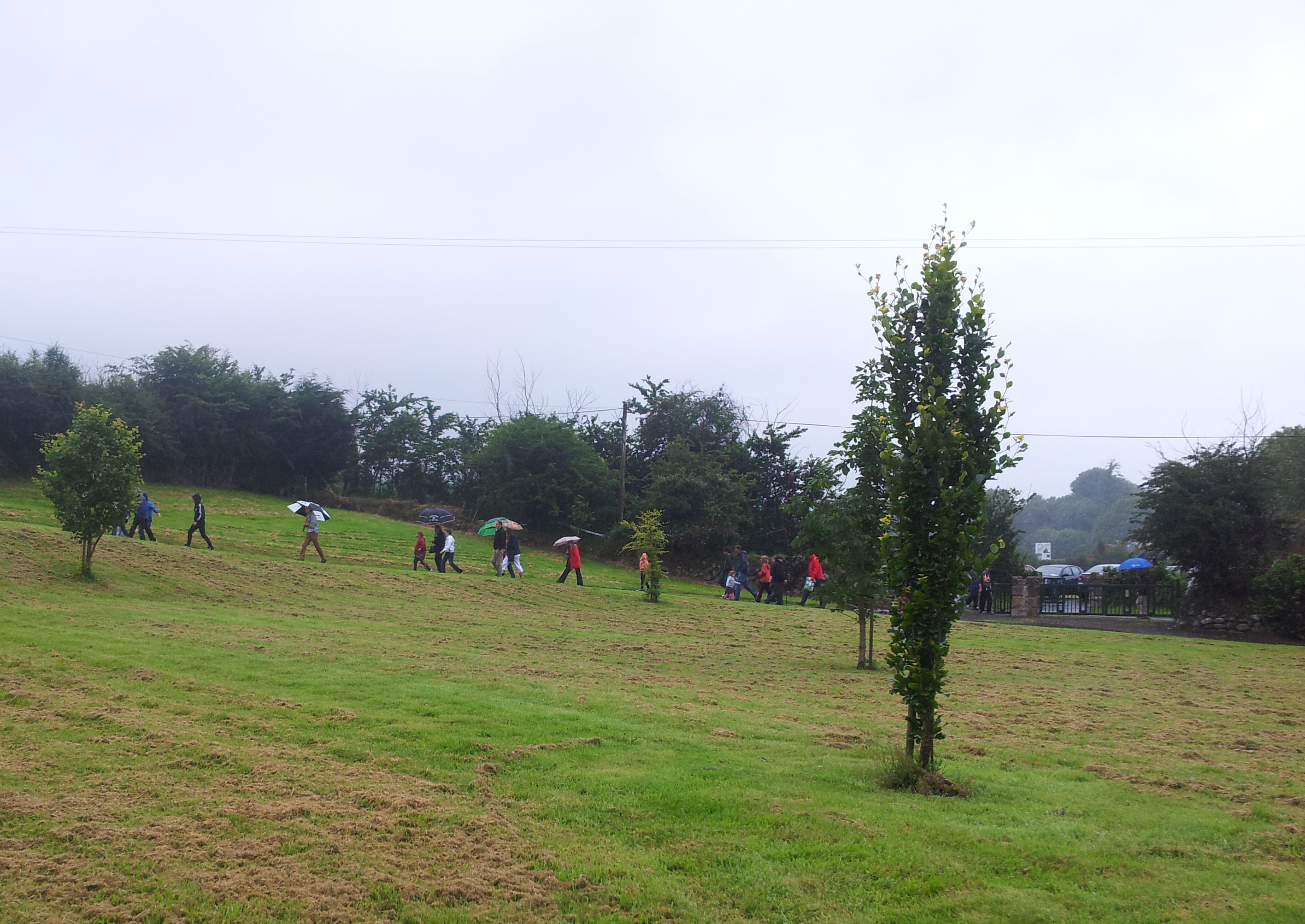
Following the blessing  of the waters,  pilgrims  drink the water from the well and pray for their own intentions, before walking to the graveyard for mass. Some people  attended mass first and then went  to the well to drink its water.  The waters from the well are reputed to have great healing powers.

People walking from  St Moling's well to the graveyard

People walking from St Moling’s well to the graveyard

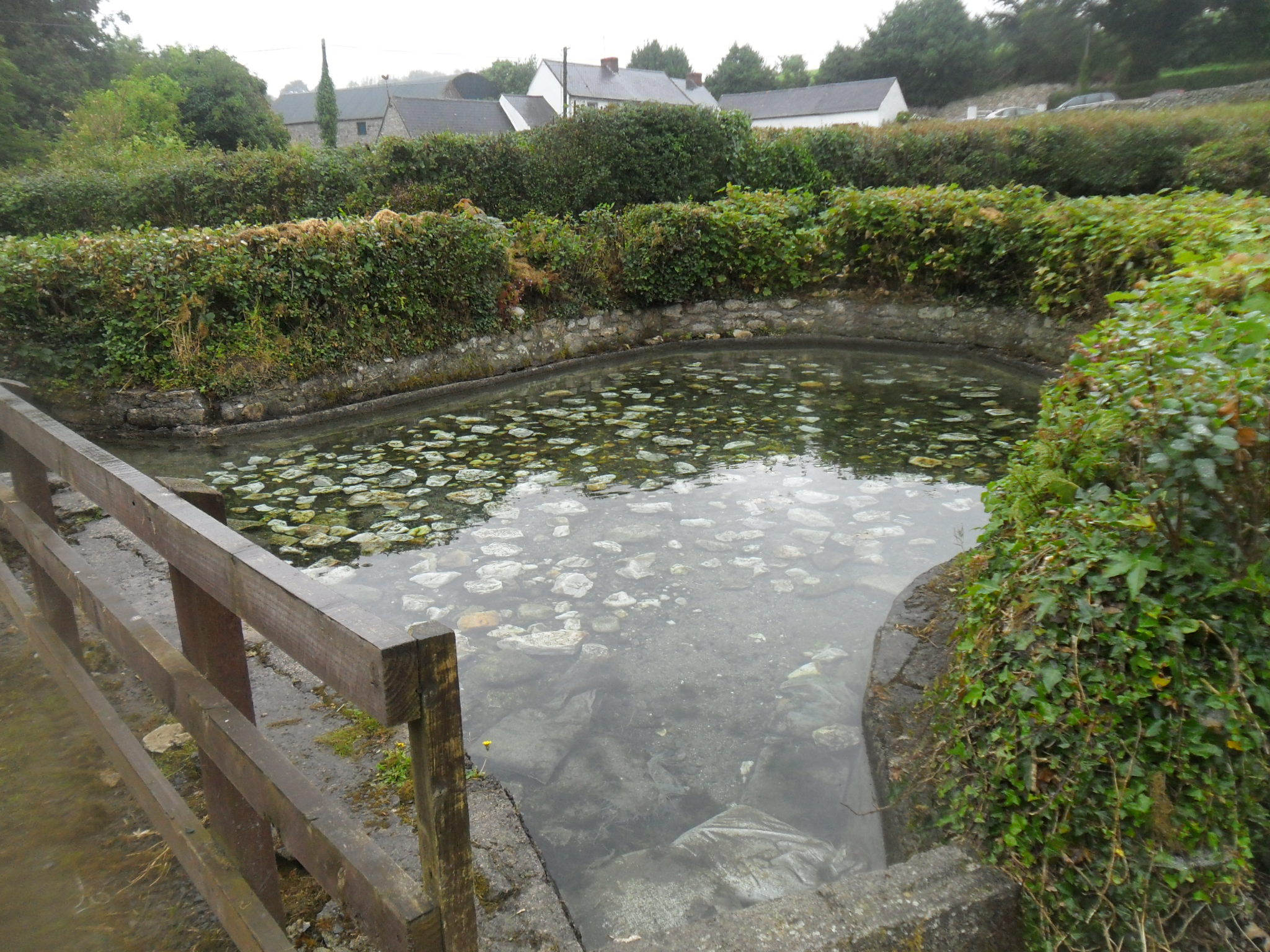
The well  which is dedicated to St Moling consists of a reservoir filled by nine springs  surrounded by a low wall.

Pool of water at St Molings Well

Pool of water at St Moling’s Well

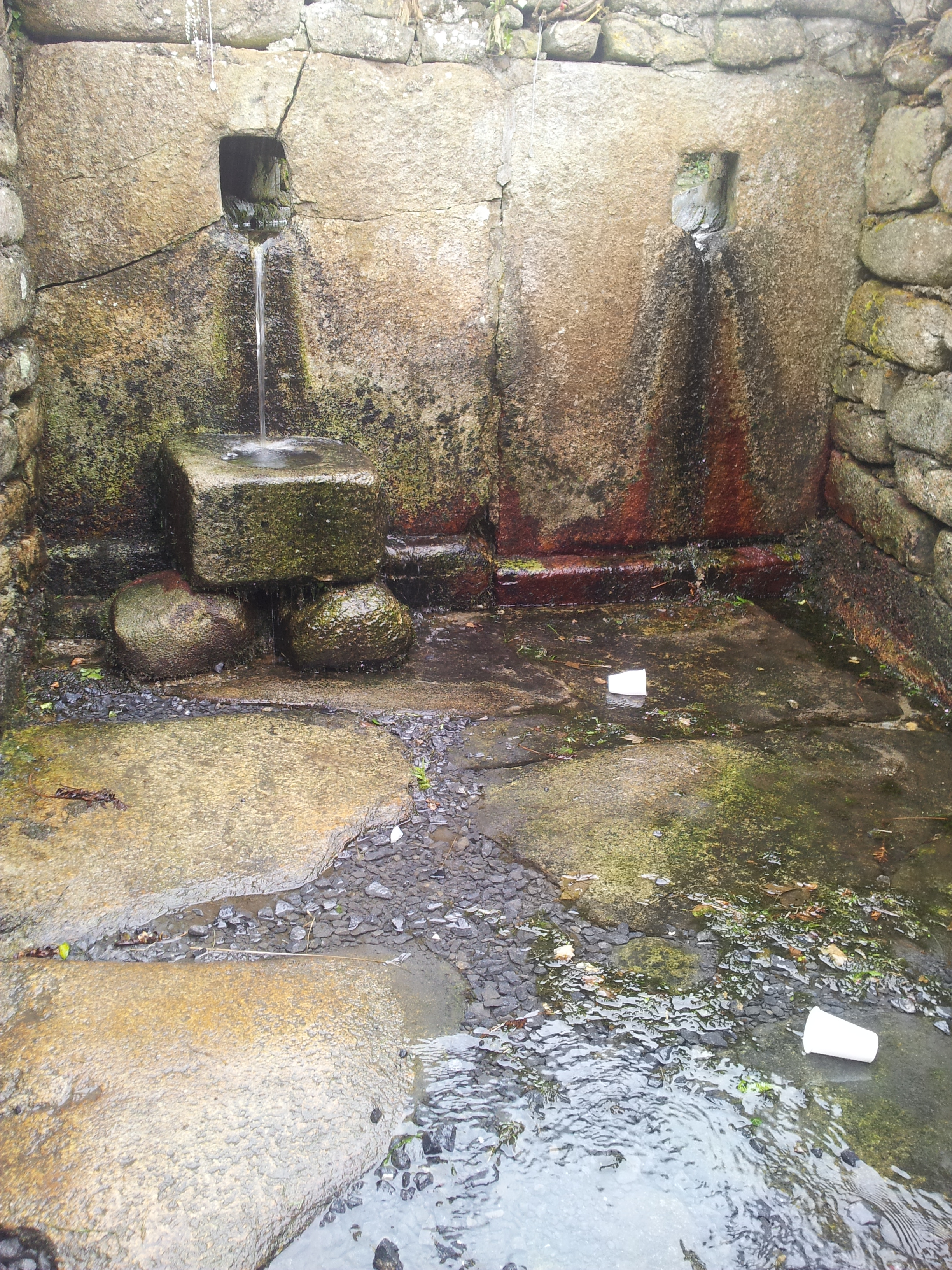
The water flows from this reservoir into a small roofless structure.  To get to the water one has to enter through a narrow door. The water flows from the pool through  two large  granite holed stones in the back wall .  A rectangular cut stone  with a circular basin/depression catches the water  as it flows out.

The Holy well at St Mullins

The back wall of the structure at St Moling’s well

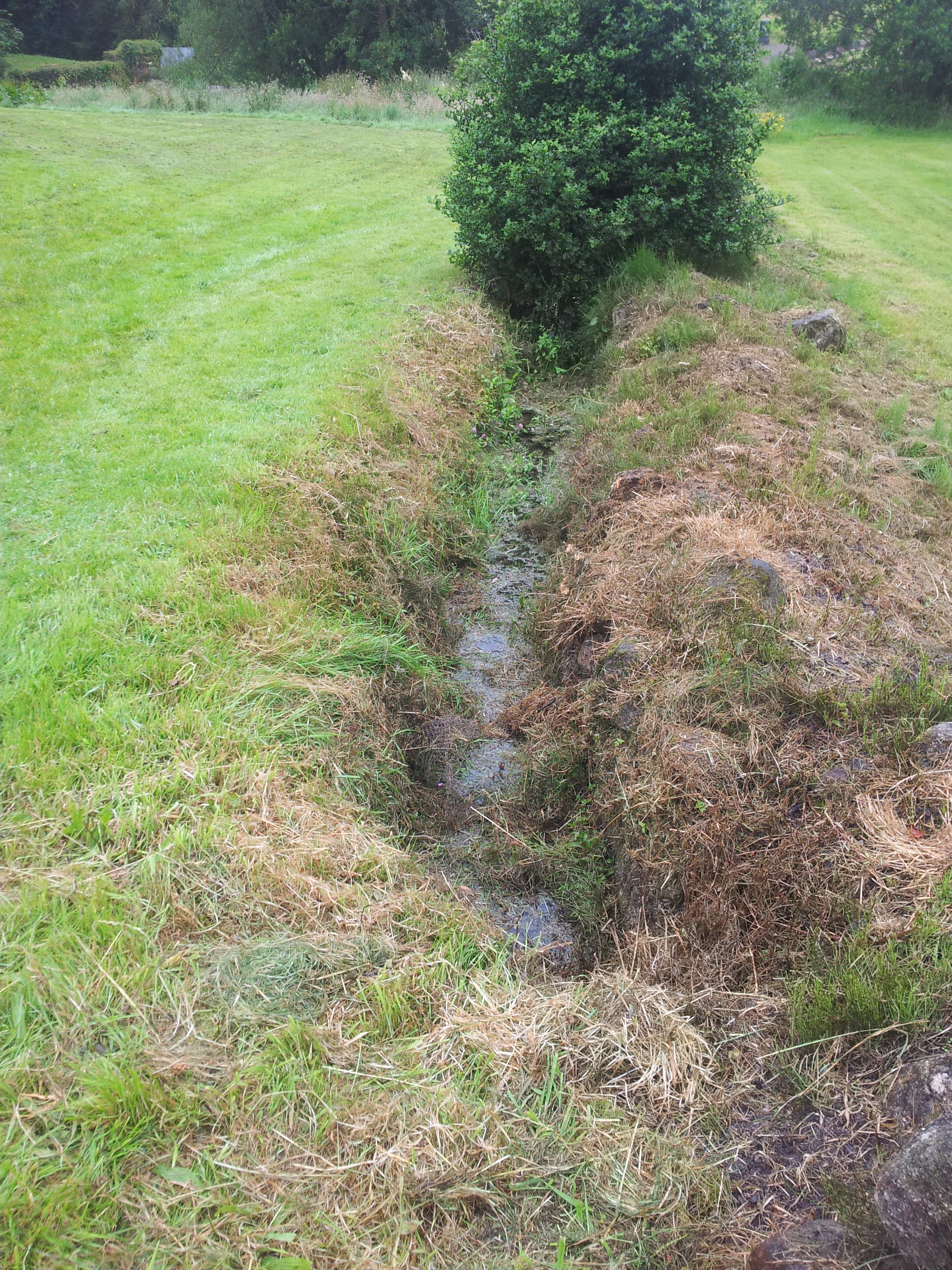
The water then flows  over flag stones out the door and into the nearby mill-race known as the Turas (Pilgrim’s Way).

Mill race beside St Moling's well

Mill race beside St Moling’s well

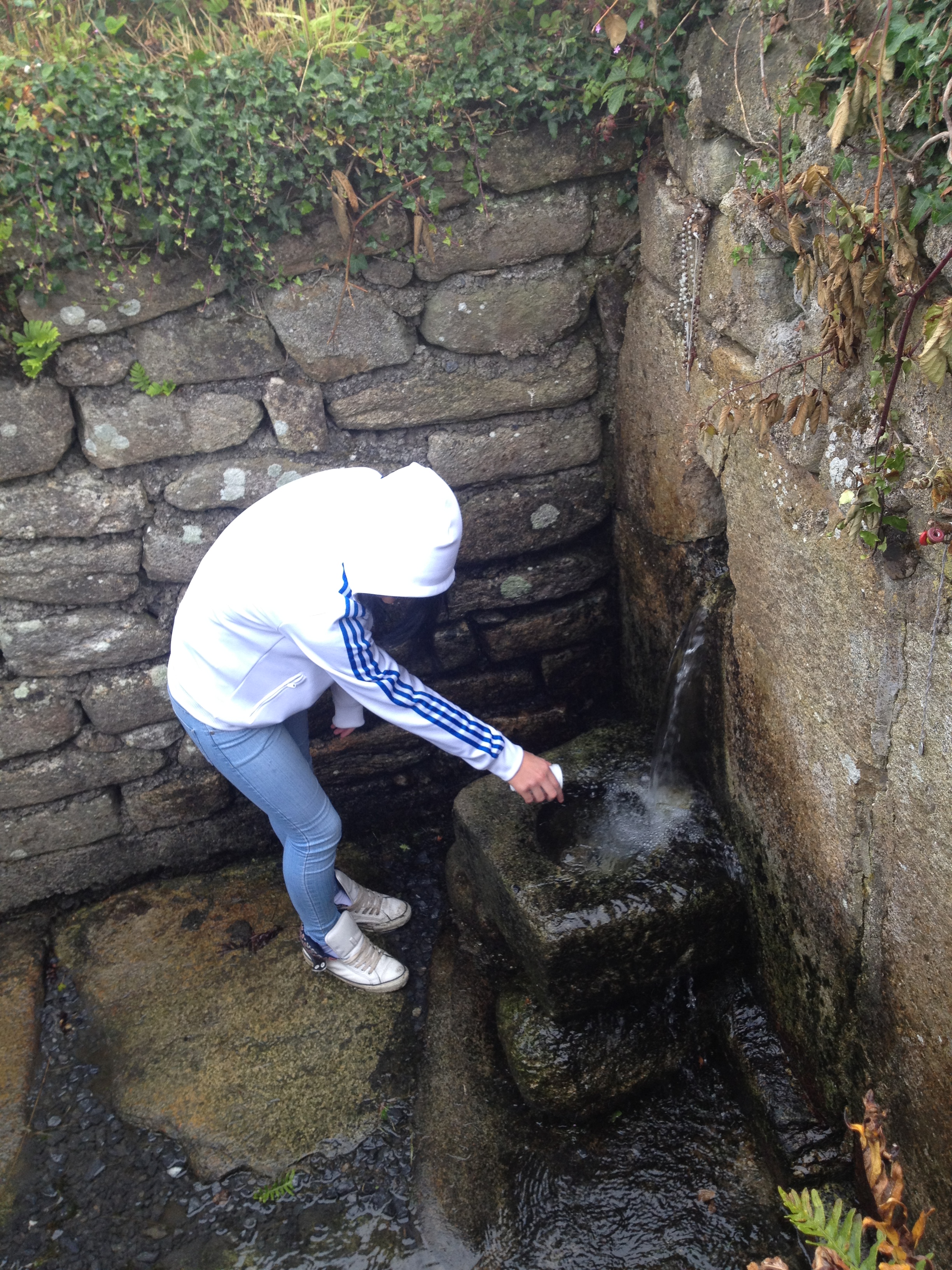
When I visited the well on the pattern day in 2008,  I met a lovely lady Molly who looked after pilgrims  at the well and handed out water to them , she told me she did this every year for 50 years and her father before her  did the same . This year  she couldn’t make it as  she had recently been ill, so two   local student  stepped in to help out.  I  forgot to  ask their  names, too busy talking. So  they were  in charge of  filling cups with water and handing them to pilgrims who didn’t want to go inside for the water ( the flagged floor was very wet so not everyone wanted to get their feet wet).  I also had a chat with Mr Joe Mahony who was originally from Coolrainey and is now aged 92. He told me that when he was young as well as drinking the water people would stick their heads under flow of water as it came out of the wall. It was the belief that this would protect them from ailments of the head for the coming year. Joe  is a great character has been in his own words  ‘ coming to the pattern day since before he was born’.

girl collecting water at st mullins

One of the local student in charge of giving water to the pilgrims

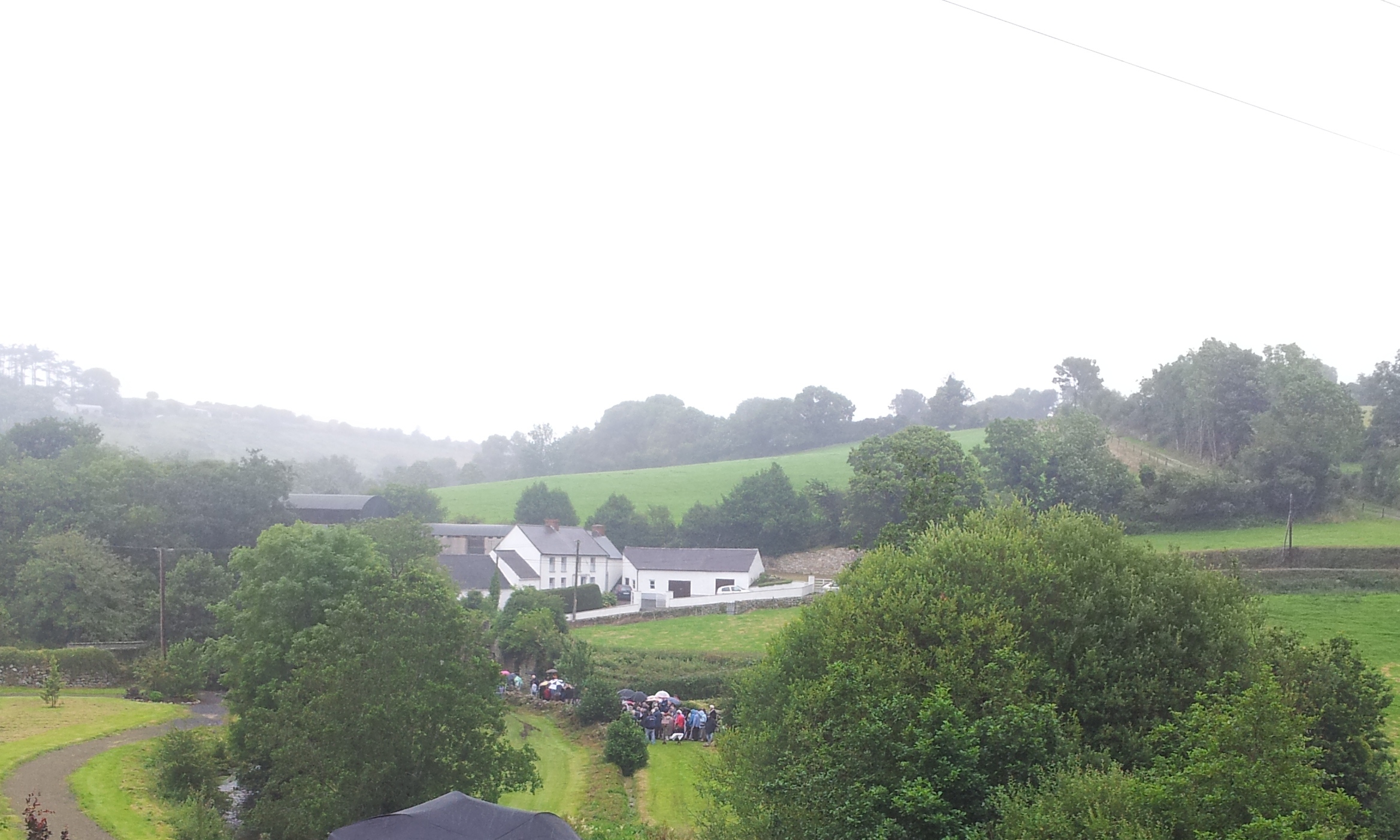
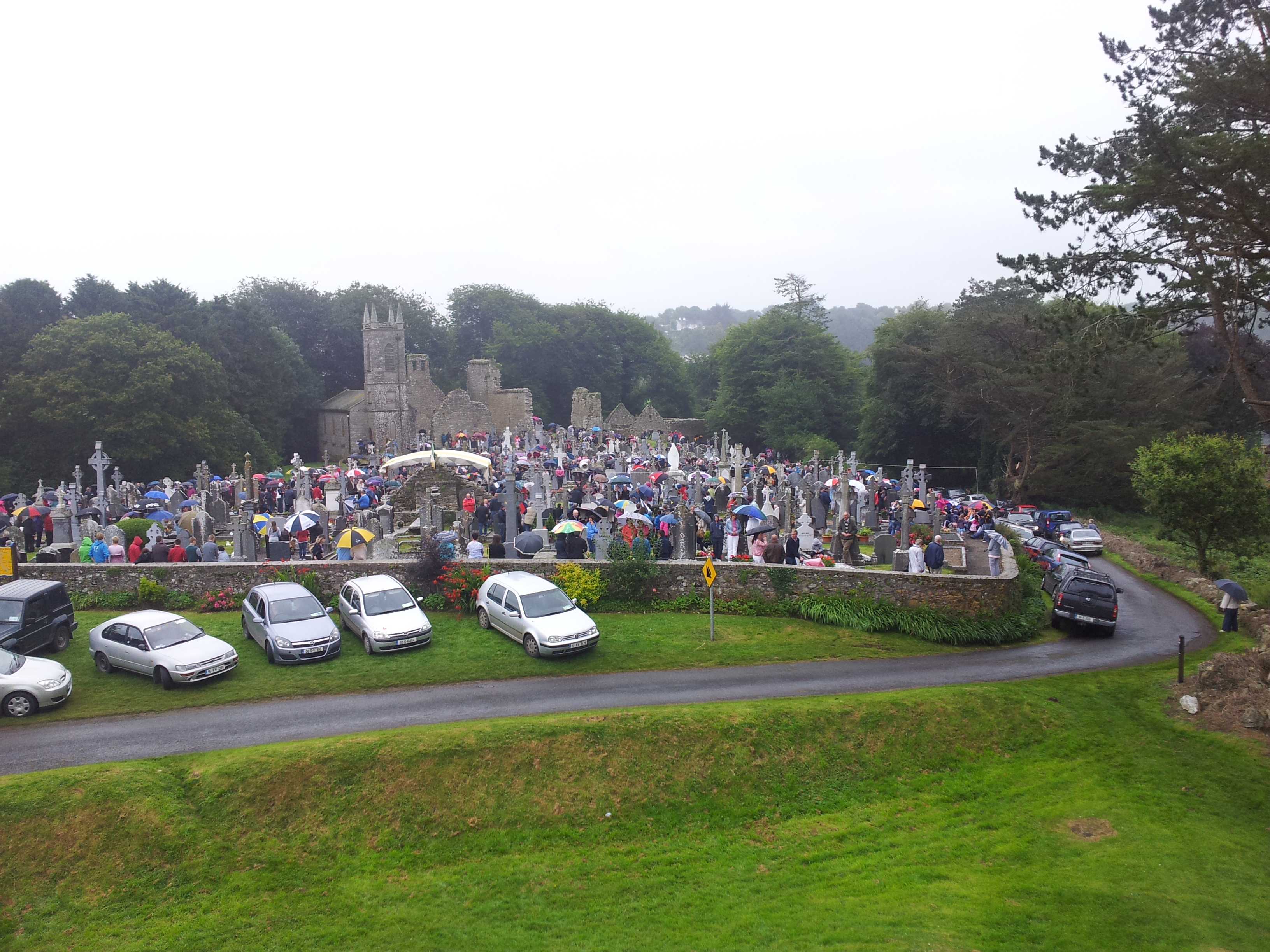
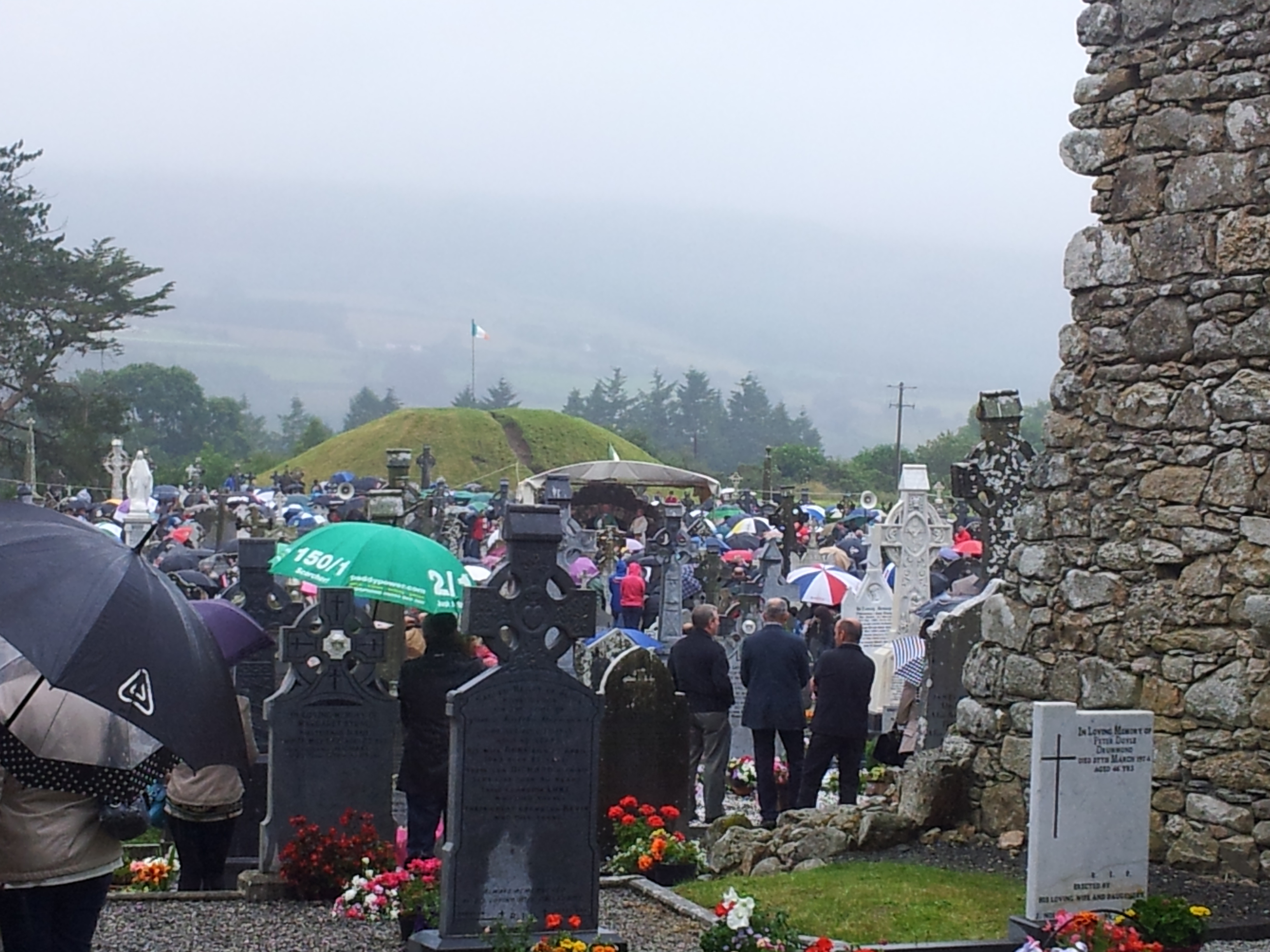
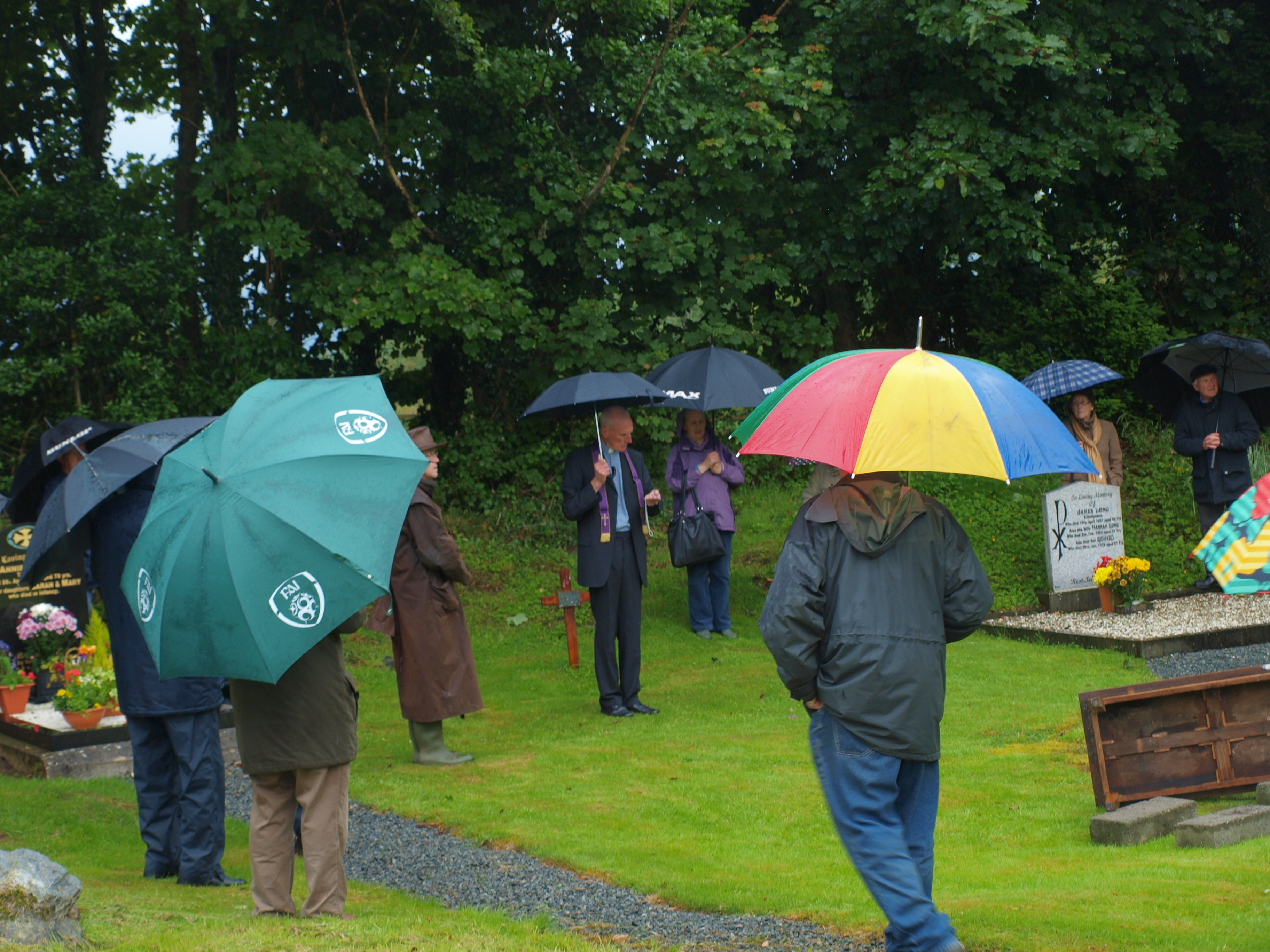
Mass  began in the graveyard at 3.  The weather was  wet and a constant light rain was down for the afternoon, but  despite the weather the graveyard was a see of coloured rain jackets and umbrellas.

View of Patron Mass from Summit of nearby Motte

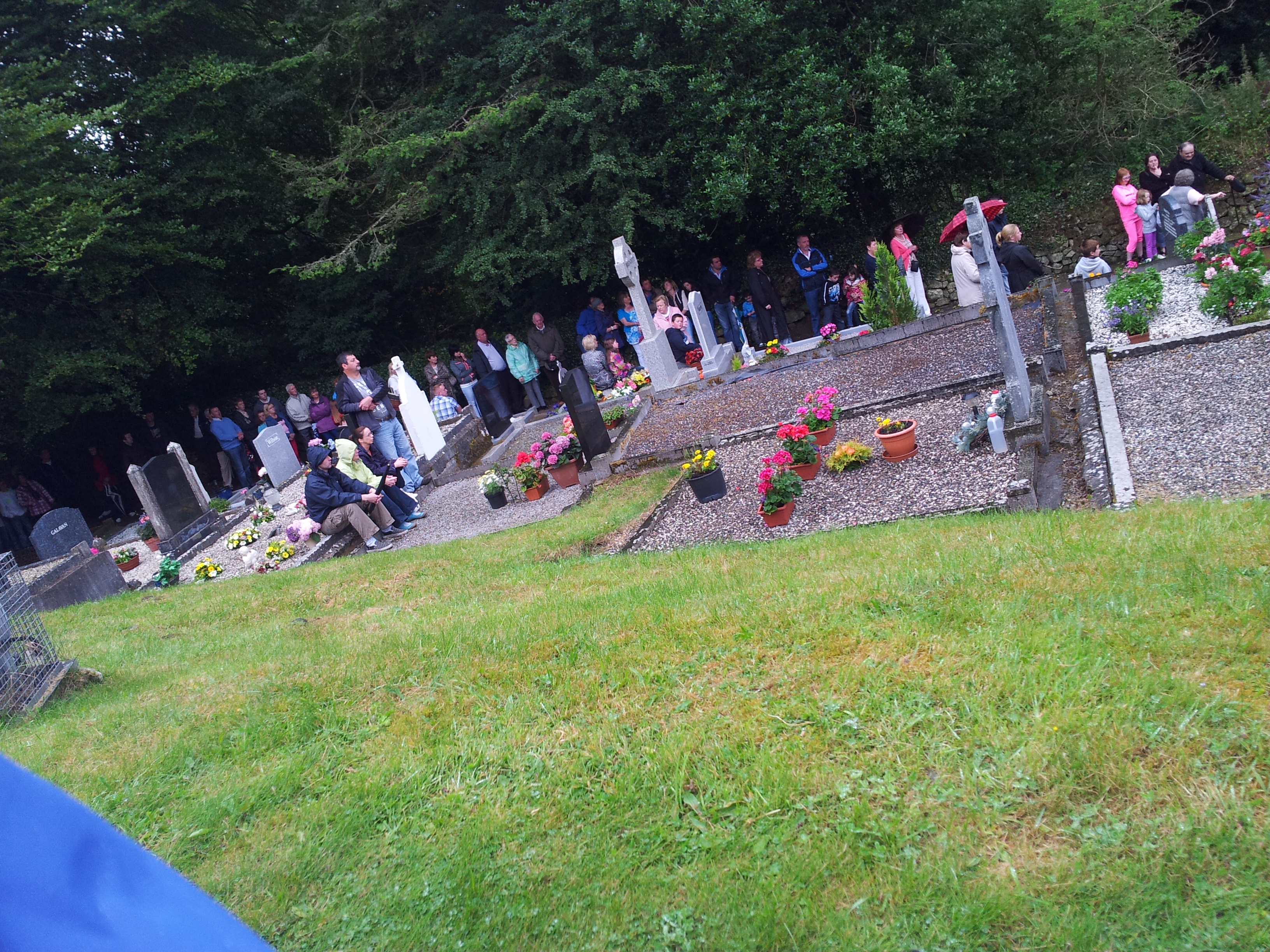
Some tried to take cover from the rain under the trees or in the ruins of the monastic buildings.

Pilgrims hiding from the rain under the trees during mass at St Mullins

People of all ages  attendance on Sunday from small babies to the very elderly. There is a real sence that this is a very important event for the local community. The mass performed by the priest in the middle  of  the graveyard, at  the site of  a penal altar.

Mass  being at penal alter

Mass being at penal altar

It is amazing to think that this pilgrimage has been taking place for centuries and there is a real sence of community and  history here.

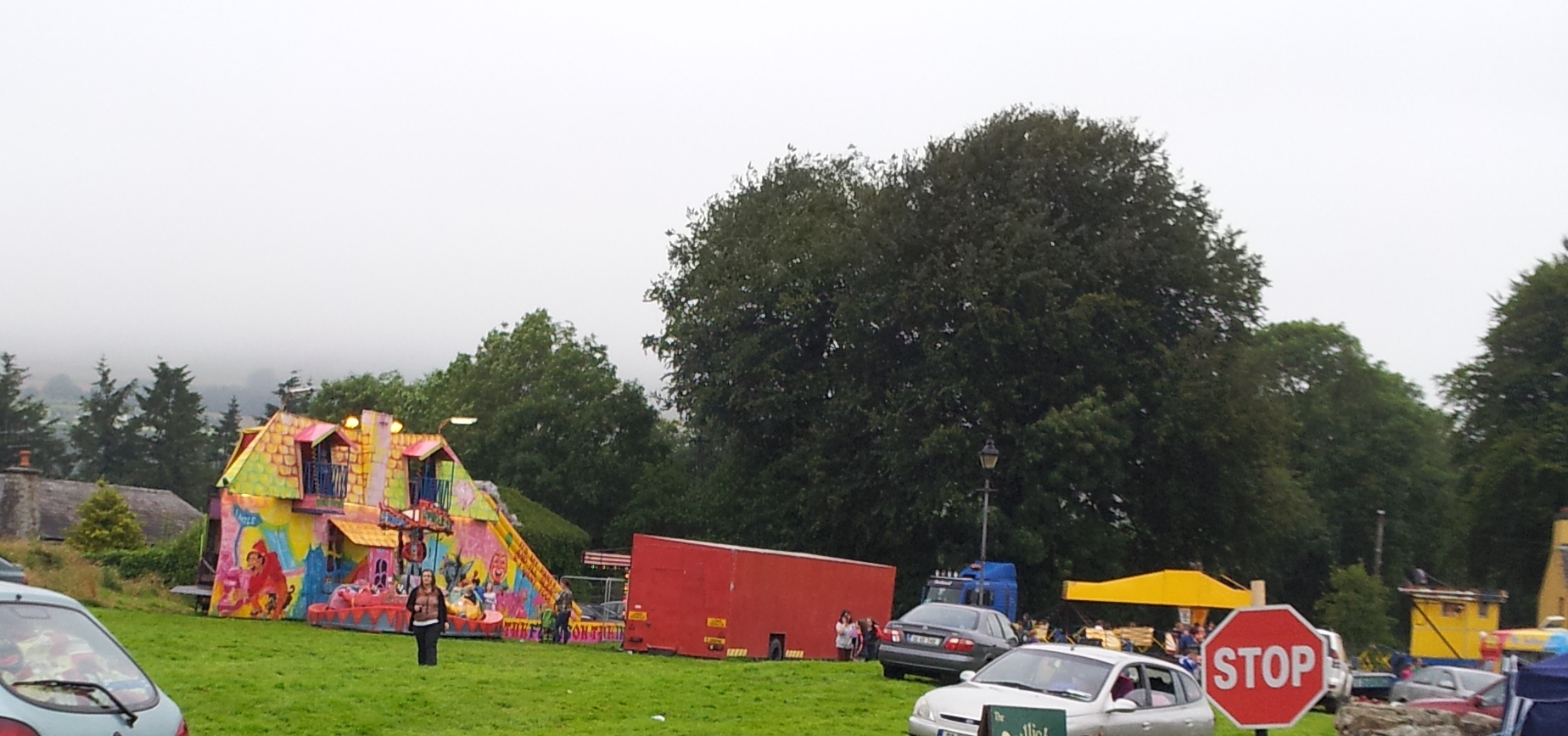
The Patron day is also a social event for local people,  in the green  beside the Norman Motte a short distance from the graveyard  there were amusements and stalls selling their wares, and chip vans .

Amusments  at St Mullins

Amusments at St Mullins

The pattern is a day for people to meet up with friends and have a chat.  Many local  people  who live in other parts of the county will come  back especially for the pattern.

Following the pattern, I headed to the  St Mullins Heritage Centre . The Heritage Centre is located in a former Church of Ireland church built in 1811 at the edge of the graveyard. It  is well worth a visit and has lots of information plaques of the history of the area, St Moling and the pilgrimage. The centre also deals with  genealogy queries .

The Blessing of the Graves & St Aidan’s Holy Well, Preban, Co. Wicklow

Last week I headed to Wicklow to visit Preban graveyard near Tinahely. Yvonne Whitty of the De Faoite Archaeology Company and member of the Preban graveyard committee brought me on a tour of Preban graveyard. She also  filled me in on the committee’s exciting plans for the site.

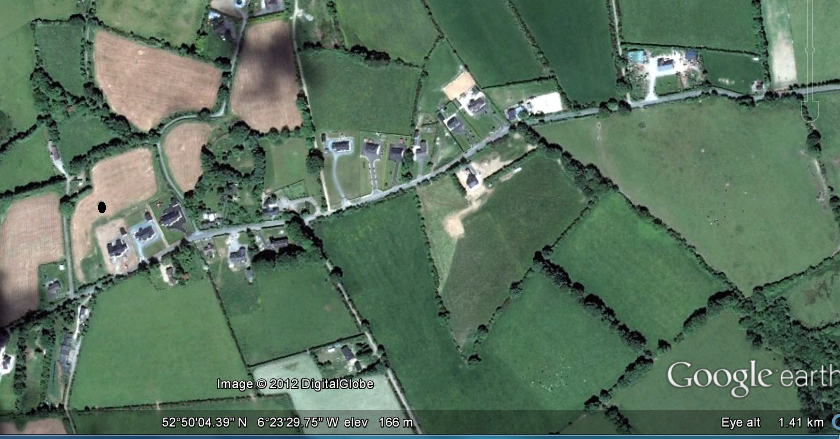
Preban Graveyard & St Aidan's Holy Well (taken fro Google earth)

View of Preban graveyard. St Aidan’s Well is located to the left hand side of the graveyard, marked by the black dot. The image is taken from Google earth

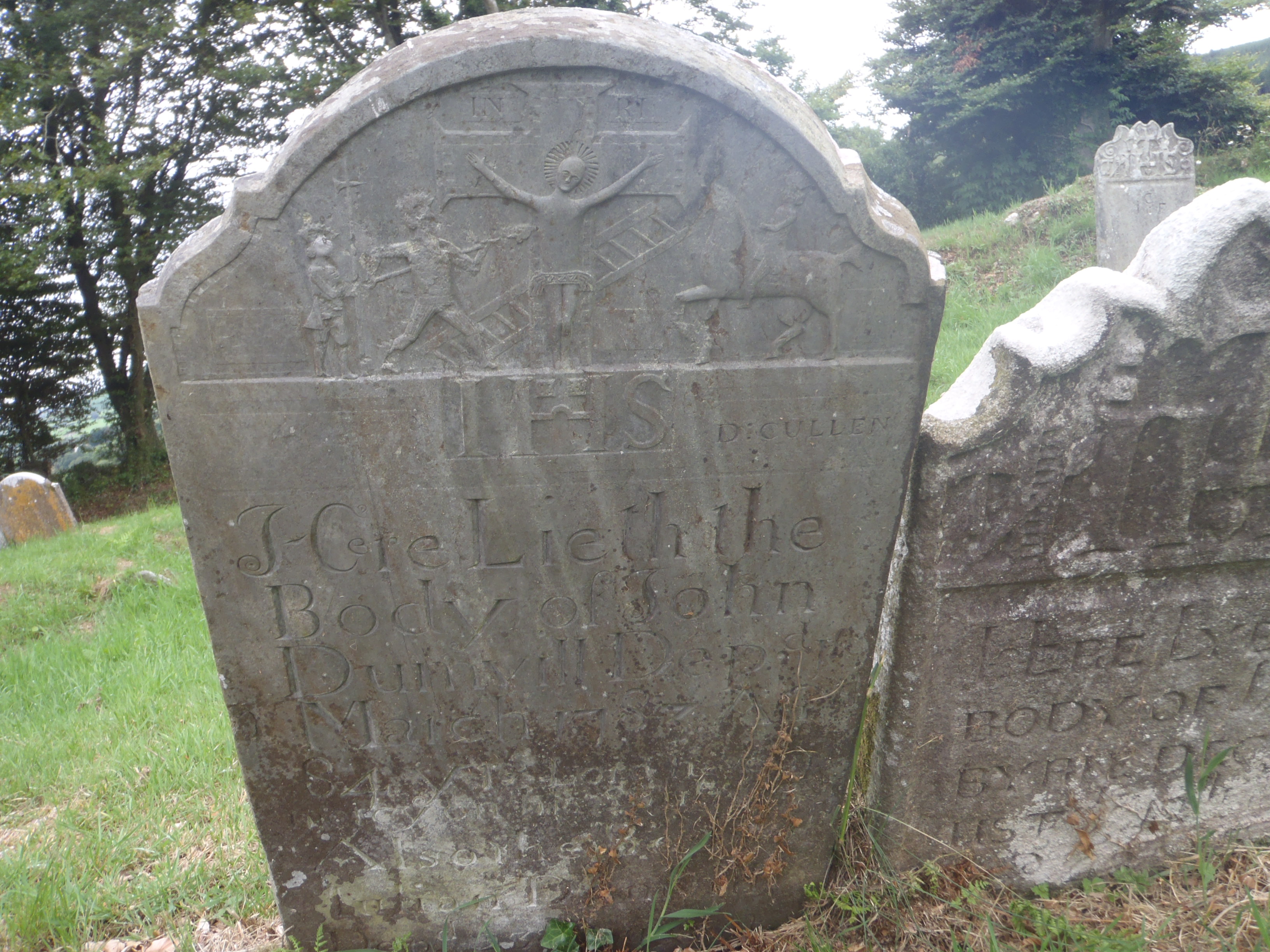
Preban is  an early medieval ecclesiastical site, there are no surviving upstanding  early medieval remains  but traces of an enclosure can be identified from the 1st edition Ordnance Survey maps and the surrounding field boundaries. Today the main features at the site are traces of a medieval church surrounded by a graveyard. In the coming months the site will be record and mapped and  a geophysical survey of  the surrounding fields. This graveyard is very special as it has some amazing eighteenth century gravestones three of which are by the renowned Denis Cullen.

Denis Cullen Headstone

Image of the crucifixion on Denis Cullen Headstone at Preban

The graveyard is not a site of pilgrimage but each year in July a blessing of the graves takes place. The blessing of the graves is a tradition that occurs in many graveyards around Ireland. The ritual can vary from place to place with either mass being celebrated in the graveyard and the priest then blesses the graves or elsewhere mass is celebrated in the parish church and people then come to the graveyard and the priest blesses the graves or prayers are said in the graveyard the the graves are then blessed. This ritual brings local communities together. It is also a time people tidy and clean up the graves of loved ones. This year the blessing of the graves  was last Friday  the 13th of July. Despite the wet weather there was still a good turnout from the local community and following some prayers by the Parish Priest Rev. James Hammel the  graves were blessed.

Blessing of the graves at Preban

Fr. Hammel blessing of the graves at Preban

St Aidan’s Holy well is located a short distance from Preban graveyard.  The well is not marked as an RMP site nor is it marked on the 1st edition Ordnance Survey maps of 1840’s, however local people remember it being a site of local pilgrimage. Today the well is very overgrown and visited by a very small number of local people.

St Aidan's Holy Well

View of St Aidan’s Holy Well and holy tree

St Aidan or Aodhán is the diminutive form of the name Aodh. Saints bearing this name are found throughout Ireland and Gaelic-speaking parts of Scotland (Ó’Riain 2011, 71). One of the most famous of these saints was Aodhán or Maodhóg (Mogue) of Ferns Co. Wexford (ibid). The well  at Preban appears to be dedicated to St Aidan of Fern’s as the feast day of both saints are  on the 31st of January.

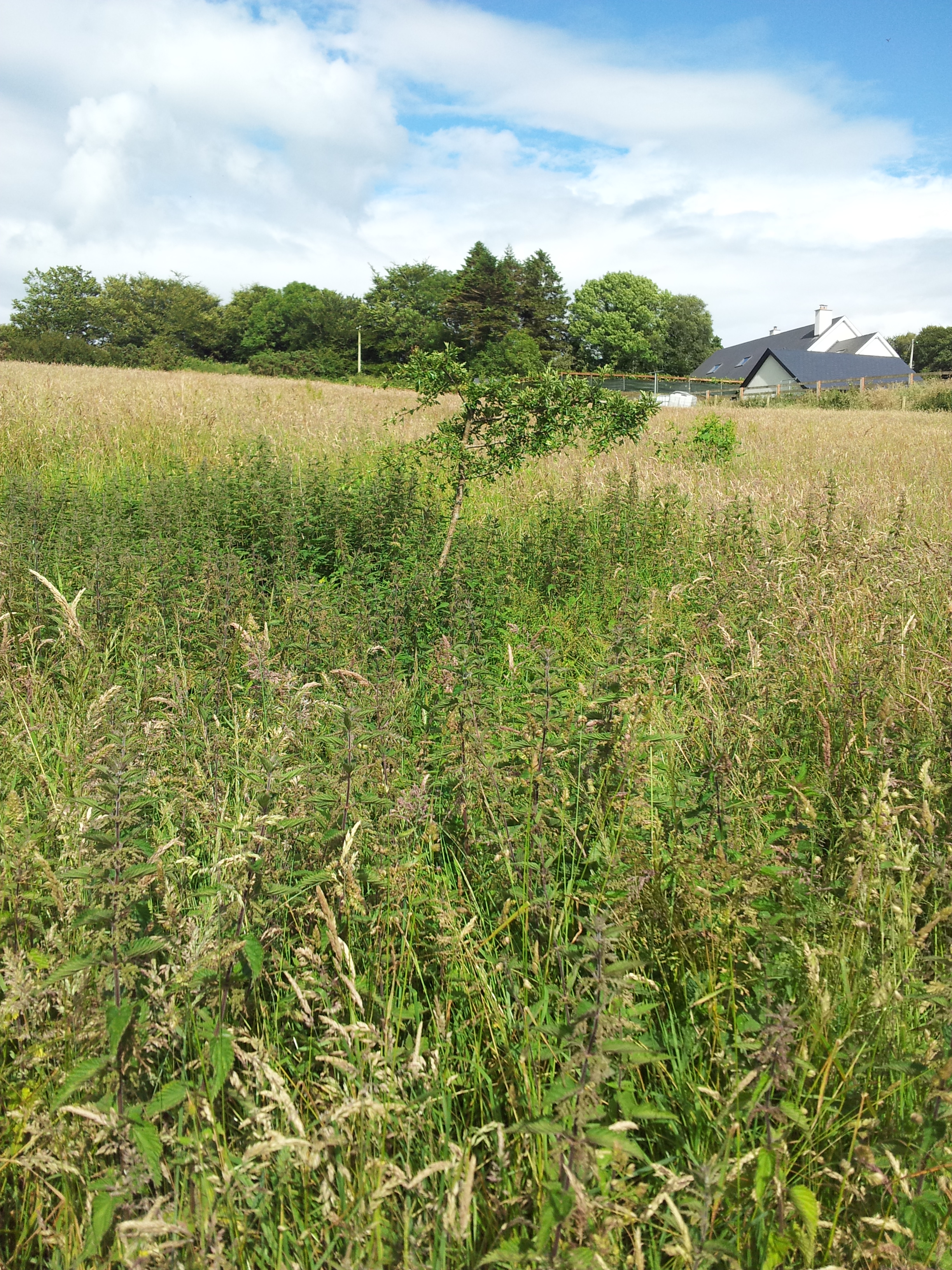
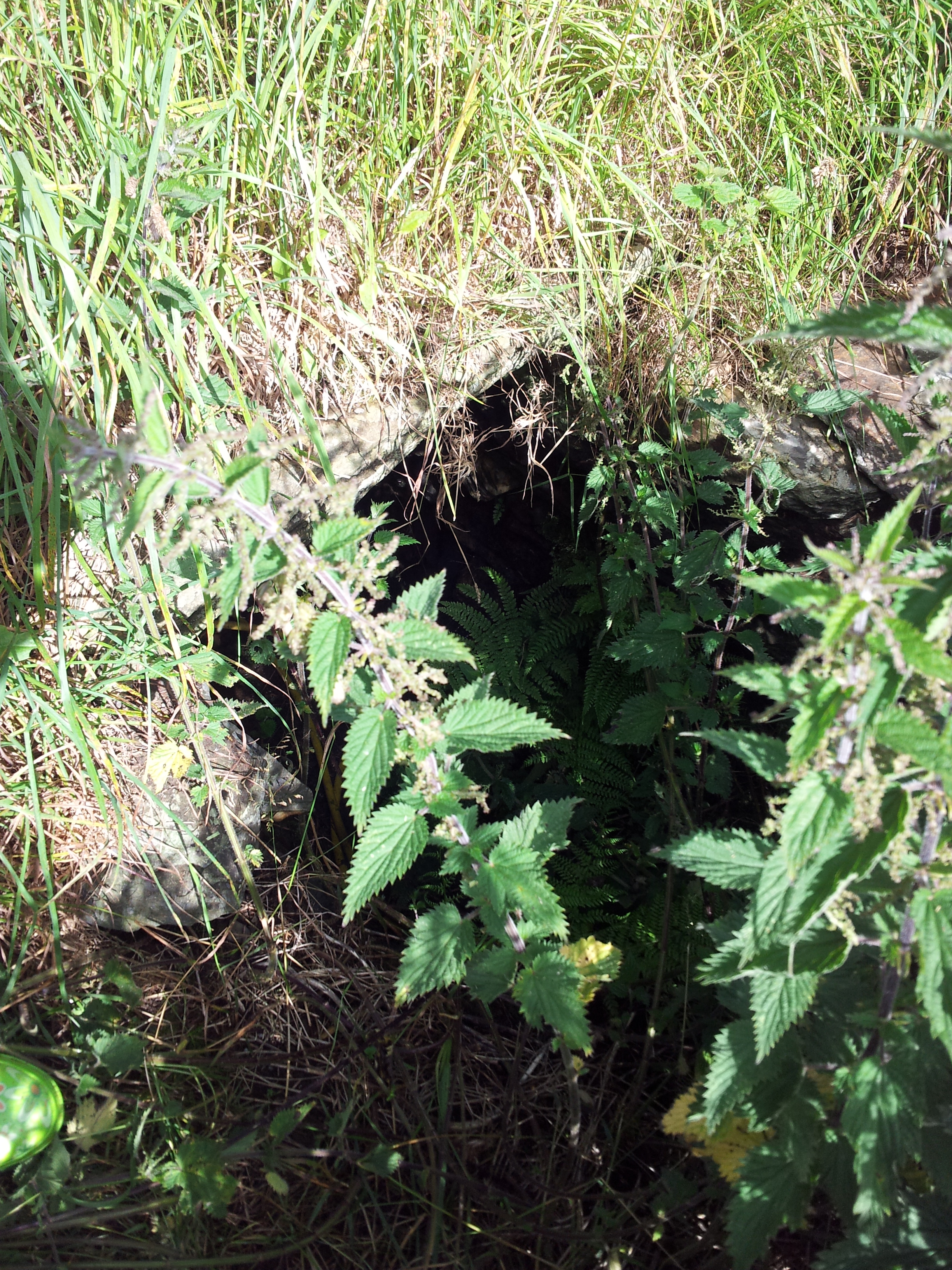
Locating the well at present is very difficult as the field is in long grass/meadow. The well can be identified by a green circle of long grass at the centre of the field. A black thorn tree sits at the edge of the well. From what I could make out without disturbing  the thick vegetation the well is sunken below the ground level of the field and consists of a stone built superstructure the top of which is level with the ground level of the field. I will try and visit again in winter as it will be easier to examine the well when the vegetation is less dense.

St Aidan's Holy Well

St Aidan’s Holy Well

I was very luck to chat with three local ladies who live and grew up close to the holy well. They were able to tell me about the  traditions  associated with the well. Benny Kelly told me when she was a child it was tradition to visit the well on the feast day of St Aidan the 31st of January  but that people also visited the well at other times during the year. She told me that there was a special prayer to St Aidan that some people recited when going to the well and its water had a great tradition of having a cure, but she didn’t think this cure was for any one illness. Another local lady Cathy Whitty told me that when she was a child the well was one of the only sources of local water and that people used to come here to get their drinking water but despite being used as a domestic water supply the well was still seen as holy and the water has healing qualities. Finally Maura Carthy one of the oldest surving inhabitants of the parish, told me when she was young  “the old people would go to the well nine days in a row before the feast of the saint and that people would tie red rags to the tree beside the well”. She also told me that pilgrims coming from Lough Derg  to Lady’s Island in Co. Wexford, “having cross over the mountains  would stop here to pray at the well” before heading on to Lady’s Island.

This is a very special well and the graveyard committee plan to collect more oral traditions associated with the well in the coming months. Many thanks to Yvonne for the tour of Preban and Benny, Cathy and Maura for sharing their memories of St Aidans well

Bibliography

Ó Riain, P. 2011. A Dictionary of Irish Saints. Dublin: Four Courts Press.

Pilgrimage at Kildare in the Seventh Century

In September I will be presenting a paper to the Castledermot Historical Society concerning the historical and archaeological evidence for pilgrimage in Co. Kildare during the medieval period. I started working on the paper earlier in the week and I was reminded of the description of pilgrims arriving at monastery of St Brigit at Kildare. This account was recorded in the seventh century Life of St Brigit.

 And who can count the different crowds and numberless peoples flocking from all the provinces- some for the       abundant feasting, others for the healing of their afflictions, others to watch the pageant of the crowds, others with great gifts and offerings – to join in the solemn celebration of the feast of the saint Brigit who, free from care, cast off the burden of the flesh and followed the lamb of God into the heavenly mansions, having fallen asleep on the first day of the month of February (Connolly & Picard, 1987, 27).

As Peter Harbison notes in his book Pilgrimage in Ireland the surviving literary evidence for early medieval pilgrimage in Ireland is

‘sparse and sporadic….. So meagre is our information in most cases that we know little more than the names of places known to have been the goal of a pilgrim’ (1991, 51).

With this in mind the above text, although brief, provides a unique glimpse of pilgrimage at an important shrine in early medieval Ireland.

The pilgrimage described above was taking place on the feast day of St Brigit the first of February. Medieval sources from Britain and the Continent suggest that while pilgrims were free to perform pilgrimage at any time during the year (and many did), the main bursts of pilgrim activity, was focused on the eve and day of the saint’s feast. The feast day became the primary focus of devotion due to the belief that the saint’s powers and presence at the shrine was at its most potent on his or her feast day (Davies 1988, 5-6; Hopper 2006, 108; Sumption 1975, 23-24). On a practical note as all public holidays in the medieval world were church feast days, it was probably easier for ordinary people to organise travel and pilgrimages on such days.

The Life also provides a valuable insight into the motives of pilgrims. The text suggests that some came to Kildare for healing, others to offer thanks in the form of gifts and some merely to enjoy the festivities and celebration of the feast day. The text also gives a sense that the pilgrimage experience at Kildare was a mixture of pious devotion and secular celebration. The combing to devotion and celebration is recorded at many European shrines during the early and later medieval period. The co-existence of devotion and celebrate or the sacred and profane can also be seen in the mass pilgrimages early modern period to holy wells on the Patron day or Saints Feast day.

In the coming weeks I hope to expand on this  brief discussion of pilgrimage at Kildare and other Irish sites during the  early  medieval period.

Bibliography

Connolly, S. & Picard, J. M. 1987. ‘Cogitosus: Life of Saint Brigit’, JRSAI, Vol. 117,  11-27.

Davies, J. 1988. Pilgrimage Yesterday and Today. Why? Where? How? London:  SCM Press Ltd.

Harbison, P. 1991. Pilgrimage in Ireland. The monuments and the people. London: Syracuse University Press.

Hopper, S. 2006. Mothers, Mystics and Merrymakers. Medieval Women Pilgrims. Gloustershire: Sutton Publishing.

Sumption, J. 1975. Pilgrimage an Image of Medieval Religion. London: H.M.S.O.

Mass Rock in the Knockmealdown Mountains

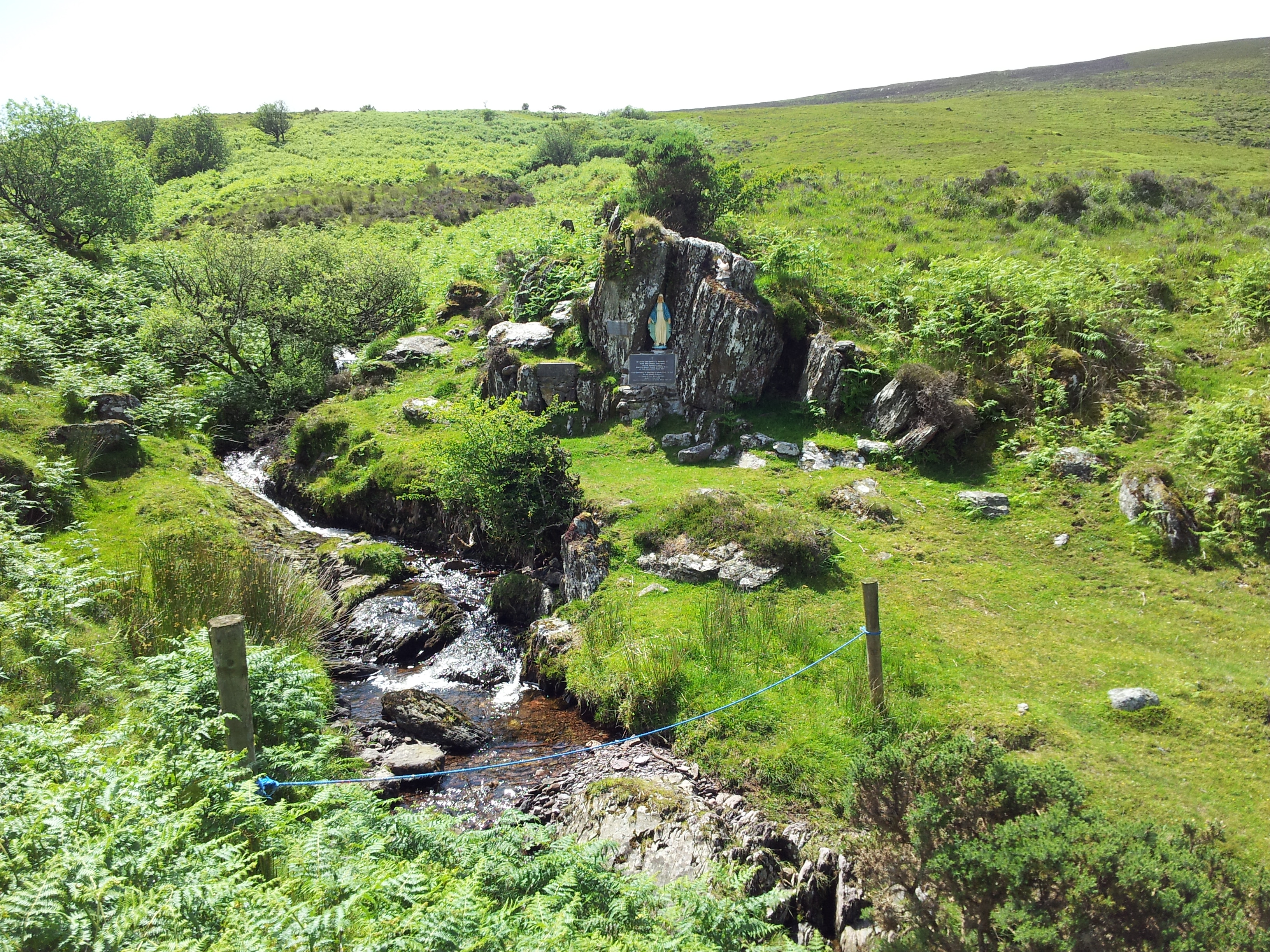
View from the Mass Rock facing towards Newcastle

View from the Mass Rock facing towards Newcastle

In between the rain showers  I visited  a mass rock  in the Knockmealdown mountains with my uncle Eddie Prendergast. This rock was used by priests to say mass in the “penal times” and is located 2-3 miles outside of Newcastle village in Co. Tipperary. In the late 17th and early 18th centuries a series of laws known as  ‘Penal Laws’ were passed by the Irish parliament to force Catholics to conform to the established Anglican Church. These laws prevented Catholics from holding elected office, purchasing land, or owning property worth more than 5 pounds. Catholics were also barred from legal worship and the laws forced the practice of the Catholic religion underground.

Image

Mass Rock, located beside stream

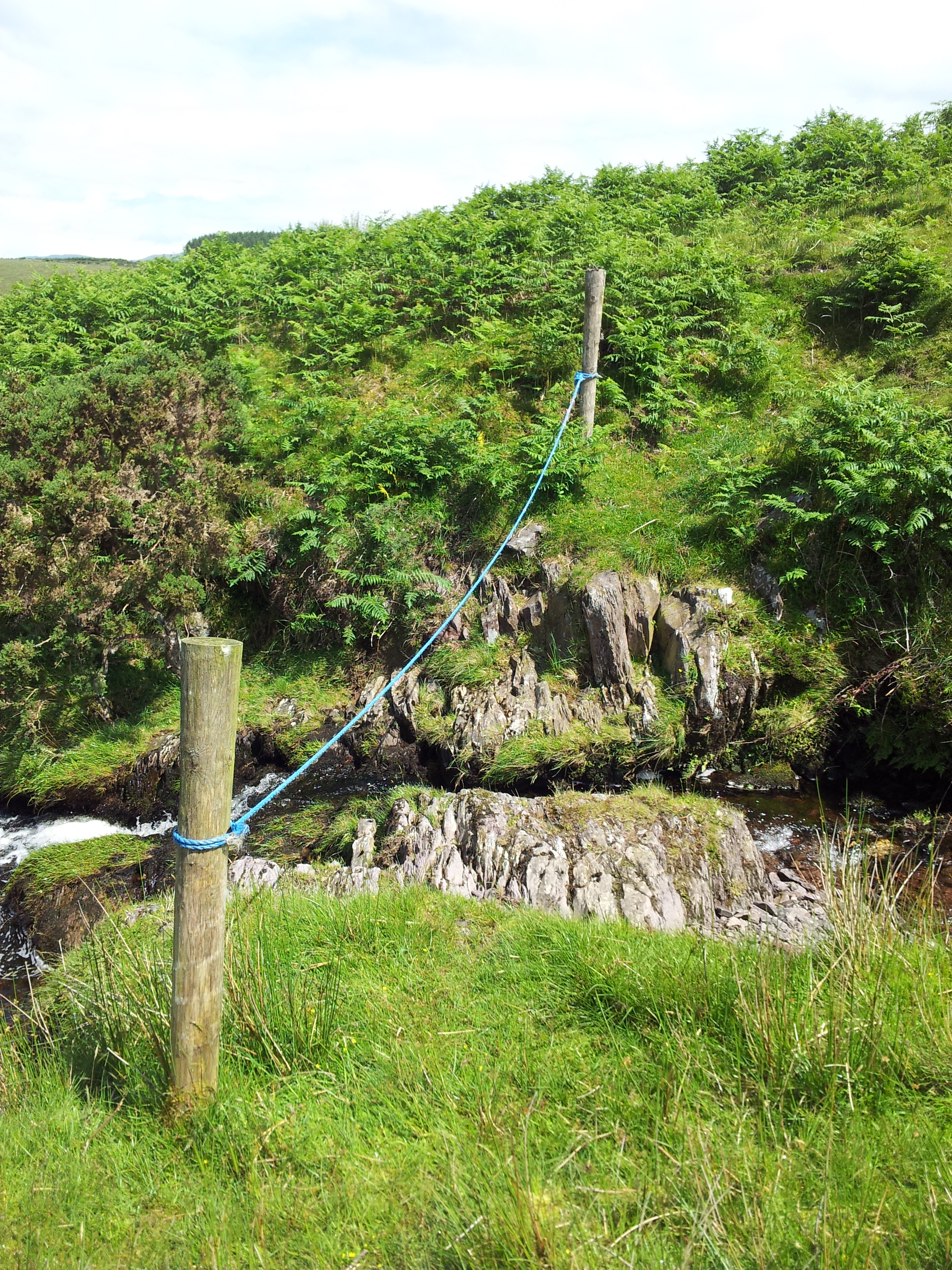
Mass was often celebrated in open air places in the countryside in isolated places with good views of the surround landscape. Large rocks were often used as alters. The Newcastle mass rock is a large rock outcrop of sandstone, located within a valley beside a fast flowing stream.  A rope has been placed across the stream to helps people cross safely.

Image

Rope bridge across stream at Mass Rock

The rock is known locally as cnoicín aifrin/little hill of the mass rock. According to Tales of the Deise it is associated with Knockanaffrin a mass rock in the Nier Valley. Priests on the run supposedly came from Knockanaffrin in the Commeragh Mountains here to Newcastle before heading on to Cork and Kerry. The site was rediscovered in the 1970’s by a local man called William Morrisey and shortly afterwards the present tradition of annual mass began (pers. comm. Eddie Prendergast). Mass is  held here annually by local people in the summer months.

I first visited the  rock in 1999.  At the time the site consisted of a large rock outcrop with a memorial plaque  dedicated to Mr Morrisey and a modern granite block with a cross, inserted into the outcrop used as an alter. A number of jam jars were scattered around the rock (possibly to collect water from the stream). Rosary beads and ribbons were tied to the surrounding heather.

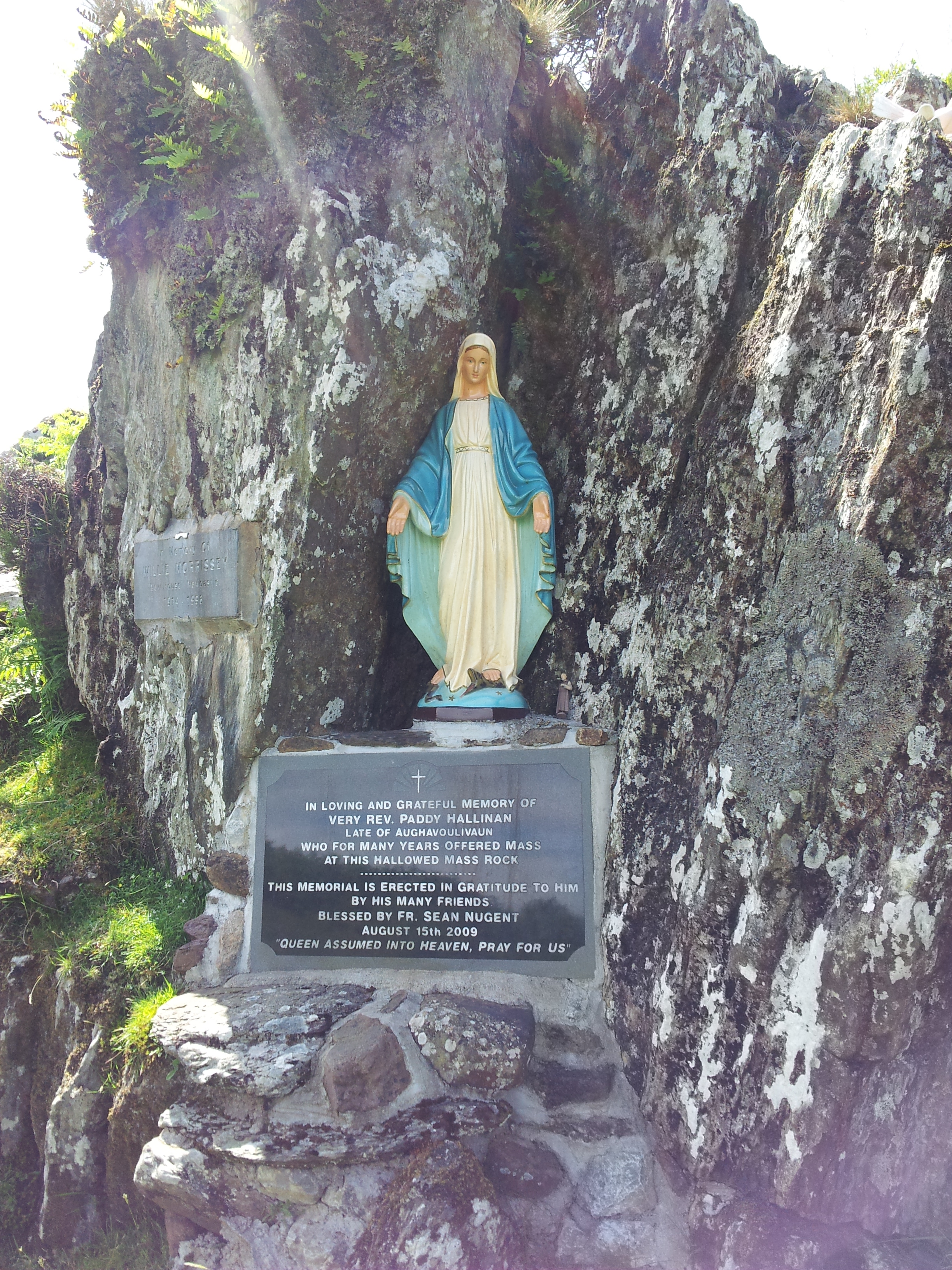
This visit  I noticed a few changes, such as the addition of a large statue of the Blessed Virgin and a new memorial plaque dedicated to the memory of late Father Hallinan who often said mass here.

Statue of the Blessed Virgin at Mass Rock

Statue of the Blessed Virgin at Mass Rock

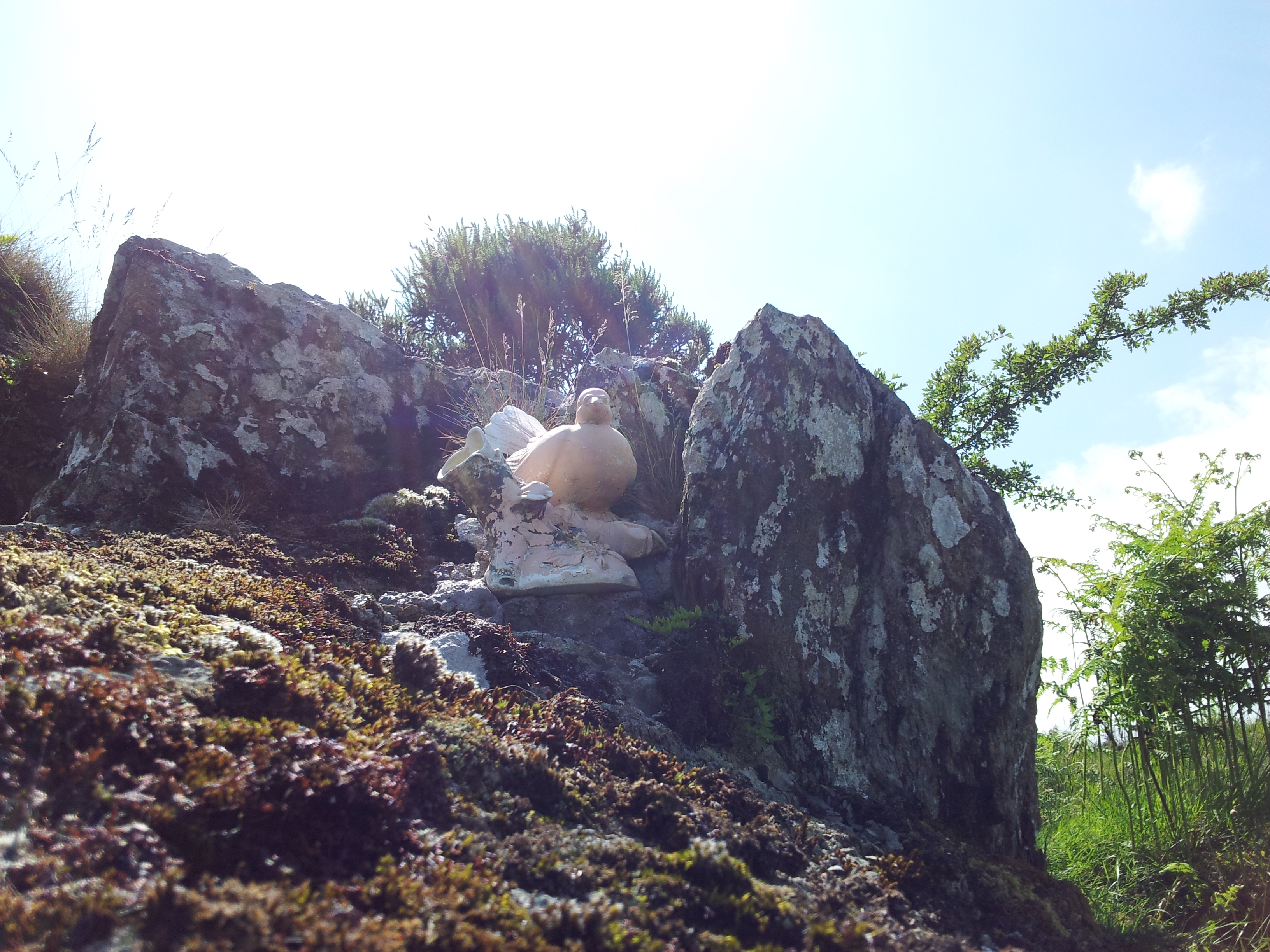
Another unusual new feature was a small statue of a pigeon or dove is found on top of the rock.

Statue of a dove

Statue of a dove

I am hoping to return for the annual mass in August and take  some more photos.

Molough Abbey Co. Tipperary

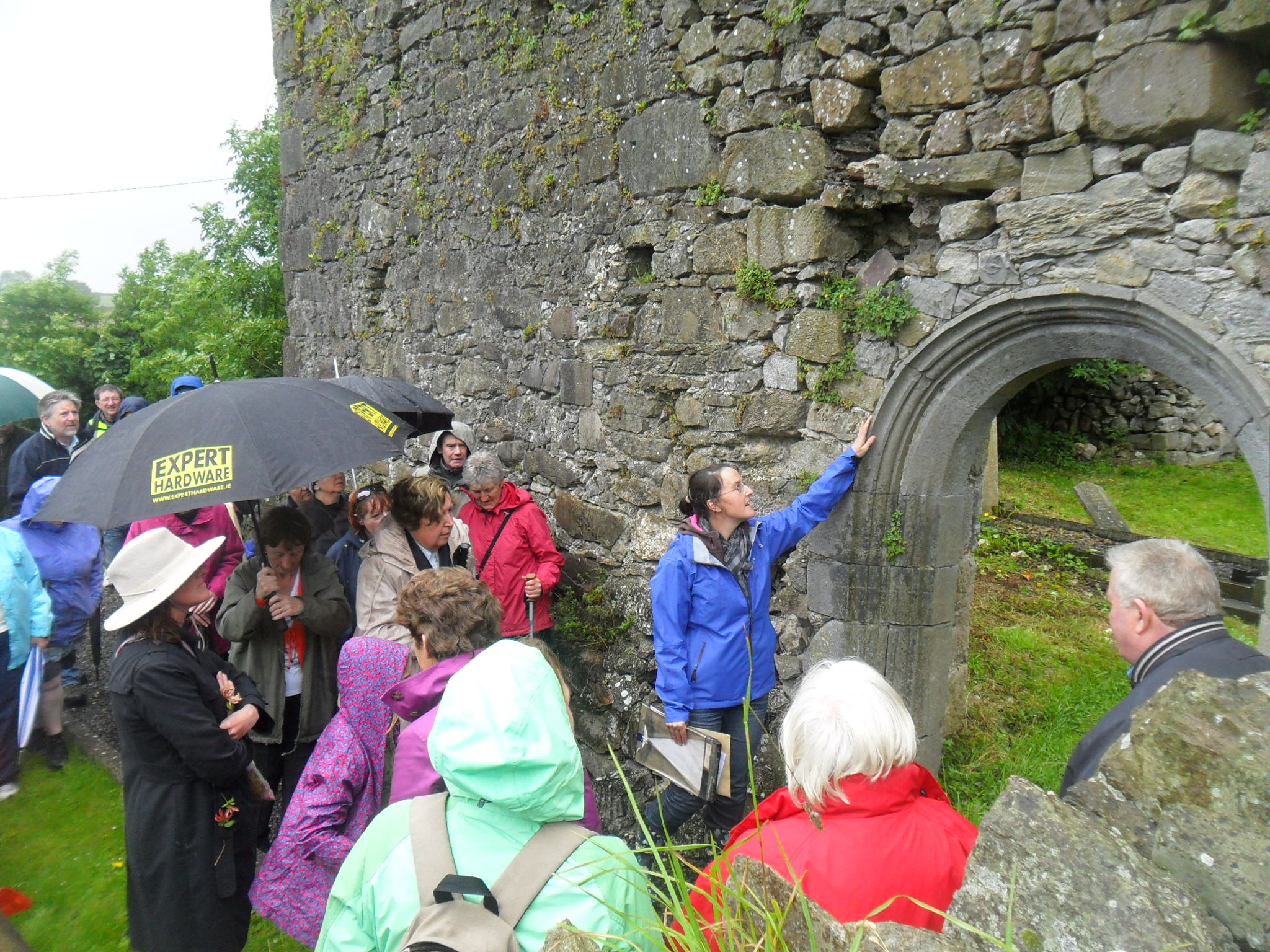
The sleepy Augustinian Nunnery at Molough just outside of  Newcastle was a hive of activity today. A historical and archaeological  tour of the abbey  took place as part of the annual Éigse festival.

Talk at Molough Abbey, Newcastle

Talk at Molough Abbey, Newcastle

Despite the  rain a large crowd still turned out. Breda Ryan talked about the history of the nunnery and I gave a tour of the the site.

Carved doorway in south wall of  church at Molough Abbey

Carved doorway in south wall of church at Molough Abbey

The monastery was dedicated to St Brigid and was founded in the early medieval period by the daughters of the King of the Deise.  It appears to have been re-founded in the early part of the later medieval period. The present remains consist of a 13th century church, a cloister and two domestic buildings on the  east and west side of the cloister.

View of cloister on the north side of the church

View of cloister on the north side of the church

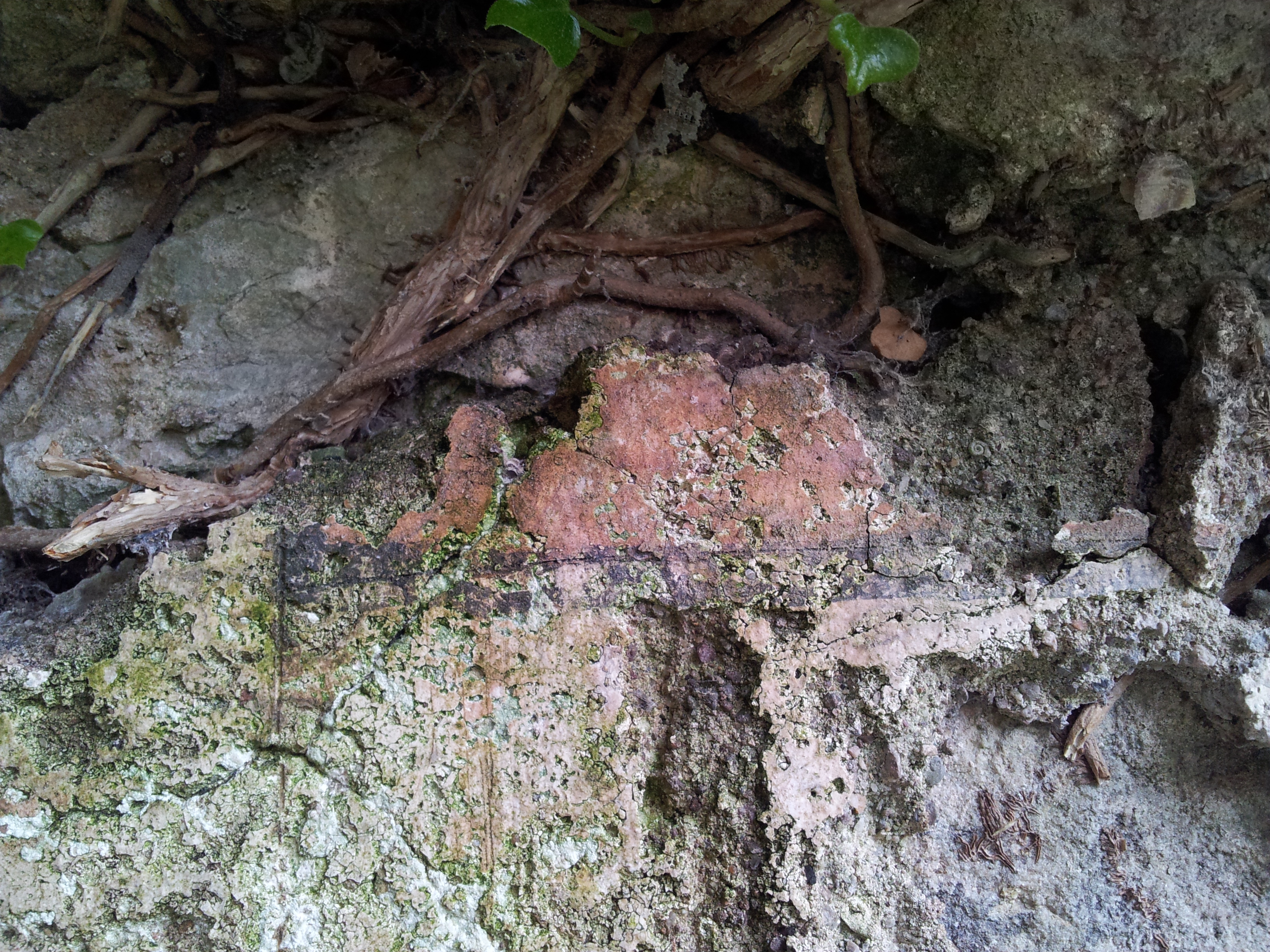
The church  has a number or single light sandstone windows and a beautiful  15th century carved limestone doorway.  There are traces of painted plaster work in the  east window of the south wall. The paint is orange/reddish colour with black horizontal lines which appears to trying to imitate ashlar masonry.

Section of painted plaster in the south-east window of church

Section of painted plaster in the south-east window of church

Ogulla Holy Well

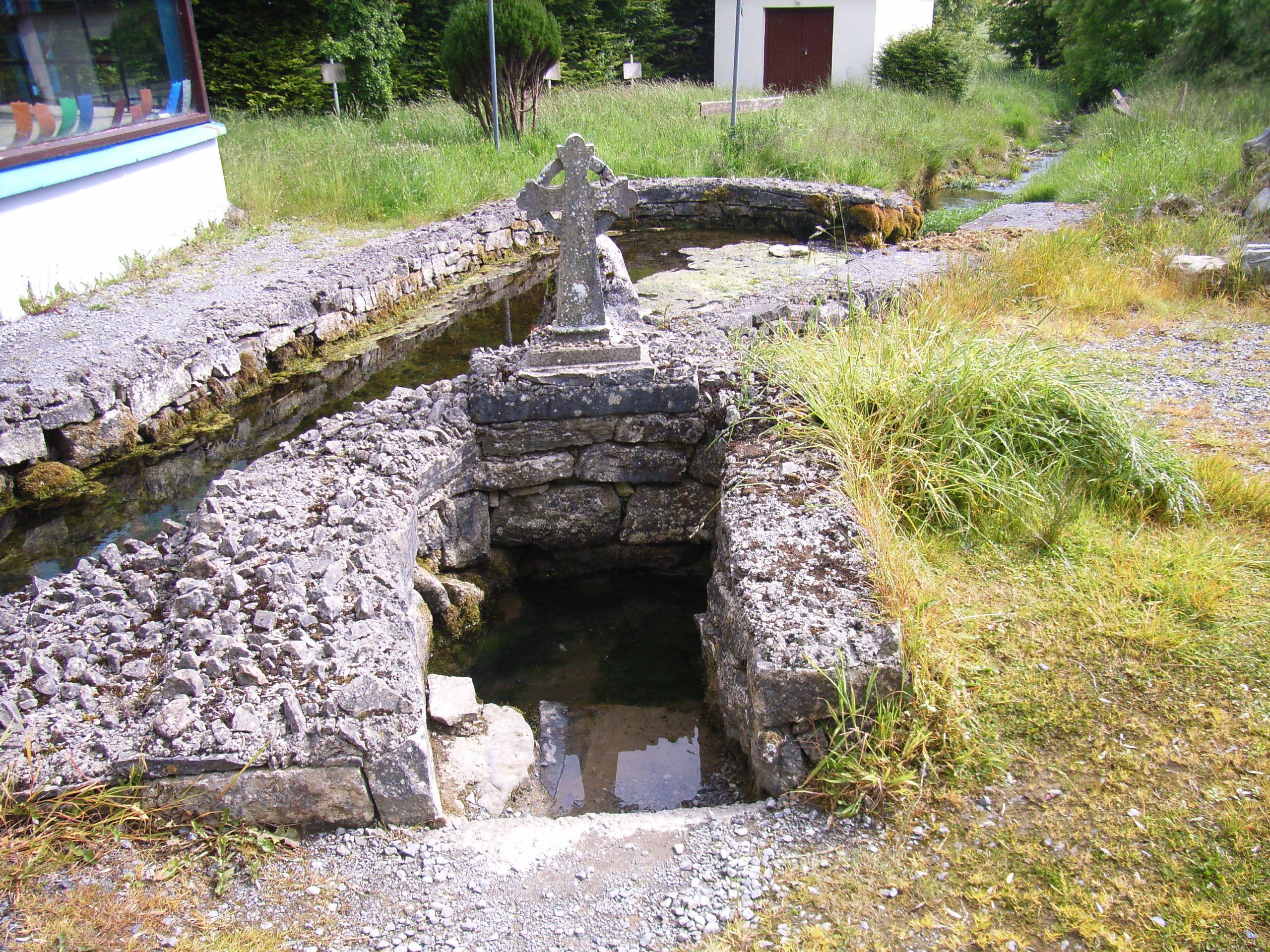
I recently visited a holy well at Ogulla near Tulsk, Co. Roscommon. The well is believed to be the location where St Patrick baptised Ethne and Fidelm, the daughters of the High King of Ireland.

St Patrick's well, Ogulla.

St Patrick’s well, Ogulla.

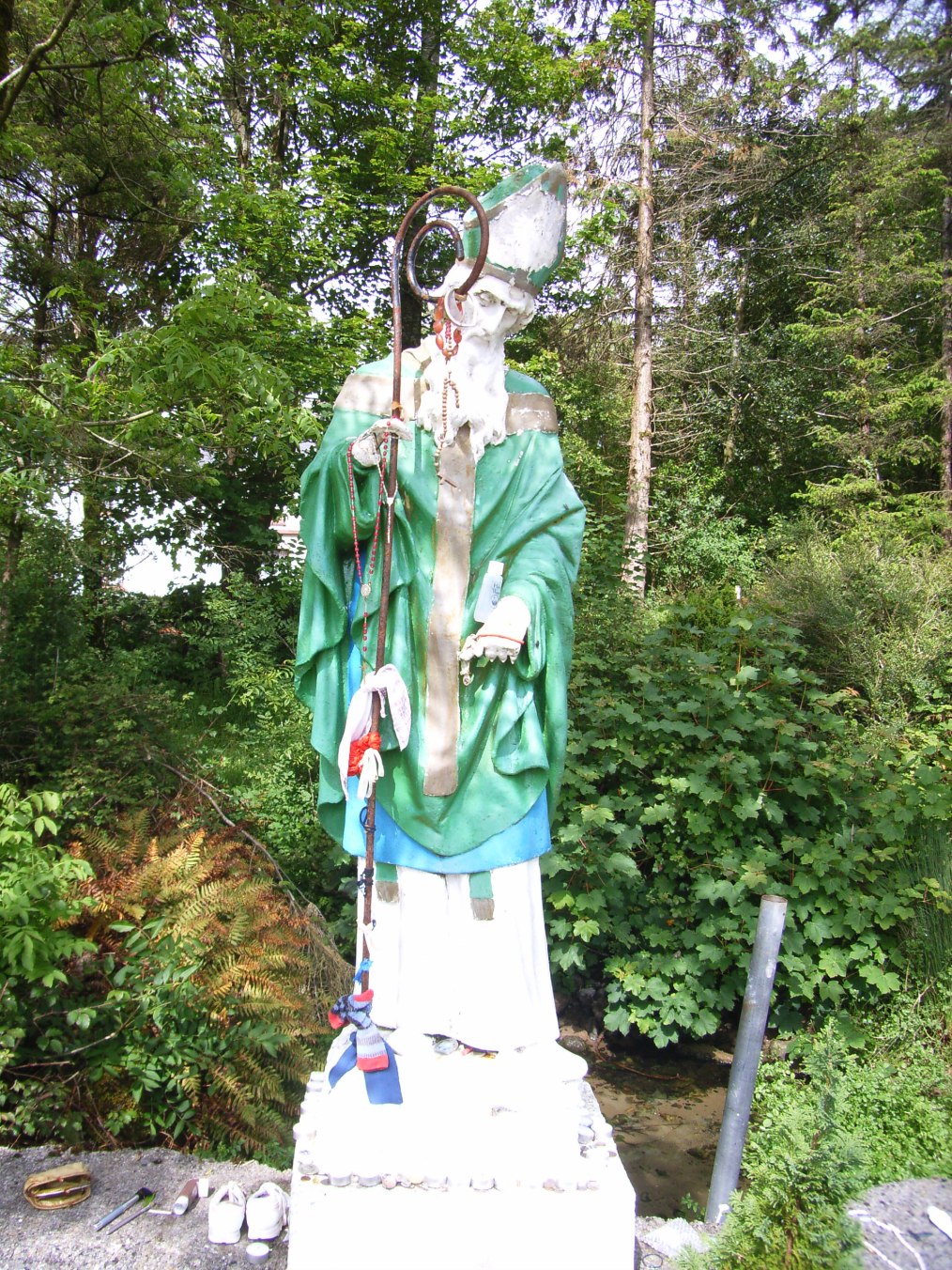
The well is still a site of devotion and  people leave votive offerings at statue of St Patrick. People also perform stations of the cross around the site.

St Patrick

Statue of St Patrick

Image

Beside the holy well is a small modern oratory.

Modern Oratory at Ogulla

Modern Oratory at Ogulla

According to locals mass is held here on last Sunday of June

Statue of the Blessed Virgin beside holy well

Statue of the Blessed Virgin beside holy well

The well is associated with healing and a number of cures have been recorded here.

Pilgrim Walk in Dublin

I came across what can only be described as a pop -up pilgrimage where for two weeks coinciding with  the International Eucharistic Congress, a  new  pilgrimage will be happening in Dublin where   pilgrims  will walk to and pray at a number of city centre church sites.

The walk is being held from Saturday 2nd -16th June and will visit seven city centre churches.  All pilgrims will be issued with a “Pilgrim Passport” that will be stamped in each of the seven churches  St Ann’s, Dawson Street, St. James, James Street, Our Lady of Mount Carmel, Whitefriar Street, John’s Lane, Thomas Street, St. Mary of the Angels, Church Street, St. Michans, Halston Street, and St. Mary’s Pro Cathedral, Marlborough Street.

According to the website all pilgrims will be issued with a “Pilgrim Passport” that will be stamped in each of the seven churches and  at the last church  St. Mary’s Pro-Cathedral, Marlborough Street  pilgrims will receive a Pilgrimage Certificate of completion. People can participate in groups, on their own; they can complete the Pilgrim walk or “Camino” in a day or throughout the days of the Congress.

Details are available from the Archdiosces of Dublin website ( http://www.dublindiocese.ie/content/pilgrim-walk )

ATLAS Religious Tourism and Pilgrimage Special Interest Group

Last week on  the 8th and 9th of June , I presented a paper ‘Learning from Pilgrimage in Medieval Ireland: Pilgrimage at Croagh Patrick from medieval to modern times’  at a conference organised by Kevin Griffin of  the ATLAS Religious Tourism and Pilgrimage Special Interest Group .  The theme of the conference was “Not Losing the ‘Pilgrimage’ in the Pilgrimage Tourism Experience’ and the event was held at NUI Maynooth .  Over the two days  18 speakers  talked about a wide range of topics from product development, history of pilgrimage,  walking routes,  pilgrimage at holy wells  and walking the Camino de Santiago. It’s really hard to single out any one talk as all were great but  Terry Cunningham’s  showcased St Declan’s Way, a pilgrim route very close to my heart, and Attracta Brownlee’s  paper on Irish travellers and pilgrimage were fascinating.  The conference ended with a  field trip to Clonmacnoise and a boat trip around Lough Ree .