Recent Excavations at the Upper Lake at Glendalough

The ecclesiastical settlement at Glendalough, Co. Wicklow   was one of Ireland’s most important centres of pilgrimage from the early medieval period to the 19th century. I have visited this site on many  occasions  and each time I see something that I havent noticed before.

St Kevin’s Church at Glendalough

This visit  luckily coincided with the  School of Archaeology  UCD, research excavation at the upper lake.  This excavation is  part of a research and teaching project focusing on the Glendalough Valley which has been on going since 2009.  This year their team of archaeologists and students are doing  a geophysical survey at an area called the pattern bank close to the round tower at the lower lake and they are excavating a number of trenches at the upper lake.  One of the trenches contains a  possible  medieval leacht. The  leacht was part of the post medieval pilgrim landscape and excavation will prove if it was also part of the  medieval pilgrim landscape.

Excavation of Leacht at Upper Lake Glendalough

The progress of the dig is being is being up dated daily  on the Glendalough Archaeology Blog  http://www.ucdblogs.org/glendalougharchaeologyproject/blog/

I cant wait to follow the progress and see what the dig uncovers.

Tobar Íosa (Jesus’s Well) Cahir, Co. Tipperary.

Tobar Íosa (Jesus’s well) is located in the townland of Caherabbey Upper on the outskirts of the town of Cahir in Co Tipperary. I came across it by accident a year ago.

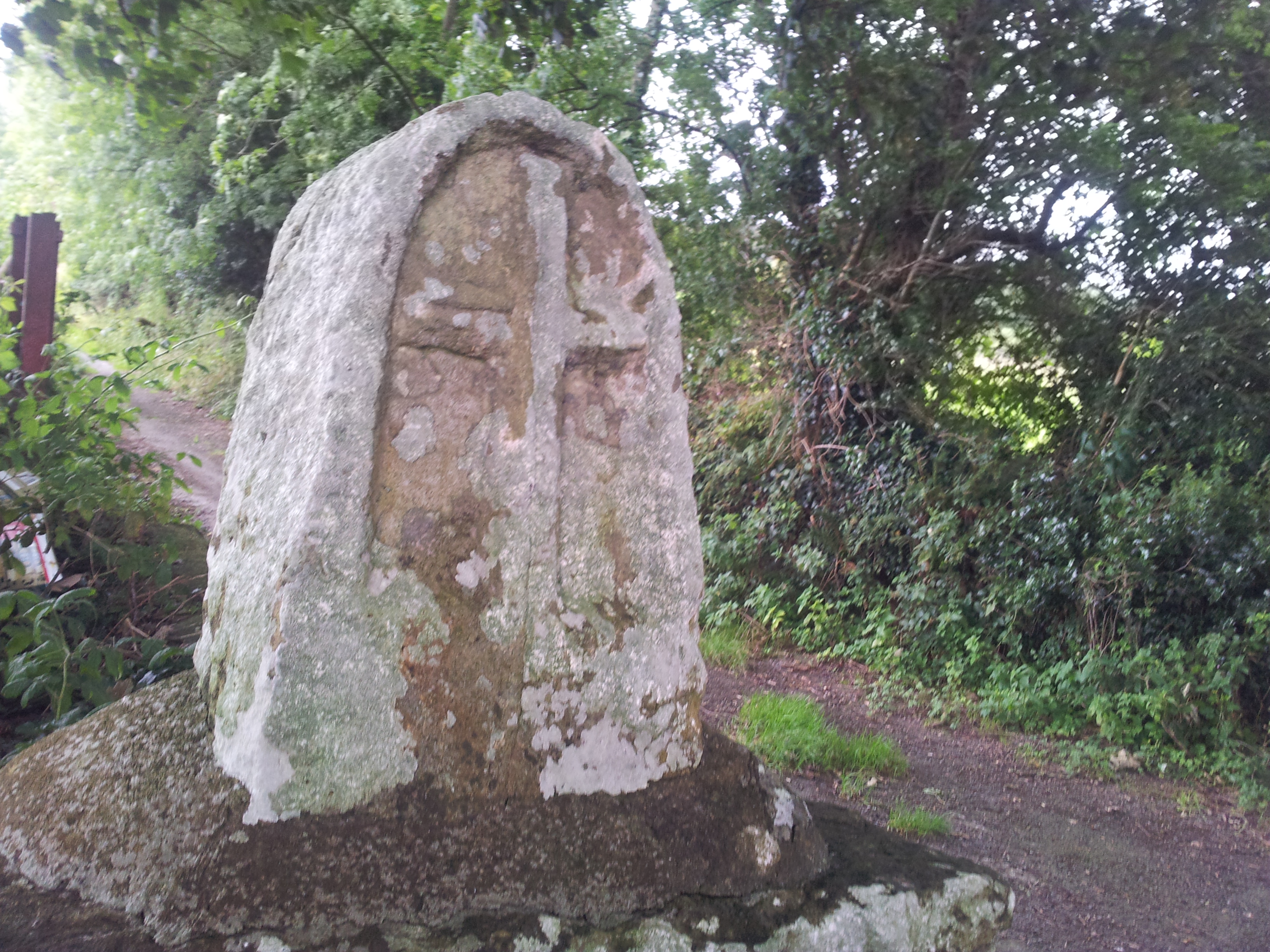
The well is located at the end of a small residential laneway. The field where the well is located can be entered through a gate and there is  a small  stone with a Latin cross, in relief sitting on top of the entrance wall.
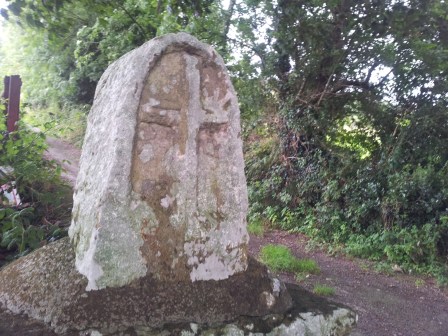
Latin cross at entrance to Tobar Íosa

According to Power (1908, 23) this stone is post medieval in date having been ‘cut and placed’ there by Roger Sheehy in the late 1800’s.

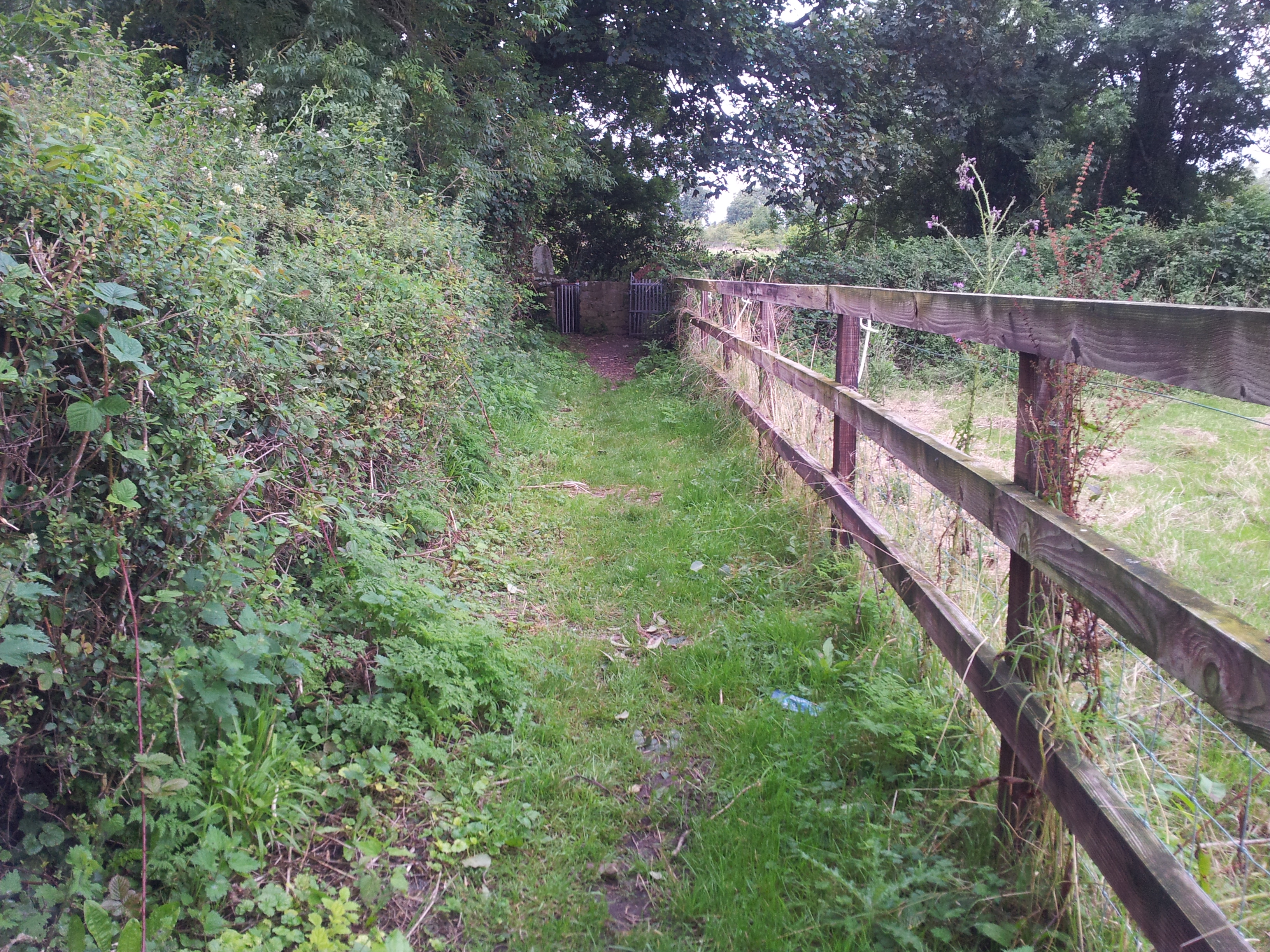
Once through the gate one follows a small track which widens out into a rectangular shaped area and it is here that the well is located.
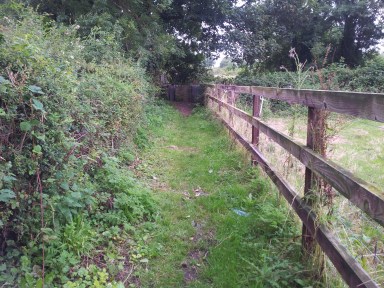
Track leading to holy well

In 1908 Power noted that the well ‘was surrounded by a patch of swamp now drained’. This work was carried out at some point in the nineteenth century.

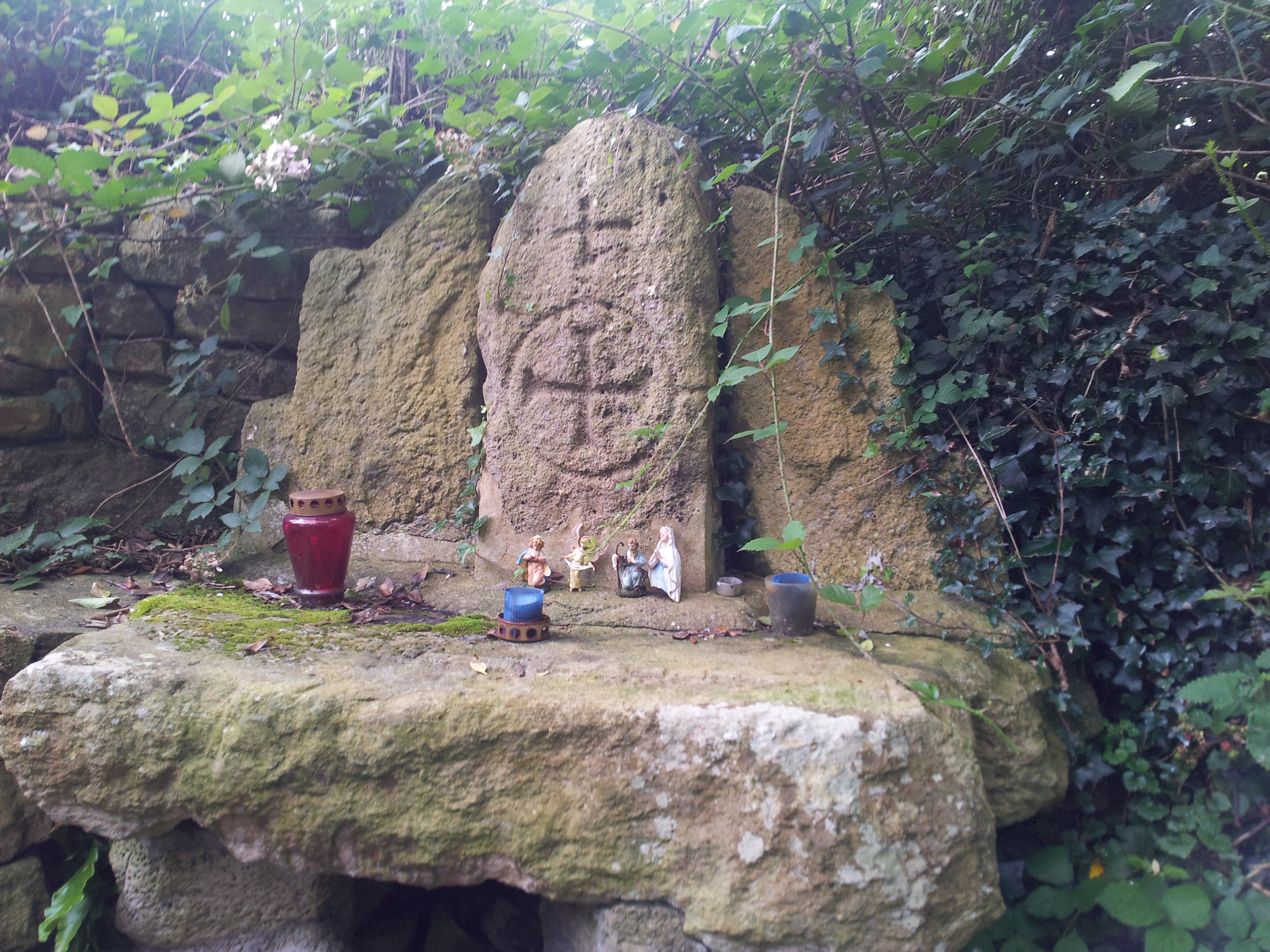
Today the site consists of a small altar of sandstone with an early medieval cross slab with two crosses. A simple Latin cross is found at the top of the stone and a larger Latin cross in a circle if found underneath. Power noted that this early medieval cross slab  was found ‘many years ago together with the smaller rude cross, in a bog close to the Bansha road, a full half mile from the well’ by Roger Sheehy (1908, 23). I couldn’t see any trace of the smaller  cross at the site.
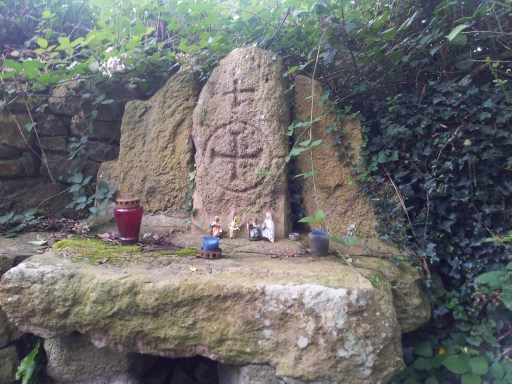
Altar with early medieval cross slab

Tradition  holds that the altar  was used to say mass  in Penal times. In 2009 the altar was vandalised the local newspaper the Nationalist reported  ‘the altar stones now lie smashed at the bottom of the shallow well’. The altar has since been restored and an illustration of the altar in the JRSAI  for 1899 suggests it has changed little and any reconstruction has been sympathetic.
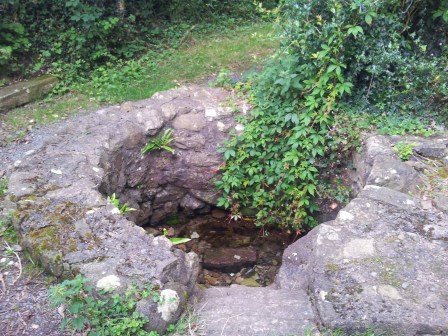
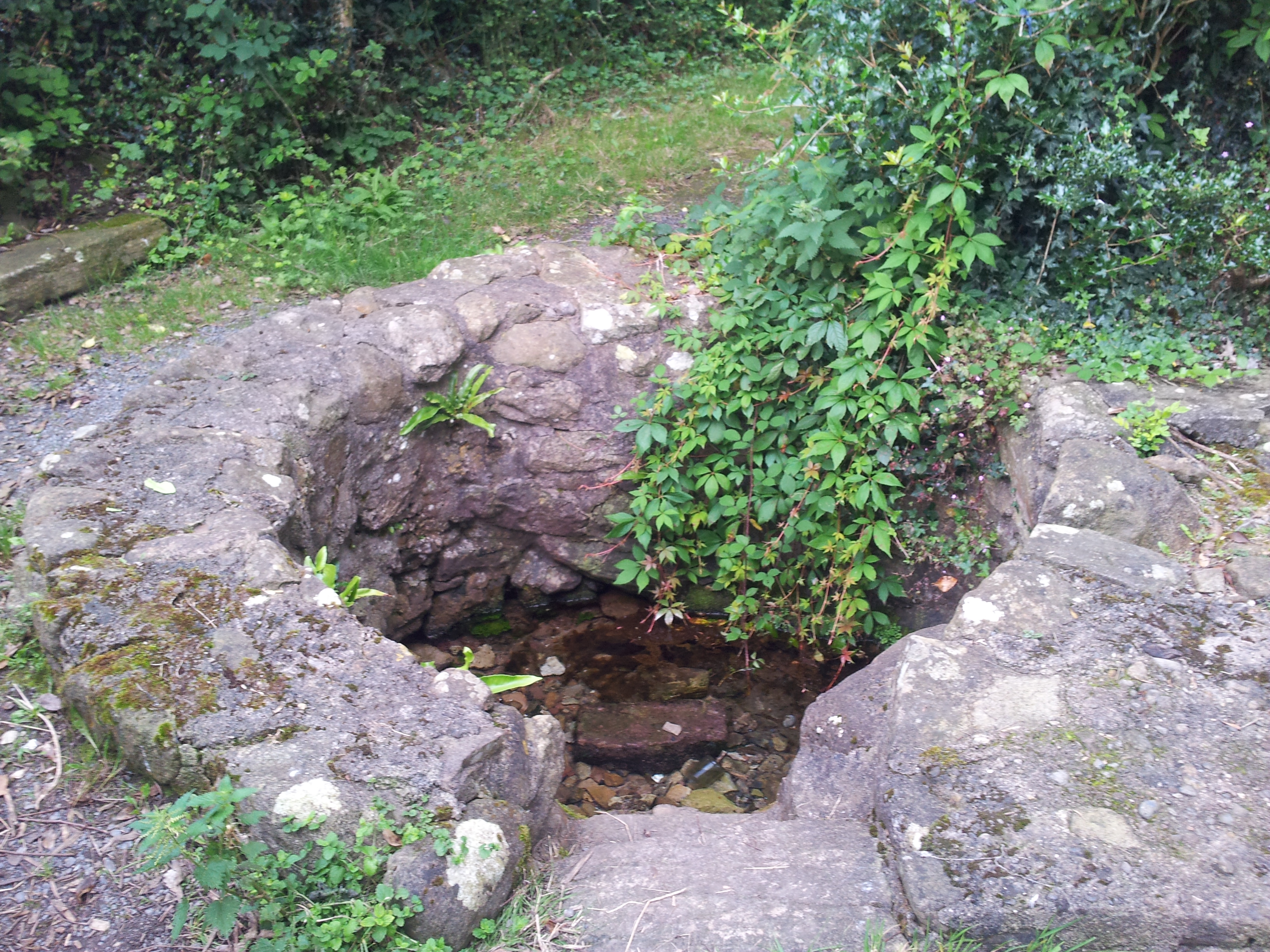
Upper Well at Tobar Íosa

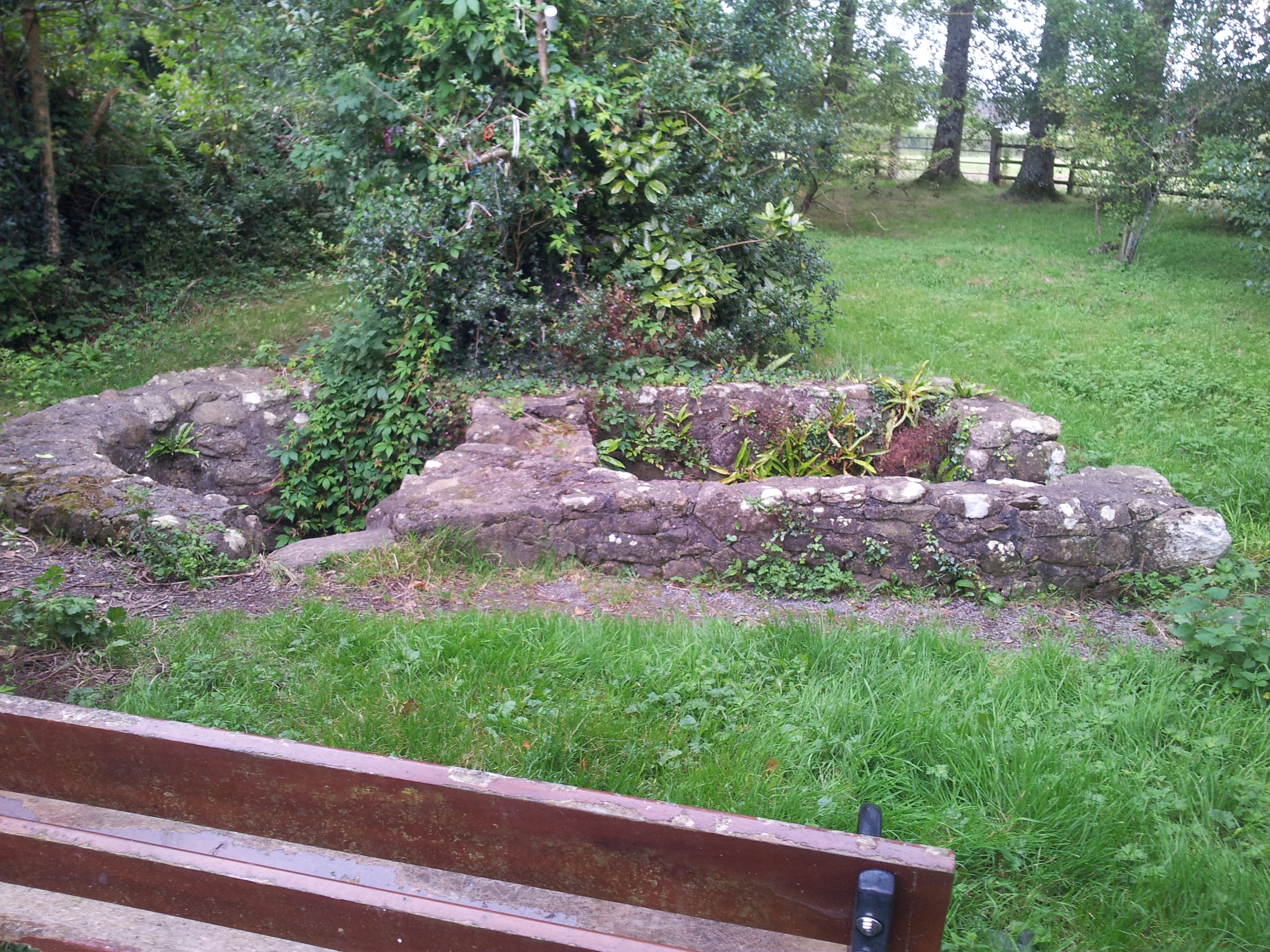
The holy well consists of a natural spring surrounded by a circular stone structure with steps(SW) leading down into the water, two outflow holes let water flow into a rectangular pool surround by a stone wall.
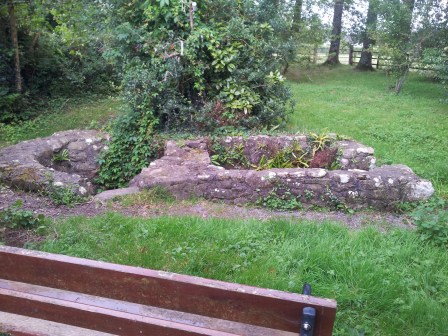
View of rectangular trough known as the lower well that is attached to the circular well

The two parts of the well are known as the upper (circular part ) and lower well (rectangular part). The water flows out of the rectangular trough/well and flows as a small stream  which  joins a larger stream c. 20m to SE.  The structure that surrounds the well looks relatively modern and is likely 19th century in date.
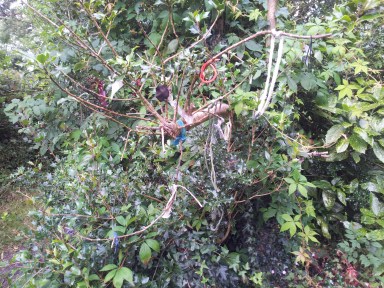
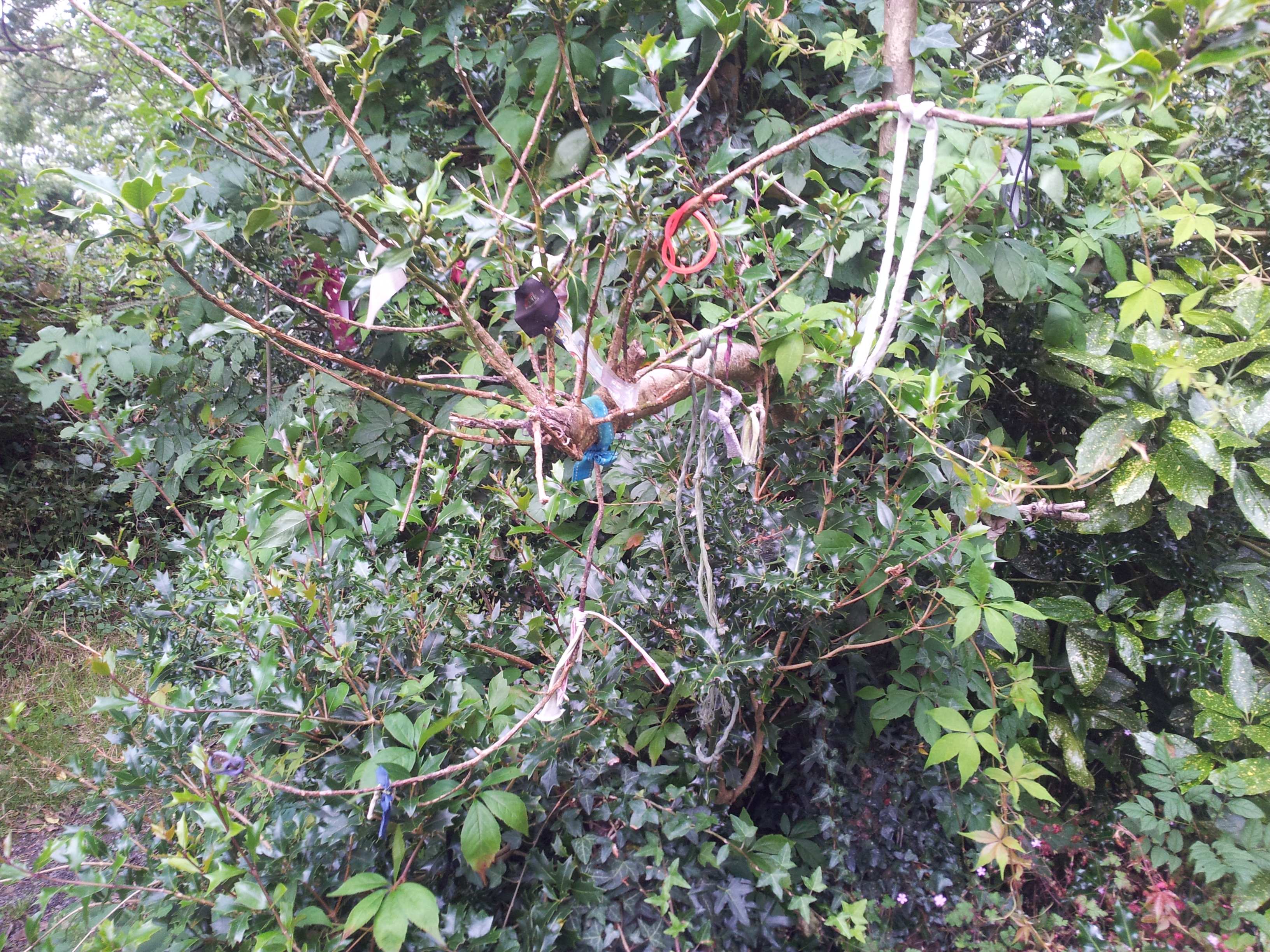
Rag bush beside the well

The well is still visited by local people and I am hoping to find out more about local devotions here in the coming months. Traditionally the  pattern day at the well was held on Christmas eve, some local people still continue this tradition.  According to the Nationalist newspaper in 2009 ‘There is a rosary here on every first Saturday of the month’.

At the turn of the last century Power (1908) noted the following prayer was recited at the well

Go m-beannuidhe Dia Dhuit,

A Íosa Naomtha,

Tána mé go dtí  thú a’ghearán  Mo scéil duit,

A d’iarraidh cabhair i gcúntas Dé Uait,

go mbeannuidhe Di mise,

Íosa beannuigthe Naomhte.

I place myself in your presence

O Holy God and Holy Jesus,

To make known my problem

Asking help through the power of God,

Bless me O God,

And Holy Jesus bless me too.

According to an information plaque at the entrance of the site three pebbles were taken by pilgrims from the upper well, in remembrance of devotions made. Generations of Cahir people emigrating took away bottles of water and pebbles from the well before their departure as did British soldiers based in the former Kilcommon Barracks before going to war.
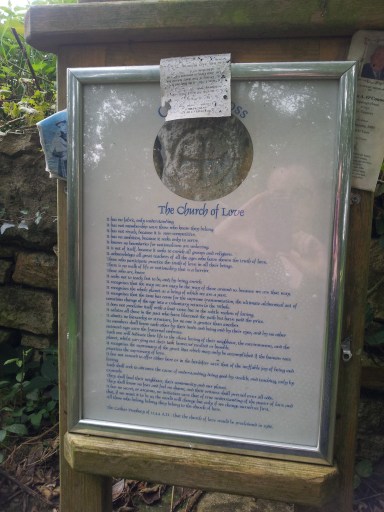
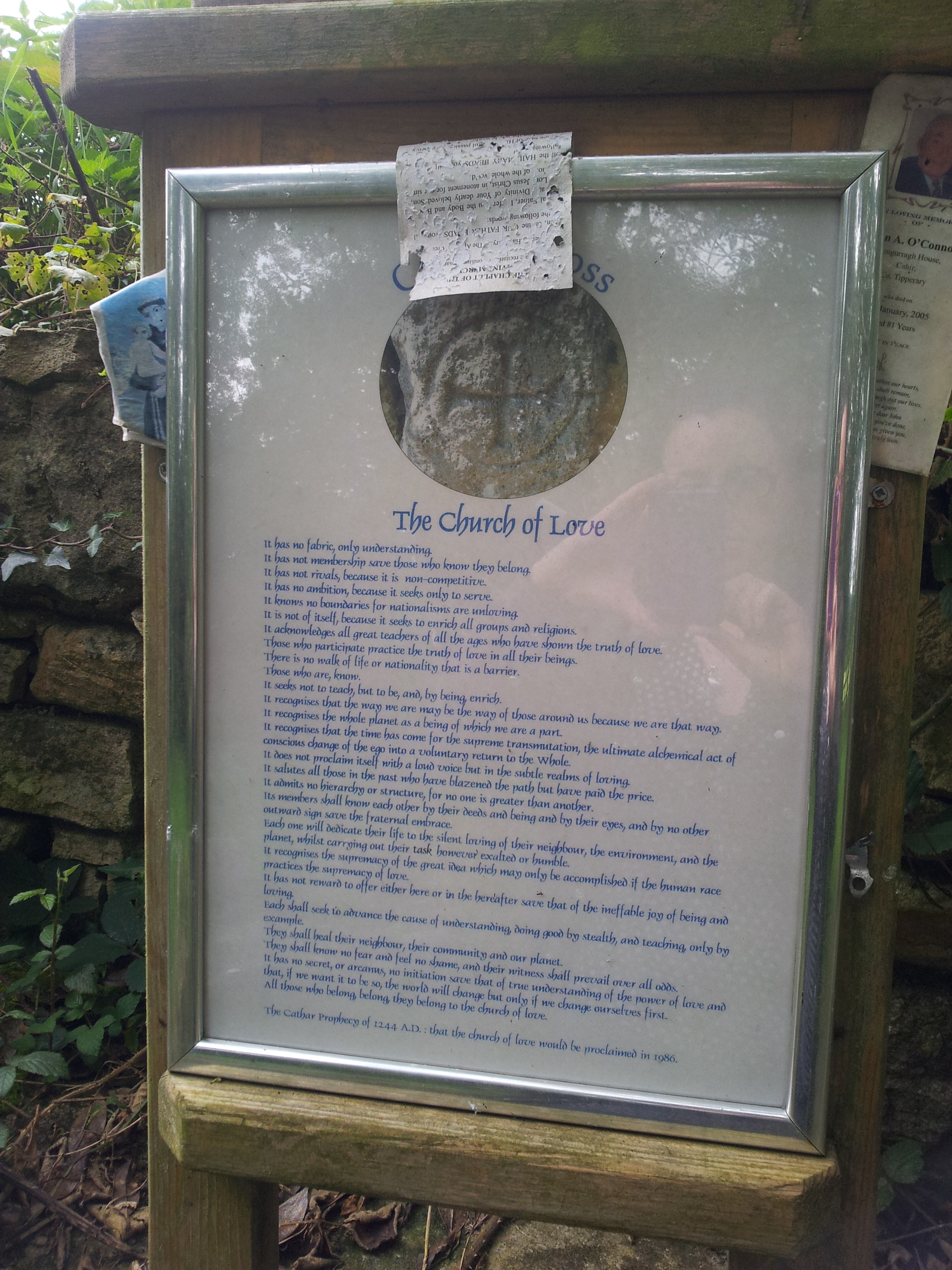
Prayer beside altar at Tobar Íosa

This is a really interesting sites and I plan to investigate further and see if I can find out more about it in the coming months so watch the space.

References

Anon. 2009. ‘Outrage as Cahir holy well is desecrated’ Nationalist newspaper March [on line] http://www.nationalist.ie/news/local/outrage-as-cahir-holy-well-is-desecrated-1-2242848 [accessed 23/08/2012].

Power, Rev. P 1908. The Place-names of Decies . London: David Nutt, 23

Power, rev. P. 1937. Waterford &f Lismore. A Compendious History of the United Dioceses. Cork: Cork University Press, 99.

Smith, N. 1899. ‘Holy Well and Antiquities near Cahir, Co. Tipperary’  The Journal of the Royal Society of Antiquaries of Ireland, Fifth Series, Vol. 9, No. 3, pp. 258-259.

Scattery Island. A place of prayer, battle and beauty!

I am delighted to introduce   my first guest post written by Maggie McNamara .  Maggie is an archaeologist based in Co Clare who has a great interest  in archaeology and history of  Scattery Island also known as Inis Cathaigh.

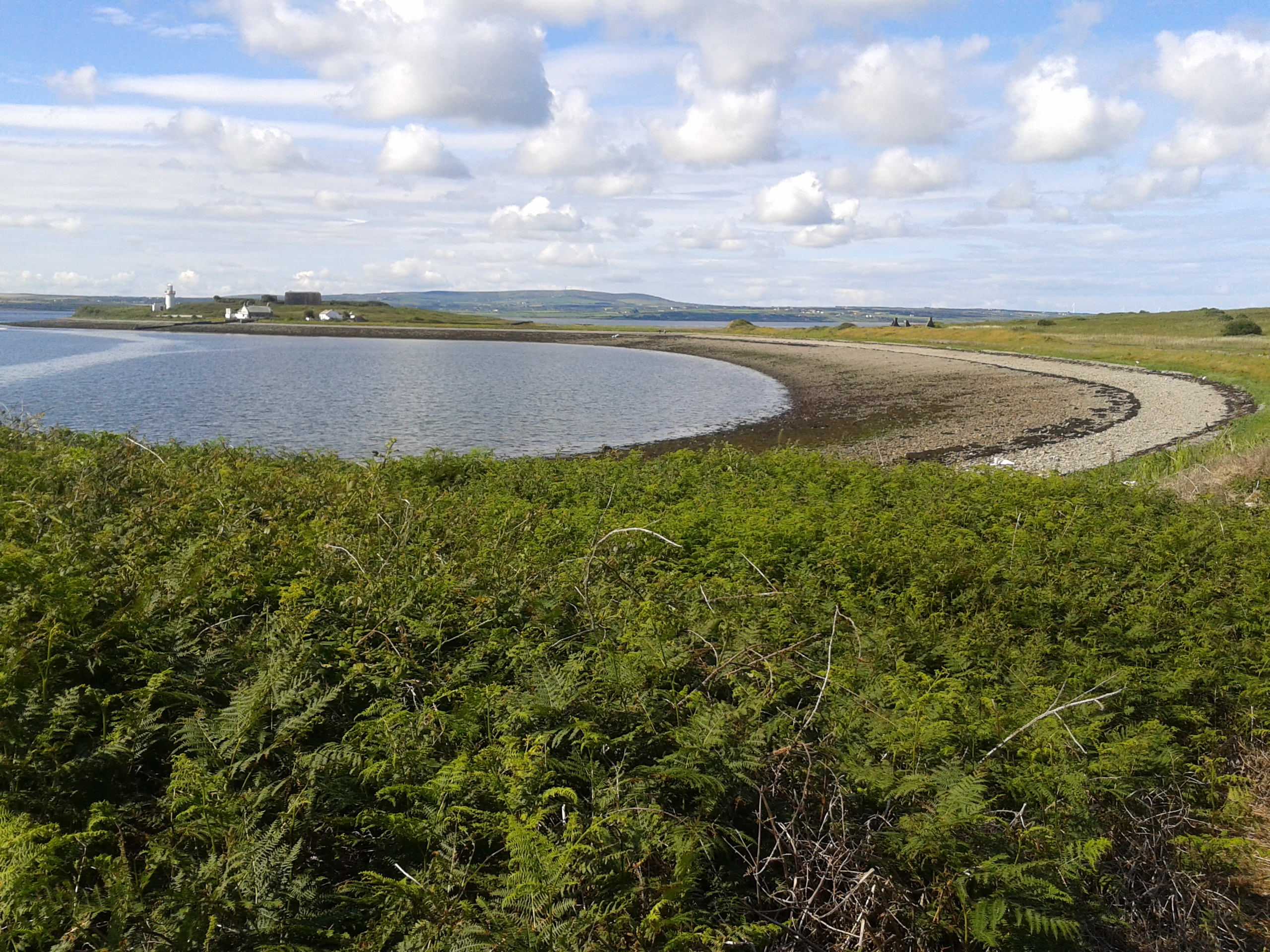
Scattery Island (Inis Cathaigh), a beautiful historic island located in the mouth of the Shannon estuary, off the coast of Kilrush Co. Clare, is home to a monastery founded by St. Senan in the early 6th century.

View of Scattery Island

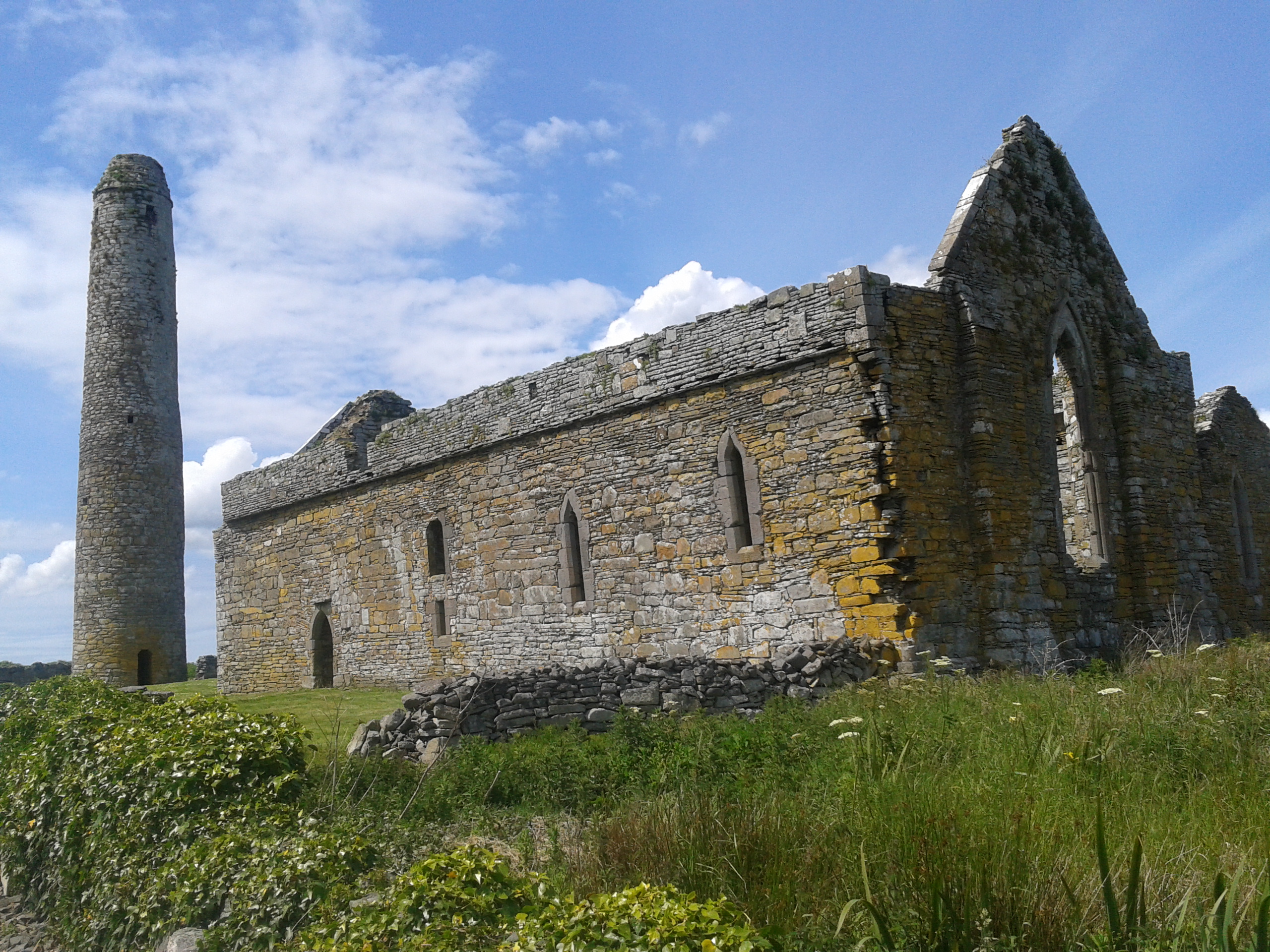
Legend tells us that Senan was placed on the island by an angel where he had to defeat a terrifying monster called Cathach hence the name Inis Cathaigh. The island contains evidence of intensive religious activity represented by the ruins of 6 churches, a round tower and holy well. It is said that there were 7 churches here at one stage if not more. An important religious settlement and place of learning in medieval times, administering to a diocese in the 12th century, associated with monastic possessions such as the Golden Bell (7th-8th century) and Bell Shrine (12th century) and a strong cult of Senan which survives to the present day. The saint is also said to have founded monastic cells in Brittany, Wales and Cornwall as well as at other Irish sites in Enniscorthy and Cork and on Mutton and Canon Islands in Co. Clare. Connections with other monastic foundations are known, most notably Clonmacnoise. The church ruins date to between the 7th and 15th centuries and display much fine stonework and a number of carved faces including representations of a bishop and kings. The round tower dates to the 10th century and is unusual in that it is one of only two in the country with its door at ground level.

Round Tower and St Senan’s church at Scattery Island

There is also a 10th century cross slab containing the inscription ‘A prayer for moinach, tutor of mogroin’ and an undated ogham stone.

St. Senan is said to have died  here in 544 on March 8th. In post medieval times pilgrimage took place here on Easter Monday and the 8th March, the saint’s feast day. Although there are no direct references to pilgrimage in medieval times, the modern pilgrimage is very likely to be a continuation of a medieval tradition.

The pilgrimage involved rounds of the island, starting on the shore and moving to the various churches and other points on the island, finishing at the holy well (located close to the round tower). The well is said to cure eye ailments and was an important focus for the islanders. The saint’s grave was also supposed to be the site of miraculous cures. The Life of St Senan states that the

Stones from St. Senan’s Bed were regarded as relics and a protection against diseases and especially drowning.

The Parliamentary Gazeteer of Ireland for 1845 noted

“A holy well in the island,” says Mr. Hely Dutton, “is resorted to by great numbers of devotees, who, as they term it, take their rounds about it annually on their bare knees; and it is a frequent practice for those who cannot conveniently perform this penance, to pay at this and other holy wells a trifling gratuity to some persons to perform this ceremony for them; I have known a woman to make a trade of this mummery. The common people have a great veneration for this island and its ruins; they carry pebbles taken from it as preservatives against shipwreck, and the boatmen will not navigate a boat that has not taken a round about Scattery in a course opposite the sun.”

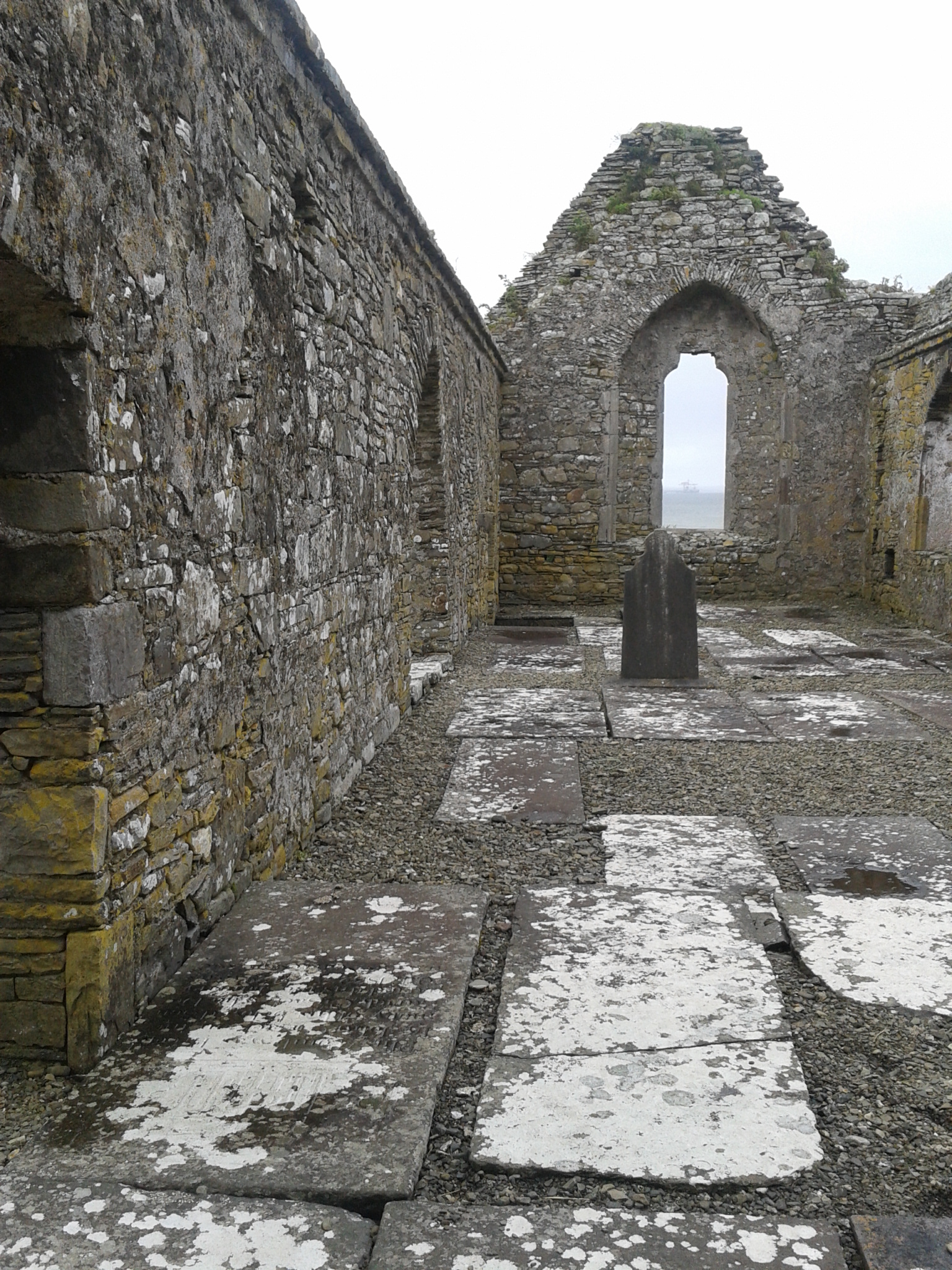
Interior of St Senan’s church

The island has seen much turmoil over the centuries having been raided numerous times by the Vikings, Irish and Anglo Normans. The Vikings had a stronghold here in the mid 10th century. Other features on the island include a late 16th century tower house, 19th century battery and lighthouse and a 19th-20th century village, home to river pilots and fisher-farmers up to the late 1970’s. A place of prayer, battle and beauty!

References

Anon. 1845 The Parliamentary Gazeteer of Ireland, 1845. [online] http://www.clarelibrary.ie/eolas/coclare/places/scattery_1845.htm [accessed 3/04/2012]

Local studies Project (no date) Scattery Island [on line] http://www.clarelibrary.ie/eolas/coclare/people/life_of_senan.htm

[accessed 4/08/2012].

Hedderman, Fr. S. Life of St Senan, Bishop, Patron Saint of West Clare [on line] http://www.clarelibrary.ie/eolas/coclare/people/chapter8.htm [accessed 4/08/2012].

Westropp, T. J. 1905. ‘Iniscatha (1188-1420)’ in Journal of the Royal Society of Antiquaries of Ireland, vol xxxv .

Westropp, T. J. 1897. ‘Descriptive sketch of places visited: Scattery Island and Canons’ Island, Co. Clare in Journal of the Royal Society of Antiquaries of Ireland, vol. xxvii .

Westropp, T. J. 1915, ‘Ancient remains on the west coast of Co. Clare: St Senan’s bell shrine’ in Journal of the North Munster Archaeological Society, vol.iii, no. 4 .

An overview of the history of pilgrimage to Croagh Patrick

Today is Reek Sunday the main pilgrimage day to Craogh Patrick. Croagh Patrick is located on the western coast of Mayo on the southern shores of Clew Bay. Its pyramid-shaped summit is known locally as the “The Reek”, and the  mountain has a long  association with St Patrick. Pilgrimage can be undertaken at any time during the year but the main pilgrim days are the last  Friday of July, last Sunday of July or Reek Sunday and the 15thof August. In the coming months I hope to expand on this post and explore the prehistoric,  medieval, early modern and modern pilgrimages in much more detail. What follows is really just an overview of the history of the pilgimage here.

Croagh Patrick

View of Croagh Patrick, taken by Helen Duffy

The mountain has been a focus of pilgrimage from medieval if not pre-historic times  and has an unbroken tradition for pilgrimage through the medieval period  to the present. Little is known about the early medieval history of Croagh Patrick. By the seventh century the mountain was associated with St Patrick. The earliest written record of this association is the Brevarium by  Tírechan which recalls that, during his mission in the west of Ireland, St Patrick  (Mons Aigli)  fasted there for forty days and nights on the summit of Croagh Patrick ( Bieler 2000, 153). Excavations carried out on the summit in 1994 revealed the presence of  a small oratory on the summit dating to between between AD 430 and 890 built in the style of Gallarus oratory Dingle, Co. Kerry (Hughes 2005).

The earliest and most interesting reference to  pilgrimage at the mountain comes from the annals for the year AD 1113 (AU). We are told

A ball of fire came on the night of the feast of Patrick 17 March on Cru chain Aighle, and destroyed thirty of those fasting (AU).

The pilgrims were fasting and performing a night vigil  when this  horrific event occured .  Jocelyn’s twelfth century Life of St Patrick also records pilgrims fasting and performing a vigil ‘That many are accustomed to spend the night awake and fasting on the mount’ (Hughes 1991, 16). In 1432 Pope Eugene IV issued an indulgence of two years and two quarantines  ‘of enjoined penance to penitents who visit and give alms for the repair of the below mentioned chapel’ on the summit of Croagh Patrick on the last Sunday of July (CPL). Croagh Patrick continued to attract pilgrims in the aftermath of the reformation and there are  detailed  ninteenth century accounts of the pilgrim rituals at the mountain. These rituals consisted of performing prayers known as stations, ritual prayers around devotional points in the landscape of the pilgrim site. The stations performed by modern pilgrims are very similar and the core traditions have not changed drastically, with the exception of the relaxing of some of the more penitential aspects of the prayer such as performing the entire pilgrimage barefoot or the stations on bare knees. Following the famine pilgrimage seems to have gone into decline but due to the efforts of the clergy it was revived, and a new church was built on the summit in 1905 (Hughes 2005, 15-22). The  popularity of the pilgrimage has continued to grow and today  pilgrim numbers on the main pilgrim day can reach  tens of thousands.

Modern Pilgrims climbing Croagh Patrick, image from The Guardian 2009
(http://www.guardian.co.uk/world/2009/jul/31/croagh-patrick-pilgrimage)

Bibliography

Bieler, L. 2000. (reprint 1979). The Patrician Texts In The Book Of Armagh.  Dublin: The Dublin Institute for Advanced Studies.

 CLP -Calendar of the Entries in the Papal Registers Relating to Great Britain and Ireland. Papal Letters. Vols. I to XIV, London, HMSO, 1893-1960; Vols. XV-XX, Dublin, Irish Manuscripts Commission, 1978-2005 and in progress.

Hughes, H. 1991. Croagh Patrick: (Cruach Phádraig-The Reek) An Ancient Mountain Pilgrimage. Westport: Berry’s of Westport.

Hughes, H. 2005. Croagh Patrick. Ireland’s Holy Mountain. Westport: The Croagh Patrick Archaeological Committee.

Mac Airt, S. & MacNiocaill, G. (eds.) 1983. The Annals of Ulster (to AD 1131). Dublin.

Billberry Sunday

MacNeill (1962) has made a strong case that many pilgrimage  that take place on the last sunday of July such as pilgrimage to Mount Brandon Co Kerry, Croagh Patrick Co Mayo and Maumeen  Co Galway evolved from the celtic  Festival of Lughnasa held in honour of the God Lugh.  Another relic of this festival  was the collection of billberries  also on the same day the last sunday in July.

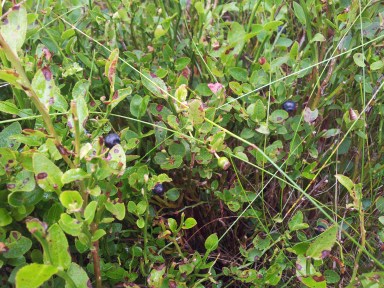
Billberry Bush

Billberry Bush

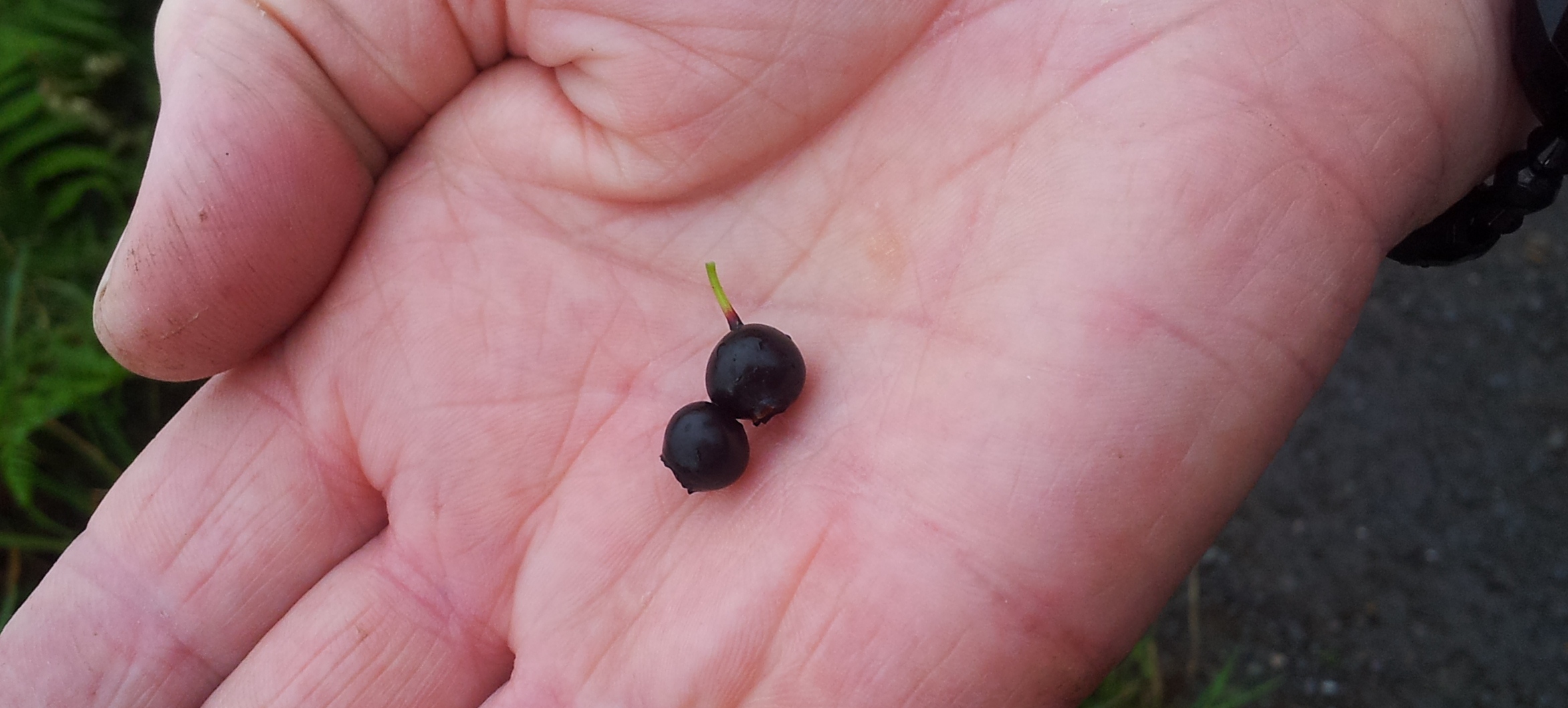
Bilberries are a small blue/black berry that looks very like a blueberrybut are much smaller. They  grow in mountainous land. They are known by different names around the country  fraughan or the irish  frachóg, whorts, hurts or heatherberries. The last sunday of just which is also known by a variety of terms Garland Sunday, Domhnach Crom Dubh (Sunday Black Crom) Domnach na bhFraochóg (Billberry Sunday) as well as Billberry Sunday or Fraughan Sunday.

Traditionally the gathering of the berries was carried out by young people  who would climb up into the hills and have a
good time picking the berries. In the evening young girls would incorporate the berries into a cake and at the dance that evening present the cake to whatever ‘fella’ they had their eye on.

Billberries

As a child, my cousins  my sister and I, would collect these berries which we called hurts as a snack when we played at my grandparents house, unaware of the ‘ Billberry Sunday’ tradition .

In the past the berry was used  for cooking in  medicine and as a dye. Seeds from the fruit have been found in excavations of Viking and Anglo Norman Dublin. The medieval sources for Ireland also suggest it was a a valuable crop being mentioned in a middle Irish text on the entitlements of kings (Kelly 2000, 307). In 1941 the berries were ‘ Bought and cleaned by local dealers, the berries were shipped off within 24 hours – some 400 tons of them in 1941, an exceptionally good year (when British pilots, reportedly, found bilberry jam improved their night vision)’ (Viney 2012).  It is sad that most people dont know what this berry is or what it looks like. This year with the wet summer the crop is very poor, but there are still some yummy berries to be found for the adventurous.

Bibliography

Kelly, F. 2000. Early Irish farming. Dublin: Institute for Advances Studies

MacNeill, M. 1962. The festival of Lughnasa: a study of the survival of the

  Celtic festival of the beginning of harvest. London: Oxford University Press.

Viney, M. 2012. ‘When we found our thrill picking billberries on a hill’ Irish Times Saturday, July 7, 2012

Sexton, R.( no date) ‘Bilberry Sunday, a Festival of Food and Courtship’ http://www.ireland-fun-facts.com/bilberry-sunday.html

St James, Irish Pilgrims & Pirates

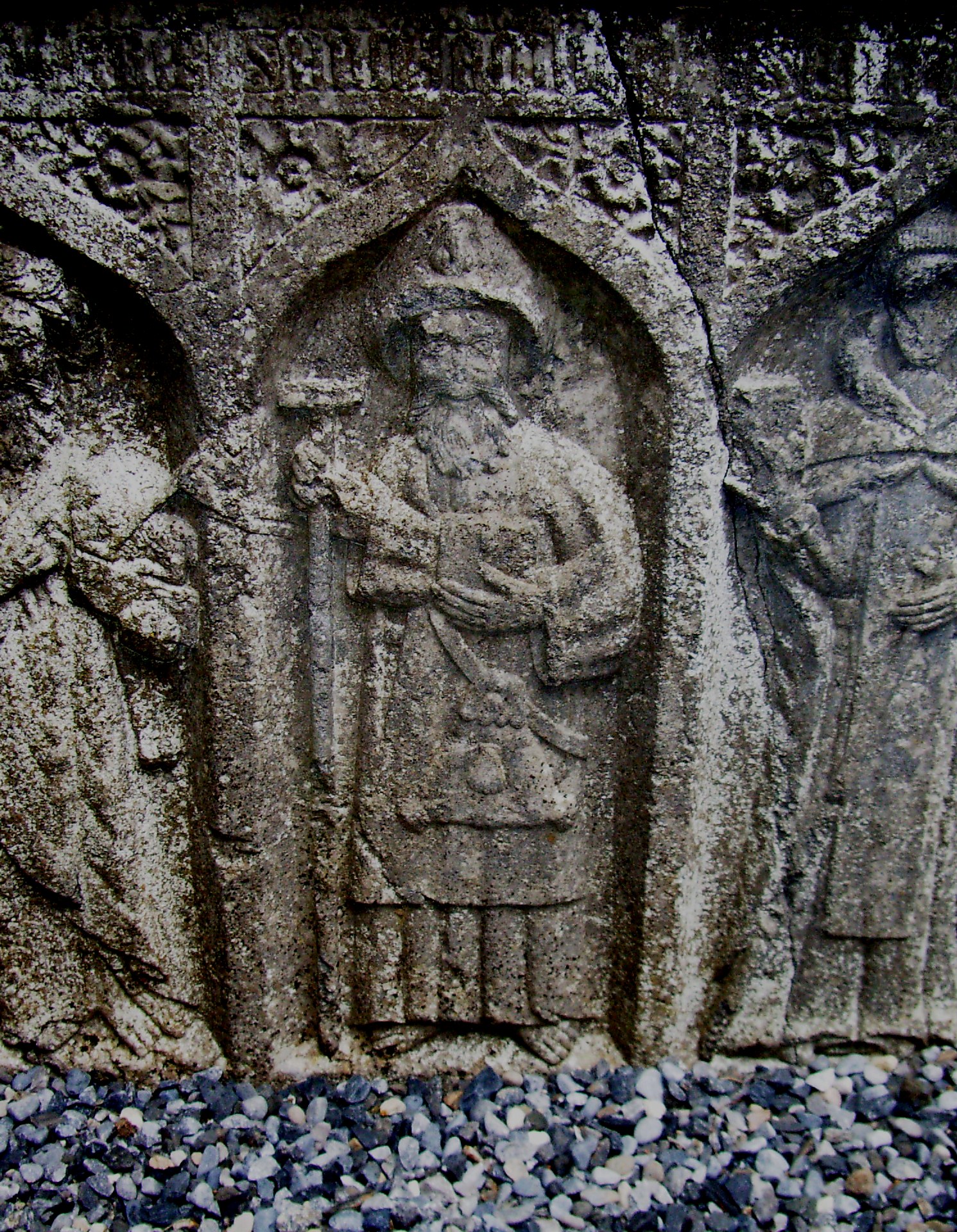
Today is the feast of St James  the apostle.  The saint’s shrine  at Santiago de Compostela in Spain attracted large numbers of pilgrims from all over the Christian world  during the medieval period. Medieval souvenirs purchased by pilgrims to Santiago have been recovered  across Europe including  Ireland.  St James enjoyed  great devotion  in medieval Ireland and  his image turns up on a number of Irish medieval  tombs.

St James

Image of St James on a medieval tomb at the Franciscan Friary at Kilconnell, Co Galway

Given the long distance of the journey from Ireland to Santiago and the requirement to travel part of the journey by boat, a pilgrimage to Santiago from Ireland  was very expensive. Historical sources suggest that the majority of Irish pilgrims travelling to Santiago were  from the upper echelons of  Irish society. Pilgrims would have embarked from a variety of Irish ports such as Drogheda, Dublin, Wexford, New Ross, Waterford, Youghal, Cork, Kinsale, Dingle, Limerick and Galway (Stalley 1988, 398).

Roger Stalley gives an excellent discussion of the literary and archaeological evidence for Irish Pilgrimage to Santiago in his article ‘Sailing to Santiago: Medieval pilgrimage to Santiago de  Compostela and its artistic influences in Ireland’.

Travel by sea was shorter than by land but it was not without its own hazards. Pilgrims traveling by sea  were at risk from storms, disease and pirates. Bad weather was the biggest threat as storms had the potential of causing ship wrecks (Davies 1988, 47-48). There are many accounts of  pirates attacking ships  from Continental sources. Pirates  were known to  kill, kidnap and ransom or enslave pilgrims. A Lübeck chronicle dating to 1453 recorded the capture of some three hundred pilgrims returning from the Holy Land by hostile Saracens who killed all the men and enslaved the women (Ohler 1989, 48-49; Harpur 2002, 79). One of the most interesting reference to Irish Jacobean pilgrims dates to the year 1473.

The 1473 account concerns Irish pilgrims  traveling on ship called the La Mary London.  The  pilgrims appear to have been on their return journey from pilgrimage to Santiago when their boat was captured by pirates. It is not known  exactly how the events unfolded but the pilgrims were later released in the port of Youghal, Co. Cork, although the ship had originally been destined to dock at Waterford. It is likely that the pilgrims were ransomed by the pirates. They  had a lucky escape as they could have easily been, murdered or sold as slaves like the villagers of Baltimore in 1603  (Stalley 1988, 397 after Cal. Pat rolls. 1476-85, 78).

Bibliography

Harpur, J. 2002. Sacred Tracks. 2000 Years of Christian Pilgrimage. London: Frances Lincoln Ltd.

Ohler, N. 1989. The medieval traveller; translated by Caroline Hillier. Woodbridge: Boydell Press.

Stalley, R. 1988. ‘Sailing to Santiago: Medieval pilgrimage to Santiago de Compostela and its artistic influences in Ireland’, In Bradley, J. (ed.) Settlement and  Society in Medieval Ireland. Studies presented to F.X. Martin, o.s.a. Kilkenny:  Boethius Press, 397-420.

Mass Rock in the Knockmealdown Mountains

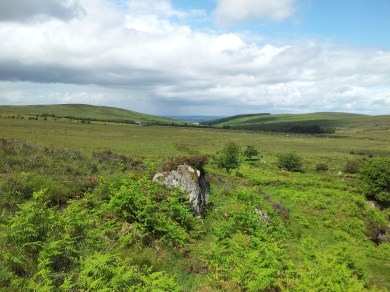
View from the Mass Rock facing towards Newcastle

View from the Mass Rock facing towards Newcastle

In between the rain showers  I visited  a mass rock  in the Knockmealdown mountains with my uncle Eddie Prendergast. This rock was used by priests to say mass in the “penal times” and is located 2-3 miles outside of Newcastle village in Co. Tipperary. In the late 17th and early 18th centuries a series of laws known as  ‘Penal Laws’ were passed by the Irish parliament to force Catholics to conform to the established Anglican Church. These laws prevented Catholics from holding elected office, purchasing land, or owning property worth more than 5 pounds. Catholics were also barred from legal worship and the laws forced the practice of the Catholic religion underground.

Image

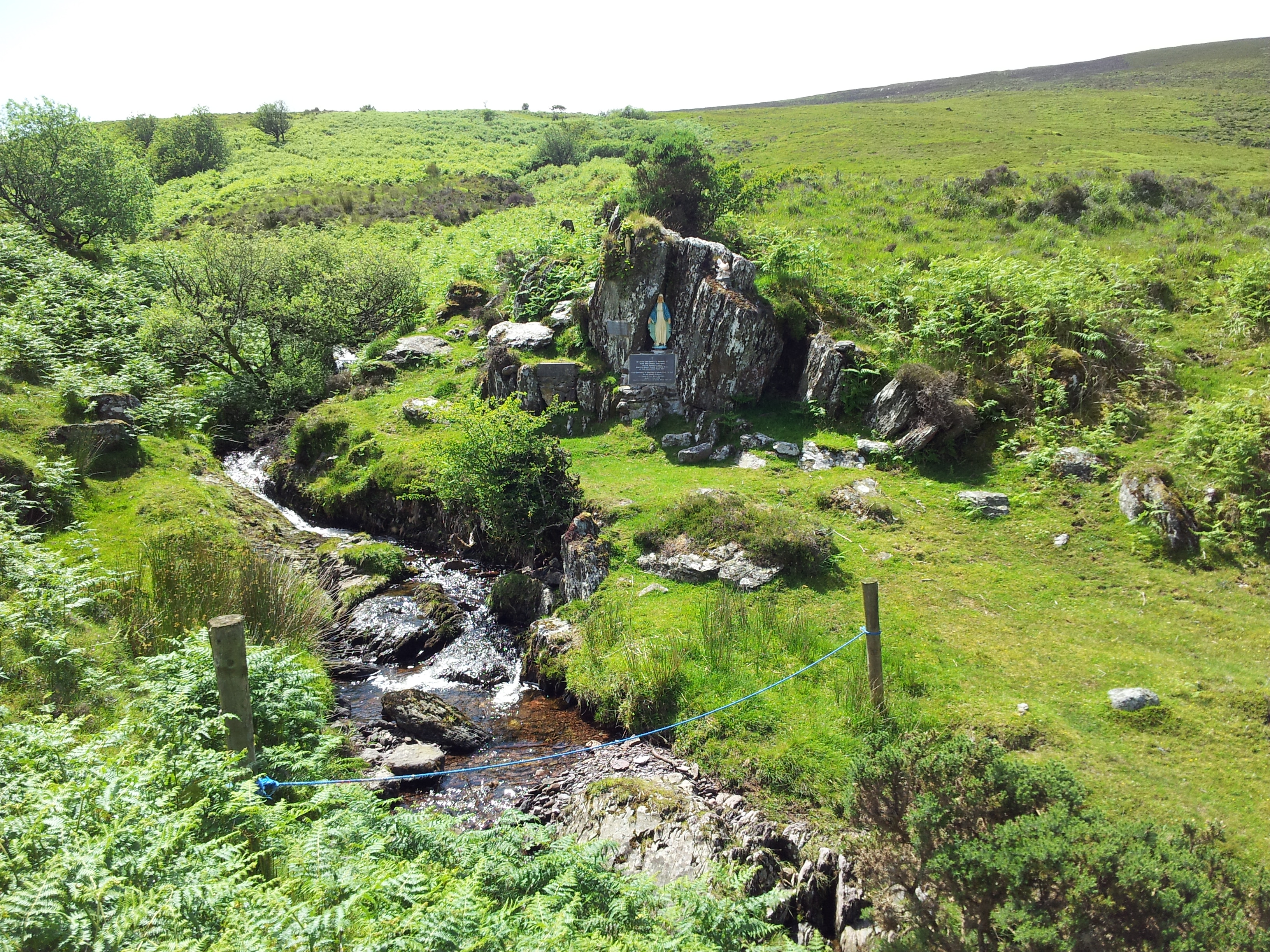
Mass Rock, located beside stream

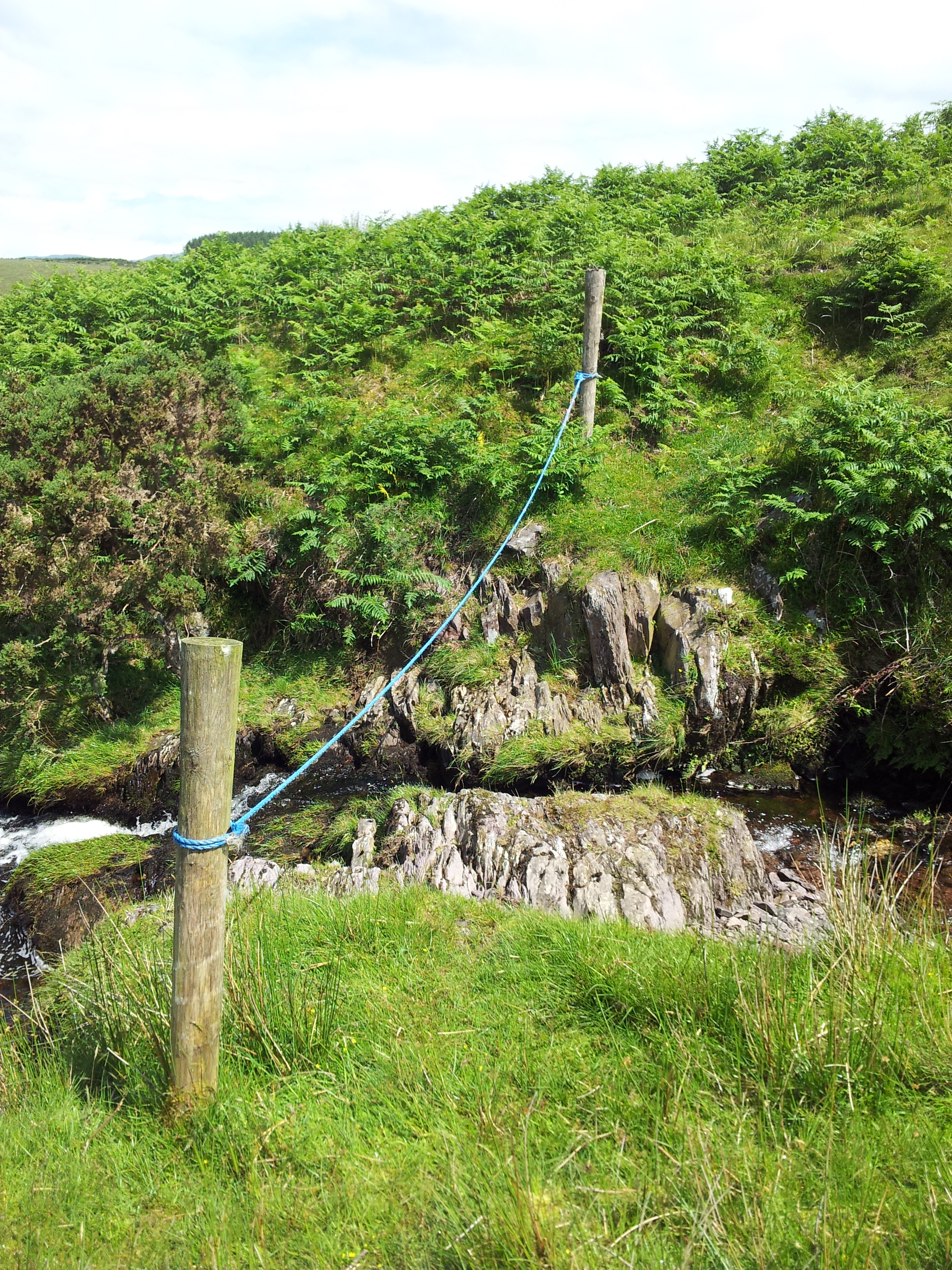
Mass was often celebrated in open air places in the countryside in isolated places with good views of the surround landscape. Large rocks were often used as alters. The Newcastle mass rock is a large rock outcrop of sandstone, located within a valley beside a fast flowing stream.  A rope has been placed across the stream to helps people cross safely.

Image

Rope bridge across stream at Mass Rock

The rock is known locally as cnoicín aifrin/little hill of the mass rock. According to Tales of the Deise it is associated with Knockanaffrin a mass rock in the Nier Valley. Priests on the run supposedly came from Knockanaffrin in the Commeragh Mountains here to Newcastle before heading on to Cork and Kerry. The site was rediscovered in the 1970’s by a local man called William Morrisey and shortly afterwards the present tradition of annual mass began (pers. comm. Eddie Prendergast). Mass is  held here annually by local people in the summer months.

I first visited the  rock in 1999.  At the time the site consisted of a large rock outcrop with a memorial plaque  dedicated to Mr Morrisey and a modern granite block with a cross, inserted into the outcrop used as an alter. A number of jam jars were scattered around the rock (possibly to collect water from the stream). Rosary beads and ribbons were tied to the surrounding heather.

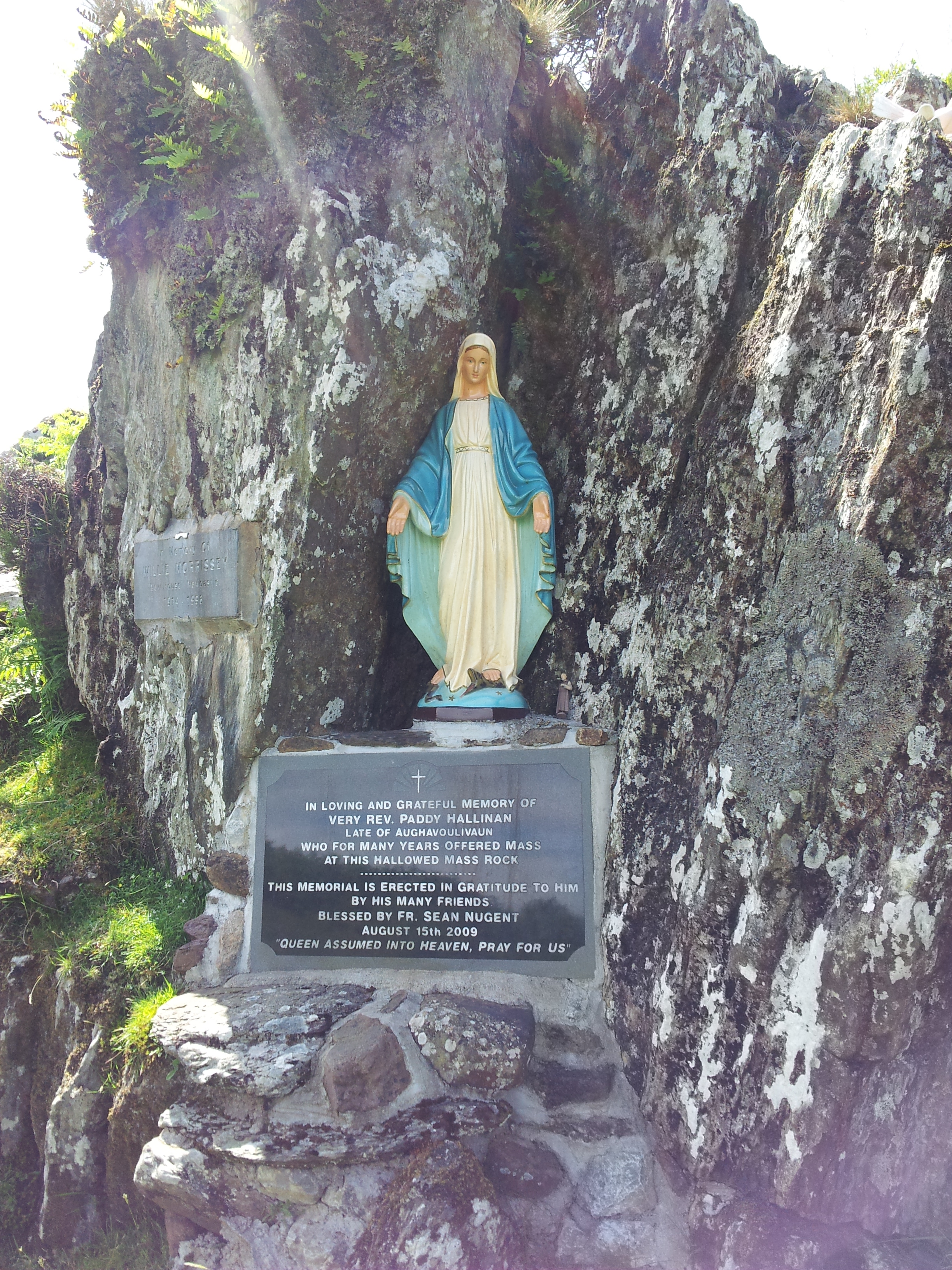
This visit  I noticed a few changes, such as the addition of a large statue of the Blessed Virgin and a new memorial plaque dedicated to the memory of late Father Hallinan who often said mass here.

Statue of the Blessed Virgin at Mass Rock

Statue of the Blessed Virgin at Mass Rock

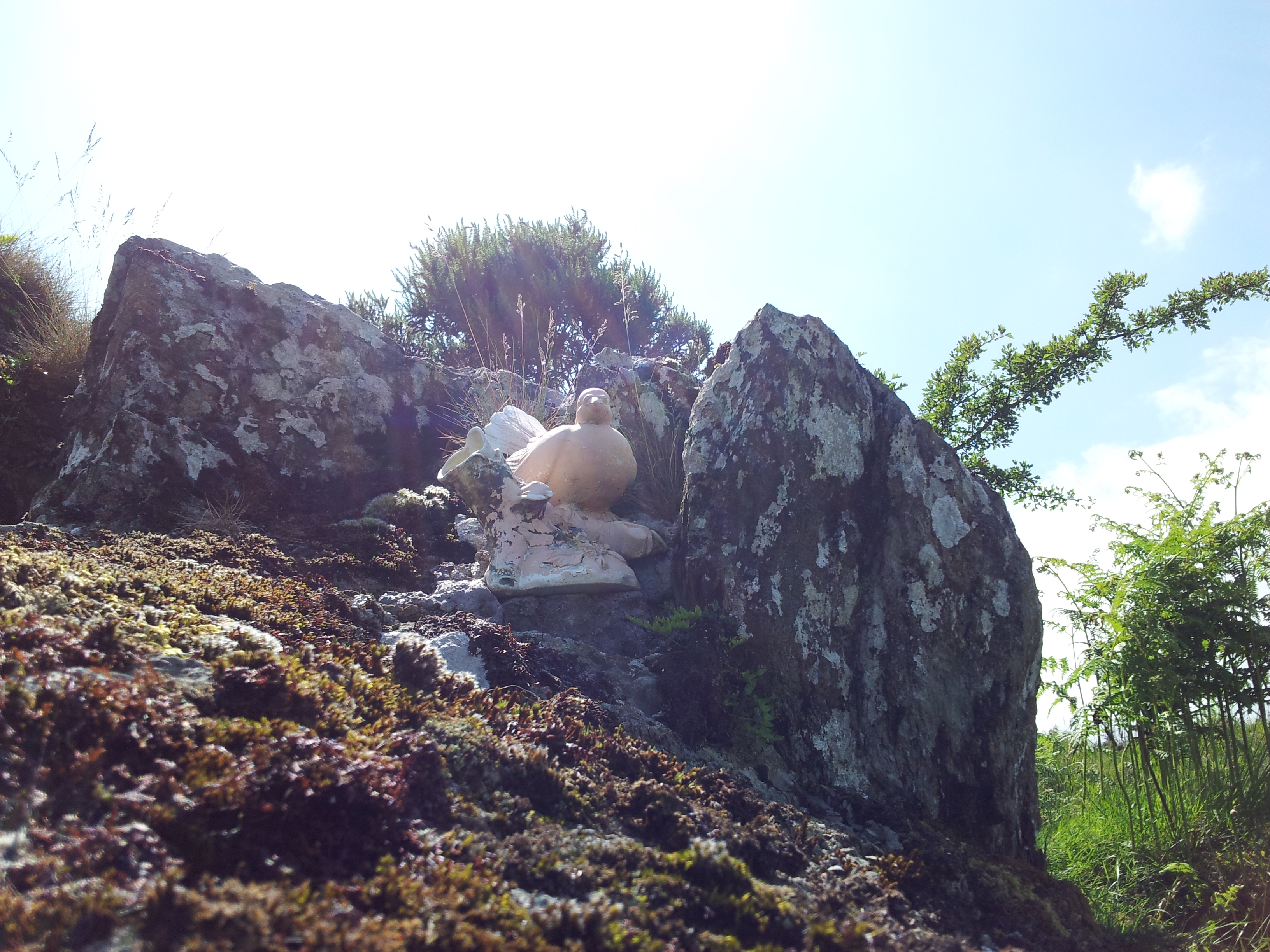
Another unusual new feature was a small statue of a pigeon or dove is found on top of the rock.

Statue of a dove

Statue of a dove

I am hoping to return for the annual mass in August and take  some more photos.

Molough Abbey Co. Tipperary

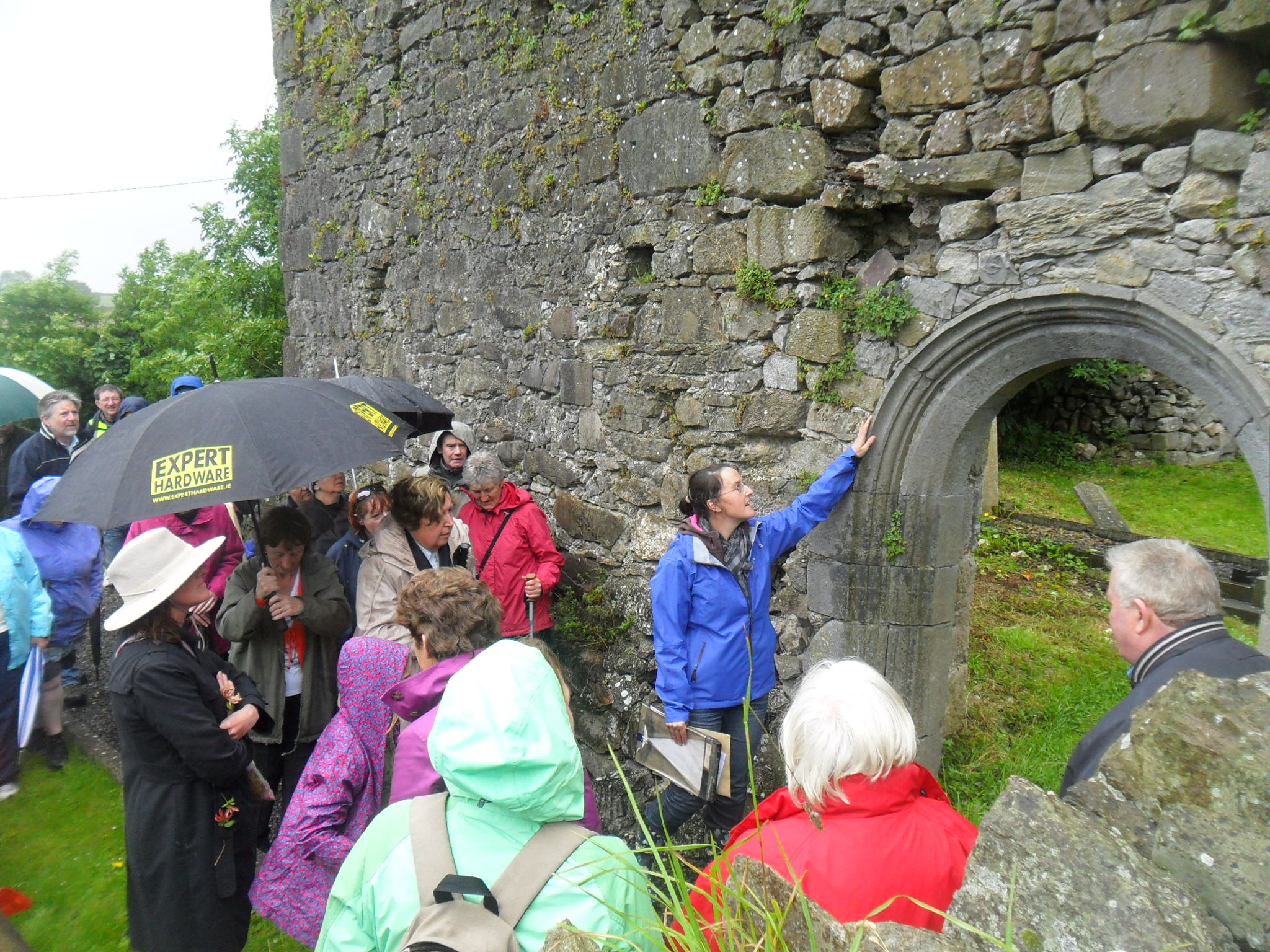
The sleepy Augustinian Nunnery at Molough just outside of  Newcastle was a hive of activity today. A historical and archaeological  tour of the abbey  took place as part of the annual Éigse festival.

Talk at Molough Abbey, Newcastle

Talk at Molough Abbey, Newcastle

Despite the  rain a large crowd still turned out. Breda Ryan talked about the history of the nunnery and I gave a tour of the the site.

Carved doorway in south wall of  church at Molough Abbey

Carved doorway in south wall of church at Molough Abbey

The monastery was dedicated to St Brigid and was founded in the early medieval period by the daughters of the King of the Deise.  It appears to have been re-founded in the early part of the later medieval period. The present remains consist of a 13th century church, a cloister and two domestic buildings on the  east and west side of the cloister.

View of cloister on the north side of the church

View of cloister on the north side of the church

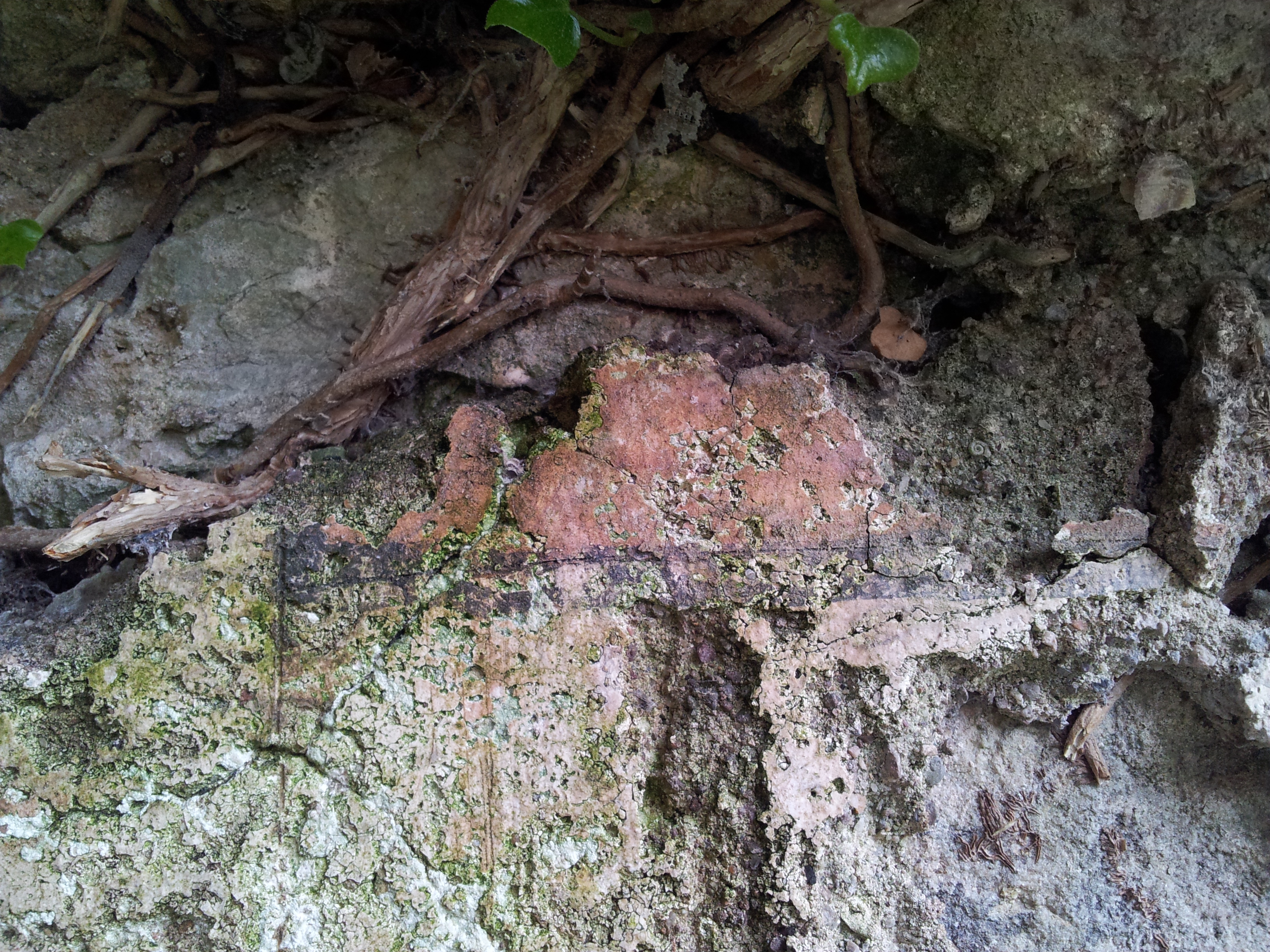
The church  has a number or single light sandstone windows and a beautiful  15th century carved limestone doorway.  There are traces of painted plaster work in the  east window of the south wall. The paint is orange/reddish colour with black horizontal lines which appears to trying to imitate ashlar masonry.

Section of painted plaster in the south-east window of church

Section of painted plaster in the south-east window of church

Pilgrim Walk in Dublin

I came across what can only be described as a pop -up pilgrimage where for two weeks coinciding with  the International Eucharistic Congress, a  new  pilgrimage will be happening in Dublin where   pilgrims  will walk to and pray at a number of city centre church sites.

The walk is being held from Saturday 2nd -16th June and will visit seven city centre churches.  All pilgrims will be issued with a “Pilgrim Passport” that will be stamped in each of the seven churches  St Ann’s, Dawson Street, St. James, James Street, Our Lady of Mount Carmel, Whitefriar Street, John’s Lane, Thomas Street, St. Mary of the Angels, Church Street, St. Michans, Halston Street, and St. Mary’s Pro Cathedral, Marlborough Street.

According to the website all pilgrims will be issued with a “Pilgrim Passport” that will be stamped in each of the seven churches and  at the last church  St. Mary’s Pro-Cathedral, Marlborough Street  pilgrims will receive a Pilgrimage Certificate of completion. People can participate in groups, on their own; they can complete the Pilgrim walk or “Camino” in a day or throughout the days of the Congress.

Details are available from the Archdiosces of Dublin website ( http://www.dublindiocese.ie/content/pilgrim-walk )

ATLAS Religious Tourism and Pilgrimage Special Interest Group

Last week on  the 8th and 9th of June , I presented a paper ‘Learning from Pilgrimage in Medieval Ireland: Pilgrimage at Croagh Patrick from medieval to modern times’  at a conference organised by Kevin Griffin of  the ATLAS Religious Tourism and Pilgrimage Special Interest Group .  The theme of the conference was “Not Losing the ‘Pilgrimage’ in the Pilgrimage Tourism Experience’ and the event was held at NUI Maynooth .  Over the two days  18 speakers  talked about a wide range of topics from product development, history of pilgrimage,  walking routes,  pilgrimage at holy wells  and walking the Camino de Santiago. It’s really hard to single out any one talk as all were great but  Terry Cunningham’s  showcased St Declan’s Way, a pilgrim route very close to my heart, and Attracta Brownlee’s  paper on Irish travellers and pilgrimage were fascinating.  The conference ended with a  field trip to Clonmacnoise and a boat trip around Lough Ree .