Holy Cow. The Miraculous Animals of the Irish Saints: Part One St Ciaran’s Cow

This post is  inspired by an article I am writing and it is the first in a  of a series  of posts  highlighting some of the many colourful legends about animals, in particular cows, associated with the early Irish saints.

St Ciarán of Clonmacnoise and his Dun Cow

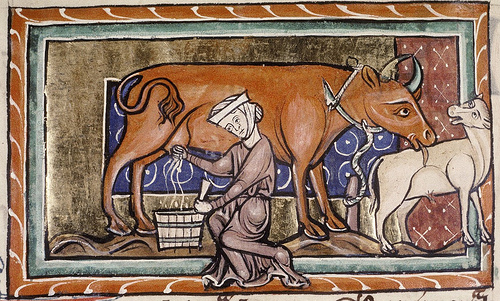
St Ciarán’s cow features prominently in folklore and hagiography associate with the saint. The cow was originally part of a herd of animals owned by the saints family. As a youngster the saint worked herding his families cows but as he became older he was drawn to the church and decided study and train under St Finnian at Clonard.  The story goes as  St Ciarán was leaving home he asked for permission to take one of the family’s cows with him.  His mother refused his request. As he left he blessed one of the cows who then followed him with her calf to the monastery at Clonard.


4883212632_eb0ac9501d

The cow was a dun (a greyish brown) colour and was referred to as St Ciarán’s Dun cow. This was no ordinary cow , she was an excellent milker and had the ability to supply  the entire monastery with milk (Ó h’Ogain 1991, 88).

Ciaran’s Dun was wont to feed,

three times fifty men in all;

Guests and sick folk in their need,

in a soller and in dining-hall.

She  remained a companion of the saint for the rest of her life and when she  died, her hide was kept as a relic at Clonmacnoise.

Unicode

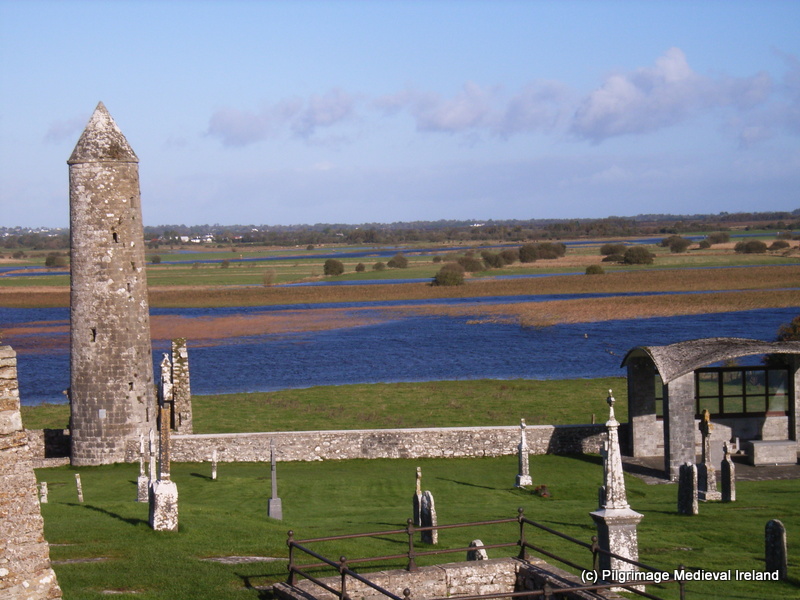
View of the River Shannon from ecclesiastical site of Clonmacnoise

The relic, known as “Odhar Chiaráin” or “hide of the dun cow ”  was mentioned  in the seventh century Martyrology of Óengus (1905, 205).  It seems there  existed a belief that whoever died on the hide went straight to heaven (Stokes 1890, 268; Lucas 1986, 9).  In the year 900 the annals of Inishfallen recorded  Tadgh King of Connacht  dying on the hide

‘repose of Tadgh, son of Conchbar, king of Connacht after he had renounced the world on the hide of Ciaran’s Dun Cow.’

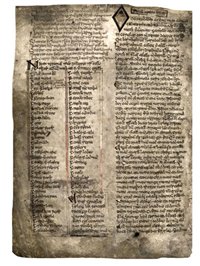
The  cow was also commemorated by the name of manuscript written at Clonmacnoise called the Leabhar na hUidhre or the Book of the Dun Cow (Ó’Riain 2011, 170).
LU-p-56.10cm

Leabhar na hUidhre

This book was compiled around 1100 at Clonmacnoise and it is the earliest surviving manuscript with literature written in Irish, and it contains the oldest version of the Táin Bó Cuailgne, the Voyage of Bran, the Feast of Bricriú, and other religious, mythical and historical material. By the thirteenth century the manuscript  was in the possession of the O’Donnells of Donegal.

In 1359, when a number of the family were taken prisoner by Cathal Óg O’Connor, of the O’Connor family in Sligo, they were ransomed with Lebor na hUidre and Leabhar Gearr (now lost). Lebor na hUidre was recovered by Aedh Ruadh O’Donnell in 1470, and was in Donegal when the Annals of the Four Masters was completed in 1631. It then disappeared but was used by George Petrie in 1837 and turned up in the Hodges Smith Collection of 227 manuscripts which was purchased by the Academy for 1,200 guineas in 1844 (https://www.ria.ie/library/special-collections/manuscripts/leabhar-na-huidre.aspx).

The cow also features prominently in the  local folklore associates with Clonmacnoise. One early twentieth century folk tale from the area tells of a group of thieves from Coosan near Athlone  stealing the dun cow from the field she was grazing in at Clonmacnoise.  Afraid of being caught  they beat her with a stick to make her run and to escape quickly but in their hurry the cow fell on a flag and her two knees sunk into it leaving in it the impression of two circular shaped holes. The cow got up again and the thieve drove her on to Coosan. When St Ciarán arose in the morning  he found his  cow was missing but by divine inspiration he knew what happened. He followed her tracks to Coosan. The saint then  entered a boiling house and there to his grief  he saw the skin of his  cow hanging behind the door. Her horns were left on the floor and he body boiling in a boiler.  The saint  flew into a rage taking the skin from the behind the door and lifting the horns from the floor he moved towards the boiler. He placed the skin around the half cooked body of his beloved cow and immediately she jumped from the boiler alive and as active as she every had been before.  Ciarán  then returned to Clonmacnoise with his newly resurrected  cow. The theme of the theft of the saints  cows is common in Irish folklore and associated with many Irish saints. I plan to return to and explore this topic in a later post.

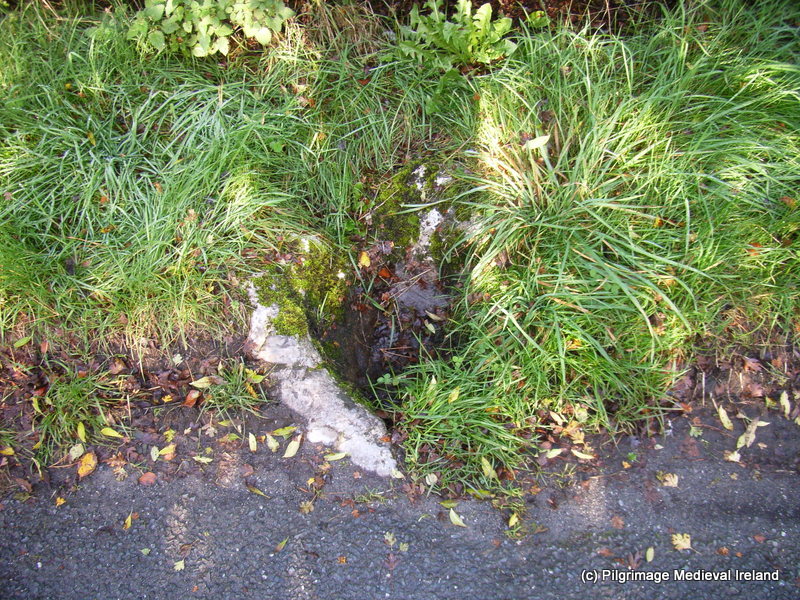
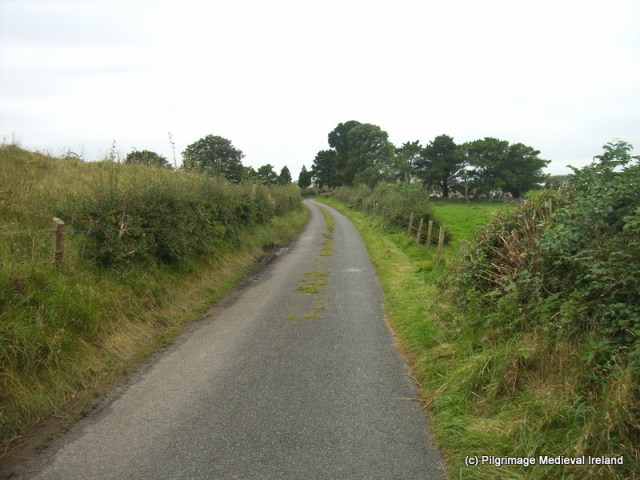
The legend of the dun cow  has also left a physical imprint on the landscape of Clonmacnoise.  A large bullaun stone located on the side of the Saint’s road that runs from Clonmacnoise past the Nun’s Church is associated with the cow.

Unicode

The bullaun stone where the dun cow fell and broke her hip.

According to local tradition the stone marks the spot where  St Ciarán’s cow fell braking her hip. The stone with its hollow is held to be the spot where the cow fell with the hollow created by the cow. During the nineteenth century this stone was used as a healing relic by pilgrims who would place their head in the cavities in the hope of healing. The stone was also part of the nineteenth century pilgrim stations.

Unicode

The Saint’s road Clonmacnoise.

Reference

Lucas, A. T. 1986. ‘The Social Role of Relics and Reliquaries in Ancient Ireland’, .JRSAI Vol. 116, 5-37.

Mac Airt, S. (ed.) 1944. The Annals of Inishfallen. Dublin

Ó hÓgáin, D. 1991. Myth, legend & romance an encyclopaedia of the Irish folk tradition

New York: Prentice Hall Press.

Ó hÓgáin, D. 2006. The lore of Ireland :an encyclopaedia of myth, legend and romance /

Doughcloyne, Cork : Collins Press.

O’Riain, P. 2011. The dictionary of Early Irish Saints. Dublin : Four Courts Press.

https://www.ria.ie/library/special-collections/manuscripts/leabhar-na-huidre.aspx.

Stokes, W. (ed.) 1890. Lives of Saints from the Book of Lismore. Oxford: Clarendon
Press.
Stokes, W. 1905. The Martrology of Oengus the Culdee. London: Printed for the
Henry Bradshaw Society.

The Autumnal Equinox and the Sliabh na Calliagh Passage Tomb Complex

Sliabh na Calliagh Passage Tomb complex is  one  of Ireland’s finest prehistoric archaeological sites. I am delighted to present a  guest blog  by the wonderful Lynda McCormack   that explains the  archaeological significance of the complex and its role in the autumnal equinox.  Lynda  is currently carrying out  Doctoral Research at the Department of Archaeology at NUI Galway and Sliabh na Calliagh is one of her study areas.


The Autumnal Equinox and the Sliabh na Calliagh Passage Tomb Complex By Lynda McCormack

Introduction

The Sliabh na Callaigh Passage Tomb Complex often referred as the Lough Crew Complex is located in the north west of County Meath on a raised ridge of lower carboniferous limestone which erupts in four individual summits known as Carnbane West, Newtown hill, Carnbane East and Patrickstown Hill. The central and highest hill within this ridge is Carnbane East. At a height of 274m this is the highest point in County Meath and from this position in the landscape it is allegedly possible to view up to 18 counties on a clear day.

map

A map of the Sliabh na Callaigh Complex showing the distribution of monuments (McMann 1995).

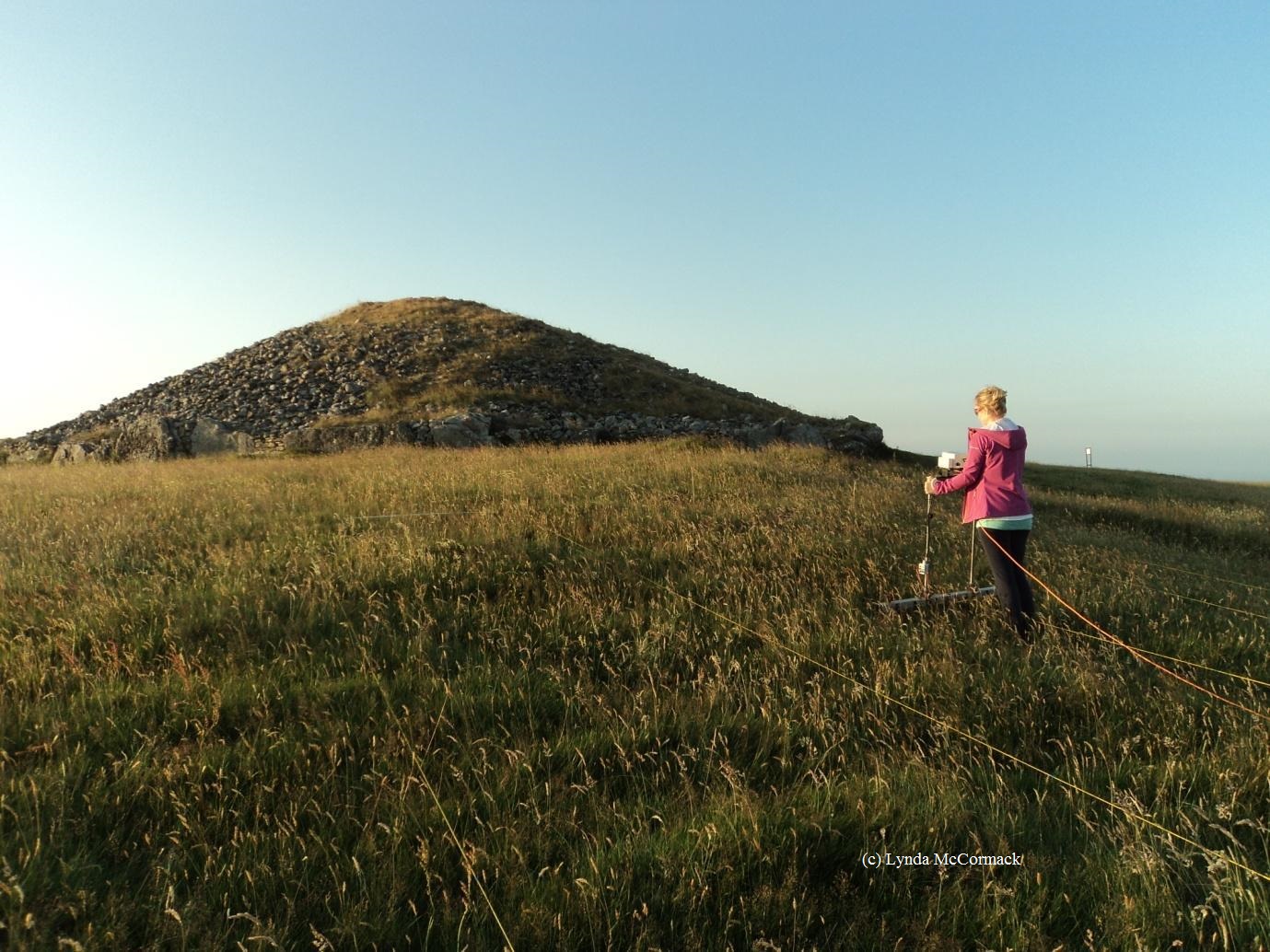
There are 31 archaeological monument found on the heights of summits and low valleys within this area. Antiquarian accounts of the area suggest there may have been many more monuments here with some dismantled in the past for the construction of walls in the 1800’s. Recent geophysical investigations which involve non invasive scanning of the ground to detect the signature of sub surface remains have clarified the pattern of monument distribution with the result that it is now possible to speculate that the arrangement of space within the Complex may have been quite different in the Neolithic (McCormack 2010, 2012, 2013, 2014).

LC

Lynda carrying out geophysical survey  on the southern extent of Carnbane East.

Folklore and Origin legends

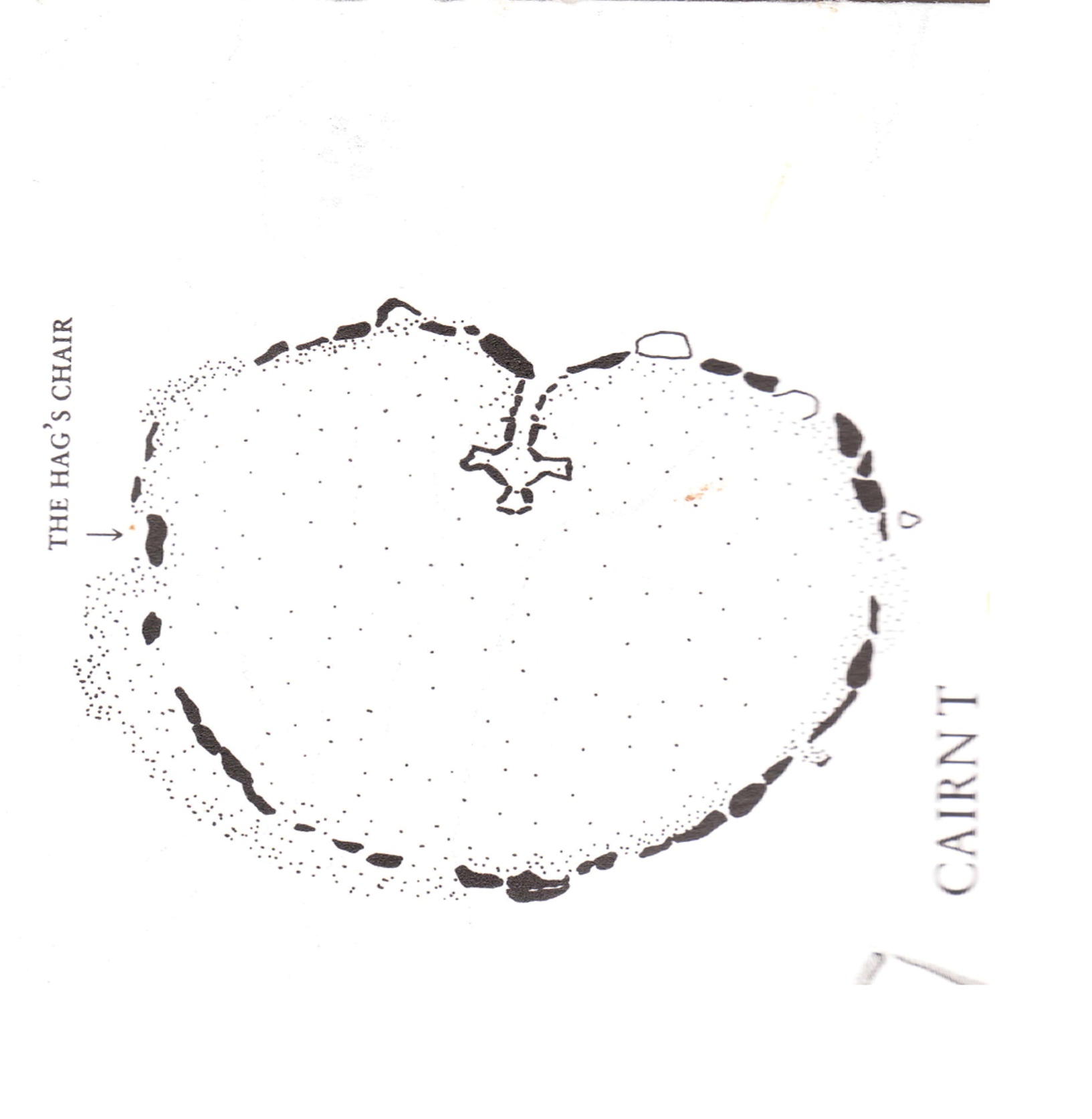
The name Sliabh na Calliagh translates as the hills of the Witch and references a local explanatory narrative which attributed these enigmatic stone heaps to a mythological Cailleacht/Witch who allegedly dropped these stones from her apron as she jumped from hill to hill in her quest to rule all of Ireland. She apparently fell to her death on the lower slopes of Patrickstown hill but not before dropping these stone cairns in her wake. The detail inherent in these stories suggests that the locals who perpetuated these narratives were familiar with the distribution of sites across the ridge. Not only is the site named after her, one of the distinctively shaped kerbstones on the northern face of one of the largest monuments Cairn T is  named the Witches’ chair and it is thought that if she had succeeded in her quest then this particular stone could have functioned as her throne.

Caillech

Cartoon of the caillech/withch dropping the stones from her apron after (Eibhlin Nu Sheinchin 1937).


Determined now her tomb to build, Her ample skirt with stones she filled,
And dropped a heap on Carnmore; Then stepped one thousand yards, to loar,
And dropped another goodly heap; And then with one prodigious leap
Gained Carnbeg: and on its height, Displayed the wonders of her might. (Jonathan Swift 1700).

Hags chair

Drawing of the hag’s chair from the Discovery of the Tomb of Ollamh Fodhla (Conwell 1973)

Passage Tomb Complexes and Passage Tombs

The Sliabh an Calliagh Passage Tomb Complex is one of our four major Irish Passage Tomb Complexes. There are over 236 of these monuments in Ireland, many of which appear within these four main concentrations. While many other Megalithic structures such as the Court Tomb, Portal Tomb and Wedge tomb most commonly appear in isolation. The Passage Tomb monument type is distinctive for its appearance in groups. These groups are commonly referred to as Cemeteries but are most accurately referred to as Complexes because a burial role can only have been one small part of their ritual usage. The most famous Irish Passage Tomb Complex is undoubtedly the Boyne Valley Complex where Newgrange and Knowth have been extensively excavated and reconstructed to facilitate tourist access via the Bru na Boinne visitor center in Donore Co. Meath. The two complexes in Co. Sligo are known as the Carrowkeel/Keashcorran Complex and Cuill Irra and both of these have been subjected to multiple research initiatives including excavation over the years. The Carrowmore distribution which is central to the Cuill Irra Complex is also accessible via an OPW visitor centre.

Cairn T

Plan of Cairn T plan showing the location of the hag’s chair (McMann 1995)

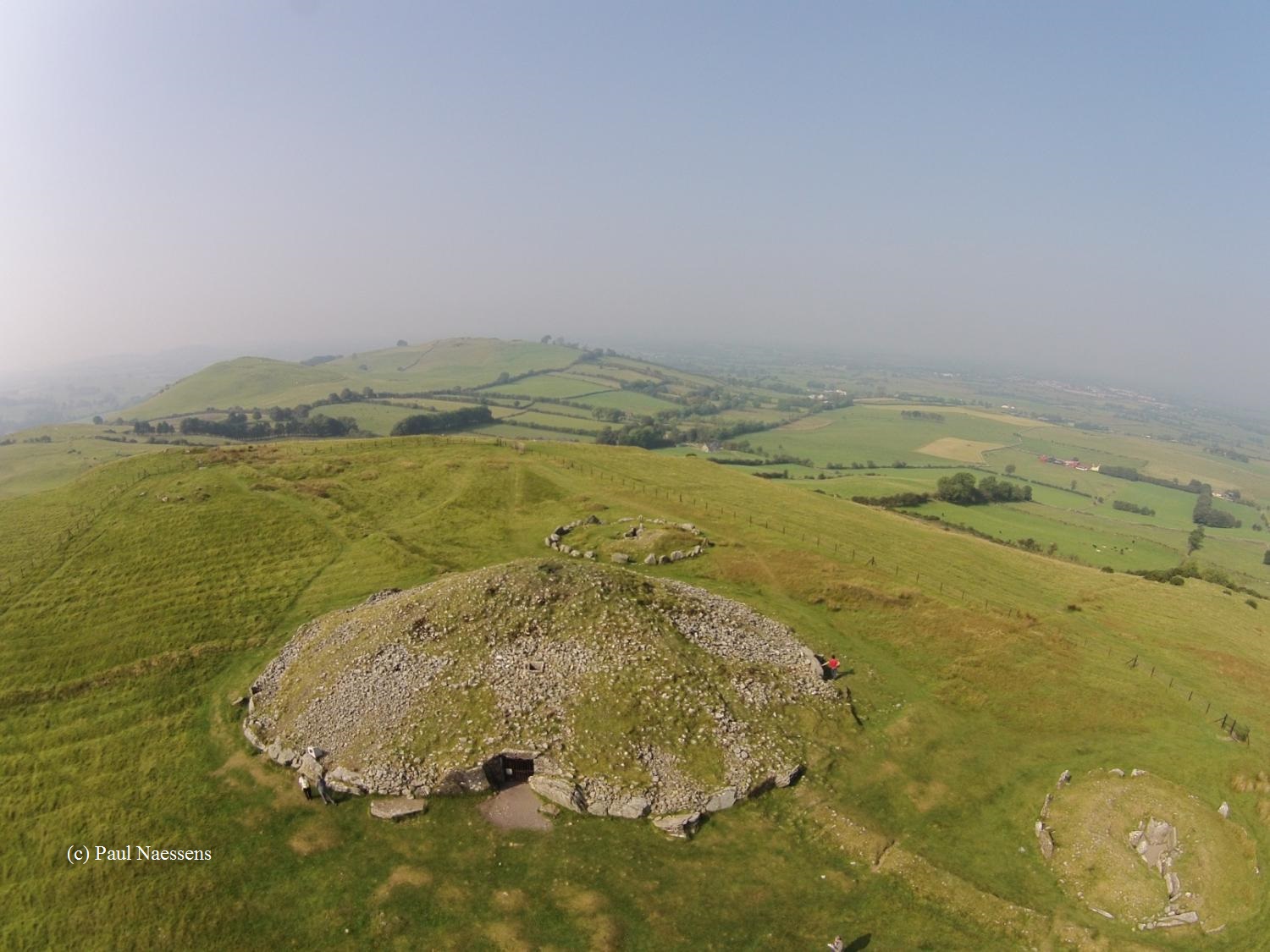
Passage Tomb monuments are named for the presence of a long passage which leads to a chamber which is concealed within a cairn of stones and retained by a kerb line of boulders. There is much variation in terms of size and while some monuments are small and compact and may never have facilitated human entry others are large and complex and appear to have been constructed to be as impressive as possible to a spectator.

Paul Naessens

Photograph by Paul Naessens Cairn T centrally placed on Carnbane East with Cairn U to the right and Cairn S in the background.

They date to the Neolithic period c. 3000BC and are complex ritual structures within which cremated human remains were carefully deposited. Although human bone is usually within these structures, they were not just built to contain to remains of the dead. These structures were built with ritual and used with ritual an in many instances excavation has revealed a series of foundation events which predate the structures suggesting that the very positions which they occupy within the landscape were of importance long before they came to be monumented in reflection of this in the Neolithic.
The Sliabh na Calliagh Passage Tomb monuments were brought to prominence by local school inspector Eugene Alfred Conwell in 1863 after a fortuitous visit to the summit of Carnbane East. It is most likely that the monuments were already well known to the locals and possibly also further afield but their significance was not understood or contextualised within the Irish Passage Tomb Tradition until Conwell began his investigations. He thoroughly searched the ridge and the surrounding hinterland and carefully documented each monument and implemented an identification scheme by which the individual monuments are still known today. Following his detailed field walking he undertook a series of investigations focused specifically on the recovery of human remains and the careful recording of each decorated surface. His records are of great value particularly because much of this art has been badly damaged and is no longer visible. Conwell also presented his findings to the Royal Irish Academy on numerous occasions and was responsible for the publication entitled The Discovery of the Tomb of Ollamh Fodhla. His research was conducted in the style of the time where different questions were asked of the data and so very little attention was paid to stratigraphy. Despite this however, Conwell was an industrious student and not only are his records detailed they are thoroughly engaging as he describes how he conducted his investigations under the watchful gaze of a number of ‘fine ladies’. Although the Sliabh na Callaigh Passage Tomb Complex is well known for its Neolithic Passage Tombs, it is a multi-period landscape which includes evidence for Mesolithic, Bronze Age and Iron Age activity extensively focused on the landscape to the north of the ridge.

Map 2

Multiperiod Sliabh na Calliagh (McCormack 2010)

The Equinox at Cairn T Sliabh na Calliagh

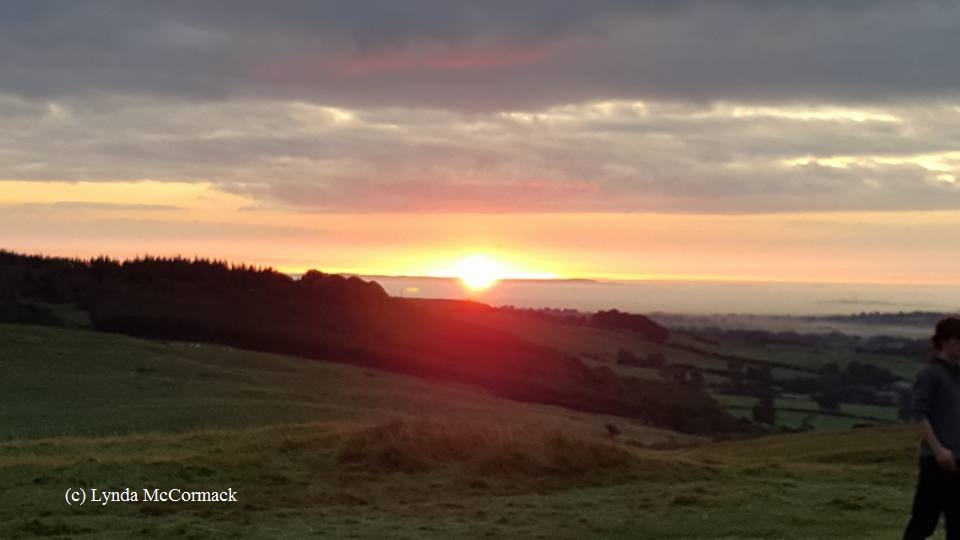
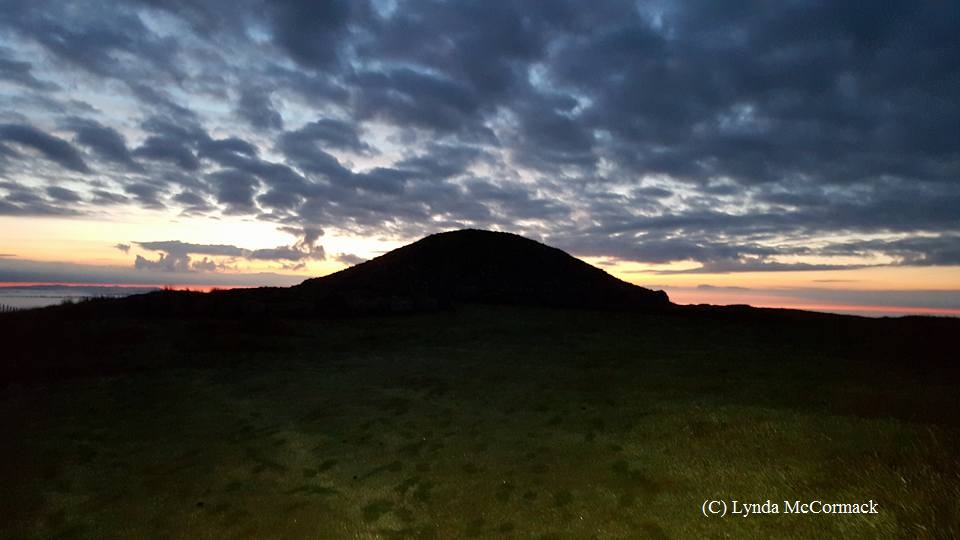
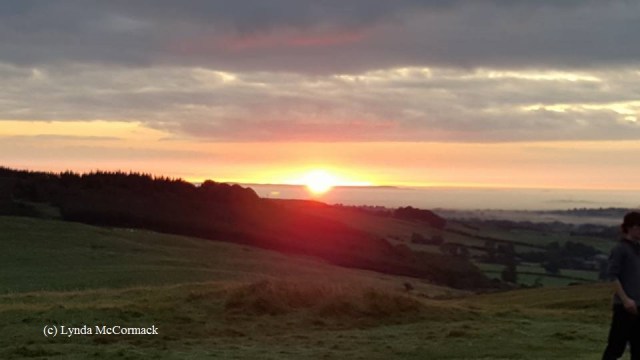
Many of the passage tombs on the height of the ridge are orientated towards the east and Cairn T in particular is carefully positioned with the effect that it captures the rays of the rising sun on the mornings of the Equinox in March and September. This alignment takes place over the course of five mornings and lasts for up to 30 minutes provided that the sun can penetrate the clouds.
Sunrise LC

Facing the rising sun on the 21st September 2015

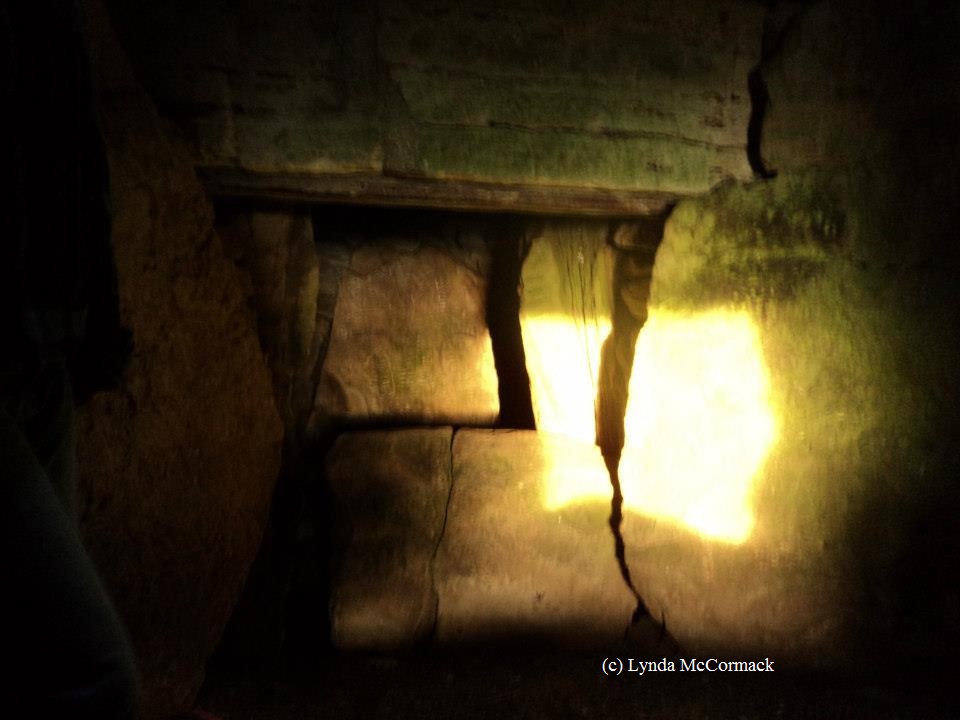
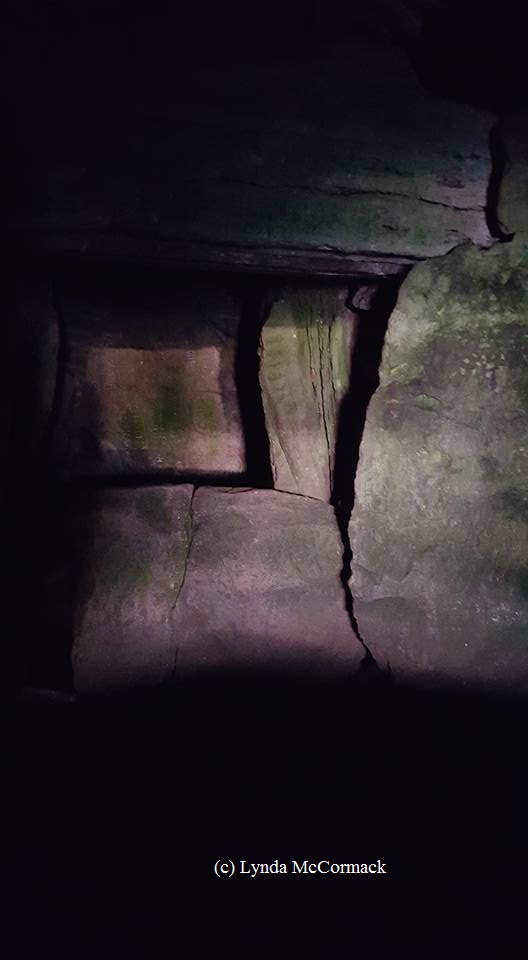
Having visited the Equinox for over 15 years myself, I can say that it is easier to see it in March around 6am in comparison to September around 7am when the weather can be a little more unpredictable. Each year on the mornings of the Equinox, hundreds of tourists climb Carnbane East in the dark to watch the sun rise and to access Cairn T where they can watch the light travel over the floor space of the passage until it eventually reaches the highly decorated backstone which is directly aligned with the entrance portal.
chamber

The illumination at 6.30AM

chamber.jpg 3

Illumination at 7.05AM

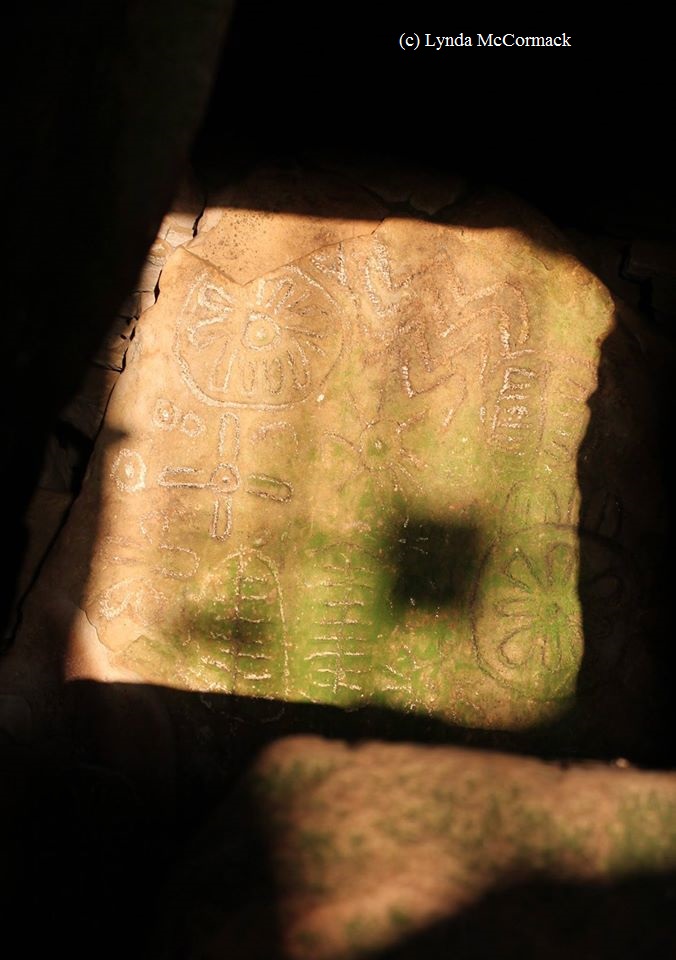
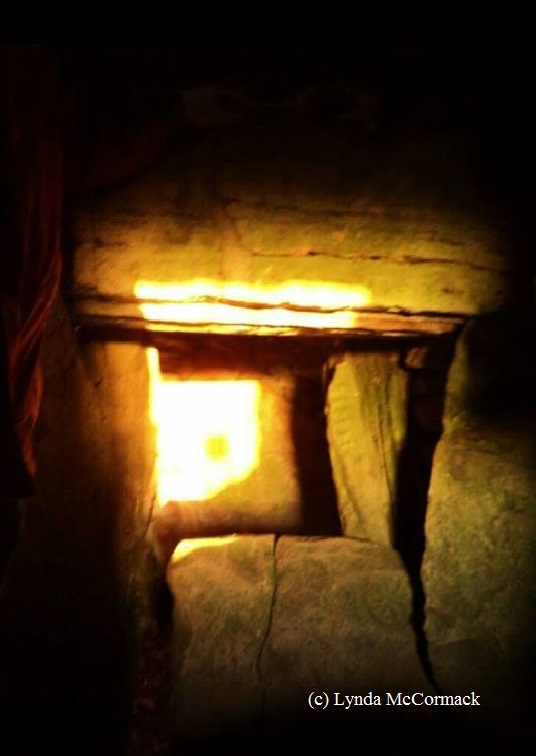
Those who enter the chamber of Cairn T on the mornings of the Equinox can watch the sunlight trace its decorated path across the surface of the stone, starting in the top left hand corner and moving right in front of their eyes until it comes to rest on the chamber orthostat to the right of the recess.
light chamber

The illumination at 7.10AM

Interestingly, the quality of the light changes as it moves across this stone, as the sun rises. The colour of this light also changes from a deep red to a vibrant golden yellow.

chamber.jpg 2

The illumination at 7.30AM


The decorated backstone has been extensively studied and Shee Twohig (1981) notes that the ‘sunburst motif’ which is illuminated by the sunlight on the mornings of the Equinox is not found elsewhere within the Complex or within the Irish passage Tomb Tradition.

Chamber 5

Illumination at 7.15AM, the light showing the decoration on the backstone.


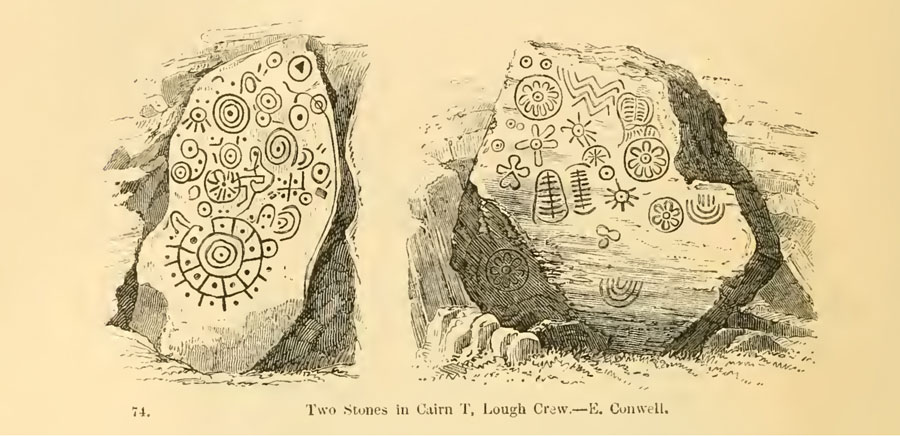
Within Cairn T in particular there are 19 decorated orthostats, 2 decorated sill stones, 8 decorated roof stones and one decorated kerbstone known as the Witches’ chair (Shee Twohig 1981, p. 214). Another interesting motif which is found on the surface of this stone is the offset motif which is also known as the scaliform motif (Robin 2008), Robin’s recent research into the structured placement of megalithic art within Passage Tomb monuments has shown that this particular motif is commonly found in association with entrances and sill stones and places of transition within the monument.
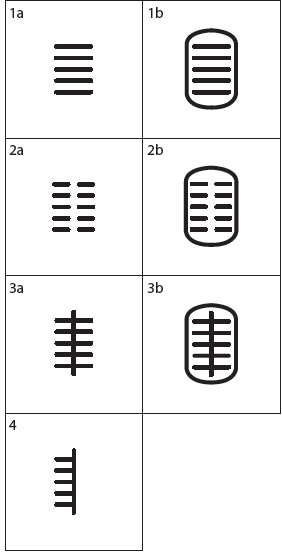
scaliform motif

The Scaliform motif (Robin 2008) Decorated back stone Cairn T (Conwell 1873)


Antiquarian sketch of decoration backstone cairn T

Antiquarian sketch of decoration back stone cairn T


Its appearance here on the backstone is potentially indication of a metaphorical transition seeing as it is not possible to physically move thorough this space. Perhaps the presence of this motif on this surface is also connected to the transition of the sunlight across the surface of the stone. Megalithic art is commonly referred to as abstract art. There are multiple interpretations of what the individual motifs might represent and each interpretation is a valid as the next but it is impossible to be sure of the true meanings affixed to the individual motifs. One thing is certain though, this art was undoubtedly integral to the ritual experience of the site and undoubtedly had a deep meaning for those who constructed and used these spaces in the Neolithic.

CT 2

Cairn T photographed from the west on the morning of the Equinox 21st September 2015.

Visiting Sliabh na Calliagh

The central hill of the Sliabh na Calliagh Passage Tomb Complex known as Carnbane East is state owned and access can be gained free of charge to this site throughout the year. The key to Cairn T can be obtained from a local coffee shop and so access is facilitated to this monument even after the OPW have withdrawn their tour guiding presence which extends throughout the summer months .This Monday on the 21ST of September at 7AM hundreds of us made our twice yearly pilgrimage to the heights of Carnbane East in the dark hoping to experience the sun light trace its decorated path across the backstone of Cairn T. In doing so we were potentially re-tracing the footprints of our Ancestors who constructed these monuments 5000 years ago who may have climbed this hill with comparable anticipation. Those who made the trip this year were rewarded by the sight of a sunrise from the highest vantage point in County Meath, We were also rewarded by the sight of the sunbeams carefully captured within the monument for this short period of time.
We will gather again in March 2016 for the Vernal Equinox which marks the return of the light and the lengthening of the days but until then we are left with an evocative image of how these monuments may have been used to measure the passing of time in the Neolithic.

You can keep up todate with Lynda’s research on twitter at  @LyndaMcCormack1 and on academia.edu

This slideshow requires JavaScript.

References

Conwell, E. 1873. Discovery of the tomb of Ollamh Fodhla. Dublin, McGlashan &Gill.
McCormack, L. 2010. A Comparative and Multiperiod Landscape Analysis of the Sliabh na Callaigh Hills. Unpublished MA Thesis. NUI Galway.
McCormack, L. 2012. A Geophysical Investigation of the Sliabh na Callaigh Passage Tomb Complex Phase 1. Unpublished report NUI Galway
McCormack, L. 2013. A Geophysical Investigation of the Sliabh na Callaigh Passage Tomb Complex Phase 2. Unpublished report NUI Galway.
McCormack, L. 2014. A Geophysical Investigation of the Sliabh na Callaigh Passage Tomb Complex Phase 3, Unpublished report NUI Galway.
McMann, J. 1995. Loughcrew the Cairns a Guide, Meath, After Hours Books.
Robin, G. 2008. Neolithic Passage Tomb Art around the Irish sea Iconography and Spatial Organisation. Unpublished Ph.D thesis, Nantes.
Shee Twohig, E. 1981. The Megalithic Art of Western Europe. Oxford, Clarendon Press.
Votes needed for Pilgrimage in Medieval Ireland for Blog Awards Ireland 2015

I am delighted that Pilgrimage in Medieval Ireland has been short-listed in the best Arts and Culture  category in the blog awards Ireland.

Vote for Us Buttons 300x2503

A big thank you to the people who nominated the blog  I still cant believe I have gotten this far. Also thank you to everyone who supports and reads this blog.

Part of the judging process is a public vote so if  you’d   like to vote for  the blog  just  click here.  I have also added links to the voting areas in the blog’s sidebar.


The Medieval Statue of Our Lady of Dublin

On Monday on my way back from the National Archives, I popped into the Carmelite church on Whitefriar Street Church, in Dublin city.

backdoor

Whitefriar Street Church taken from http://www.whitefriarstreetchurch.ie

Within the church is the Shrine of Our Lady of Dublin.  The shrine contains a  very  fine medieval  statue of the Blessed Virgin and Christ Child. I had to use my phone to take the photos but below is they are a little blurry but I hope they give you a sense of the statue and inspire you to pay a visit.

wpid-20150831_170950.jpg

Shrine of Our Lady of Dublin

The statue of 15th century date originally belonged to the Cistercian abbey of St. Mary’s located on the north bank of the Liffey in Dublin.

The statue is life-sized and carved of oak. It was originally brightly painted and traces of gold and bright blue polychrome were found in its crevices until the early part of the last century.  It was whitewashed over at a later date.

During the Reformation, St. Mary’s was dissolved in 1539 and stripped of all its valuables and treasure. The statue survived but it was said that it was used as a pig trough  in the  yard of an inn beside the monastery. The statue  was laid face down, and hollowed out back a common feature of medieval stature faced upward and formed the make shift trough.

wpid-20150831_171000.jpg

Our Lady of Dublin


The statue was later mentioned 
in an account of the Catholic chapels of Dublin written  in 1749 suggesting it was rescued from the yard and its new domestic role in the years that followed.

 In Mary’s Lane is a parochial chapel whose jurisdiction extends from one side of Boot Lane to one side of Church Street. It is a large and irregular building. On the Epistle side of the altar stands a large image of the Blessed Virgin with Jesus in her arms, carved in wood; which statue at the dissolution belonged to St. Mary’s Abbey (MacLeod 1947,  56).

The Mary’s Lane chapel no longer survives  and was located at  St. Michan’s House. In 1816 a new church was built for St. Michan’s parish and the old chapel was converted for use as a school.

The statue seems to have made its way to a second-hand shop on Capel Street.  Father Spratt of Whitefriars saw  the statue in the shop in 1824 and purchased it. He had the statue placed on the Epistle side of the high altar in the new Whitefriars church. In 1915 the statue was sent for cleaning and all traced of white wash and medieval paint were removed. When the statue was returned it was placed in a new elaborate marble the shrine erected in the Carmelite church.

wpid-20150831_171027.jpg

Prayer to Our Lady of Dublin

The statue is still visited today and the  feast day of Our Lady of Dublin is celebrated on September 8.

References

MacLeod, C. 1947.’Some Late Mediaeval Wood Sculptures in Ireland’. JRSAI, Vol. 77, No.1, 53-62.

Pochin Mould, D. 1964. Whitefriar St. Church: A Short Guide, by Daphne.
Carmelite Publications. Dublin.

http://www.whitefriarstreetchurch.ie/shrines.html#OurLadyofDublin.


Paupers graves at St Mary’s Collegiate church Youghal

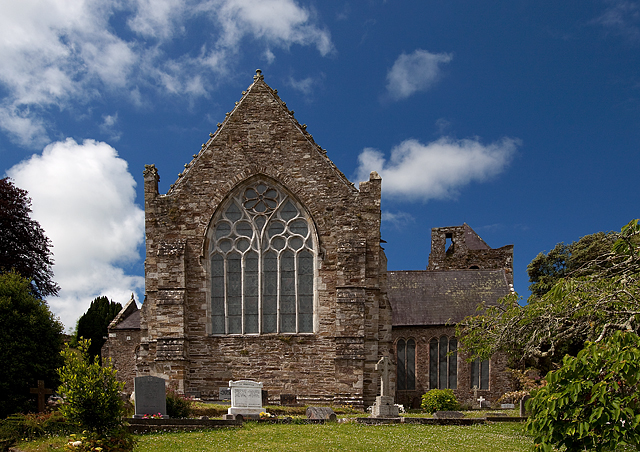
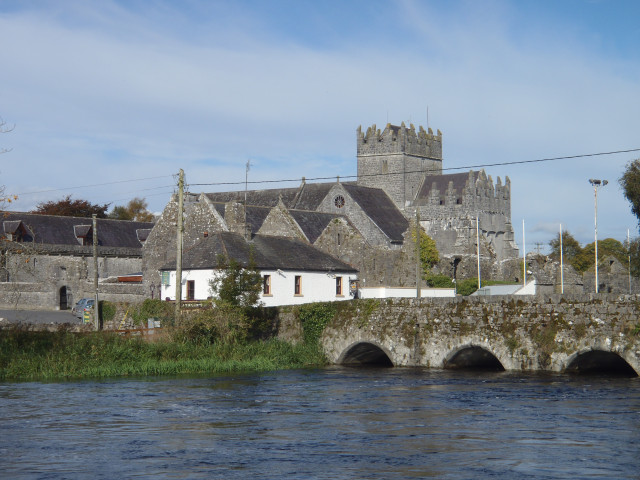
Last week  I was lucky enough to go on a guided tour of the  St Mary’s Collegiate Church  in Youghal. The tour was led by archaeologist Dan Noonan. The church is an amazing building, filled with  many interesting features and I highly recommend  a visit.

1392211_ea4830ff

St Mary’s Collegiate Church

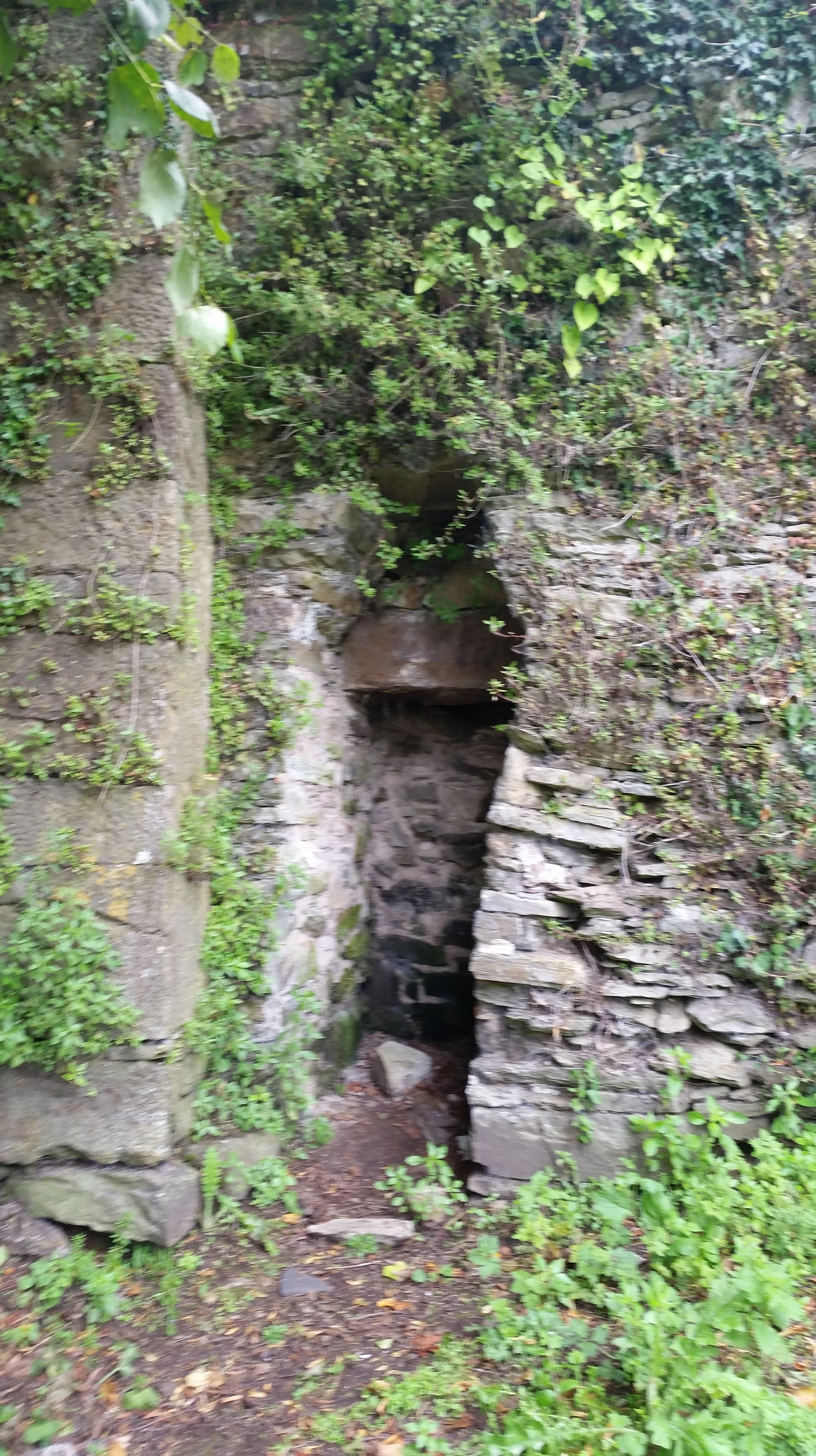
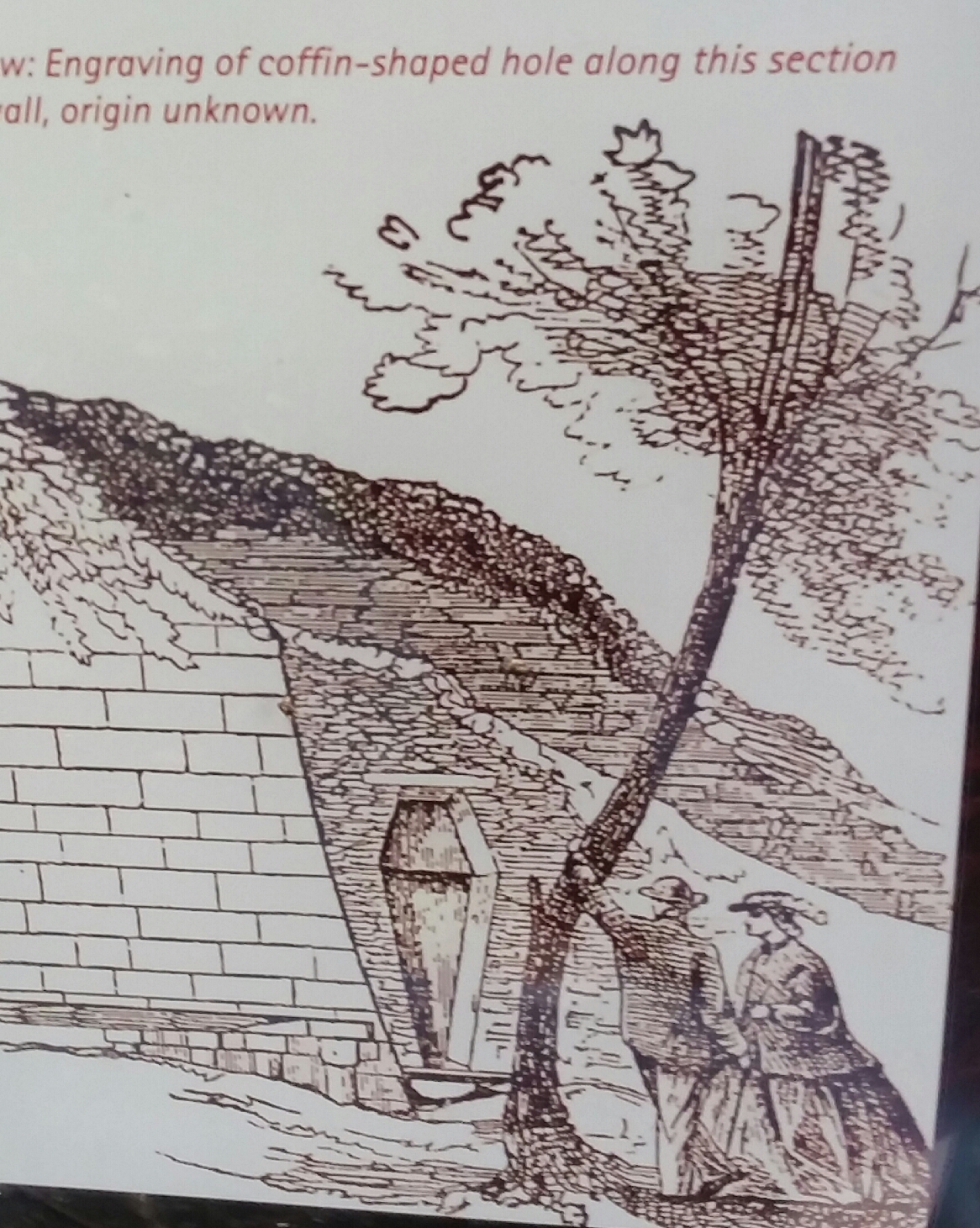
The church is surrounded by a really interesting historic graveyard located in the north-western corner of the town walls. The graveyard has a very unusual  and interesting feature. This is a coffin-shaped recess built into the town walls.  Tradition has it the recess was used to hold a coffin for pauper burials.  Those who could not afford a coffin were place within this coffin temporarily during the burial process.

wpid-20150808_130106.jpg

Recess for coffin in the graveyard wall of St Mary’s Collegiate church Youghal

The deceased was carried to their  grave  in this coffin and then they were removed and placed in the grave. The coffin was then returned to the wall  to await the next burial.

wpid-2015-08-17-06.56.12.jpg.jpeg

Engraving of the coffin-shaped recess dating to the 19th century

Id be really interested to know if anyone has come across anything similar at  other graveyards.

Heritage Week 2015: Walking tour of the Pilgrimage and Holy Sites of Cork City

This year for Heritage Week I have teamed up with geographer and holy well expert Dr Richard Scriven to give a walking tour of the pilgrimage and holy sites of Cork City.

st findbarr galaxy s5 070

St Fin Barre’s Cathedral Cork City

The walking tour will begin at St Fin Barre’s Cathedral on 29th August 12:00 PM

The tour   is FREE !!!!  It   will take about  90 min  and will  taken in of sites such as  St Fin Barre’s Cathedral,  Nano Nagle’s grave,  the medieval statue of Our Lady of Graces at the Dominican Friary at  Popes Key and  a number of holy wells around  North Mall.   These sites are just some of the holy places that will feature in book on the holy  and pilgrim sites of Cork City that Richard and I are in the final stages of working on. Will keep you posted on that.


2015-06-07 12.02.08

Nano Nagle’s Grave


Please spread the word and I hope to see some of you there.

For any additional information contact me at

Abbey Well: The forgotten pilgrimage at Holycross abbey

Holycross abbey, Co Tipperary is one of my favourite pilgrim sites. During medieval times the abbey was famous for its relic of the true cross that attracted pilgrims from across Munster. In a previous post I discussed medieval pilgrimage at the abbey.

View of Holycross abbey Co Tipperary

View of Holycross abbey Co Tipperary

The abbey was also associated with a holy well. The well was recorded as ‘Abbey Well’ on the 1st, 2nd & 3rd ed. 6 inch Ordnance  Survey map of Tipperary. The  well  is located close to the west bank of the River Suir, c. 10m east of the chancel of the abbey church.

3rd ed 6inch Ordanance Survey Map showing location of Abbey Well

3rd ed. 6 inch Ordnance Survey Map showing  the location of Abbey Well

The earliest reference to the well and  its associated pilgrimage dates to 1628 when a man called John O’Cullenan was cured of pain after visiting the well ‘near the front of the abbey church and drinking its water three times’ (Hayes 2011, 13).  A Short Account of Holy Cross Abbey published in 1868 states the well was visited by pilgrims up to the beginning of the 1800’s when the pilgrimage was suppressed by the orders of Archbishop Bray. The book also makes note of  pilgrim rituals at the well. The rituals  included pilgrims going around the well on their knees three times before drinking the water. No doubt set prayers were also recited. In the ensuing years the wells importance declined and by the 1950’s  pilgrimage had ceased and the well was reduced to a wishing well.
The wells importance declined even further  and today the well is covered over. This took place when the  land  surrounding the well was landscaped and turned into a prayer garden  to commemorate the visit of Pope John Paul II in 1979.
If anyone is interested in visiting Holycross abbey guided tours of the abbey are available on request (further information holycrossabbeytours@gmail.com / 086-1665869). Also thanks to Kilkenny Archaeology for the references relating to the holy well.

References

C. M. E. A Short Account of Holy Cross Abbey /. Dublin: Edward Ponsonby, 1868.

Hayes, W. J. Holycross : The Awakening of the Abbey /. Roscrea: Lisheen Publications, 2011.

A visit to the Claypipe Centre at Knockcroghery Co Roscommon

Over the course of my career as an archaeologist the  most common artefact I have found on site is  the clay pipe.   I have a particular soft spot for  clay pipes  so on Thursday morning last, as I was driving through Co Roscommon, I had to detour to visit the  Claypipe Centre at Knockcroghery.

During the  18th and 19th century clay pipes or “Dúidíns” as they were known in Ireland  played an important role in Irish everyday life and custom, especially regarding wakes and funerals.

Their association with traditions, along with the pleasure of “taking a puff”, led to their growth in popularity throughout the country but most particularly in the rural communities of Ireland. They were often associated with storytellers who would keep an attentive crowd in suspense in the midst of a story while having a smoke from his dúidín.
Clay pipes were also particularly prominent at wakes, where trays of tobacco filled pipes, Guinness and whiskey would be provided for the mourners. As soon as a person died, relatives or friends would buy a number of items for the funeral ceremony and these typically included a half barrel of porter, a gallon of whiskey, snuff, tobacco, and of course clay pipes.
It may seem strange now, but the clay pipe was one of the most important parts of any wake and was considered improper to be without them. A gross or more was usually purchased and this would then be filled with a twist of cheap tobacco, and passed around to all the mourners in the room.
Traditionally, the shank of the clay pipe was dipped into some Guinness or whiskey, a process that scaled the mouthpiece and imparted a good flavour to the clay for the smoker. Upon receiving the pipe it was customary to say “Lord have mercy” and in time the pipe became known as a “Lord ha’ mercy”.

(Taken from  Clare Library website).

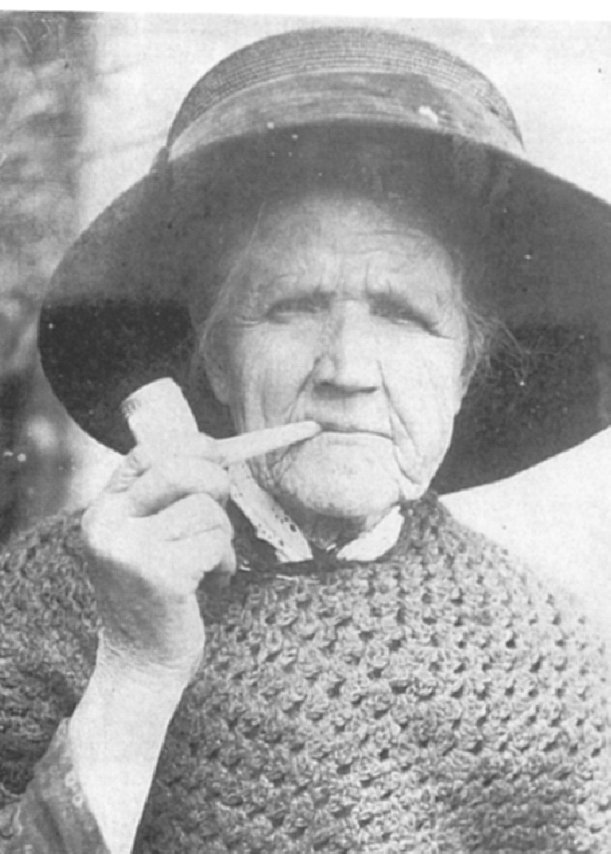
Pipes were  smoked by both men and women. As a general rule the small the pipe bowl the older the pipe.

Vegetable gardener for the Belmont house (image http://resources.teachnet.ie/jfarrell/2007/carlow/Oldphotographspurcell/gentry.htm)

Vegetable gardener for the Belmont house smoking a clay pipe (image http://resources.teachnet.ie/jfarrell/2007/carlow/Oldphotographspurcell/gentry.htm)

Clay pipes were produced in vast amounts in Ireland  and  Knockcroghery was one of the main centres of production for the Irish clay pipe industry. Pipes were produced here for over 300 years and towards the end of the 19th century, seven   families were involved in the industry in the village each with their own kiln.  Production ceased when the village was burned by the Black & Tans in 1921. Turtle Bunbury has written an excellent article on this event.

Excavations at the Hamilton family clay factory at Winetavern Street in Belfast  produced numerous clay pipes. This excavation and others around the country have shown that pipes occurred in a variety of forms some were plain while others had elaborate decorations. Interestingly many  pipes were decorated with political slogans while others had symbols of societies such as the masons.  The Knockcroghery pipes were inscribed with the names of their producers – O’Brien, Curley, Cunnane and Murray  or  inscriptions such as “Home Rule”, “Who dares speak of ’98?”, “Support Irish industry”, “Repeal” and “Parnell” (Bunbury).  The Winetavern excavation uncovered


 …twenty-seven types of late nineteenth-century pipes, ranging from the ‘cutty’ (a small, plain pipe), through those embellished with masonic symbols (compasses, plumb bobs, wheat sheaves, fruit) to pipes bearing more overtly political symbols and slogans (the Red Hand of Ulster, ‘Home Rule’ and ‘Gladstone’). Clearly, the Hamiltons tailored their production for a range of customers and markets (Donnelly & Brannon 1998).


Ethel Kelly has reviving the tradition  of Irish clay pipe making at the Claypipe Visitor Centre at Knockcroghery .

Ethel  produces  clay pipes in the traditional fashion.  A visit to the centre is a wonderful experience  as you can learn about the history of clay pipes, see and participate in demonstrations of  clay pipes being made.


If you are passing through Roscommon  do stop here for a visit.

References

Donnelly, C & Brannon, NF 1998, ‘Trowelling through History: Historical Archaeology and the Study of Early Modern IrelandHistory Ireland, vol 6, pp. 22-25.

http://www.turtlebunbury.com/history/history_irish/history_irish_knockcroghery.htm

http://www.clarelibrary.ie/eolas/claremuseum/news_events/pipe_smoking.htm

http://nmni.com/uafp/Collections/Crafts-and-Trades/Clay-Pipes

https://www.facebook.com/ClaypipeCentre/info?tab=overview

Launch of 2015 Douglas Hyde Conference

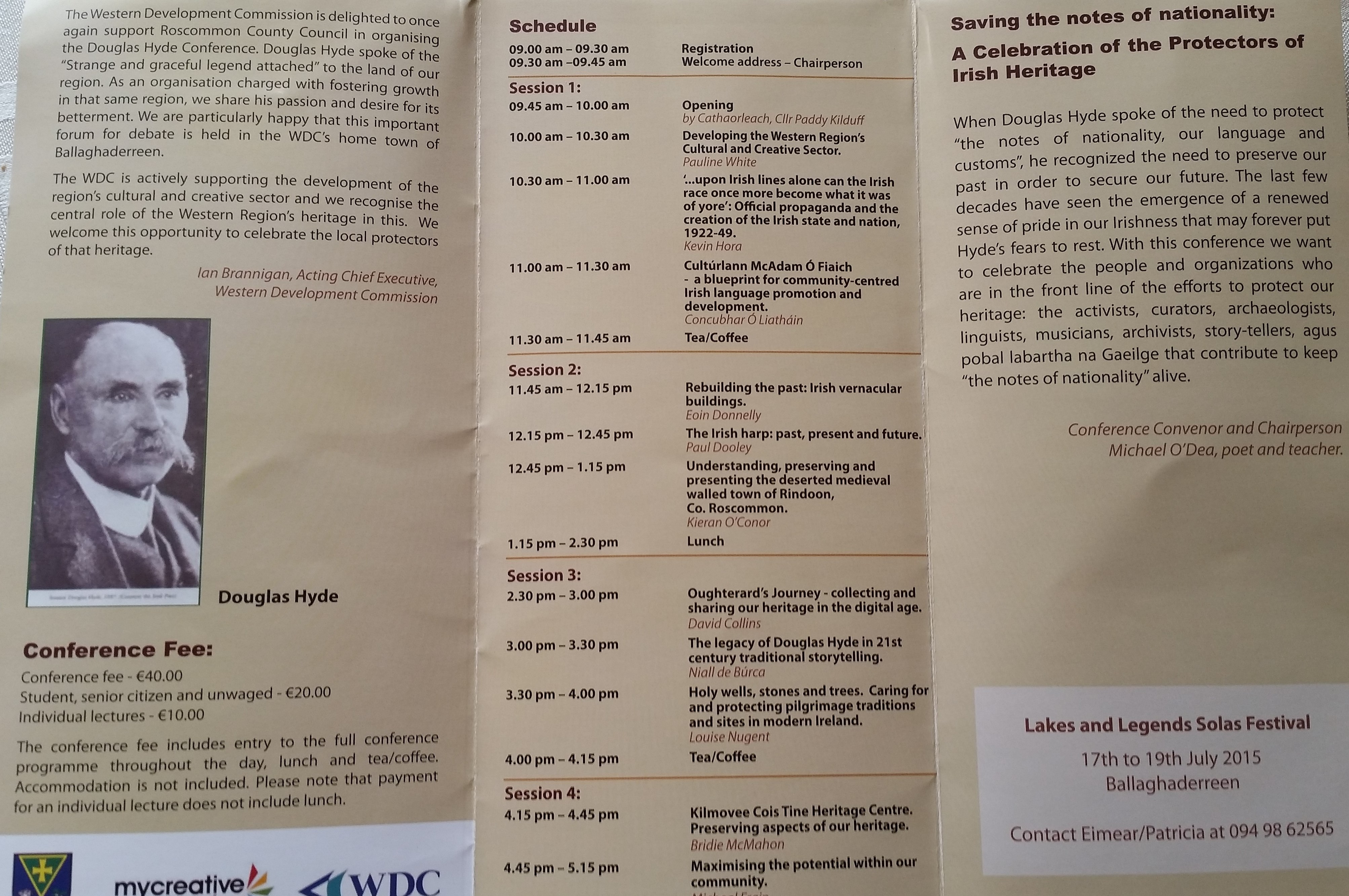
The 2015 Douglas Hyde Conference  was launched today at Áras an Uachtaráin.  

Áras an Uachtaráin

Áras an Uachtaráin

As a speaker at this years conference I was delighted to be able to attend.  This was a most  appropriated setting for  the launch of a conference dedicated to Douglas Hyde Ireland’s first President.  I must give a big thank you to Michael O Dea chair the Conference and Mary Mullins Arts Officer with Roscommon County Council for organising this event.

?

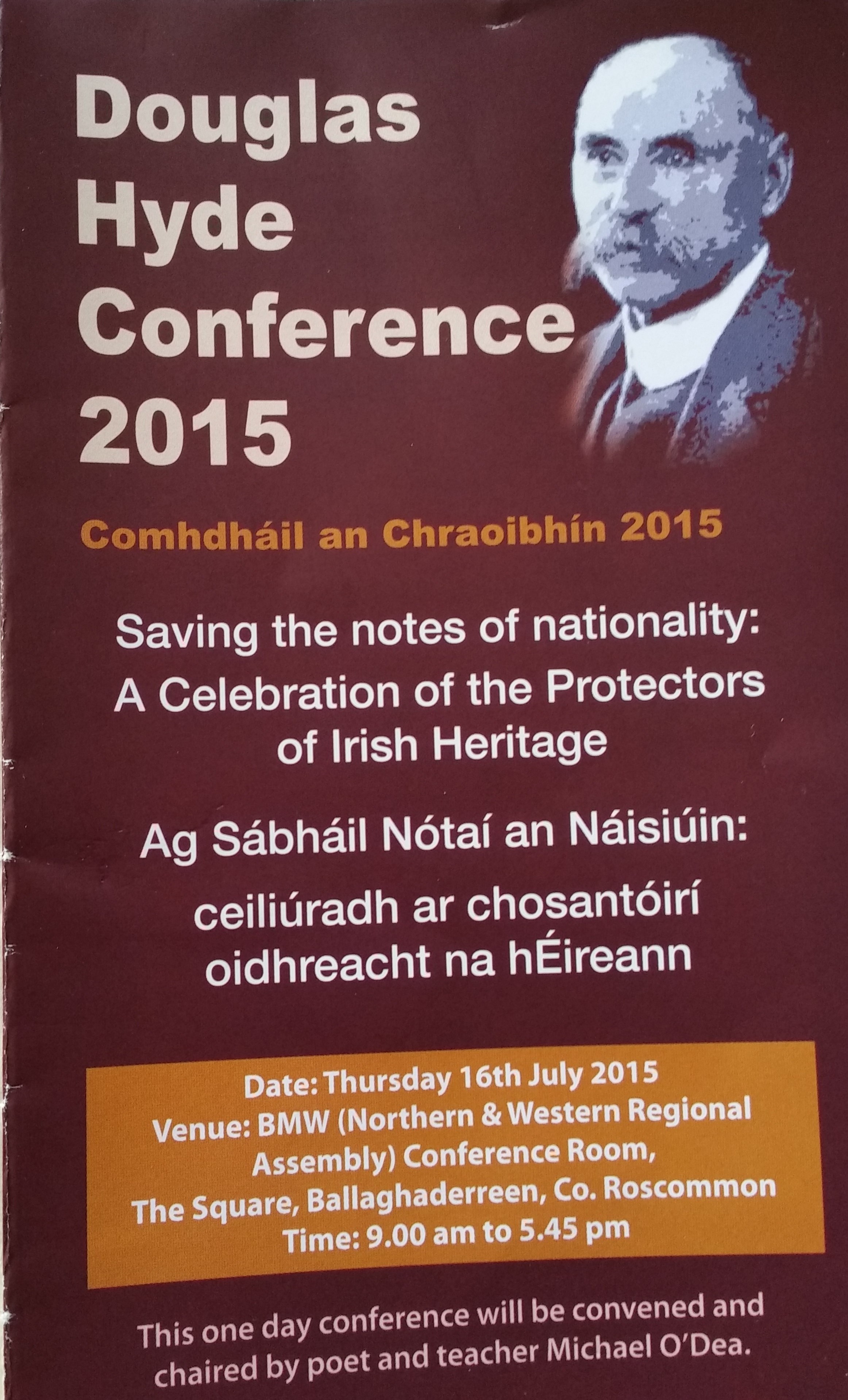
Theme of Douglas Hyde Conference “Saving the notes of nationality: a celebration of the protectors of Irish heritage”


The theme of this years conference is

“Saving the notes of nationality: a celebration of the protectors of Irish heritage.”

There is a very interesting and diverse line up. I will be presenting a paper at the conference  on protecting pilgrimage sites and holy wells.

?

Line up for 2015 Douglas Hyde conference

The conference will be held next Thursday July 16th 2015 in the BMW Conference Room, The Square, Ballaghaderreen, Co. Roscommon and there are still places available.

For anyone interested in attending  information about the conference can be found by following this  link http://www.roscommoncoco.ie/en/Services/Comm_Ent/Arts_Office/the-douglas-hyde-conference.html


http://www.roscommoncoco.ie/en/Services/Comm_Ent/Arts_Office/the-douglas-hyde-conference.html

Pilgrimage at St Patrick’s Holy Well Marlfield Clonmel

Last week on the 25th of June I attended an event at St Patrick’s holy well at Marlfield Clonmel.  This is one of my favour holy wells and it has a rich history which I have discussed in a previous post.

DSCF1677

St Patrick’s Holy Well Marlfield, Clonmel

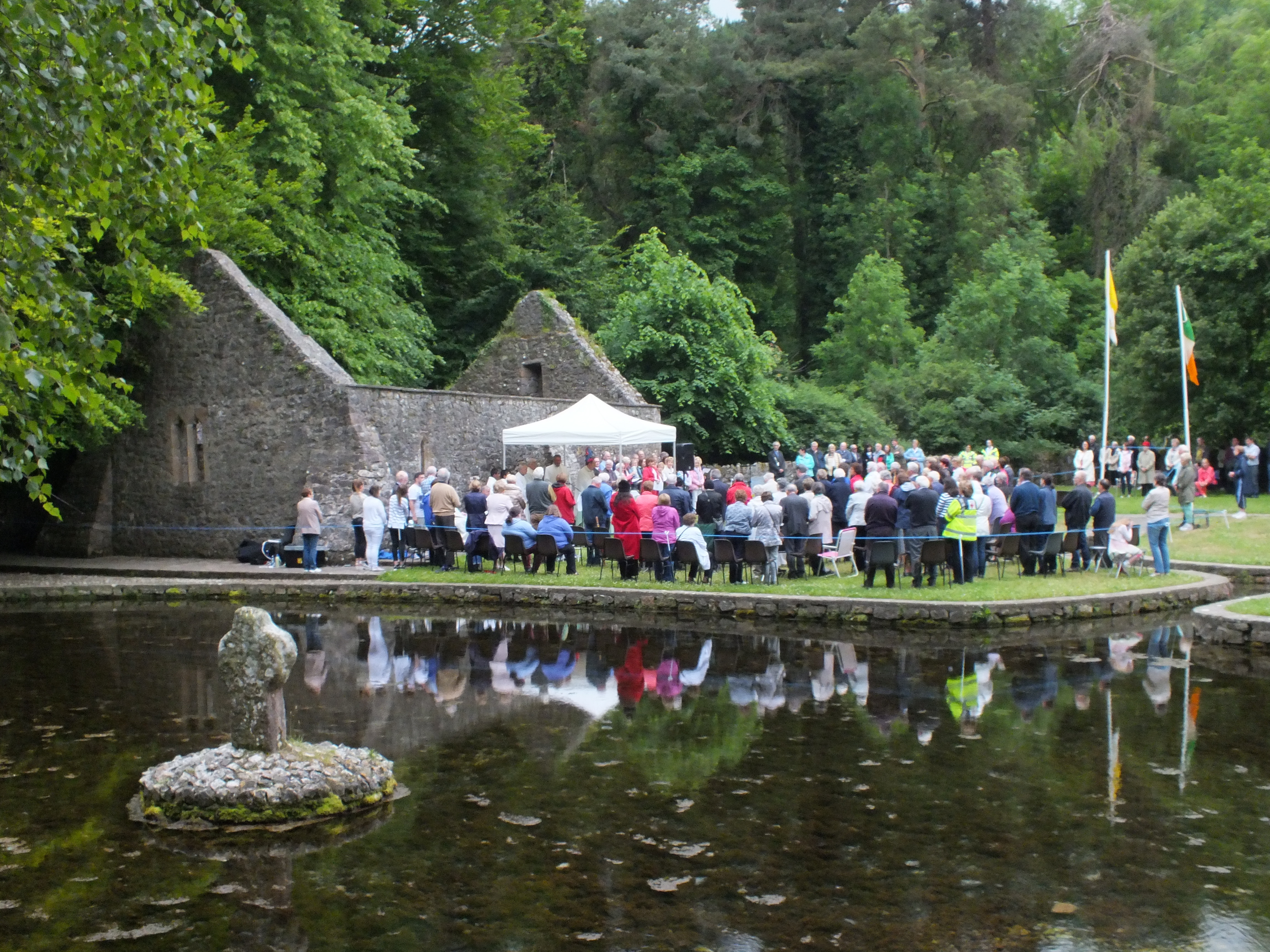
The well is visited throughout the year but each Summer the people from the village of Marfield and surrounding parishes in Clonmel  town, come to the well for an annual gathering that takes the form of a mass.

This year the mass was held at 8pm and a large crowds  attended. Mass was celebrated by Bishop Cullinan, the new Bishop of the Diocese of Waterford and Lismore.

DSCF1729

Bishop Cullinan the new Bishop of the Diocese of Waterford and Lismore.

People gathered in front of the old medieval church others sat around the holy well and the boundary walls.
DSCF1718

People gathered in front of the old medieval church

The waters of the well  were bubbling forth  in the background , birds singing. Despite the crowds the site was very peaceful.
DSCF1700

People standing around the well during mass.

The large crowds emphasized the size of the area around the well which really is quiet vast. There was a real festive feeling with lots of singing and live music.

DSCF1717

Pilgrims at St Patrick’s holy well

I look forward to returning to the well later in the summer .