Review of Book The Holy Wells of County Clare

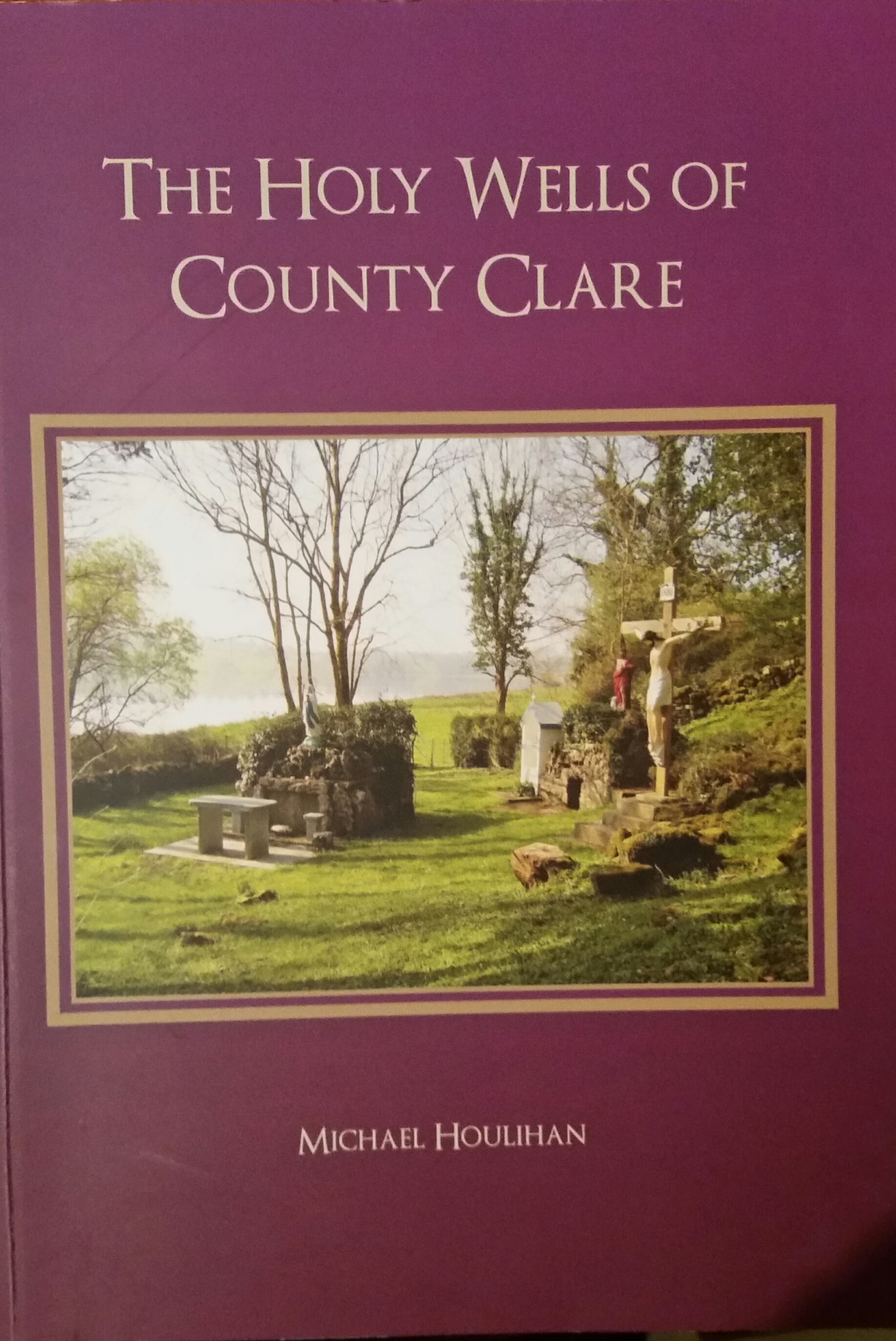
I recently got a copy of The Holy Wells of County  Clare written by Michael Houlihan.  This is a great read and a must have for anyone interested in holy wells or the history of County Clare.
image

Clare  has 240 known holy wells, the highest concentration of  holy wells of any county in Ireland, while there has been some research carried out on individual  holy wells or wells within a select geographical area such as the parish, this is the first comprehensive countywide study.
DSCF1506

Tobar Colman Oughtmama

The book  begins by exploring the origins and antiquity of holy wells.  The author then discusses the  Clare group of wells against the social and historical landscape of the county during 19th century,  charting the rise and fall of the popularity of devotion at wells, their significance to the community  and the slow decline to modern times.
IMG_4356

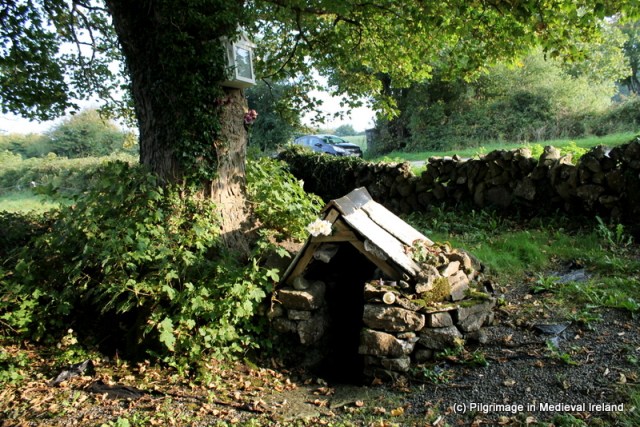
St Inghean Bhaoith’s holy well at Anneville, Killinboy Co Clare

Houlihan points out that many of the Clare wells are associated with healing for example St  Cravan’s well near Ennistymon  was known to heal sore eyes. He discusses the wells role as a place of healing for the community in pre and post famine period, along with health care  practices  and the health of the population in the 19th century.
408

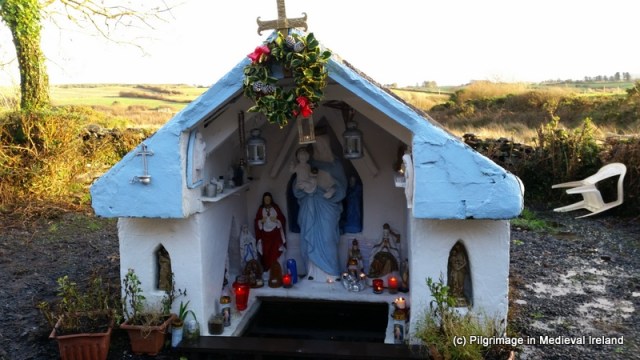
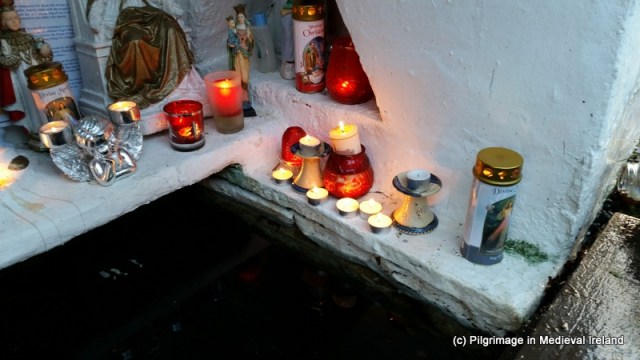
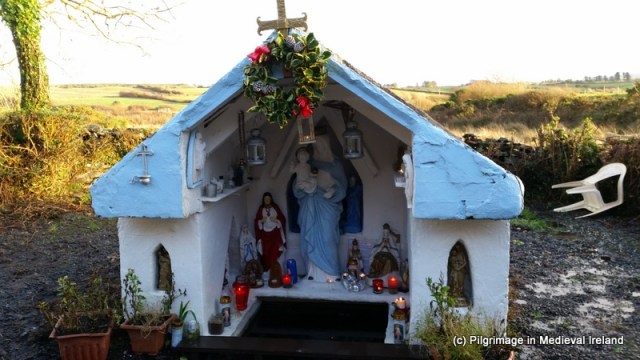
St Anastasia’s holy well is located on farm land in the townland of Tullygarvan West a few miles from Lahinch in Co Clare.

Chapter five provides a great account of  the origins and function of the  pattern celebrations associated with  holy wells and  details some of Clares most popular pattern days at sites such as  Inis Carthaigh (Scattery Island), Killone and Inis  Cealtra (Holy Island).  Chapter six  discusses the decline of the pattern with official efforts by church and government to suppress such celebrations due unsavory aspect of the pattern such as heavy drinking and faction fighting.
Burren 136

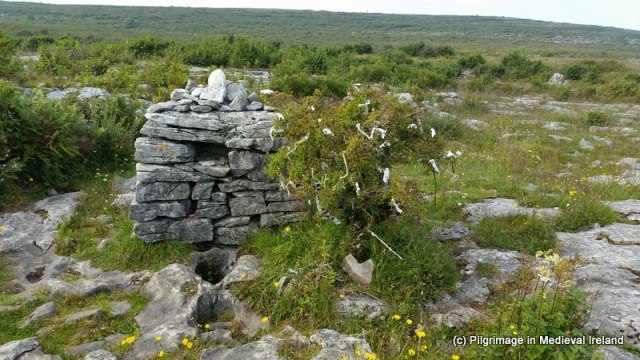
St Fachtna’s well the Burren

The book concludes by discussion holy wells in modern Clare and a provides detailed accounts of  a selection of wells from different geographical areas of the county.  This book is a great resource for those interested in the study of holy well and a great read for those interested in the local history of Clare.

If your interested in getting a copy of this book it is on sale  from the author  just drop him a line at michaelhoulihan5@gmail.com

or from the following bookshops

Clare

Ennis Bookshop, 13 Abbey Street, Ennis

Easons, Bank Pl, Ennis

Sceal Eile, 16 Lower Market Street, Ennis

Bookshops around the county

Galway

Charlie Byrne’s Bookshop, The Corn Store, Middle Street, Galway City

Limerick

O’Mahony’s bookshop 120 O’Connell St, Limerick

A Visit to the National Print Museum in Dublin City

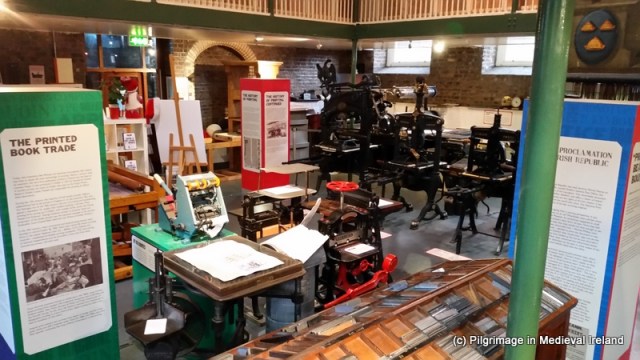
Before Christmas I paid a visit to the  National Print Museum at Beggars Bush in Dublin. The museum collects, documents, preserves and exhibits the material evidence for  printing in Ireland.

509

The National Print Museum Dublin

The ground floor of the building is filled with a wide range of artifacts that cover the whole range of printing in Ireland from its introduction in the 16th century to the invention of the typewriter and computers. The museum houses printing presses, binding machines, printing blocks, metal and wooden movable type, ephemera and photographs. The artifacts span the ages of printing and are interspersed with poster boards that detail different aspect  of the story of printing in Ireland, charting advancements and innovations in the industry, what it was like to work in printing etc .


539

View of the ground floor of the National Print Museum

One of the most elaborate looking machines on display is  the Columbian Press, one of the most widely used printing presses in the nineteenth century.

The museum also has an Albion Press  a contemporary machine manufactured in London in the 1820s.

One of the most interesting artefacts on display is an original printed copy of the 1916 Proclamation (on loan until 1916).

The Proclamation was printed at Liberty Hall on the Sunday 23rd April by printer Christopher Brady and compositors Liam O’Brien and Michael Molloy.

On receiving the text of the document, the printers began setting up the type, the shooter being used to lock the type into position. They soon found that there was insufficient type for the job and eventually concluded that they would have to print the document in two halves. The compositors set the type for the first half and printed about 2,500 copies. They then re-set the forme to print the second part on the bottom half of the same sheets (http://www.museum.ie/The-Collections/Documentation-Discoveries/March-2014/Printing-Press-Shooter-%E2%80%93-Printing-the-Proclamation).

This historic document would have been printed on a machine similar to the Wharfedale Stop Cylinder Press  on display in the museum.


553

Typewriter at National Print Museum

The Museum  hosts temporary exhibitions throughout the year,  on my visit they were show casing  a wonderful exhibition displaying the works produced by graphic design students at Distillers Press  from 1983 until the present.

The National Print Museum is a wonderful place for any book lover to pass an hour.  Entry is FREE and there is also a wonderful coffee shop attached.   Apart from exhibitions the museum runs a range of educational programs including art and craft workshops such as Introduction to Letterpress, Printmaking (including Drypoint & Chine Colle, Linocut, Japanese Woodblock and Monotype), Calligraphy, Bookbinding, Artist’s Bookmaking, Batik, Origami, Silk Painting and Card making.

For more information visit the National Print Museum  website http://www.nationalprintmuseum.ie/

To find out more about the Proclamation see

http://www.museum.ie/The-Collections/Documentation-Discoveries/March-2014/Printing-Press-Shooter-%E2%80%93-Printing-the-Proclamation

St Sylvester’s Holy Well at Malahide

Today the 31st of December is the feast of St Sylvester who was the chosen pope in succession to Pope Miltiades (311-314) and his pontificate also coincided with the reign of the first Christian emperor, Constantine.

In the town of  Malahide in North County Dublin there is a holy well along with the modern  Catholic Church dedicated to St Sylvester.  The church built-in the 1800’s takes its dedication from the holy well. Antiquarian sources relating to the well  provide some debate as to the patron of the well.  Some feel its St Sylvester whose feast is on the  31st of December and his cult was introduced by the Normans, others argue its a Bishop Silvester, a holy man associated with the fifth-century Christian mission to Ireland. I will have to look into the patronage of the well some more when time allows.

0d62a0_35ce2337e9cb06f01b5058dc2600f5d3

St Sylvester’s well and church (image taken http://www.malahideheritage.com/#!sylvesters-well/cidb)


The well was also known as Sunday’s Well and Lady’s Well, the later  being derive from devotions at the well on the 15th of August. The site of the well was marked on John Rocque’s map of 1756 unfortunately the  dedication of the well was not recorded.

Pilgrimage to the well has now died out  but in the past the traditional day of pilgrimage was the 15th August when a pattern day was held at the well. The Malahide Heritage website notes that

The Malahide well, like many others, became associated with the Blessed Virgin Mary, and a patron or pattern was held there regularly on the 15th August. On this date the well was decorated and the statue of the Blessed Virgin was decked with ribbons. There is a theory that the statue used was Our Lady of Malahide, associated with the Oak panel carving of the Assumption in Malahide Castle. During the patterns, the well was circled seven times, while reciting a special prayer or rann. At these 15th August patterns, worshippers gathered from many miles distant. The tradition of reciting prayers whilst circling the well on 15th August was revived in recent times.


Fr. Scantlebury was the organiser of the cycling club and was also an excellent photographer. Photo gifted by Leonard Little, son of Dr. Geo.A. Little

Photo of St Sylvester’s holy well circa 1948 (image taken http://www.malahideheritage.com/#!sylvesters-well/cidb.

The waters of this well were held to have curative powers and up to the close of the 1890’s, an eel was inserted into the waters of the well to purify it. Many wells around Ireland are said to be inhabited by a sacred fish or eel. In most cases the tradition is that if one sees the fish/eel in the well ones prayers will be granted or cures received. St Sylvester’s well  is the only well I have come across where an eel was regularly placed in the waters, all in accounts of wells and eels from other wells the eel seems to be in residence within the well.

I am intrigued by this well so will investigate further in the coming months and see if I can find out anymore historical information about the well. In the mean time for further  information see the list of references below.

References

Branigan, G. 2012. Ancient & Holy Wells of Dublin. Dublin: History Press.

O’Reilly, P. J. 1910. ‘The Dedications of the Well and Church at Malahide’ JRSAI Vol. 40, no.3,  147-165.

http://encyclopedia2.thefreedictionary.com/St.+Sylvester’s+Day

http://malahideparish.ie/blog/the-history-of-st-sylvesters/

http://www.malahideheritage.com/#!sylvesters-well/cidb

http://www.enjoymalahide.com/home/all-about-malahide/malahide-a-brief-history/


The feast of the Holy Innocents Lá Crosta na Bliana

Today is the feast of the Holy Innocents  or Lá Crosta na Bliana or the cross day of the year  in Irish.  The day was also known as La na Leanbh/  day of the children.  In Irish tradition this day was seen as a ill-omened or unlucky day  because it commemorated the  murder of children by King Herold.

childermaspainting

Murder of the Innocents

In days gone by in Ireland this day was seen as an unlucky day,  so people would do all they could to refrain from  beginning any work or commence a new enterprise. If something urgent occurred that necessitated work, such as a burial , to avoid the bad luck the task was to be commenced before midnight of the 27th. According to Danaher if a grave were to be dug  on this day the sod must be turned  the previous evening (Danaher  1972, 258).

He also says that

In many places the ominous character of the day continued through the coming year. Thus, if 28th of December fell upon Monday all Mondays were unlucky, and similarly for all other days of the week (Danaher 1972, 258).

I had never come across this tradition when growing up and when I asked my parents neither remember this so perhaps it had died out in our locality at least 60-70 years ago. I would be very interested to know if any of you were familiar with this old superstition or keep to  it today.  For some non Irish traditions  for this day,  Spainish  and Mexican

References

Danaher, K. 1972. The Year in Ireland. Irish Calendar Customs. Mercier Press.

http://www.irishcultureandcustoms.com/ACalend/StStephens.html

Christmas Eve Pilgrimage to St Anastasia’s Holy Well Co Clare

St Anastasia’s  holy well is located  on farm land in the townland of Tullygarvan West a few miles from Lahinch in Co Clare.  The well is dedicated to Anastasia  a sixth century martyr whose relics are held in the Cathedral of St Anastasia in Zadar, Croatia.

408

St Anastasia holy well

The wells dedication  appears to be late as the 1st ed. OS 6 inch list the well as ToberIneenboy suggesting the well was once dedicated to the early Irish saint Inghean Bhaoith.

For generations  there has been a tradition of local people visiting the well on Christmas Eve. Having arrived at the well the pilgrims  say a prayer and light a candles.

418

Candles left by pilgrims on Christmas Eve at St Anastasia’s well

Today I drove down to Clare to be part of this special and unique pilgrim tradition.  In between the sleet and rain I was able to meet and speak with pilgrims. No on was sure why exactly pilgrimage was preformed on this day but it was the tradition. One gentleman I spoke with told me that he had only missed the pilgrim one year  in his lifetime.


Michael Houlihan author of The Holy Wells of County Clare, points out that  the feast-day of St Anastasia is the 25th of December, in the early church her feast was honored with the second mass on Christmas day.  Its likely the origins of this tradition  are connected with the dedication of the well to Anastasia.

This slideshow requires JavaScript.

Despite the rain  and the long drive this was one of the  nicest pilgrimage I have been too and its fantastic to see this tradition surviving and long may it continue.

Winter Solstice at Knockroe Passage Tomb 2015

Knockroe Passage tomb is located close to the Tipperary/Kilkenny border in Co Kilkenny, near the village of Ahenny. The tomb dates to circa 3,000 BC .  For a nice synopsis of the history and significance of the site  check out this article by the time travel Ireland blog written by Abarta Audio Guides.   An important feature of the site  is a midwinter alignment of two tombs  in the east and the west within the main mound with the rising and setting sun on the 21st of December.  This alignment runs a day or two either side of the main solstice. Unlike the Newgrange passage tomb,  the Knockroe passage tomb  is uncovered, so to see this event properly one needs a clear sky without clouds.

DSC_0219-2

View of Knockroe passage tomb. Image is from Abarta Audio Guides.

The winter solstice  is normally on the 21st December of each year but occasionally it can be on the 22nd.  This  year in Ireland it fell on the  22nd of December.  This has to do with a number of things like  leap years, the wobble of the earth,  and  time zones – so in the US this year it was the 21st while in Ireland on the 22nd.   This articles 10 Things About the December Solstice  explains it all quiet nicely.

21st of December at Knockroe

For many years now  while most people flock to Newgrange to experience the  solstice,  a large gathering of people  local to the area of Knockroe  and  the surrounding counties come to Knockroe to see   either for the  sun rise or  sun set alignment.  For many it is an annual event and a well established tradition.  This year the morning of the 21st was very wet and windy but as the day went on it cleared and the sun came out. I hopped in my car and  arrived for the sunset solstice at the western tomb.  This was my first time at the Knockroe solstice, as I walked down the long bohereen that leads to the site I meet many people on their way to the tomb.  A really large crowd had turned up  and it was a really nice social occasion with  mince pies, and mulled wine.  I also ran into some archaeology friends of mine which was great. While we waited for the solstice Prof Muris O Sullivan who excavated the site gave a brief history of the site and the results of  the excavation.

113

People crowded around the western tomb listening to Murris O’Sullivan talk about the tomb.

At  3.45 am of light run along the passage and hit the back wall of the tomb  lighting up the back stones and  a number of people saw a beam of light shine through the back of the tomb on to the grass behind it.

This slideshow requires JavaScript.

 Following the solstice the group was addressed by the Caiseal Conservation Committee.  We were told that the local community  are  trying to raise awareness and fight  a proposes development of a windfarm running from  the  shoulder of Sievenamon back along the ridge  opposite Knockroe. The turbines would be visible from the passage tomb  and some of the turbines are proposed to be built  in the area where the sun sets and aligns with the tomb. The photos below provide details of the development and contact details for the community groups fighting this development Caiseal Conservation Committee and the Suir Valley Environmental Group. For  anyone who wants to find out more  contact this email walshtullahought@yahoo.co.uk

22nd of December the day of the Solstice

As the official solstice was the 22nd and I was at a loose end  I decided to  head back to Knockroe.  As on the 21st the morning was particularly wet but the day did clear up although there was a lot of cloud in the sky.   I arrived at the site at about 3pm by 3.30pm  I was part of a group of  four, one of whom was a film maker and had placed a small camera inside and outside the tomb, I have added his video of the event at the end of the post.

At roughly  3.45pm the clouds  suddenly cleared  enough to allow a  beam of light run along the passage and hit the back wall of the tomb highlighting the rock art carved on the back stones.

045

Beam of light on the 22nd of December as it hits the back wall of the tomb

I know my prehistoric  archaeology friend who often tease me alot I might add about my interest/obsession with all things medieval and pilgrimage,  will be delighted to know  that I found this an amazing experience and I feel very lucky that the weather conspired to allow us to experience the magic  of the solstice and for me to see the light enter the tomb two days in a row. Brilliant what an amazing way to spend an afternoon.

This is a video by the film maker I met. I’m not a fan of the music but images are very cool and give a real sense of the event.

This slideshow requires JavaScript.

Facebook pages for anti turbine campaign

https://www.facebook.com/faugheenagainstpylonspage/?ref=ts&fref=ts

https://www.facebook.com/AhennyActionGroup/?fref=ts

https://www.facebook.com/ballynealeparish/?fref=ts

Holy Cow. The Miraculous Animals of the Irish Saints: Part Two St Manchan’s Cow

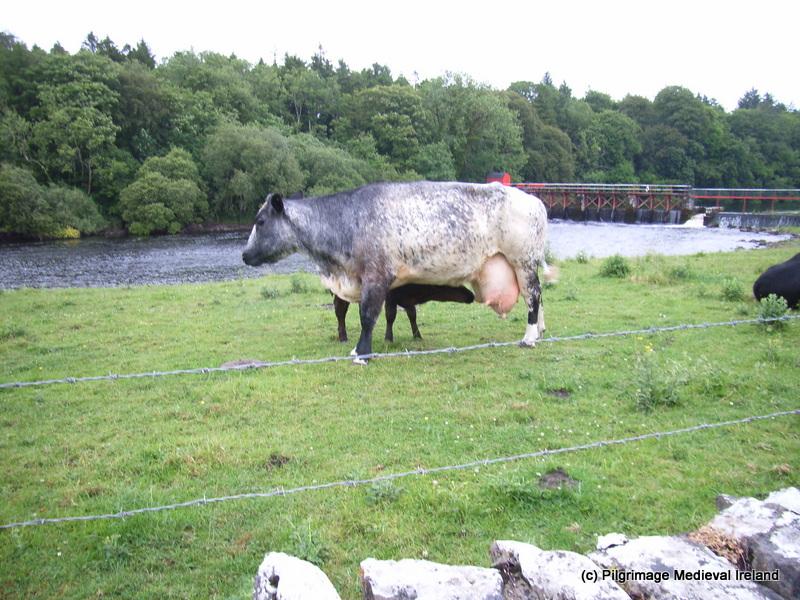
St Ciarán was not the only saint to have a magical cow, his  neighbour St Manchan of Lemanaghan also had a cow with the ability to produce an endless supply of milk.

Unicode

Cow and calf taken around Carrick-on -Shannon

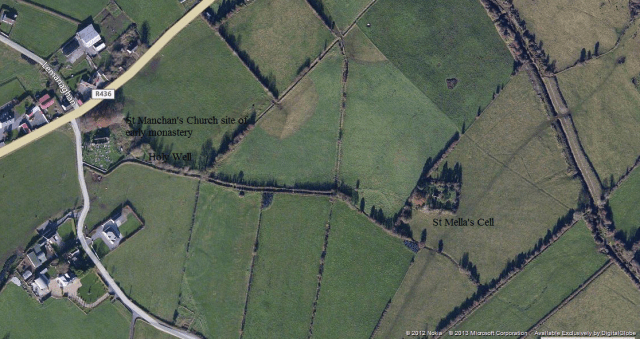
Lemanaghan was founded in the seventh century, when King Diarmaid son of Aedh Sláine, granted the land of the territory of Tuaim-nEirc (Doimerc) to Clonmacnoise following his victory at the battle against Guaire King of Connaught in 645/646.  Manchan a monk of Clonmacnoise, founded a sister monastery within this newly acquired territory at Lemanaghan. The place-name Lemanaghan “Liath-Manchain” in Irish means the grey place of Manchan”.


Map of Lemanghan showing the monastic remains from Bing maps

Map of Lemanghan showing the monastic remains from Bing maps

Manchan died in 664/665 having caught the yellow plague that raged through the country. Most of what we know about the saint comes from local folklore.

St Manchan and his Cow

According to folk tradition St Manchan had a cow that had the ability to supplied milk to all the people of Lemanaghan. The cows amazing milk producing qualities inspired envy in others and according to a local folk tale one day when the cow was grazing outside of the monastery the people of Kilnamaghan came and stole her (The Schools Manuscripts  1939 Vol 810, 104).

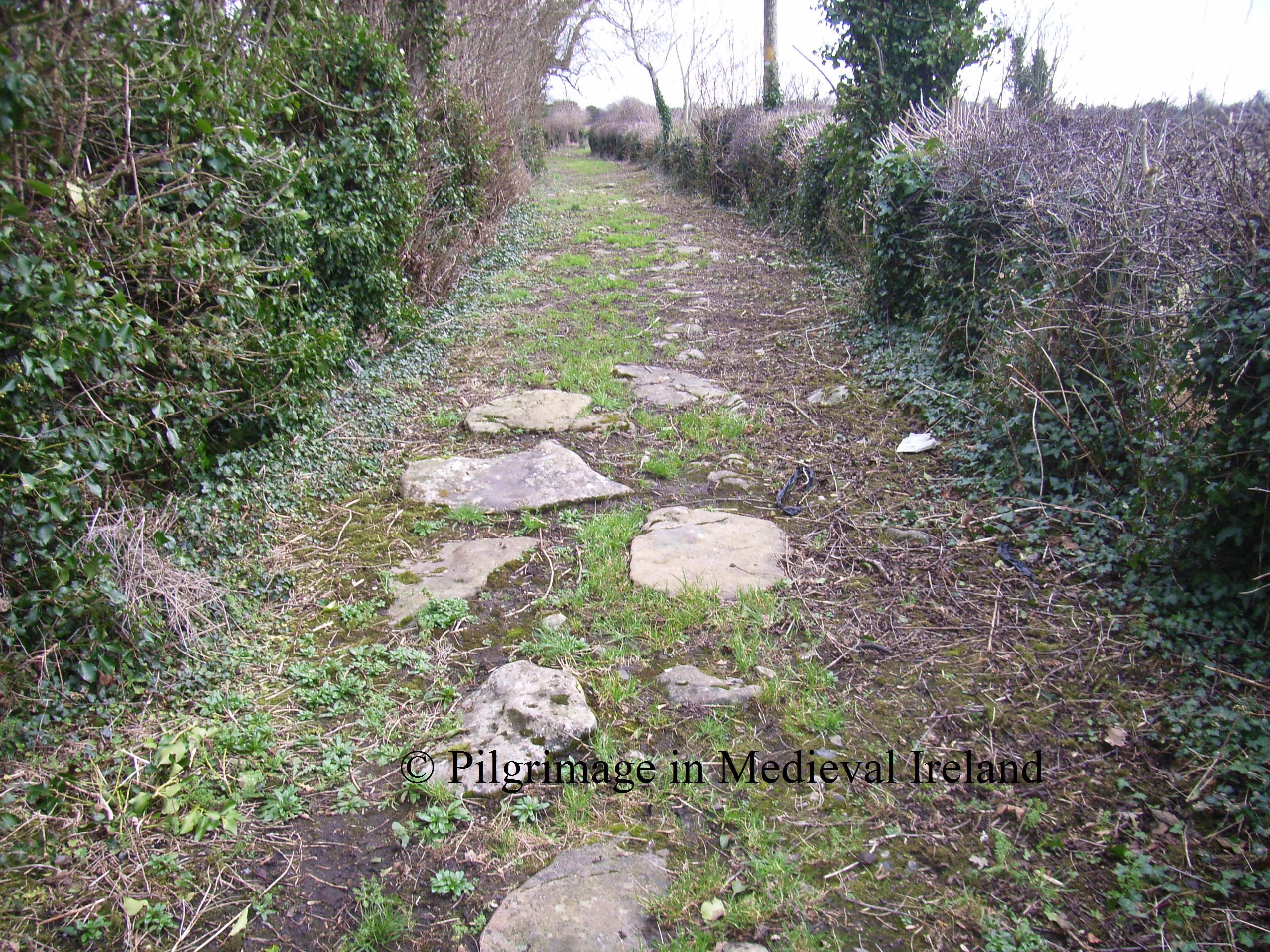
They brought the cow backwards and at every little well that was on the way the cow drank. As she came up from the well she even left the track of her feet in the stone. The well and the tracks of her feet in the stone are yet to be seen. When the Saint came back he missed the cow and set out in search for her.

RIMG1636

View of St Manchan’s road at Lemanaghan. The cow was said to have left marks of her feet on this  small stone causeway beside the main monastic site at Lemanaghan.

When Manchan realized  his cow was missing  he was very upset but luckily was able to traced the cows movements by following the tracks made by her hooves and tail on stones along the route of her journey. Manchan followed the signs left by the  cows until he reached Kilnamaghan. The saint to his horror found his beloved cow boiling in a large pot inside a hut. The hide of the cow was left behind the door.  The saint hit the hide a kick and up jumped the cow alive and well.  It was said she was every bit as good as she had been before but for the loss of a bone which caused her to be a bit lame (The Schools Manuscripts  1939 Vol 810, 104). This tale has many similarities to contemporary folk tales told about St Ciarán’s cow.

The kidnapping and returning from the dead didn’t seem to cause too much distress to the cow and when she came back to Lemanaghan she supplied  milk to the people just as good as before.  It is saint that ever since that time the people of Lemanaghan have never sold milk and also they keep St Manchan’s day as a holiday of obligation (The Schools Manuscripts  1939 Vol 810, 104).
The tradition of not selling milk  survived down to modern times and in 1999 an Irish Times article reported on the tradition among farmers in Lemanaghan to not sell any milk.

The tradition is observed to this day by the locals who believe that if they sell their milk they show disrespect to their local patron saint. They will give any surplus milk away but will not accept any payment for it. They make their living by rearing suckler cows, beef cattle and sheep.

The same article tells of

one man who moved into the area refused to believe the tradition and in the 1940s set up a dairy herd. Eleven of his cows died overnight, and the calves were born with heads like sheep. The man gave up dairying.

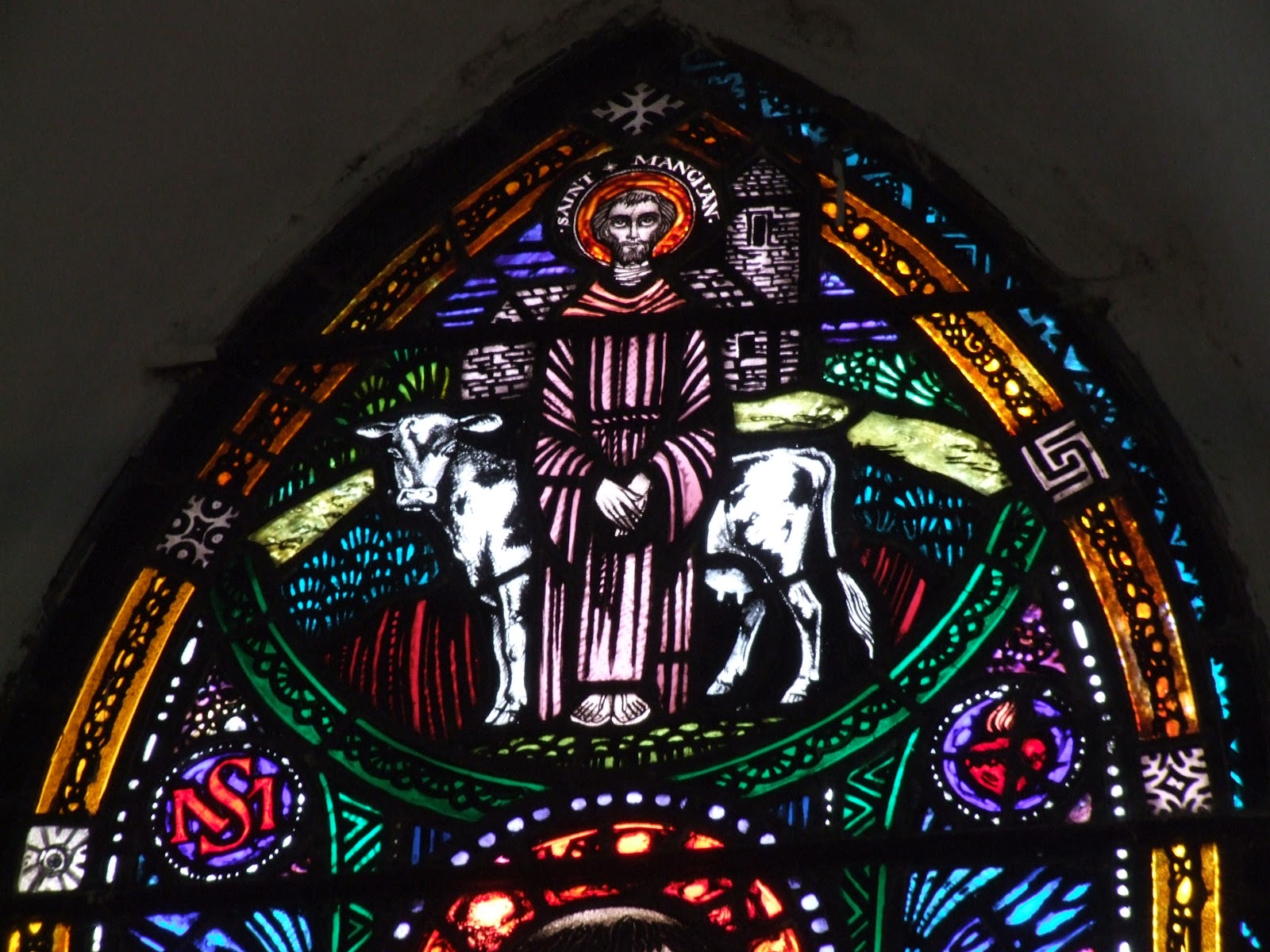
St Manchan and his cow are still fondly remembered in the area  and have a meaning for the local community. This is clearly seen at the local parish church at Boher which boasts a magnificent  Harry Clarke window which depicts the saint and his cow.

St Manchan and his cow

Harry Clarke Window showing St Manchan and is Cow at Boher Co Offaly ( image taken http://irelandsholywells.blogspot.ie/2012/04/saint-manchans-well-county-offaly.html)

References

Farmers refuse to sell milk out of respect for local saint Irish Times, March 4th, 1999 http://www.irishtimes.com/news/farmers-refuse-to-sell-milk-out-of-respect-for-local-saint-1.158972

DEPARTMENT OF FOLKLORE, U.C.D Schoolbook vol 810, Leamonaghan (1939)

http://irelandsholywells.blogspot.ie/2012/04/saint-manchans-well-county-offaly.html

https://pilgrimagemedievalireland.com/tag/st-manchans-shrine/


A visit to Rothe House and Garden Kilkenny City

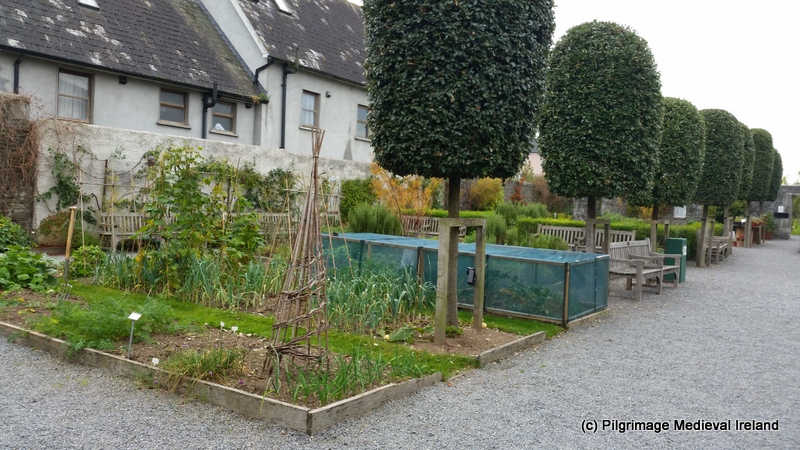
In autumn of this year  I  spent quiet a bit of time in Kilkenny with work. I also managed to do some sight seeing  and spend some time at a number of historic sites within the former medieval city.

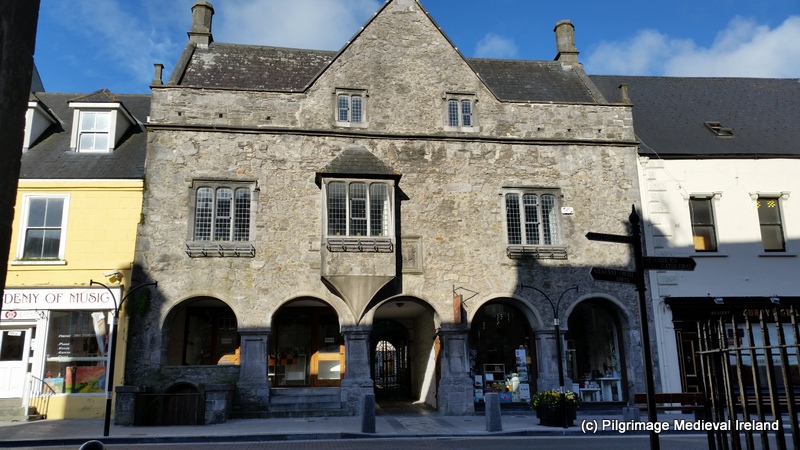
Rothe House  a late 16th/early 17th century merchant’s townhouse, built between 1594 and 1610  was a definite highlight. The site consists of complex of three houses and three enclosed courtyards, with a large garden at the rear.

1184

View of Rothe House from Parliament Street.

For a brief overview of the history of the site see the video below

The houses are fascinating and on my visit  I availed of a  self-guided tour, that takes the visitor through the Tudor buildings, highlighting  interesting historical facts and architectural features within the buildings.

This slideshow requires JavaScript.

Rothe House  is full of surprises and also houses a small museum located in the third Tudor house built-in 1610,  at the rear of the complex.  The ground floor of this building was once the kitchen and now displays a wide array of archaeological artifacts from Kilkenny, some of which came from  the excavations of the  garden behind the house.

This slideshow requires JavaScript.

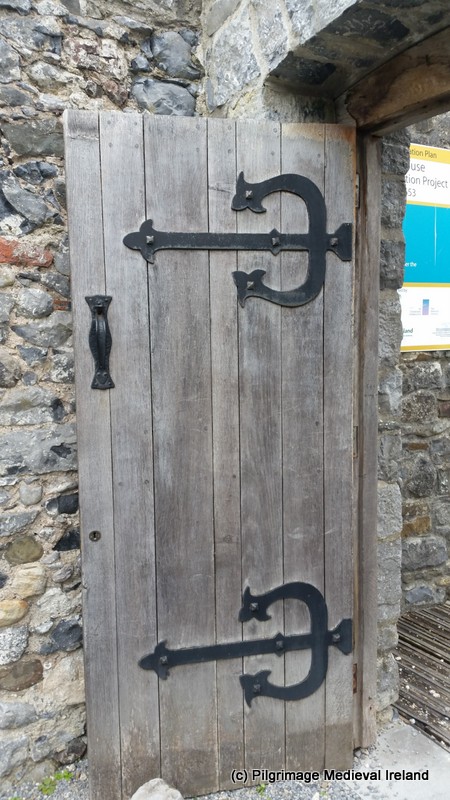
For me the highlight of my visit was the reconstructed 17th century garden at the rear of this house. The garden was restored by the Kilkenny Archaeological Society and the Rothe House Trust and opened to the public by then President Mary McAleese in 2008.
378

Door leading into the garden at Rothe House.

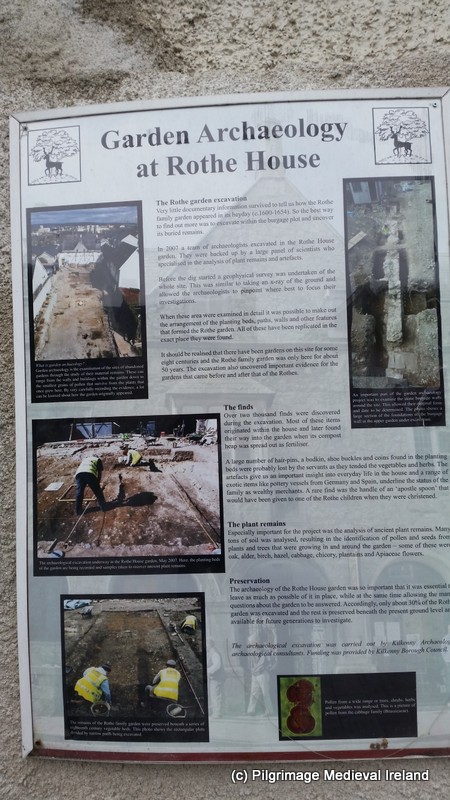
Prior to the opening  Kilkenny Archaeology carried out a series of archaeological  excavations within the garden  between 2005-7.

371

Notice board detailing discoveries of excavations carried out at the garden at Rothe House.

The garden is the only Tudor townhouse garden to be investigated in detail  in Ireland.  As well as recovering over two thousand artefacts, the excavations uncovered valuable information about the arrangement of the planting beds, paths, walls and other features that formed the original Tudor garden.  The current garden planting design is heavily influence by the findings of these excavations and all the plants in the gardens are based on what was grown here in the 17th century.
376

View of lower garden at Rothe House

The garden is divided into two sections.  The section closest to the house, know as the lower garden is planted with vegetables and herbs that include Deer Tongue lettuce, Scarlet Runner beans, Gortahork cabbage, Mammoth leeks, Lovage, Borage and Ladys bedstraw along with carrots, parsnips and pumpkins.

The other area, the upper garden or orchard contains a wide range of fruit trees: apple; medlar; quince and damson. The apple varieties include Blood of the Boyne and Scarlet Crofton.  The area is also home to a  noisy family of ducks.

367

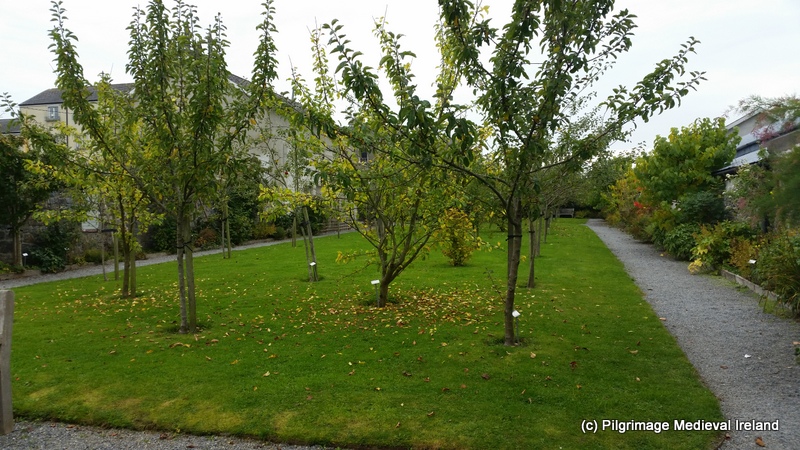
View of Fruit Trees in the orchard at Roth House


Rothe House and Gardens are open all year round and I highly recommend a visit even if it’s just to take some time out and relax in the wonderful garden.   My visit was in late autumn and there was still lots of colour in the garden. I am looking forward to returning next spring or summer to see what the garden is like at other times of the year. Information on the opening  times to the site are found in the links below.

Many thanks to Kilkenny archaeologist  Phil Kenny  for bringing me on a tour of the  museum and the wonderful garden at Rothe House.

This slideshow requires JavaScript.

Useful Links

www.rothehouse.com

Virtual  360 degree tour Rothe House and Garden http://www.virtualvisittours.com/rothe-house/

http://www.askaboutireland.ie/reading-room/culturenet/landscape-heritage/kilkenny/rothe-house/

Rothe House Garden Project

http://www.theguardian.com/environment/2015/dec/03/country-diary-durham-gates-medlar-fruit-trees-conserve-mediaeval-edwardian-richard-mabey


Launch of Wells, Graves and Statues

Any of you who follow me on twitter or Facebook  will know that Richard Scriven and I have  just finished writing  a book about pilgrimage  in Cork City called  Wells, Graves & Statues. Exploring the heritage and culture of pilgrimage in medieval and modern Cork City.

cover_jpeg_for_poster


Its  been a really exciting journey, over the course of  our research we discovered a rich and complex range of pilgrimage sites within the city some of which we had not heard of before.  The pilgrim sites of Cork  stretch from medieval time down to the present with the  latest edition a labyrinth garden in the grounds of St Fin Barre’s Cathedral opening in 2015.  There is also lots of variety in the site types  that  include a  medieval cathedral, holy wells, medieval statues and graves.

The books came back from the printers last week.  There was a lot of anticipation and excitement opening the boxes , how does the book look ? will people like it?  Thankfully Richard and I were very pleased with the results. We are very thankful to all who helped us along the way, those who provided information and access to sites, commented on drafts of the book  etc.,

Our book would not have been possible without the help of  Cork City Council and  who provided funding through Cork City Council’s Heritage Publication Grant Scheme 2015. We would also like to thank Niamh Twomey the Heritage Officer, of Cork Citywho  provided great support and advice throughout this project.

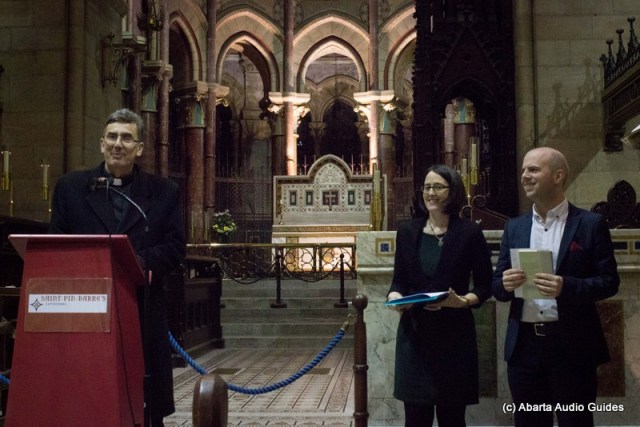
On Wednesday night  our new book – Wells, Graves and Statues – was launched by the Bishop, Dr Paul Colton, in St Fin Barre’s Cathedral, Cork

12309925_1045870535475235_2607543485448154249_o

St Fin Barre’s Cathedral image courtesy of Abarta Audio Guides

I can’t thank enough everyone who took the time to join us, family,  friends, history and pilgrimage enthusiasts,  some of whom traveled  from outside the county to be here. Their presence made it a wonderful event,

As the oldest pilgrimage site in Cork, St Fin Barre’s Cathedral was the perfect place to launch our book and we both feel very privileged and honored to have been given permission to host our launch here.   We could have not found a more splendid setting and all who attended the launch took time to explore and admire the interior of this magnificent building.

The event kicked off  with a welcome was given by the Dean of Cork, the Very Reverend Nigel Dunne.

_MG_3232

The Very Reverend Nigel Dunne welcoming everyone to the launch.

The  book was then officially launched by Bishop Colton who gave a wonderful and entertaining speech.

_MG_3247

Bishop Colton launching our book Wells Statues and Graves photo Neil Jackman

Launching the book Bishop Colton said:

‘This is a very readable book which draws deeply on our strong sense of place, not least in Cork. It is a multi–layered, interdisciplinary book which draws on the expertise of these authors – Richard and Louise – in their respective fields of geography and history, and archaeology and Celtic civilisation. More than that, there are impulses of theology, spirituality and folklore. Above all else, the book touches on that deep–seated nerve of the human spiritual quest on our journey through life.’

Richard and I  then said a few words about the history of pilgrimage at the cathedral, and the significance of the book.  The night concluded with tea  and biscuits  giving us a chance to chat to those who attended and sign a few books.

wells-graves-statues

Richard and I presenting a copy of our book to Bishop Colton

I can not thank St Fin Barre’s Cathedral enough for making us feel so welcome and facilitating us on the night.

For any of you who missed the launch  our book is available  in a number of places around  Cork City & County:

Sunday’s Well Post Office

Liam Ruiséal Bookshop Oliver Plunkett Street

Beneditus Bookshop North Main Street

Midelton Bookshop

For those of you  outside of Ireland  our book  can be purchased through amazon

Amazon.fr (€), Amazon.co.uk (£), or Amazon.com ($), and as an e-book on Kindle from Amazon.co.uk (£) or Amazon.com ($)


Our website  Corkcitypilgrimage  will have regular updates relating to retailers and upcoming talks.


http://ireland.anglican.org/news/6046

St Colmán’s holy well at Oughtmama Co Clare

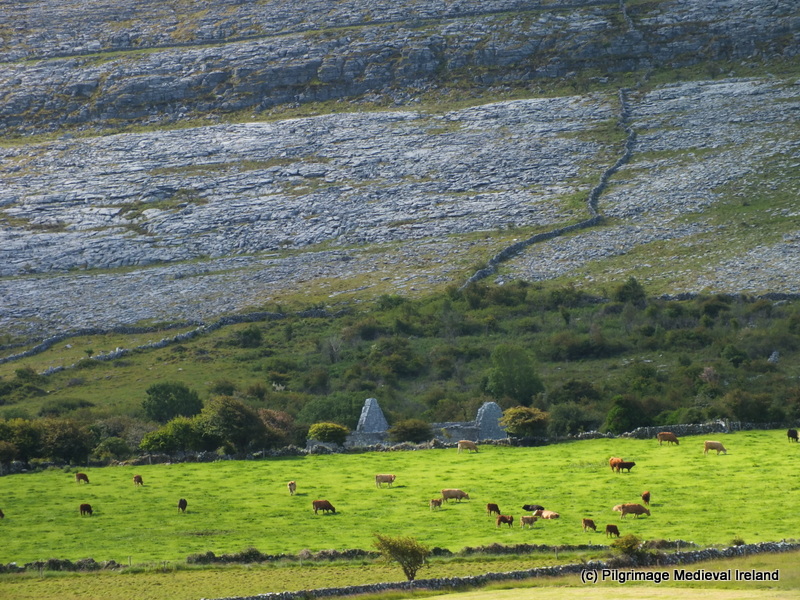
St Colmán’s well/ Tobar Cholmáin  is part of the monastic landscape of Oughtmama a small  but significant monastic site located  in a valley above Turlough Hill in the Burren in Co Clare.

DSCF1478

View of Oughtmama churches from pathway leading to Tobar Cholmán.

Oughtmama was associated with three different St Colmán’s one of which was  St Colmán Mac Duagh the patron saint of the dioceses of Kilmacduagh and it is this Colmán who is the patron of the nearby holy well. According to folklore it was said the saint came to the site in his  retirement seeking a life of solitude.  He later died here and was brought back to Kilmacduagh for burial.

DSCF1546

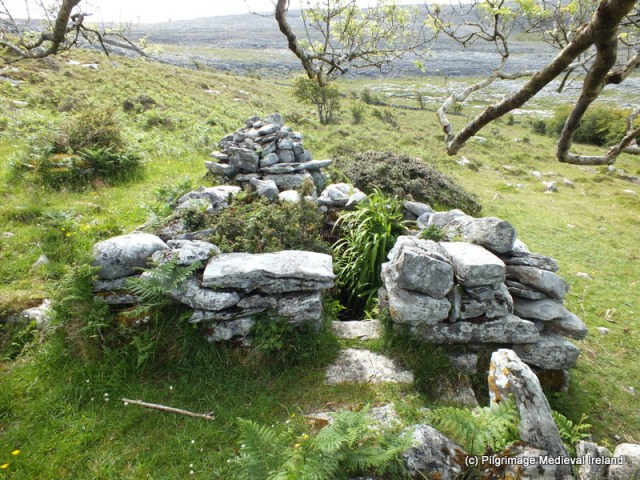
St Colmán’s well/ Tobar Cholmáin at Oughtmama

The well is located on a steep northeastern slope of the valley above the monastic site. It consists of a rectangular stone walled enclosure with steps leading down to the  water in the well.

This slideshow requires JavaScript.

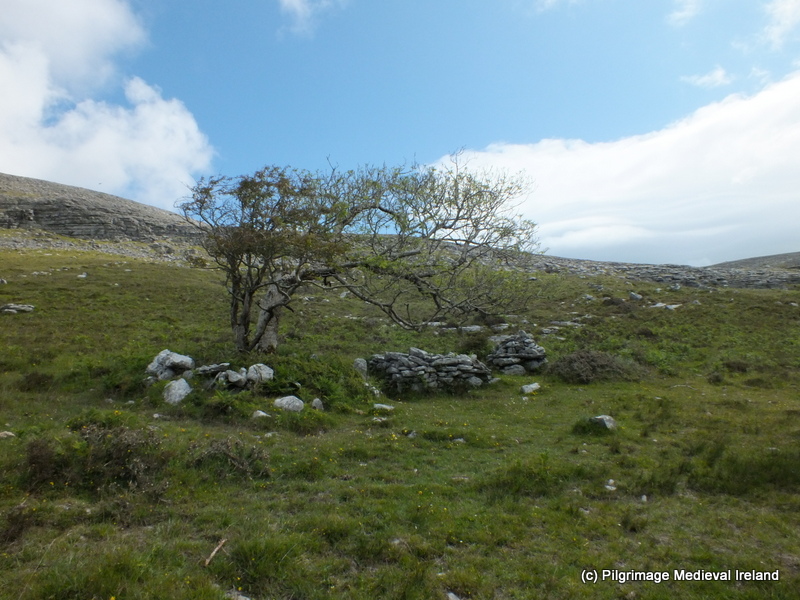
A tree  growing out of a loose pile of stones and a leacht (a small stone built cairn of stones), are found on either side of the well.

.

According the Ordnance Survey Letters of 1839 the well had

migrated from its original position and broke out a short distance lower on the slope of the hill, where it is now known by the new name of Sruthan na Naomh, the Rivulet of the Saints; but its original locality which is still called Tobar Cholmain has a square enclosure of stones, in the centre of which grows a small, stunted, white thorn bush, exhibiting votive rags of various colours.

Like many other Irish holy wells it was held to have curative powers and was  especially good for the eyes. It was said that the water could cure cataracts. The Ordnance Survey Letters ( 1839) state

This well is inbued with extraordinary naturally medicinal, or supernaturally miraculous virtues, for people have often washed their eyes in it, which were veiled with thick pearls, and ere they had completed the third washing these pearls (films) fell off leaving the eyes perfectly bright and clear-sighted .

In the late 1830s  when he Ordnance Survey Letters were written  a pattern was still held here annually on the 15th November in honor of St. Colmán feast day. Elsewhere St Colmán’s feast was celebrated on the 29th of October especially in the diocese of Kilmacduagh but at Oughtmama the feast was celebrated on the 15th of November.

The pattern day, was a day when people came together to perform pilgrimage at a holy well or saints grave, usually on the saints feast day. Such gatherings were very popular during the  17th, 18th and 19th centuries.  Secular celebration such as dancing,  drinking and stalls selling food and trinkets more often than not  took place along side religious devotion during this period.  Alcohol seems to have been a key component in  secular aspect of the celebrations on the day and pattern day could be rowdy affairs and a large number became the  scene of faction fighting and violence and disorderly behavior (Nugent & Scriven 2015, 18).   The unsocial behavior lead to much disapproval from the state and  both the established  Church as well as the  Catholic church and  attempts,  many of which were successful, were undertaken to suppress the pattern day celebrations.  By the end of the 19th century many had died out.  It is not clear  when exactly the pattern day at Oughtmama died out but it is no longer part of of the modern pilgrim traditions.

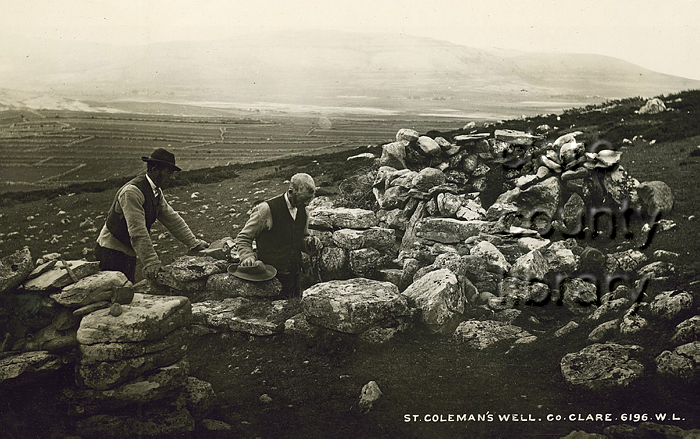
*** Local Caption *** Lawrence Collection

Image of pilgrims from the Lawrence Collection entitled ‘View of two men at St Coleman’s Well in Oughtmama, known as Tobercolman.’ from Clare County Library collection.


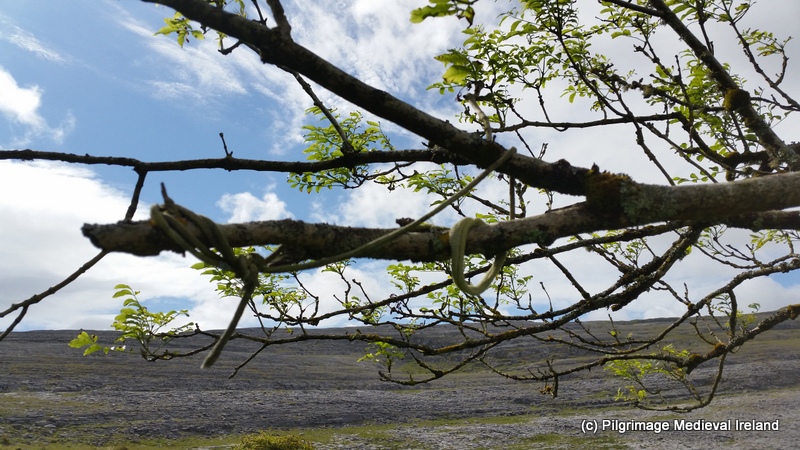
Today the well is visited by  tourists and  pilgrims although the numbers of the latter have steadily declined. The votive offerings and rags tied to the tree beside the well show the continuation of   pilgrims to the well.

063

Piece of cord tied to tree at St Colmán well Oughtmama.


Many thanks to Pius Murray of  Coisceim Anama walks  for taking me to see this holy well.   For information on Pius’s guided walks see www.coisceimanama.ie / www.pilgrimpath.ie

References

Nugent, L. & Scriven, R. 2015. Wells, Graves & Statues. Exploring the heritage & culture of pilgrimage in medieval & modern Cork city. Cork City Council: Cork.

O’Donovan, J.  and Curry E. 1839. ‘The Ordnance Survey Letters of Co Clare’, http://www.clarelibrary.ie/eolas/coclare/history/osl/oughtmama3_masduachs_well.htm.